

Сontents
The white dove is the artwork of Polina Rayko from the town of Oleshky in the Kherson Region. Her house, a folk art masterpiece decorated with her paintings inside and out, was flooded and largely destroyed as a result of the Kakhovka Dam explosion.
Image provided:
The Polina Raiko Kherson Oblast Charitable Foundation
Introduction
International criminal and international humanitarian law have traditionally functioned as shields for humanity during armed conflict. Their focus has been on protecting combatants on the battlefield and shielding civilians from the most egregious acts of violence, safeguarding their lives and health, and minimizing the destruction of homes and livelihoods. For many violations, the harm is clear – a bombed house has a specific owner who can seek justice for its loss. Unlike a destroyed house, the environment does not have a clearly defined owner; rather, it is the shared responsibility of all humanity. It is our collective inheritance, a complex web of life that sustains us all.
The environmental toll of armed conflict is a harsh reality. While some level of damage may be unavoidable, in some instances, the environmental harm may transcend mere collateral damage. It may have devastating and long-lasting repercussions for the well-being of the human species that can echo for generations. The immediate consequences can be catastrophic, disrupting ecosystems, displacing entire communities and wildlife populations, and contaminating vital resources. However, the damage extends beyond the immediate. Disasters like the Dam breach studied in this report can have cascading long-term effects. These include the loss of fertile land, disruptions in water flow leading to food insecurity and ecological imbalance, and the destruction of aquatic habitats, with plummeting fish populations and the drying of vital wetlands.
Environmental wounds, unlike national borders, know no boundaries. They pose a global threat to human health, food security, and access to clean water. The urgency of addressing environmental crimes during armed conflict is not just a matter of property but strikes at the very foundation of human flourishing on a healthy planet. The environment is a shared inheritance. The harm inflicted upon it demands a collective response, a call for all of humanity to mobilize resources and seek justice for crimes that injure it. As Earth is our constant home, the environment’s protection is not just a legal imperative, but a matter of our shared future – a future we all have a stake in.
When the Kakhovka Hydroelectric Power Plant (“Kakhovka HPP,” “HPP,” “Kakhovka Dam,” or “Dam”) was blown up on June 6, 2023, many observers raised concerns that the failure of the Dam would create an environmental disaster. However, the question arises: does international humanitarian law or criminal law explicitly address such acts? Moreover, what was the experience of the ordinary civilians who bore the brunt of this disaster, and how did their lives change? The identity of the perpetrators and the modus operandi behind the attack raise further questions. Given the Rome Statute limitations, will the International Criminal Court (“ICC”) be able to investigate this case successfully and set a precedent for addressing crimes against the environment at the international level?
Truth Hounds and Project Expedite Justice (“TH and PEJ” or “we”) delve into these and related questions and present a detailed analysis and evidence of Russia’s environmental war crime at the Kakhovka HPP. The report offers a comprehensive perspective on the disaster and its impacts on ecosystems, civilian life, the agriculture sector, and international justice.
Inflicting grave harm on the environment might be the modern-day equivalent of piracy, either because it actually occurs on the High Seas or because, even as it
occurs concretely on the territory of a particular state, its impact is global
~Frederic Megret
Summary
Section I of the report introduces the reader to the region, its history and culture, nature, and the story of the construction of the Kakhovka HPP. The Dam appeared in the 1950s as part of the Soviet Union’s ambitious hydraulic projects and played a crucial role in electricity generation, irrigation, and improving navigation along the Dnipro River. Strategically located, the Dam became a focal point during the ongoing conflict between Russia and Ukraine, which escalated into a full-scale invasion by Russian forces in February 2022.
Section II describes how the destruction of the Dam appears to have been a deliberate act by Russian forces who had control of the area at the time of the Dam’s destruction. Evidence supporting this conclusion includes seismic data indicating explosions, testimonies from local residents who heard multiple blasts, and satellite imagery showing significant damage consistent with an internal detonation. Three (3) primary theories are investigated regarding the Dam’s destruction: natural wear and tear, Ukrainian shelling, and deliberate demolition by Russian forces. The analysis allows us to rule out the first 2 theories, highlighting the unlikelihood of such extensive damage resulting from natural wear or external shelling. Seismic records confirmed multiple explosions at the Dam site, and satellite images revealed a breach in the Dam’s structure, indicative of an internal explosion. Additionally, local testimonies corroborated the timing and impact of these explosions, further supporting the theory of deliberate demolition by occupying Russian forces.
Section III outlines the main vehicles of the damage following the Kakhovka Dam’s collapse: the large flooding downstream of the Dam and draining upstream of the Dam. It focuses on the area within the Kakhovka Reservoir.
Section IV outlines the severe consequences of the destruction of the Kakhovka Dam. The flood affected over 600 square kilometers, inundating over 80 settlements, displacing thousands of residents, and causing extensive damage to homes, infrastructure, and agricultural lands. The ecological impact was profound, with significant disruption to local habitats, contamination of water bodies, and long-term adverse effects on the region’s flora and fauna. Economically, the destruction impaired agricultural production, disrupted local economies, and caused substantial financial losses due to the damage to infrastructure and the cost of reconstruction and relief efforts. The flooding also impacted numerous cultural sites located in the affected regions. The consequences assessed in this section are summarized in the chart below.
Finally, Section V engages in meticulous scrutiny of legal doctrine and analysis of numerous international court decisions to establish the presence of all the elements of the crime of excessive environmental damage as outlined in Article 8(2)(b)(iv) of the Rome Statute. The attack on the Kakhovka Dam was such that it would cause disproportionate environmental damage and inflict severe suffering on civilians.

The destruction of the Kakhovka Dam stands as a stark reminder of the devastating impact armed conflict can have on both the environment and civilian populations. This report sheds light on the event’s causes and consequences and explores potential legal ramifications, urging a comprehensive and collective approach among domestic and international stakeholders to obtain justice and protect the environment.
Methodology
The destruction of the Kakhovka HPP is one of the most complex events the contributors to this report have ever attempted to analyze. What makes it so complicated is that the Dam was a linchpin of a colossal hydraulic system encompassing a water reservoir (2,155 km2) and a network of irrigation channels spanning Southern Ukraine. This system was “implanted” into the natural environment, transforming the Dnipro River and adjacent ecosystems for human benefit. The removal of this linchpin due to the Dam’s deliberate destruction resulted in the collapse of the hydraulic system, uprooting what had become a part of the natural environment. The consequences of this event, which occurred only a year ago, are already evident and are likely to persist for an indefinite period given the Dam’s extensive spread over thousands of square kilometers.
The complexity of the matter informed our approach to preparing this report. What originated as a legal initiative to analyze the lawfulness of the Dam’s destruction under the Rome Statute soon evolved into an interdisciplinary effort advanced by people from various fields: lawyers, hydrogeologists, data analysts, agrarian experts, earth observation analysts, biodiversity experts, military experts, and others. Therefore, a wide array of methods and approaches were employed to deliver this report, ranging from lab analysis of water samples to analysis of legal sources.
To guide our inquiry, we analyzed a plethora of “rapid” or “preliminary” reports provided by various organizations immediately after the Dam’s destruction. Initially, we conducted 2 field missions in September–October 2023 to interview locals from the affected communities alongside the right bank of the Dnipro River. Interviews were carried out without interpretation in the language preferred by interlocutors. Each interviewee was briefed about the purpose of our research, and they agreed to provide personal accounts for that purpose. Names and identifying information of the interviewed individuals have been edited for security reasons. We also conducted an expert mission to the same region in March 2024 to assess hydrological changes related to the impairment of the water cycle after the draining of the Kakhovka Reservoir.
The most affected area, the left bank of the Dnipro River1 remains inaccessible because that area remains under Russian occupation. Hence, a significant part of this report relies on open-source intelligence (“OSINT”) inquiries. For instance, OSINT analysis facilitated a comprehensive exploration of all potential explanations for the destruction of the Kakhovka HPP, allowing us to determine the most relevant causative factor. Furthermore, we gathered satellite imagery and processed it using a geodatabase of the water movements resulting from the failure of the Kakhovka Dam. This dataset is presented as a series of maps in Section 3.2. of this report and can be further examined as a GIS database2.
Ultimately, one of the most crucial approaches employed during this project was constant discussions of the subject matter among contributors. As we present our findings to a wider audience, we encourage every reader to join this discussion and share their views with us.
1 Water from the Kakhovka Reservoir strived to the lowlands of the left bank. Moreover, most of the irrigation systems affected are situated also on the left bank.
2 The data set is available by the link.
I. The Region: History, Culture, Nature, Economics
The Kakhovka Hydroelectric Power Plant, located in the Kherson Oblast of Ukraine (46°46′34″N 33°22′18″E), named after P. S. Neporozhniy, was constructed between 1951–1955. The station entered industrial operation in 1959 with a capacity of 312 megawatts (“MW”). (As of the beginning of 2022, the capacity had reached 334.8 MW.)[1]
It was built as part of the so-called “Stalin’s Plan for the Transformation of Nature” (1948), which aimed to improve agricultural conditions in the arid areas of the Union of Soviet Socialist Republics (“USSR” or “Soviet Union”). The plan involved initiatives such as planting shelterbelts and constructing ponds, Reservoirs, and irrigation canals, among other measures. As a result of its implementation, several resolutions were adopted for the construction of hydraulic structures and irrigation systems. These were known as the “great construction projects of communism.” Among these was a resolution dated September 20, 1950, titled, “On the construction of the Kakhovka Hydroelectric Power Plant on the Dnipro River, the South-Ukrainian Canal, the North-Crimean Canal, and the irrigation of lands in the southern regions of Ukraine and the northern regions of Crimea.”[2] Among these, the South-Ukrainian Canal was ultimately never constructed.[3]
The creation of the Kakhovka HPP aimed at achieving multiple objectives, including electricity generation, irrigation of arid areas in the Ukrainian South, and improvement of navigation on the Dnipro River.
Additionally, geostrategic considerations regarding the protection of Crimea from potential military threats originating from the north were also significant, although not decisive.[4] Control of the Dnipro River near the city of Kakhovka was strategically important, as it allowed for easier offensives against Crimea, the Volga Region, and the Caucasus. Notably, the crossing of the Dnipro River by Red Army units in 1920 during the Soviet-Ukrainian War and by German troops in 1941 during World War II occurred in this area. According to the strategy of the Soviet command, in the event of potential hostilities, the Dam could have been blown up, which would have created obstacles to the enemy’s advance downstream along the Dnipro. Simultaneously, the Kakhovka Reservoir would prevent the rapid crossing of the Dnipro upstream of the Dam.[5]
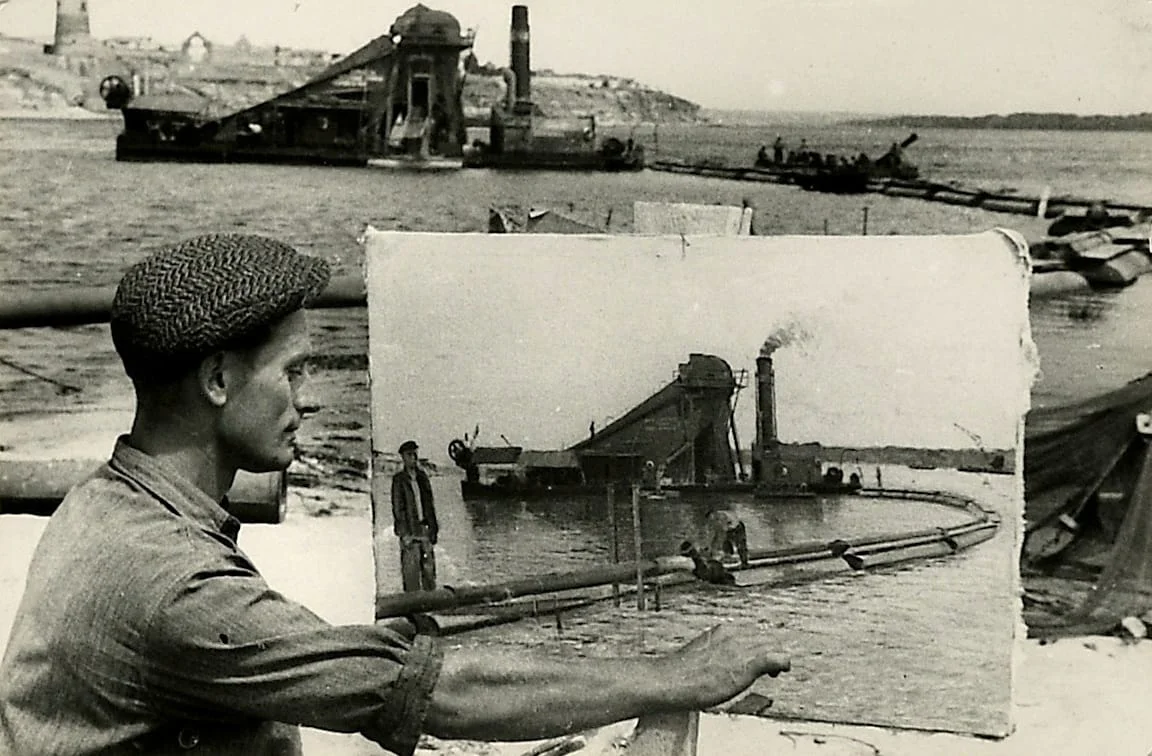
Ukrainian artist Albin Havdzynskyi working on one of his paintings dedicated to the construction of the Kakhovka HPP.
Source: Istorychna Pravda[6]
The construction of the HPP necessitated the development of an entire complex of facilities surrounding it. The entire Kakhovka hydroelectric complex consists of an earthen channel dam, a spillway dam featuring 28 spillway spans, a hydropower plant building, an earthen Dam between the lock and the hydropower plant, a shipping lock, an earthen floodplain dam, and an earthen overbank dam. (Subsequently, all these Dams will be collectively denoted as the Kakhovka Dam.)[7] Additionally, atop the Kakhovka Dam, there is both a railroad and a highway. The architectural ensemble of the Kakhovka hydroelectric complex is distinctive in Ukraine, combining monumental architecture with elements of Soviet modernism.[8]
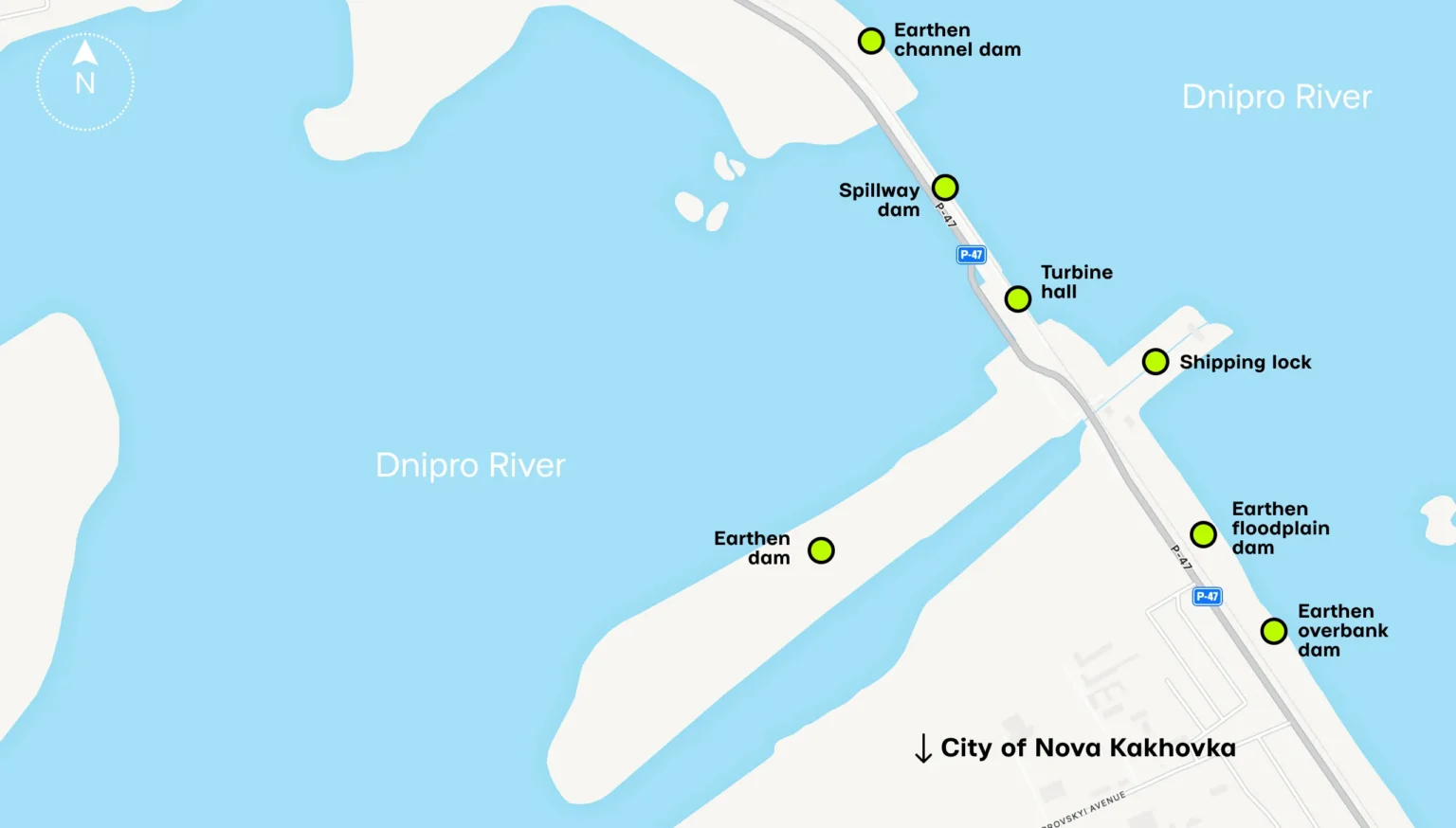
The Kakhovka hydroelectric complex scheme.
Along with the construction of the HPP complex, the Kakhovka Reservoir was created, commonly known among locals as the “Kakhovka Sea.” It is the second-largest Reservoir in Ukraine by area (2,155 km²) and the largest by water volume (18.18 km³).[9] It extends across 3 Ukrainian oblasts: Zaporizhzhia, Dnipro, and Kherson, and spans a length of 240 kilometers. The Reservoir was a key source of drinking water supply for numerous settlements in the regions, played a critical role in irrigating nearly 6,000 km2 of fields,[10] and provided water to the cooling pond of the Zaporizhzhia Nuclear Power Plant for removing residual heat from the plant’s reactors and spent fuel.[11]
The creation of the Reservoir required the flooding of more than 250,000 hectares of the Dnipro floodplains, known as the Grand Meadow (Ukrainian: Великий Луг, Velykyi Luh) – the territory that occupied a part of modern Dnipropetrovsk, Zaporizhzhia, and Kherson Oblasts. This area holds historical significance as the site of many Zaporozhian Sichs – administrative and military centers of Cossacks during the 16th to 18th centuries. The area also featured Cossack hillforts, ancient burial mounds (kurgans) and grave fields, numerous villages, and a rich variety of flora and fauna.[12]

Sketch of the original gates of the Kakhovka Hydroelectric Power Plant lock. Photo: State Archives of Kharkiv Region.
Source: Bird in Flight[13]
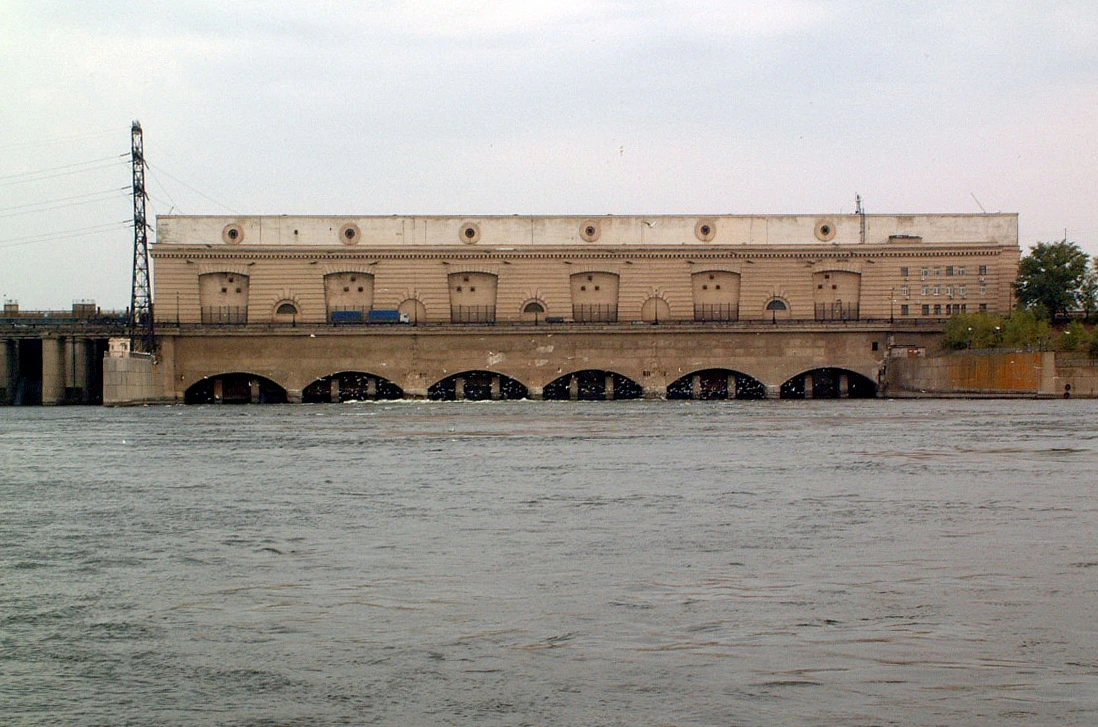
Powerhouse of the Kakhovka Hydroelectric Power Plant. Photo: Nova Kakhovka Society for Protecting Cultural Heritage.
Source: Bird in Flight[14]
The construction of hydroelectric dams has a negative impact on the environment, as it typically involves land flooding and disruption of natural waterways. However, the associated pollution from hydropower electricity generation is generally less significant and less harmful compared to that from fossil fuels and nuclear power.[15]
Despite the negative cultural and environmental impacts caused by the construction of the Kakhovka HPP and the Reservoir, the region’s ecosystem had gradually adapted to these new conditions over the years. Additionally, large areas of Southern Ukraine relied on irrigation systems supplied by the Reservoir and benefited from the electricity generated by the power plant.
We will now explore the significance of the Kakhovka HPP and delve into the history, culture, nature, and economy of the regions affected by the destruction of the HPP on June 6, 2023. We will focus specifically on the 4 most impacted southern oblasts: Dnipro, Kherson, Mykolaiv, and Zaporizhzhia.
1.1. Renewable Energy and the Role of the Kakhovka HPP
As of the beginning of 2022, the Dnipro, Kherson, Mykolaiv, and Zaporizhzhia Oblasts held prominent positions in Ukraine’s renewable energy sector in terms of total installed capacity of renewable energy sources. These oblasts were also among the leaders in the number of new renewable energy facilities built in 2021.[16]
Russia’s full-scale aggression has resulted in significant damage to Ukraine’s renewable energy facilities. Estimates by specialized renewable energy associations suggest that as of August 2022, 30-40% of these facilities in southern Ukraine have been impacted by hostilities.[17]
Sustainable hydropower development plays a crucial role in the “green transition” due to several advantages it offers. These include flexibility, minimal carbon dioxide emissions, renewability, and longevity of use.[18]
In Ukraine, hydroelectric power plants (“HPPs”) and pumped hydroelectric energy storages (“PHESs”) collectively contribute to 11.9% of the total installed capacity of Ukraine’s energy system.[19] Among the hydroelectric power plants of Ukraine’s largest Dnipro cascade, Kakhovka HPP ranked third in terms of average annual electricity production.[20]
HPPs and PHESs play a particularly important role in the Ukrainian power system during peak hours when maximum electricity consumption occurs. They balance the power system by providing additional electricity during times of high demand.[21] In this context, the role of the Kakhovka HPP was particularly significant for the southern regions of Ukraine, which have a high concentration of other renewable energy facilities such as wind and solar power plants. These renewable sources, however, cannot generate electricity continuously, making the Kakhovka HPP’s role all the more essential to ensuring a reliable and continuous energy supply.[22]
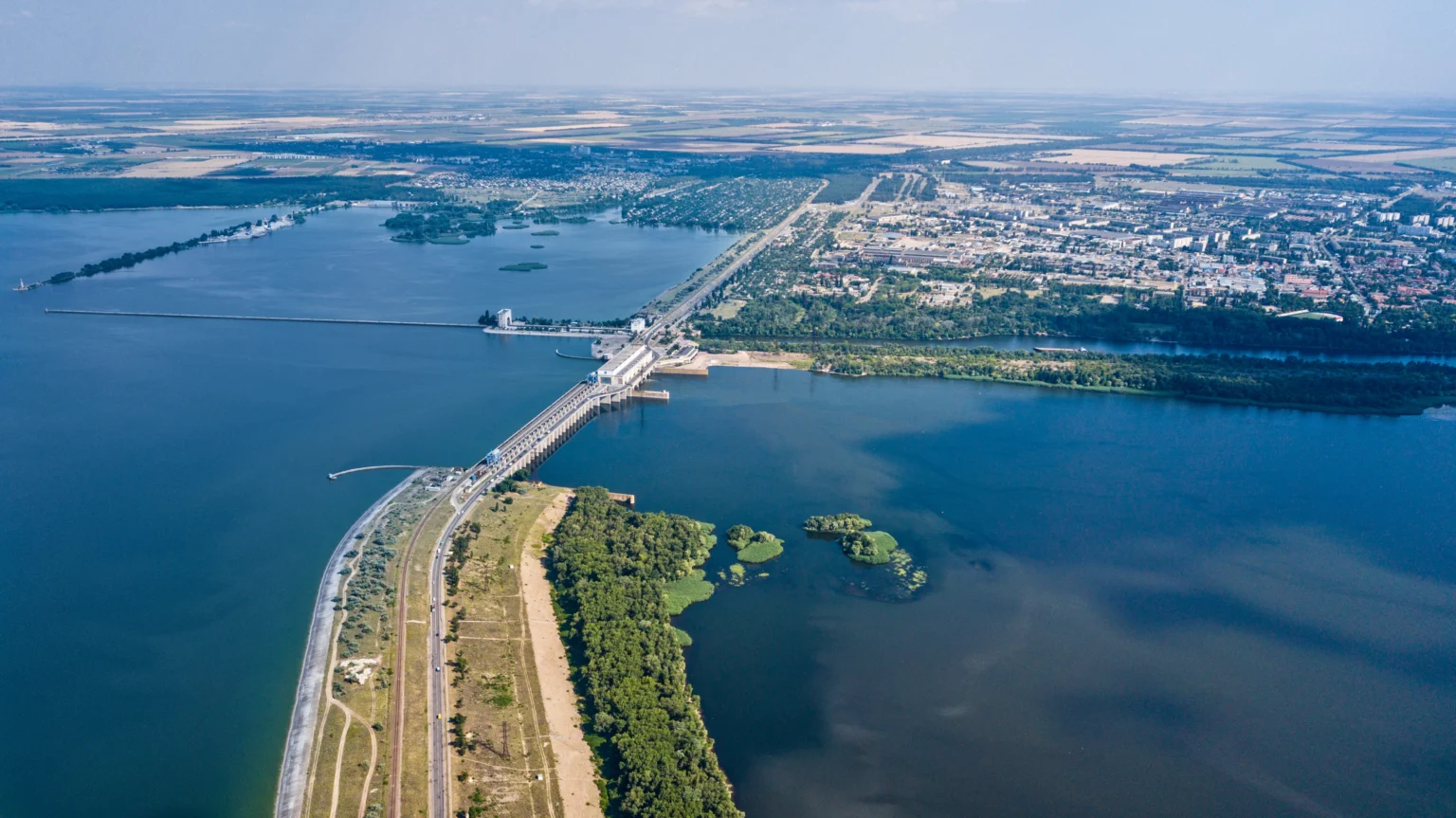
The Kakhovka hydroelectric complex. Aerial view.
Source: Ukrhydroenergo[23]
1.2. History and Culture
The territory of the 4 Southern Oblasts of Ukraine mentioned in this report is historically known as the Northern Black Sea Region. It includes steppe and forest-steppe lands inhabited by steppe nomads, as well as settled territories along the Black Sea Coast.[24] It is primarily known as home to numerous archaeological sites, including remains of settlements from various archaeological cultures, Scythian and Cimmerian burial mounds, and remnants of ancient Greek cities and settlements.
Many contemporary historians believe that the history of this region should be viewed using the multidisciplinary methodology of border studies. The adoption of this perspective is driven by the region’s rich historical landscape, which is marked by diverse cultural, ethnic, social, and religious interactions in this territory across different historical eras.
From its protohistory until the late Middle Ages, the area was largely inhabited by different nomadic pastoralists, and the Black Sea Coast was controlled by Mediterranean communities. With the decline of the Mongol Empire in the second half of the 14th century, there was a significant influx of Slavic settlers to this area, leading to the development of agriculture in the nomadic steppes. This agricultural expansion later formed the foundation of the region’s economic growth. By the early modern period, the region became a settlement area for Cossacks. It was also a territory of interaction between Ukrainians and Crimean Tatars.[25]
After the dissolution of the Zaporozhian Sich at the end of the 18th century, the Russian Empire resettled residents from different governorates of the empire to this region in order to accelerate the colonization of the rich Southern Ukrainian lands.[26] Researchers note that despite the resettlement of many individuals from various ethnocultural groups, statistical data from the late 19th century indicate that the absolute majority of the region’s population consisted of Ukrainians, which undermines the Russian narrative of the “Russianness” of these lands.[27]
The history of the first half of the 20th century left significant scars on the region. It was marked by events such as World War I, the Soviet-Ukrainian War of 1917–1921, the Holodomor, and World War II.
During the Soviet period, the territory of the region was significantly impacted by industrialization and the development of infrastructure to support agriculture, which greatly shaped the region’s modern economy. This notably led to the construction of the Kakhovka HPP and the associated city of Nova Kakhovka, which was built on the site of a small settlement called Kluchove.[28]
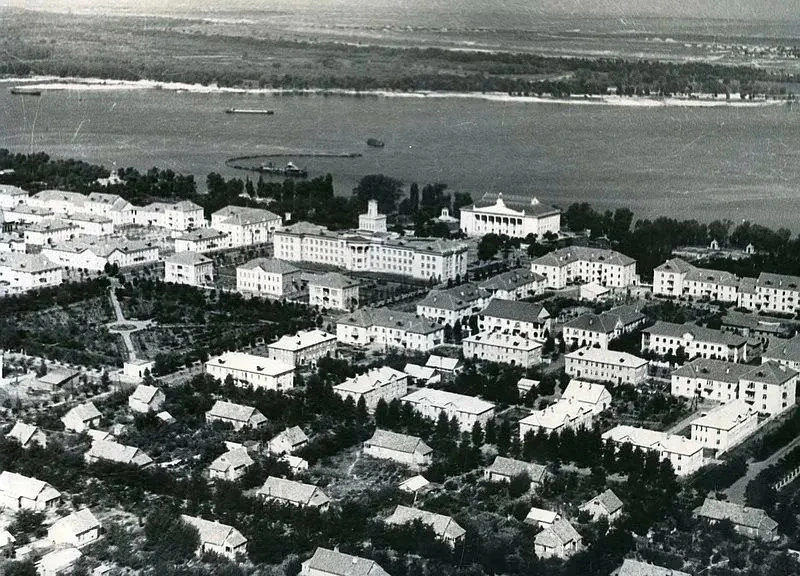
The city of Nova Kakhovka in 1960.
Source: Zaborona[29]
In 1991, the population of all 4 oblasts overwhelmingly voted for Ukraine’s independence, with more than 89% in favor.[30]
1.3. Nature
The region is known for its natural diversity. The importance of natural sites and areas in the region is internationally recognized.
The Dnipro Delta is designated as a protected site under the Ramsar Convention on Wetlands. According to the World Wildlife Fund, this wetland harbors an array of biodiversity, with 376 species of vertebrates, 68 of which are listed in the Red Data Book of Ukraine, indicating their conservation significance.[31] The Red Data Book of Ukraine provides an official list of species considered threatened or endangered in Ukraine. It encompasses animals, plants, and fungi and will be referred to hereafter in discussions of the environmental impacts of the Dam’s destruction.
This vital ecosystem serves as a crucial spawning ground for various fish species, including sterlet, sturgeon, stellate sturgeon, beluga, and others. Additionally, it provides a habitat for rare and endangered animals such as the European mink, river otter, white-tailed eagle, squacco heron, and glossy ibis. During migration seasons, the delta attracts up to 30 thousand waterfowl annually.[32]
The Dnipro Delta is also a sanctuary for plant species listed in the Red Data Book of Ukraine, such as the waterwheel plant, fringed water lily, and marsh helleborine, among others.[33]
In the region, there are 2 more sites protected under the Ramsar Convention: the Velyki and Mali Kuchugury – an archipelago of sandbank islands and adjacent shallows in the northeast part of the Kakhovka Reservoir; and the Sim Maiakiv Floodplain, located at the confluence of the Mayachka and Dnipro Rivers in the territory of the Zaporizhzhia Oblast.
The Velyki and Mali Kuchugury are important nesting locations for wetland bird communities, including rare species such as the Eurasian spoonbill, ferruginous duck, and white-tailed eagle. They also serve as the largest reproduction site for fish within the Kakhovka Reservoir and act as a natural filter of drinking water within the Reservoir.[34]
The Sim Maiakiv Floodplain comprises a unique karst system with a diverse array of flora and fauna, including 137 species of birds, 47 species of fish, and 11 species of algae, among others. This site is one of the largest transcontinental migration routes for birds in Eastern Europe.[35]
The area of about 100,000 hectares between the Dnipro-Bug Estuary and the Black Sea is also known for its biodiversity and makes up the Black Sea Biosphere Reserve, which is included in the UNESCO World Network of Biosphere Reserves.[36] This reserve serves as a distinctive transitional zone between the steppe and the sea. It is home to approximately 3,000 species of invertebrates, around 80 species of fish, and more than 60 species of animals. Recognized as an Important Bird and Biodiversity Area,[37] its territory hosts 306 species of birds, including those protected under the Agreement on the Conservation of African-Eurasian Migratory Waterbirds such as the Dalmatian pelican, black-winged stilt, and others.[38] Additionally, the region has a significant number of plants that are either endemic or rare to Ukraine, such as Dnipro thyme, summer snowflake, kovyla dniprovska, and others.[39]
The regions also include a number of natural sites that are integral components of the Emerald Network,[40] an ecological network that aims to protect endangered species and habitats in Europe. Launched by the Council of Europe and guided by the Bern Convention, this network serves as a cornerstone of conservation efforts.[41] Among the network’s sites in the regions are the Lower Dnipro, Lower Inhulets River Valley, the Dnipro-Buh Estuary, the Kinburn Spit, the Biloberezhzhia Sviatoslava National Nature Park, the Kakhovka Reservoir, and others.[42]
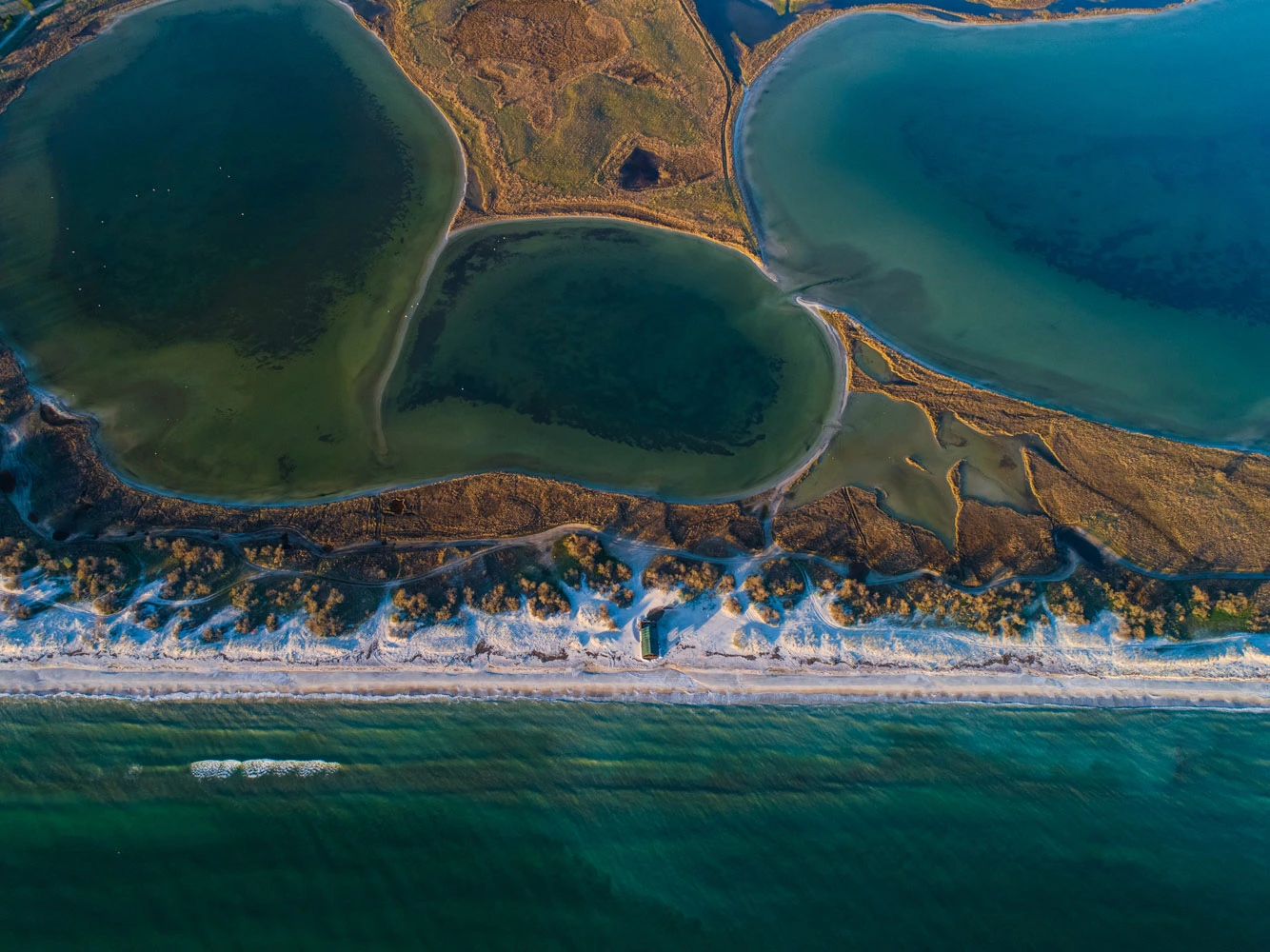
The Kinburn Spit. Aerial view.
Photo: Pavlo Pashko
1.4. Economics
The economic data from the State Statistics Committee for 2021 shows distinct contributions to Ukraine’s GDP by various regions. The Kherson Oblast contributed 1.6% to the national GDP, while the Mykolaiv Oblast contributed 2.3%. The Zaporizhzhia Oblast made a contribution of 4.2%, and the Dnipro Oblast stands out with the largest contribution in Ukraine (after Kyiv), accounting for 10.7% of Ukraine’s total GDP.[43]
The largest sectors of the Kherson Oblast’s economy are agriculture, process manufacturing, and trade.[44] As of 2021, the oblast accounted for over half of Ukraine’s rice production (57.7%), as well as significant proportions of eggplant (39.6%), melons (33.5%), and tomatoes (27.7%).[45] The Mykolaiv Oblast, which is known for its machine industry, agriculture, and food industry,[46] along with the Kherson Oblast, plays an important role in grain cultivation, particularly in the production of wheat and barley.[47]
Zaporizhzhia Oblast is distinguished by its developed machinery manufacturing, metallurgical production, and agriculture. In 2021 the oblast ranked 7th in Ukraine for grain production and contributed 8.3% to the country’s industrial products sold.[48]
The Dnipro Oblast is renowned for heavy industry and possesses over 50% of Ukraine’s total mineral reserves. It produces nearly 1/5 of all industrial products sold in Ukraine and has a significant agricultural sector, contributing about 6% of the nation’s agricultural output as of 2020.[49]
Before the Russian full-scale invasion of Ukraine,3 the cities of Kherson and Mykolaiv served as crucial logistics hubs for grain exports because of their river ports. Plant-based products dominate export volumes from these oblasts,[50] finding markets across Europe, Asia, and Africa.[51] However, ongoing occupation and hostilities have significantly reduced both the cultivated land area and the regions’ capacities to export grain and other agricultural commodities via ships. This has led to a notable increase in the cost of exports.[52]
All of these oblasts are characterized by arid climates, so they rely heavily on irrigation systems for agriculture. These systems primarily source water from the Dnipro River, which underscores the region’s strong dependence on the river’s quality and purity. Moreover, the Dnipro River provides drinking water to communities across the region, emphasizing the critical role of the river in sustaining both agricultural activities and human settlements in these arid areas.
In summary, the Kakhovka Hydroelectric Power Plant and Reservoir were created on historically and culturally rich lands of the Ukrainian South. After their construction, the region’s ecosystem, agriculture, and economy became greatly dependent on them. These infrastructures were integral to the region’s identity and livelihoods, shaping its development trajectory and fostering interdependence between human activities and natural resources.
3 Russian full-scale invasion of Ukraine began on February 24, 2022, marking a new phase of Russian-Ukrainian war, which has been ongoing since 2014 when Russia occupied the Crimea peninsula in the south of Ukraine and territories of Donetsk and Luhansk Oblasts in the east.

The House-Museum of Polina Raiko in Oleshky, Kherson Region – a Ukrainian artist known for her works in the genre of naive art. The site was partially destroyed due to flooding caused by the destruction of the Kakhovka Dam.
Source: Ukraїner[53]
II. Unraveling the Truth: The Dam’s Destruction
2.1. How the Kakhovka HPP Came Under Occupation
Russia’s full-scale invasion of Ukraine was partly launched from the Crimean Peninsula, which has been occupied by Russia since 2014. On the morning of February 24, 2022, columns of Russian military equipment breached Ukrainian checkpoints on the Isthmus of Perekop and the Chongar Peninsula. Russian troops rapidly advanced along the main roads of the Kherson Oblast toward its largest cities. In the afternoon of February 24, the Kherson Regional State Administration reported the presence of occupation forces in all 5 administrative districts of the oblast. Specifically, the regional administration stated that occupation forces had seized control of the Kakhovka Hydroelectric Power Plant (HPP) and the crossing of the North Crimean Canal.[54] On the same day, the Ministry of Energy of Ukraine clarified that at 11:28 AM on February 24, “unknown armed persons entered the territory of the hydroelectric power plant,” and “tanks without insignia” were “stationed on the Dam.”[55]
Open sources contain photo and video evidence of Russian troops at the Kakhovka HPP on the first day of the full-scale invasion.[56] Since then, they have maintained control over the plant as consistently confirmed by sightings and photographs.

Screenshot from a video uploaded to Youtube on February 24, 2022.
Source: @flackelf via Youtube [57]
Since the initial days of the occupation, local residents have reported the establishment of Russian checkpoints near the station.[58] On February 24, the first civilian casualties occurred at one such checkpoint, whereby Russian forces fired at a car with 5 family members inside, including 2 children.[59]
On February 25, 2022, the Ministry of Energy of Ukraine reported that the Kakhovka HPP was operating in regular mode.[60] However, in early September 2022, the Chief Engineer of Ukrhydroenergo, Ukraine’s main hydropower generating company, stated that the plant was operating at only 2/3 of its installed capacity. He also mentioned that there was no direct dispatch communication with the station at the time. Ukrhydroenergo contacted the staff twice a day to coordinate operating modes, which the employees had to coordinate with the occupation forces.[61]
Various sources reported that in late summer or early autumn of 2022, the Russian forces dismissed the Ukrainian staff of the station and replaced them with Russian personnel.[62] Since then, there have been regular reports of the station being mined by the Russian military. In particular, the Main Directorate of Intelligence of the Ministry of Defense of Ukraine reported that the occupation forces had mined the Kakhovka HPP back in April 2022, and, in October 2022, they began mining the floodgates and supports.[63] At the same time, researchers at the Institute for the Study of War identified it as highly probable that Russia was preparing for an attack on the Kakhovka Dam under a false flag to undermine the Dam after they withdrew from Western Kherson Oblast.[64]
In November 2022, the Russian military was forced to retreat from the right bank of the Dnipro River; however, they maintained control over the Kakhovka HPP. Numerous pieces of evidence from open sources confirm the presence of Russia’s 205th Separate Motor Rifle Brigade at the station. For instance, in December 2022, a video report was released detailing the brigade’s activities on the Kakhovka HPP.[65]
The 205th brigade’s involvement in the full-scale invasion of Ukraine dates to at least February 2022, as per available records. Prior to assuming positions at and around the Kakhovka HPP in 2022, this brigade was engaged in combat near Snihurivka in the Mykolaiv Region (approximately 50 kilometers from the Dam).[66] However, evidence from open sources suggests that members of the brigade have been participating in the conflict since as early as 2014.[67]
2.2. Versions: What Happened to the Kakhovka Dam on June 6, 2023
On the night of June 6, reports of the Kakhovka HPP Dam’s destruction surfaced on Russian Telegram channels. These reports swiftly gained attention from Ukrainian and international media. On the morning of June 6, Ukrainian authorities officially declared the complete destruction of the Kakhovka HPP Dam, immediately stating that its restoration was deemed impossible.[68]
The international community’s reaction was significantly influenced by the uncertainties associated with the fog of war and the immediate difficulties in determining the reality and extent of the incident and establishing responsibilities. Initial reactions of international organizations, media actors, and foreign leaders were, therefore, mostly restrained in their comments about the incident.[69] This cautious approach did not extend to the parties involved in the conflict and their closest allies, who promptly exchanged mutual accusations regarding the destruction of the Dam.
Meanwhile, Ukrainian territories downstream of the Dnipro River were being flooded by the water released from the Kakhovka Reservoir due to the Dam’s destruction. By the evening of June 7, local authorities reported that 1,802 buildings in Kherson – the largest settlement in the water’s path – had been flooded.[70] Subsequent updates on the morning of June 8 revealed that 600 km2 of the Kherson Oblast had been inundated, with 32% of the affected area located on the right bank and 68% on the left bank of Dnipro River.[71]
The destruction of the Kakhovka Dam was undoubtedly one of the most notable events of the Russian-Ukrainian war. Attempts to establish or conceal the truth about what exactly caused its destruction have resulted in 3 hypotheses:
- The Kakhovka Dam was destroyed due to wear and tear;
- The Kakhovka Dam was destroyed because of shelling by the Ukrainian side;
- The Kakhovka Dam was blown up by the Russian side.
2.2.1. The Kakhovka Dam Was Destroyed Due to Wear and Tear
This version was initially proposed by Bellingcat investigator Aric Toler on his X page. However, he promptly removed the post. Simultaneously, a similar thought was expressed by Russian OSINT-investigator Ruslan Leviev, who maintained his opinion.[72]
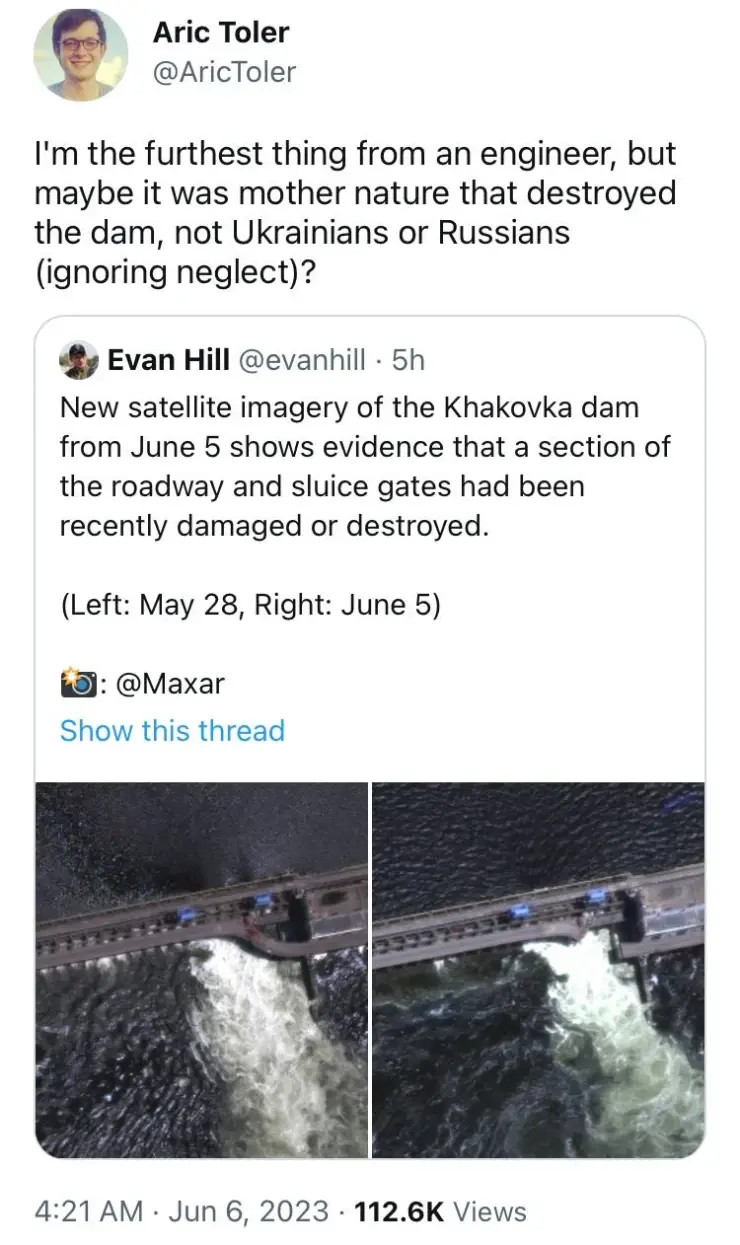
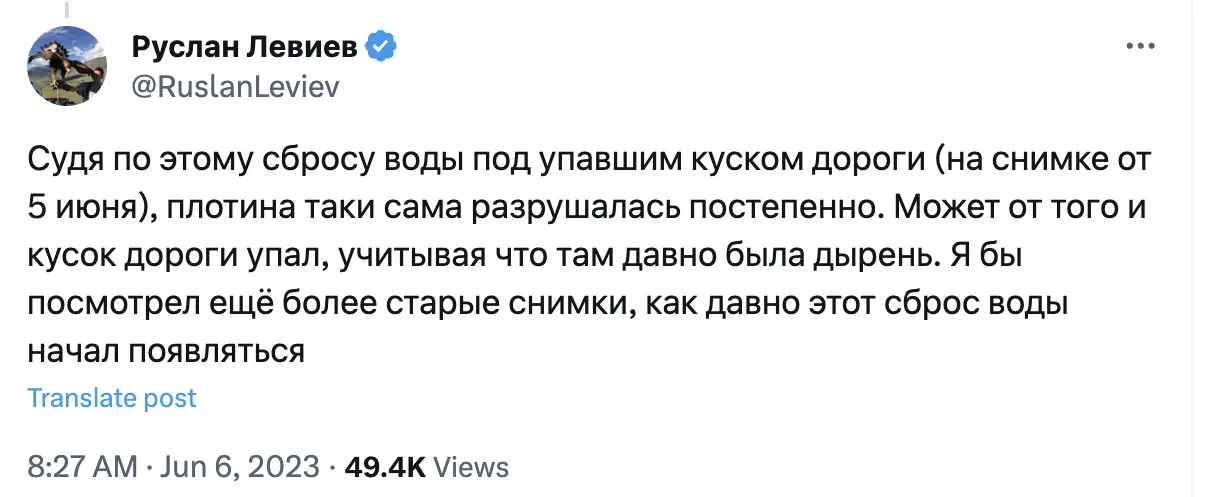
Screenshots of Toler’s and Leviev’s posts on X.
Sources: @AricToler and @RuslanLeviev via X
The version primarily emerged through the comparison of 2 satellite images of the Kakhovka Dam: one taken on May 28, 2023, and the other on June 5, 2023, the day before the explosion.[73] The latter image shows that a section of the road and sluice gates (movable gates allowing water to flow) had been recently damaged or destroyed. At the time of the disaster, the water level in the Kakhovka Reservoir was at an exceptionally high level – 17.26 meters.[74] Satellite images show that water from the Reservoir overtops the sluices. These facts were used as evidence that the Dam could have gradually collapsed under the extreme water pressure.[75]

Kakhovka Dam on May 28, 2023.
Source: @evanhill via X
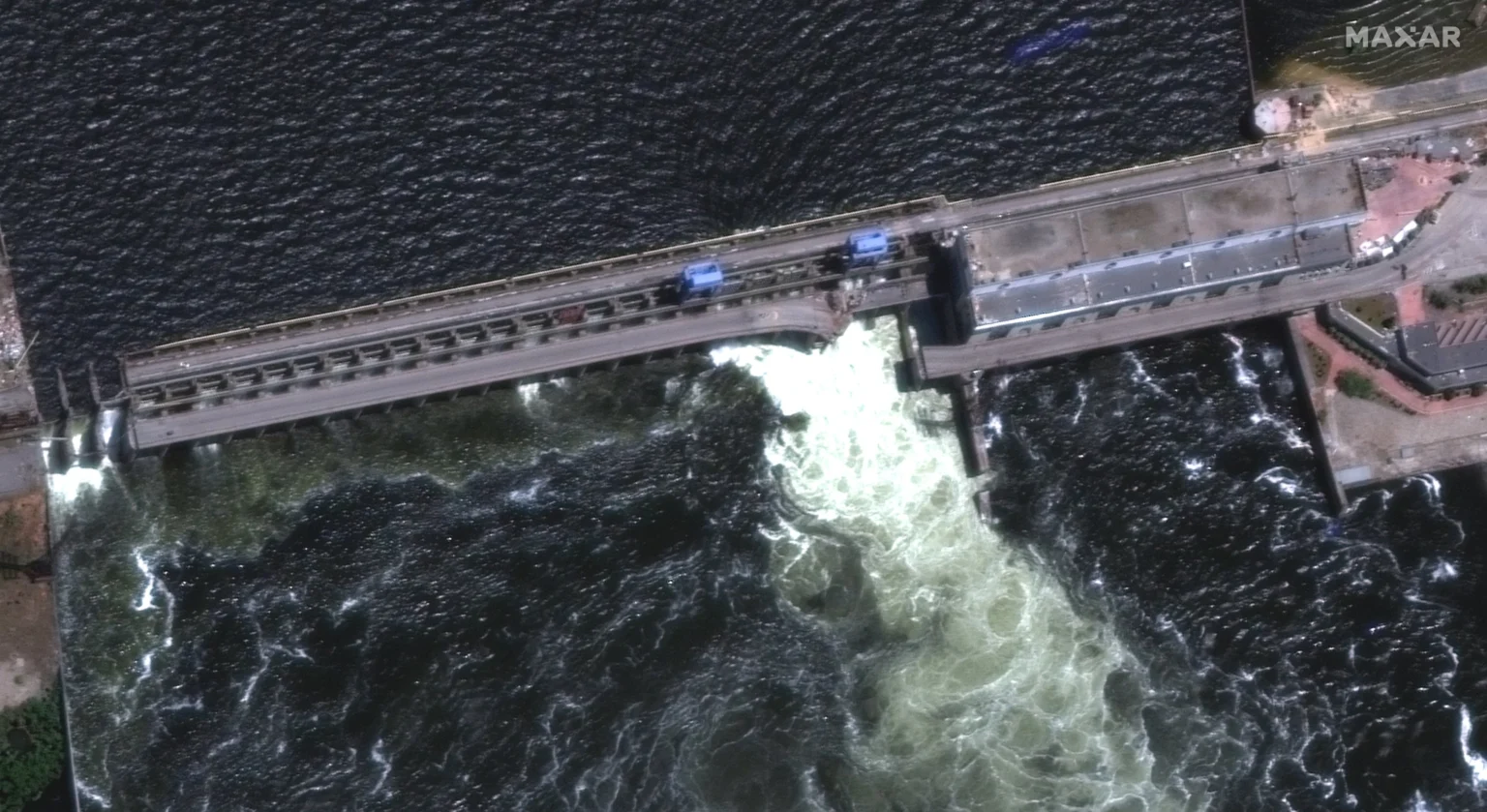
Kakhovka Dam on June 5, 2023.
Source: @evanhill via X
However, this theory overlooks several crucial facts. For instance, the NORSAR seismic stations in Ukraine and Romania recorded focused pulses of energy, which are typical of an explosion. The data reveals clear signals on June 6, 2023, at 2:35 AM and 2:54 AM.[76] Scientists report that the locations of both explosions were determined to be in the area of the Dam, albeit with an uncertainty of about 20-30 kilometers. This uncertainty arises from factors such as the distance from the Dam to the sensors (approximately 500-600 kilometers), the arrangement of sensors used for the location, measurement uncertainties, and unknowns related to the propagation of seismic waves in the Earth.
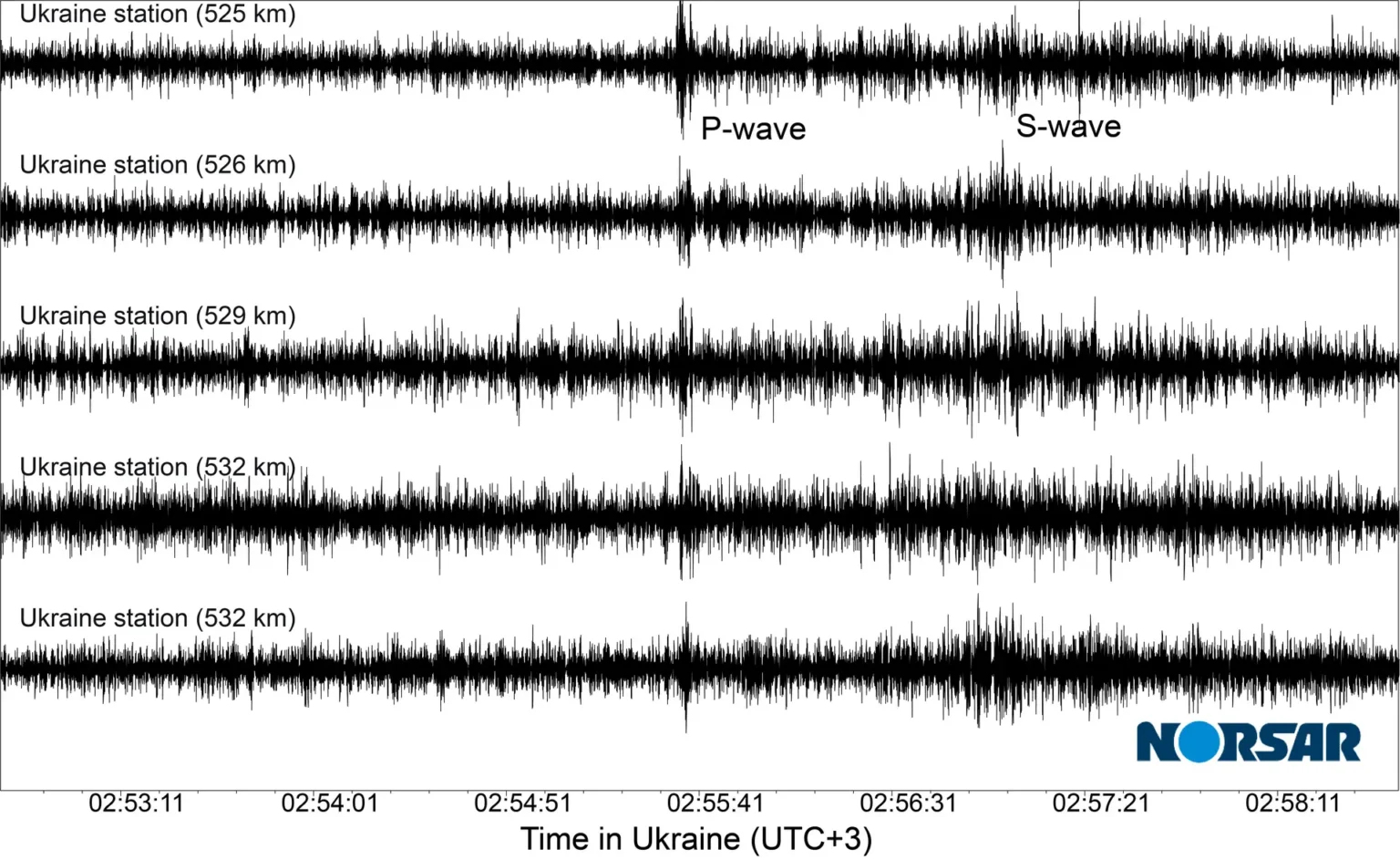
The magnitude estimated between 1 and 2 am on June 6.
Source: Norsar
Data from NORSAR is consistent with what residents reported hearing that night. The New York Times, as well as Ukrainian journalist Oleh Baturin, documented that residents heard at least several blasts around the same time.[77] In particular, Mr. Baturin, who worked in Kakhovka at the beginning of the occupation and spent 9 days in Russian captivity, mentioned that residents of Beryslav (6 kilometers away from the Dam) heard 3 loud explosions from the side of the HPP. There were also reports of explosions in local Telegram chats at around 2:18 AM.[78] Additionally, some Russian propagandists confirmed the time of the first explosion at the HPP as 2:35 AM.[79]
The exact number of explosions at Kakhovka HPP that night cannot be determined from open sources. However, it is evident that there were explosions of varying magnitudes, 2 of which were significant enough to be recorded by seismic sensors. The combination of scientific data and testimonies of residents clearly points toward the destruction of the Kakhovka Dam resulting from a blast.
It has also been reported that USA satellites equipped with infrared sensors detected a heat signature consistent with a major explosion just before the Dam collapsed.[80] No further details regarding this reported observation were disclosed to the public, leaving us without the means to verify the accuracy of this data.
Gregory Baecher, Professor of Engineering at the University of Maryland, pointed out in a commentary to the New York Times that when dams collapse due to substantial water flows “overtopping” them, the failure typically initiates on the earthen sections of the Dam, on either bank.[81] In the case of the Kakhovka Dam, the water breach did not originate from the sides but from the middle part of the Dam, next to the power plant building. This is well-demonstrated in one of the earliest videos of the aftermath of the destruction available on the internet, which also indicates that the power plant building itself was still intact as of 2:46 AM.[82]
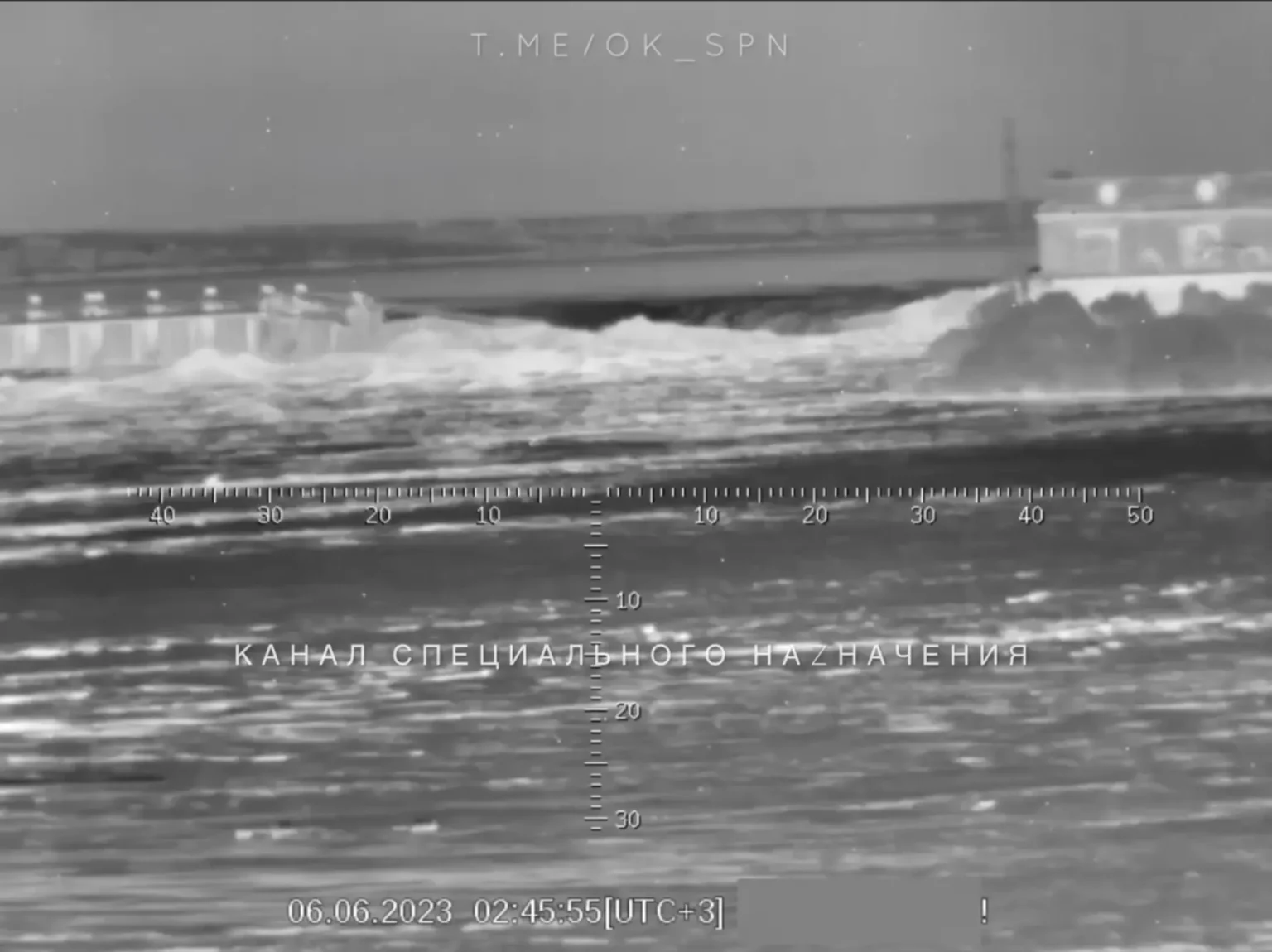

Screenshots from a video recorded by a Russian soldier with a thermal imager.
Source: @okspn via Telegram
The video also depicts the detonation of either an explosive device, which we conclude would have been placed by the Russian military on the Dam, or, more likely, a mine that was washed away by a stream of water. Based on the visual characteristics of the explosion, investigators found no reason to believe that it was caused by a shell or a missile impact. Numerous videos from open sources showcase similar explosions, suggesting that the area around the Kakhovka HPP was heavily mined.[83]
Another video depicting the aftermath of the destruction of the Kakhovka Dam shows the collapse of the hydroelectric power plant building: the central part of the structure is entirely destroyed, and the northern part is severely tilted.[84] This destruction probably occurred due to damage to the building’s foundation caused by the second explosion (2:54 AM).
The exact recording time of this video is unknown but considering that the sun in the video is below the horizon, we can assume that it was recorded at dawn. According to the SunCalc service, the dawn of June 6, 2023, lasted from 4:15 to 4:53 AM.[85] This implies that this video was recorded 90-128 minutes after the one captured with a thermal imager. This timeframe does not appear sufficient for a water flow to have caused such damage to the power plant building. Moreover, if the building had collapsed due to water pressure, the collapse would have been initiated in the northern part of the building, near the site of the first breach, as that is where the water flow would have exerted the greatest pressure on the structure.
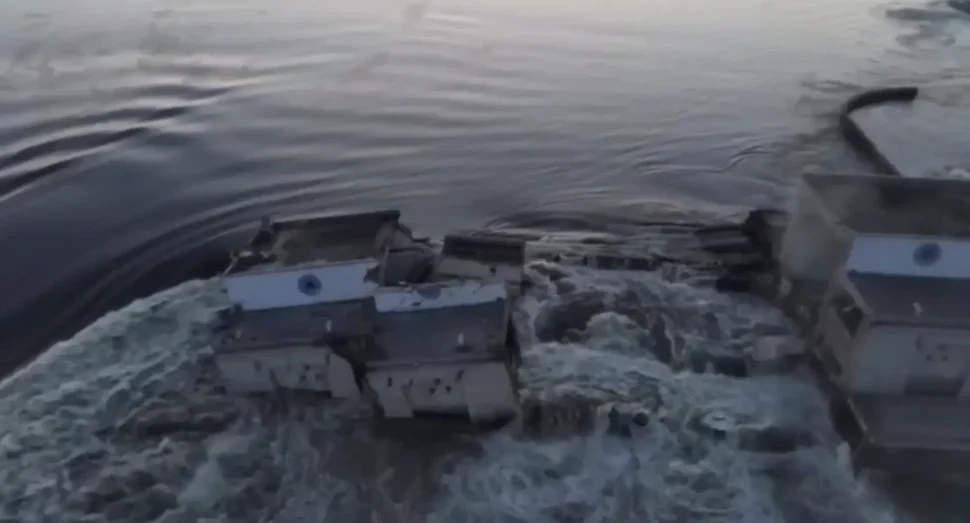
Screenshot from a video of the destruction of the Kakhovka Dam.
Source: @voenacher via Telegram
Screenshot from the same video showing the absence of the sun above the horizon.
Source: @voenacher via Telegram

Sun position on June 6, 2023.
Source: SunCalc
On the evening of June 6, Planet Labs published a satellite image of the Kakhovka HPP, showing that almost the entire territory of the station was already flooded.[86]

Satellite image of the Kakhovka HPP taken on June 6.
Source: @Planet via X
Ukrainian and foreign engineers note that a simple breach of the sluices or even the collapse of a few pillars under water pressure would not result in extensive destruction[87] and flooding.[88] They are convinced that such destruction most likely was caused by charges set deep in the Dam’s structure. The most suitable location for the explosives is a technical passageway running along the concrete base of the Dam. The passageway is accessible only from the engine room, which was under Russian control.[89]
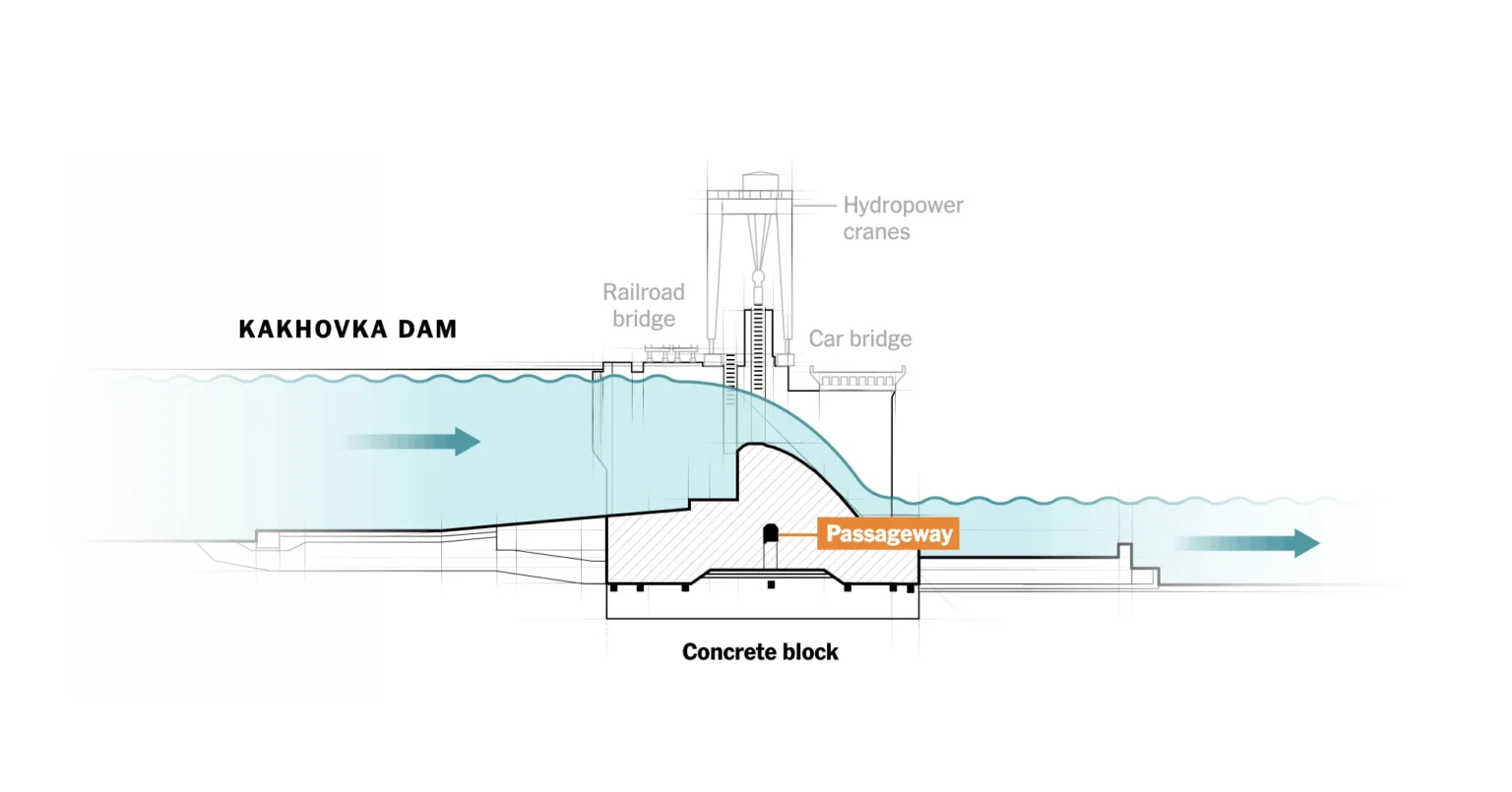
Scheme of the Kakhovka Dam and the location of the passageway.
Source: New York Times
This version is further substantiated by the fact that one of the videos depicting the aftermath reveals the absence of the top of the concrete foundation at the location of the initial breach. Such large-scale destruction could likely have been caused only by an explosion deep within the Dam. If the Dam had simply been breached, only the sluices and pillars would have been affected, leaving the top of the concrete foundation intact.

Source: New York Times
Mykola Kalinin, the Chief Engineer of Ukrhydroproject, the largest engineering company in Ukraine specializing in hydropower and water management construction, stated that the Dam has extraordinary resistance to forces acting on it from the outside, but not from the inside.[90]
The facts analyzed above suggest that the complete destruction of not only the Dam but also the hydroelectric power plant could not have been caused solely by extreme water pressure or natural wear and tear on the structure.
2.2.2. The Kakhovka Dam Was Destroyed Because of Shelling by the Ukrainian Side
This version appeared in Russian sources immediately after the incident. It was asserted by the head of the occupation administration of the city of Nova Kakhovka, Volodymyr Leontiev,[91] the press secretary for Russian President Vladimir Putin, Dmitry Peskov,[92] Permanent Representative of Russia to the United Nations Vasily Nebenzya,[93] and others. The occupation administration of Nova Kakhovka even claimed that the Dam was destroyed as a result of being hit by a rocket launched from Ukrainian MLRS (multiple launch rocket system) Vilkha.[94]
Ukrainian troops attacked the road on the Dam numerous times because it was one of the major Russian logistic arteries connecting the right and left banks of the Dnipro River. These strikes were not intended to destroy the Dam itself, but only to damage the railway and roadway on it. For the same strategic purpose, the Ukrainian Armed Forces consistently targeted the Antonivskyi car and railway bridges, 2 other logistic arteries over the Dnipro River located approximately 50 kilometers southwest of the Dam.[95] This tactic aimed to disrupt Russian capacity to supply its forces on the right bank of the Dnipro River, and it ultimately proved successful.
The first confirmed attack on the Dam occurred on July 18, 2022.[96] On that day, Sergey Kiriyenko, the First Deputy Chief of Staff of the Presidential Administration of Russia, and Volodymyr Saldo, head of the occupation administration of the Kherson Region, were visiting the Kakhovka HPP.[97] The shelling damaged several buildings on the territory of the power plant and the roadway next to the lock. There were also reports of the destruction of the Repellent-1 electronic warfare system.[98] A video confirming the attack was published in open sources on July 30, 2022.[99] The video also shows damage to the road and railways on the power plant’s territory caused by shelling in July. While the main road was not significantly affected, the railway was destroyed. The surface under the tracks collapsed into the lock under the bridge.
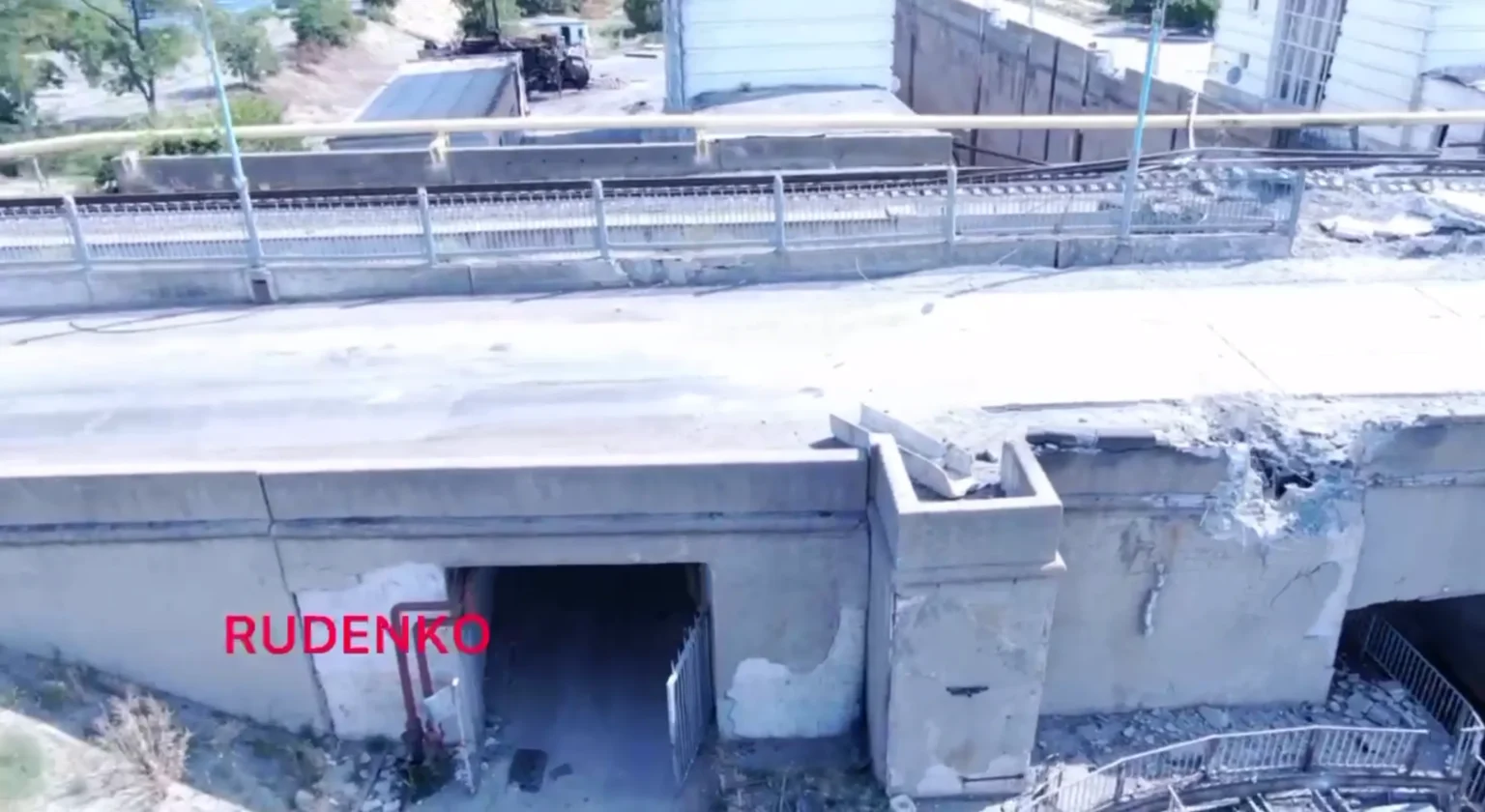
Screenshot from the video showing damage to the road and the railway, as well as destroyed Repellent-1.
Source: @RtrDonetsk via Telegram

Result of the strikes on August 10, 2022.
Source: @supernova_plus via Telegram[102]
According to Russian media reports, in 2022, the Armed Forces of Ukraine attacked Kakhovka Dam 12 times.[103]
By September 2022, the bridges on the Dam were rendered inoperative due to high-precision strikes, making them unusable for logistics.[104] Satellite imagery of the Dam reveals that most attacks targeted the bridges – the sections of the roadway and railway farthest from the sluice gates and the body of the Dam.[105] This fact suggests that the Armed Forces of Ukraine did not intend to destroy the Dam and strategically planned their attacks to minimize widespread destruction. The substantial challenges posed to Russian logistics as a result of these strikes by the Ukrainian Armed Forces are evident from the fact that the occupation forces have constructed temporary alternative bridges.[106]
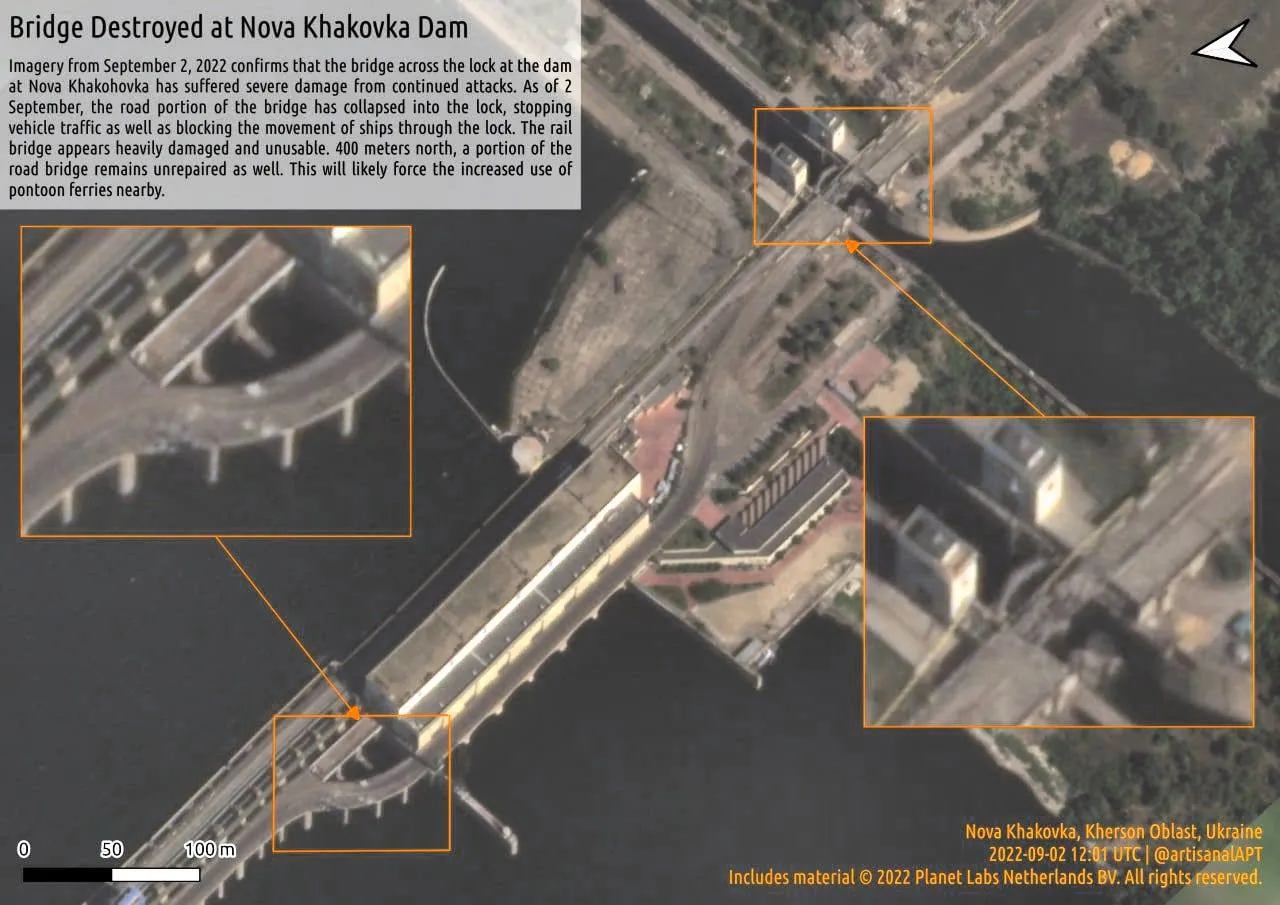
Satellite imagery of the destroyed bridges. Planet imagery from September 2, 2022.
Source: @mil.in.ua
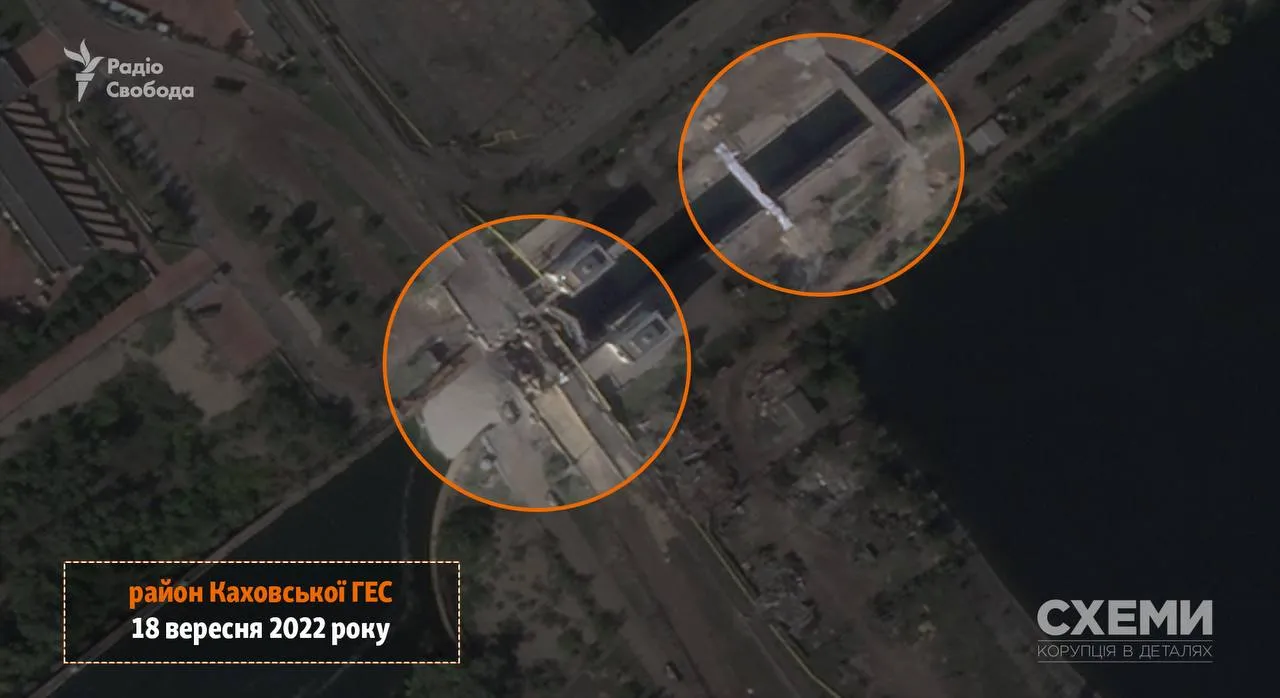
Imagery of the destroyed main bridge and Russian new temporary bridges. Planet imagery from September 18, 2022.
Source: @cxemu via Telegram
Ukraine used 227 mm high-precision rockets M31A1 and M31A2 launched from M142 HIMARS and/or M270 to carry out these attacks. Each munition is equipped with a 200-pound (90.7 kg) unitary warhead.[107] As for the Ukrainian MLRS Vilkha, which the occupation administration claimed was used to destroy the Dam, it launches R624 rockets and their modifications, with warhead weights ranging from 170 to 250 kilograms.[108] It is most likely that such rockets were used to strike the Chongar Bridge in June 2023. The consequences of that strike did not significantly exceed those observed on the Antonivskyi Bridge or the bridge on the Kakhovka Dam, which were shelled with HIMARS.[109] Therefore, it can be concluded that rockets with such a weight range of warheads are incapable of causing even comparable damage to an object such as the Kakhovka Dam. Moreover, the Russian multiple missile attack on the Zaporizhzhia HPP on March 22, 2024, carried out using Kh-101 missiles with a warhead mass of approximately 400 kg,[110] further demonstrates the impossibility of destroying such objects even with the use of conventional missile weaponry. In addition, we found an open-source video in which a Russian soldier filmed the destroyed Kakhovka HPP and claimed that it was not preceded by Ukrainian shelling.[111]
Ihor Syrota, CEO of Ukrhydroenergo, stated back in August 2022 that “both the plant and the Dam were designed to withstand super-powerful missile strikes.”[112] He also pointed out that the Ukrainian armed forces’ strikes on the Dam “could in no way cause a catastrophe at the plant or the Dam.”[113]
Shortly after the explosion on the Kakhovka HPP, several Russian military experts and propagandists expressed similar views. For instance, on June 7, during a broadcast on the Russian federal TV channel “NTV,” so-called military expert Aleksey Leonkov asserted that it is impossible to destroy the Dam with an external strike because it was constructed to withstand even a nuclear war and could only be demolished by strategically placing explosives on the body of the Dam to direct the force of the water against the sluice nodes.[114] He also stated that previous shelling “did not cause any damage” to the Dam.[115]
In October 2022, the Institute for the Study of War reported that Russian forces might conduct a false-flag attack on the Kakhovka HPP in order to prevent or delay Ukrainian advances across the river.[116] Ukrainian President Volodymyr Zelenskyi also warned the international community that Russian troops might blow up the Kakhovka Dam,[117] which had been heavily mined since April 2022.[118]
In November 2022, as Russian forces were retreating from the right bank of Dnipro River, they blew up 3 sections of the roadway and the railway.[119] A video of the explosion was published in the Russian media outlet “Izvestia” on the morning of November 12.[120]

The moment of explosion on November 12.
Source: @izvestia via Telegram[121]
Later satellite images show that, despite the powerful explosion, the body of the Dam near the site of the blast remained intact; however, the explosion damaged the sluice gates4, which impacted the general functionality and workload of the Dam.[122] On its own, such explosion still could not cause the collapse of the whole Dam.[123] This fact convincingly demonstrates the impossibility of critically damaging, especially destroying, the Dam through shelling with MLRS or by planting explosives from outside of the Dam.
4 A sluice gate is a mechanical movable gate used to control water level and flow rates in waterways.
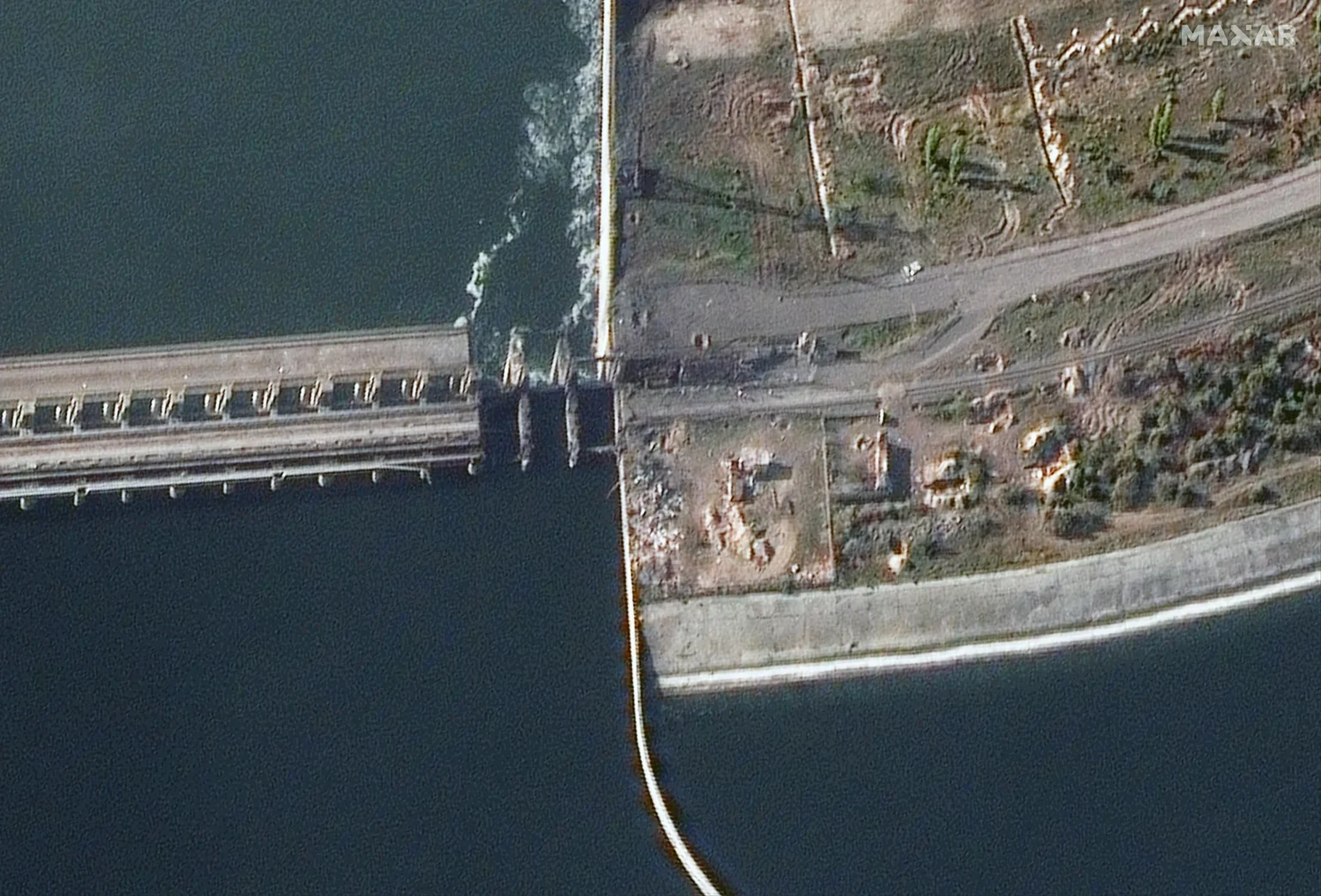
Kakhovka Dam on May 28, 2023.
Source: @Maxar via X
The lack of new visible damages to both the Dam and the surrounding bridges after the de-occupation of the right bank of the Kherson Oblast suggests that Ukrainian forces refrained from further strikes on the Kakhovka Dam, as the objective of such strikes had already been achieved. Additionally, the destruction of a part of the road bridge mentioned in the preceding subsection likely stemmed from significant damage incurred during the summer and autumn shelling. At the same time, strikes were periodically conducted in the vicinity of the Kakhovka HPP because Russian military equipment and positions were situated on and around the plant’s territory.[124] Moreover, the Russian military claimed to have fired from the territory of the Kakhovka HPP, including from tanks.[125]
2.2.3. The Kakhovka Dam Was Blown up by Russian Side
Information at hand strongly suggests that the Kakhovka Dam was blown up by Russian troops. This information includes scientific data available, resident testimonies, and Russian control over the Dam. Moreover, we have already concluded that it would be impossible for such destruction to result from simple wear and tear. We have also excluded the possibility of Ukrainian shelling.
Several elements indicate that the Russian authorities had undertaken steps before, during, and after the destruction to simultaneously plan it and deny any involvement in it.
First, before June 6, on May 30, 2023, the Russian government adopted Resolution No. 873, which states that until January 1, 2028, a technical investigation of accidents at dangerous production facilities and accidents involving hydraulic structures in the territories of the so-called Donetsk Peoples Republic (“DPR”), and Luhansk People Republic (“LPR”), Zaporizhzhia, and Kherson Oblasts, resulting from military actions, sabotage, and terrorist acts, will not be conducted.[126] The adoption of such a document indicates that the Russian political and military leadership may have premeditated an attack on the Kakhovka Dam and created conditions to obstruct any potential future investigation into this incident.
Second, despite this resolution, the Investigative Committee of the Russian Federation announced the opening of a criminal case about an “act of terrorism” consisting of the destruction of the Dam.[127] This is unlikely to be in any way reliable and impartial. For instance, in July 2023, the Investigative Committee reported that they were interviewing employees of the HPP and Russian military personnel who guarded the facility as witnesses.[128] The conclusions of the Russian investigation will, therefore, likely rely on the testimony of military personnel who may have been involved in the Kakhovka Dam’s explosion or who at least may have been instructed to endorse the official narrative.
Third, starting in February 2023, Russian forces began to elevate the water level in the Kakhovka Reservoir.[129] Altimetry data from the French Earth data provider Theia, combined with information from the US Department of Agriculture’s Foreign Agricultural Service, indicated that on May 21, 2023, the water level surged to a 30-year record height of 17.54 meters.[130] This sudden increase in water level may be consistent with an intention to generate a “water bomb” effect, maximizing the water’s flow and resulting damage after the detonation of the Dam. Such examples can be found in military/judicial history, with similar actions undertaken by the Yugoslav People’s Army (“JNA”) in September 1991. They artificially raised the water level of the Reservoir on the Cetina River in Croatia with the intention of detonating the “Peruča” Dam to create a “water bomb” effect. This was aimed at halting the Croatian advance by flooding the town of Sinj and its surrounding areas.[131]
The Russian forces maintained this critical water level from the end of April 2023 until the moment of the Dam’s detonation on June 6, 2023. These actions resulted in flooding the areas in the vicinity of the Dam even before its destruction, including residential areas[132] and Russian coastal positions and fortifications on the left bank of the Dnipro River.[133] While counterintuitive, this could be explained by the pursuit of a long-term plan and the geographical fact that the left bank is lower than the right, with Russian positions established directly on the shoreline.
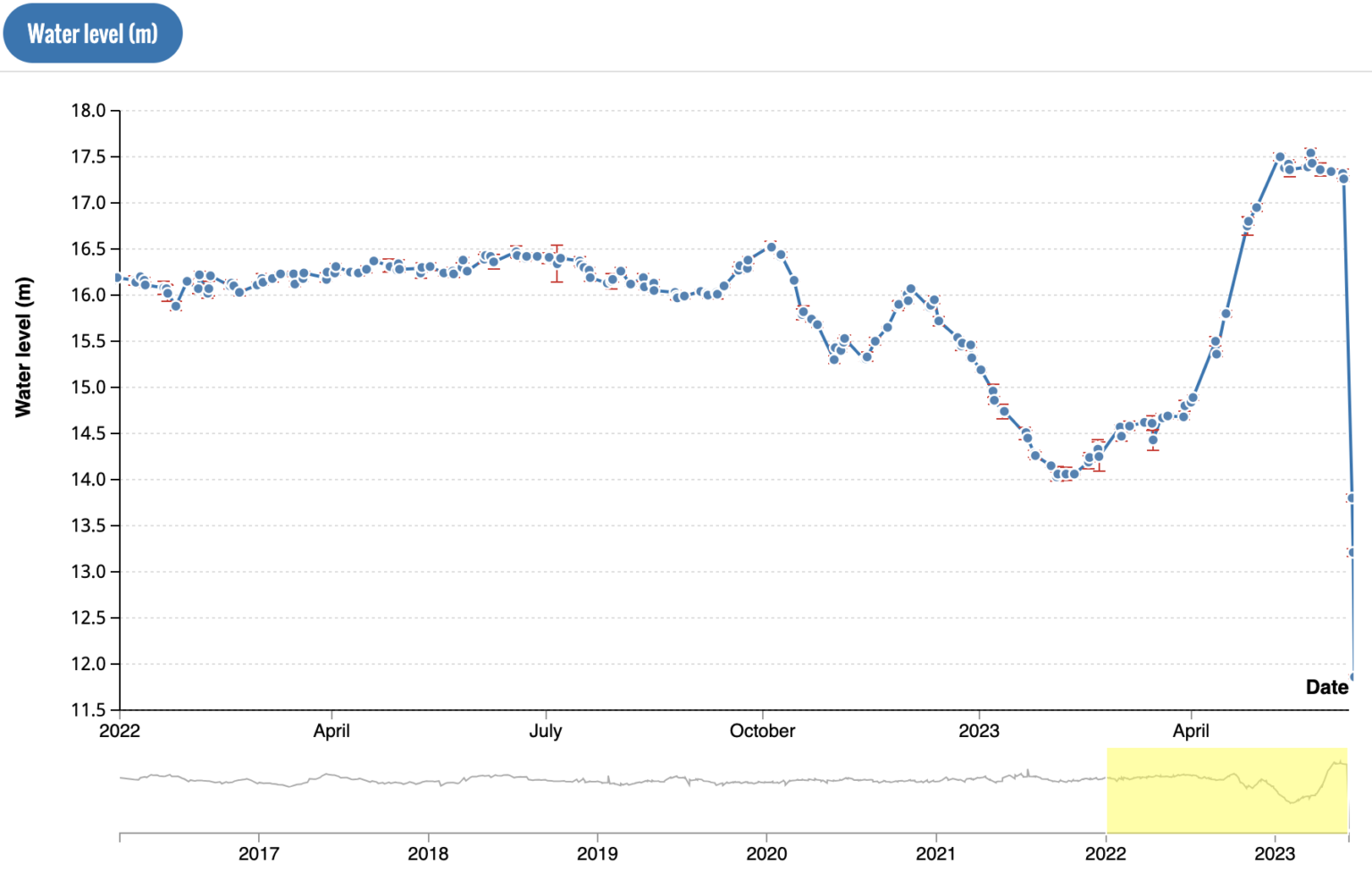
Water level dynamic from December 2022 to July 2023.
Source: Hydroweb[134]

The flooded Russian positions on the left bank of the Dnipro River
Source: Center of Journalistic Studies, May 16, 2023[135]
a) Military units involved and possible perpetrators
Multiple online sources indicate that the 205th Separate Motor Rifle Brigade was responsible for the maintenance and defense of the Kakhovka Dam at the time of its destruction. We have not been able to identify any alternative or contradicting information that would lead us to believe that they are not responsible for the explosion.
Conversely, we have found a video published at the end of November 2022, featuring a Russian journalist interviewing representatives of the 205th Brigade at the Kakhovka HPP.[136] Both the journalist and Russian soldiers explicitly stated that it is the responsibility of the 205th Brigade to defend the Kakhovka HPP. Based on the video, there was no other military unit there at the time.
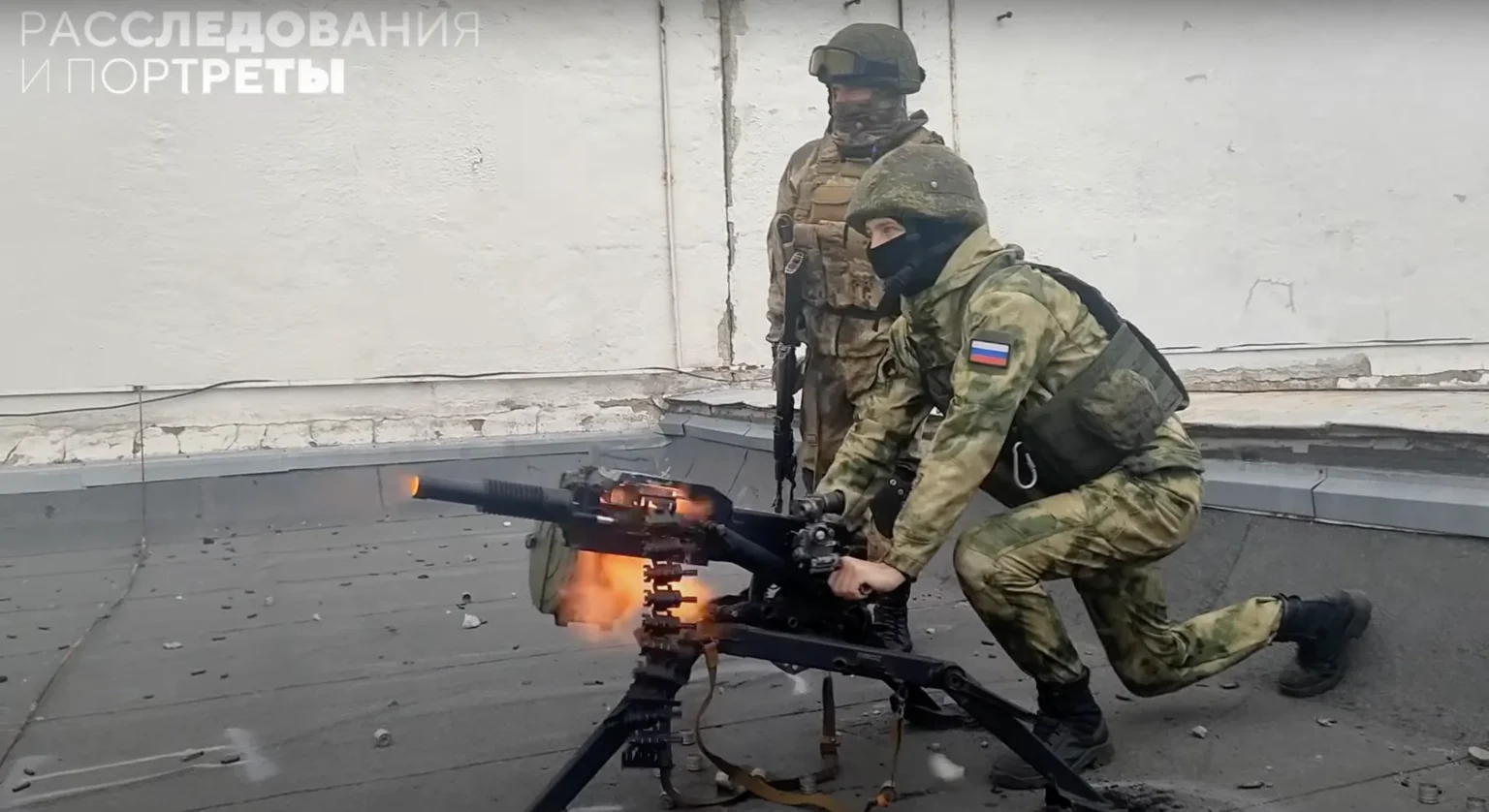
“Exercises” of the Russian soldiers on the roof of one of the Kakhovka HPP’s buildings[137]
Another video, uploaded in December 2022, features Russia’s positions near the Kakhovka Dam and also contains evidence of the 205th Brigade’s control over it.[138]

A writing “205th Brigade” could be noticed on the wall[139]
Subsequently, OSINT monitors tracking the movements of Ukrainian and Russian military units confirmed that the 205th Brigade had been deployed at the Kakhovka HPP. In particular, back in April 2023, OSINT-monitor @JominiW shared information about the deployment of the 205th Brigade in the area of Nova Kakhovka.[140]
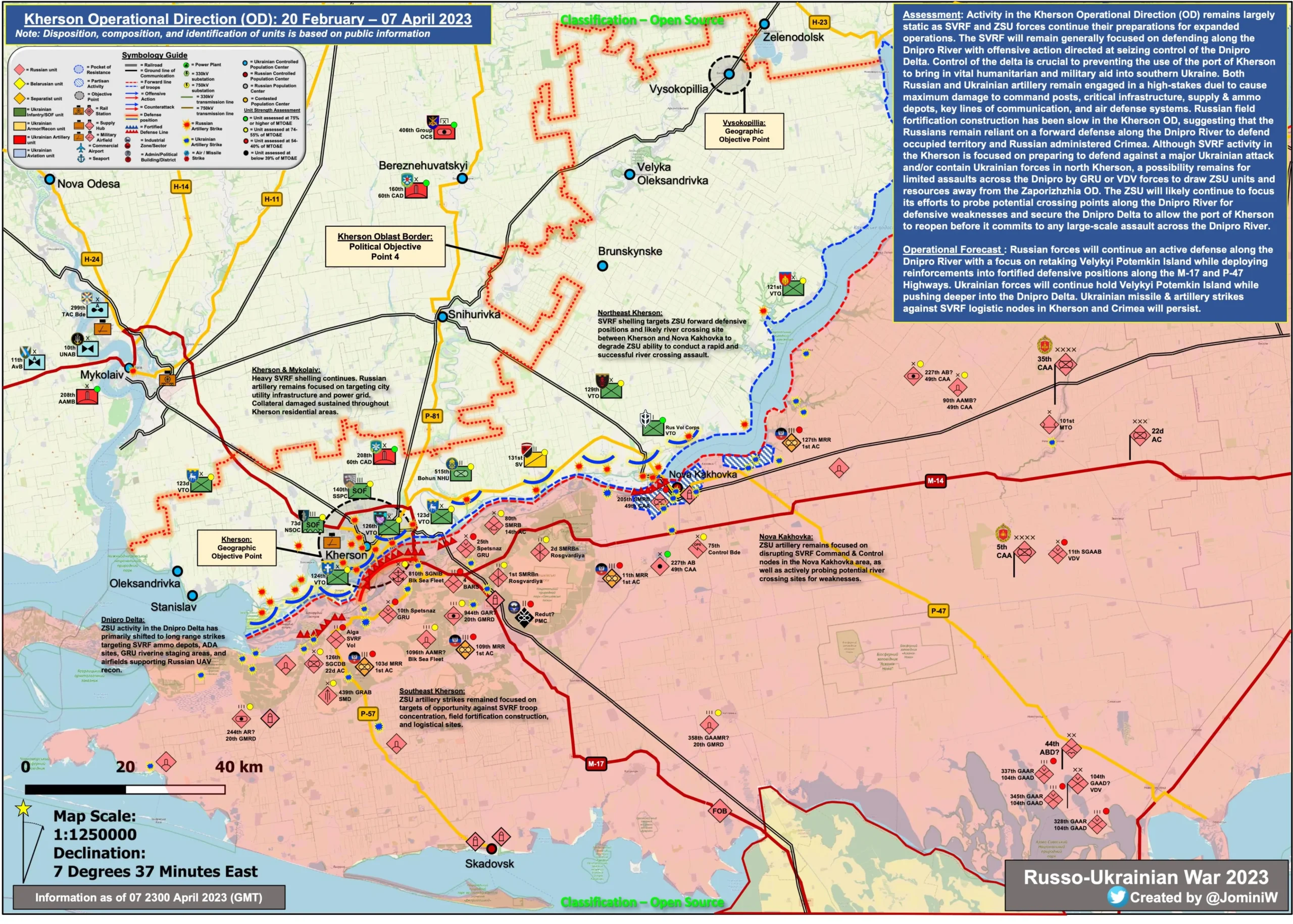
Location of Russian and Ukrainian units throughout February 20–April 7, 2023.
Source: @JominiW via X
The day before the explosion, a French OSINT-monitor, @Pouletvolant3, updated the locations of Russian and Ukrainian units in the Kherson Region. The map he published shows that the area around Nova Kakhovka was still controlled by the 205th Brigade.[141]
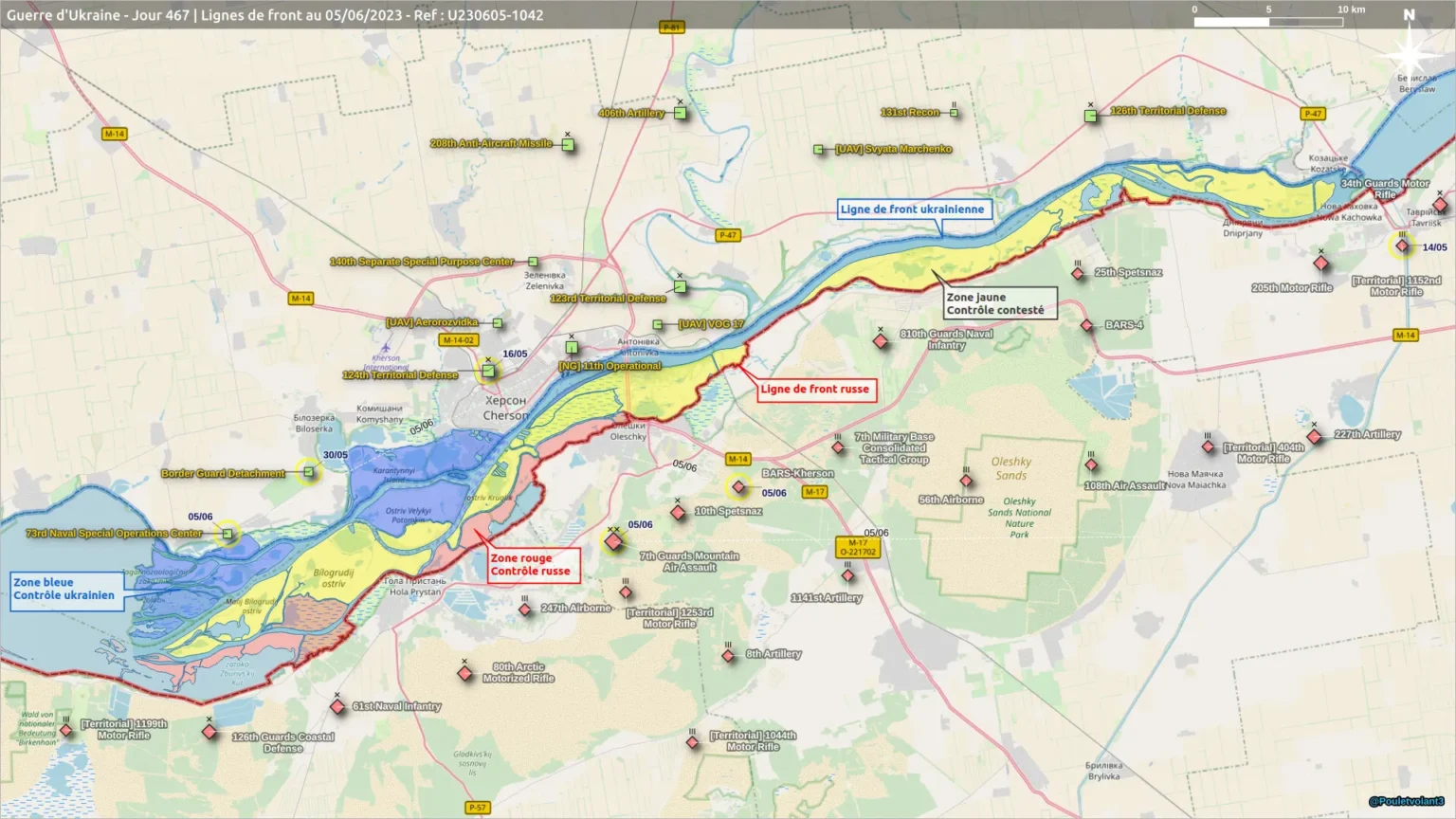
Location of Russian and Ukrainian units on June 5, 2023.
Source: @Pouletvolant3 via X
Ukrainian journalists from “Slidstvo Info” and “Skhemy,” one of the biggest independent investigative news projects in Ukraine, published a fragment of the intercepted conversation between 2 representatives of the 205th Brigade, which was provided to journalists by a Ukrainian military source. (The conversation took place between 2:20 AM and 2:34 AM on June 6.)[142] The context of the conversation suggests that Russian soldiers were preparing to do something “on command” just as the first reports of the explosion appeared. Another intercepted conversation between Russian soldiers has been made public by the Security Service of Ukraine. This conversation occurred a couple of days after the explosion and further indicates that the HPP was detonated by Russian troops.[143]
Journalists from “Slidstvo Info” and “Skhemy” have identified individuals from the 205th Brigade who may have been involved in the Dam’s destruction.[144] According to the documents, Colonel Roman Titov serves as the commander of the 205th Brigade. Journalists also published a list of individuals serving in the engineer-sapper battalion of the 205th Brigade. Additionally, Ukrainian officials have also leveled accusations against the 205th Brigade for their role in the Dam’s destruction.[145]

The list of the engineer-sapper battalion of the 205th Brigade.
Source: Slidstvo.Info
The 205th Separate Motor Rifle Brigade is part of the Russian “Dniepr” group of troops operating in the Kherson Region. At the time, the commander of the “Dniepr” group was Colonel General Makarevich Oleg Leontievich.[146] The web resource “Russian Torturers,” developed with the support of Ukrainian Intelligence, alleges that Makarevich was among those who issued the order to detonate the Kakhovka Dam.[147]

Colonel General Makarevich Oleg Leontievich.
Source: dzen.ru
It is highly unlikely that Makarevich acted alone in deciding and orchestrating the explosion. It is more likely that the operation involved other high-ranking Russian officers among those who planned the full-scale invasion of Ukraine.
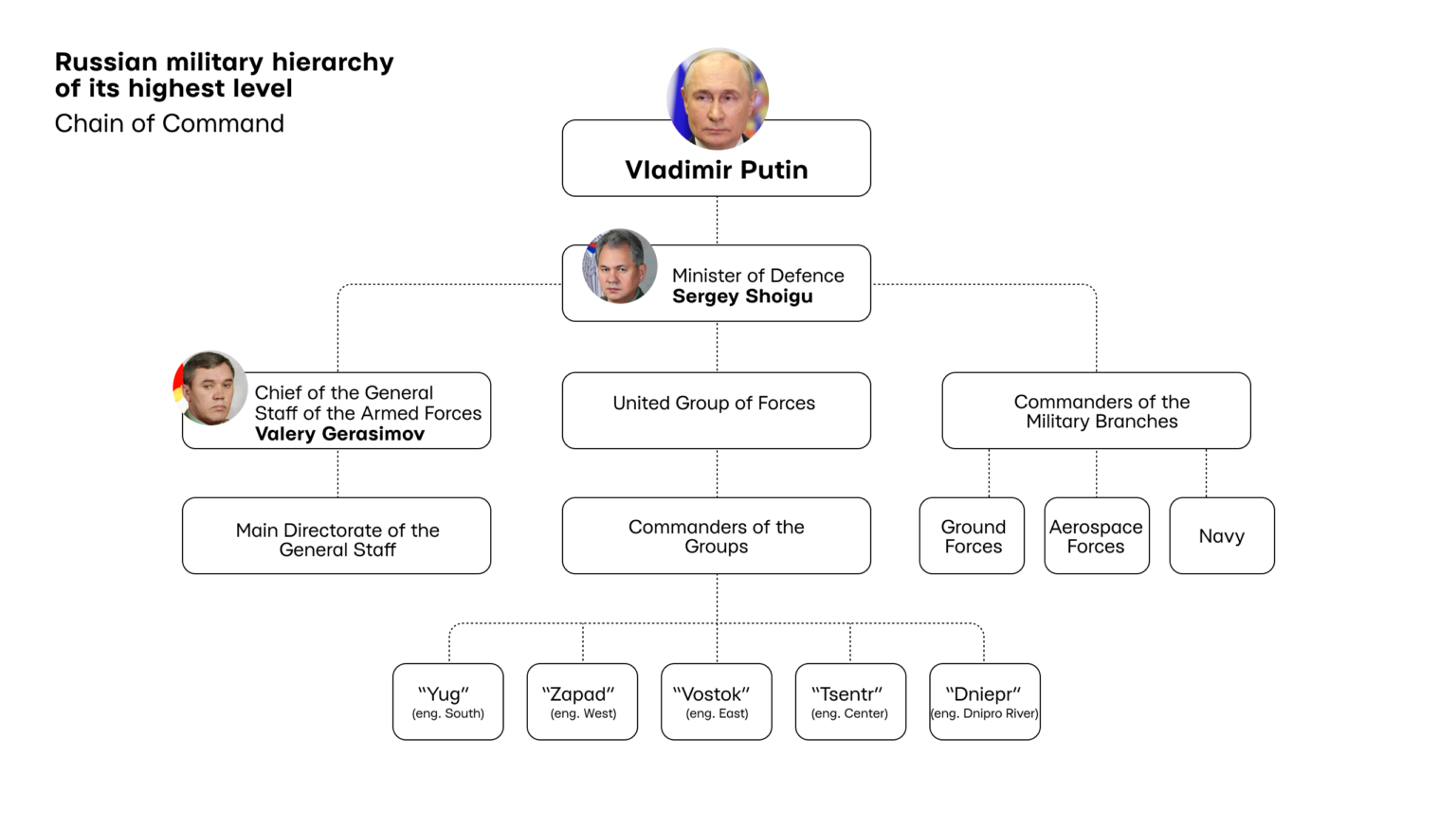
Russian military hierarchy highest level (as of June 6, 2023).
The next person in the military hierarchy is the Minister of Defense. At the time of the explosion, this was Sergei Shoigu.[150] In addition, there is the Chief of the General Staff (at the same time the First Deputy of the Minister of Defense), Valery Gerasimov, who was subordinate to the Minister of Defense[151] at the time of the explosion.
Valery Gerasimov assumed command of the “United Group of Forces in Ukraine” on January 11, 2023.[152] Prior to him, the position was held by Sergey Surovikin from October 8, 2022.[153] The Commander of the United Group of Forces in Ukraine exercises authority over the commanders of groups (“Zapad,” “Tsentr,” “Yug,” “Vostok,” and “Dniepr”).
The members of the “United Group” meetings included high-ranking officials, such as the then Defense Minister Shoigu, his deputies, the then Chief of the General Staff Valery Gerasimov, department heads from the general staff, commanders of the 3 branches of the Russian Armed Forces, and commanders of the already mentioned groups fighting in Ukraine.[154]
In addition to the military hierarchy organigram, the existence of a direct link between Supreme Commander Putin and the Commander of the “Dniepr” group is apparent from Putin’s visit to Henichesk, Kherson Region, the location of the group’s headquarters.[155] He met with commanders there in April 2023, just 2 months before the Kakhovka Dam explosion. This at least demonstrates direct involvement in, and direct knowledge of, group-level military operations in the region during the relevant period.
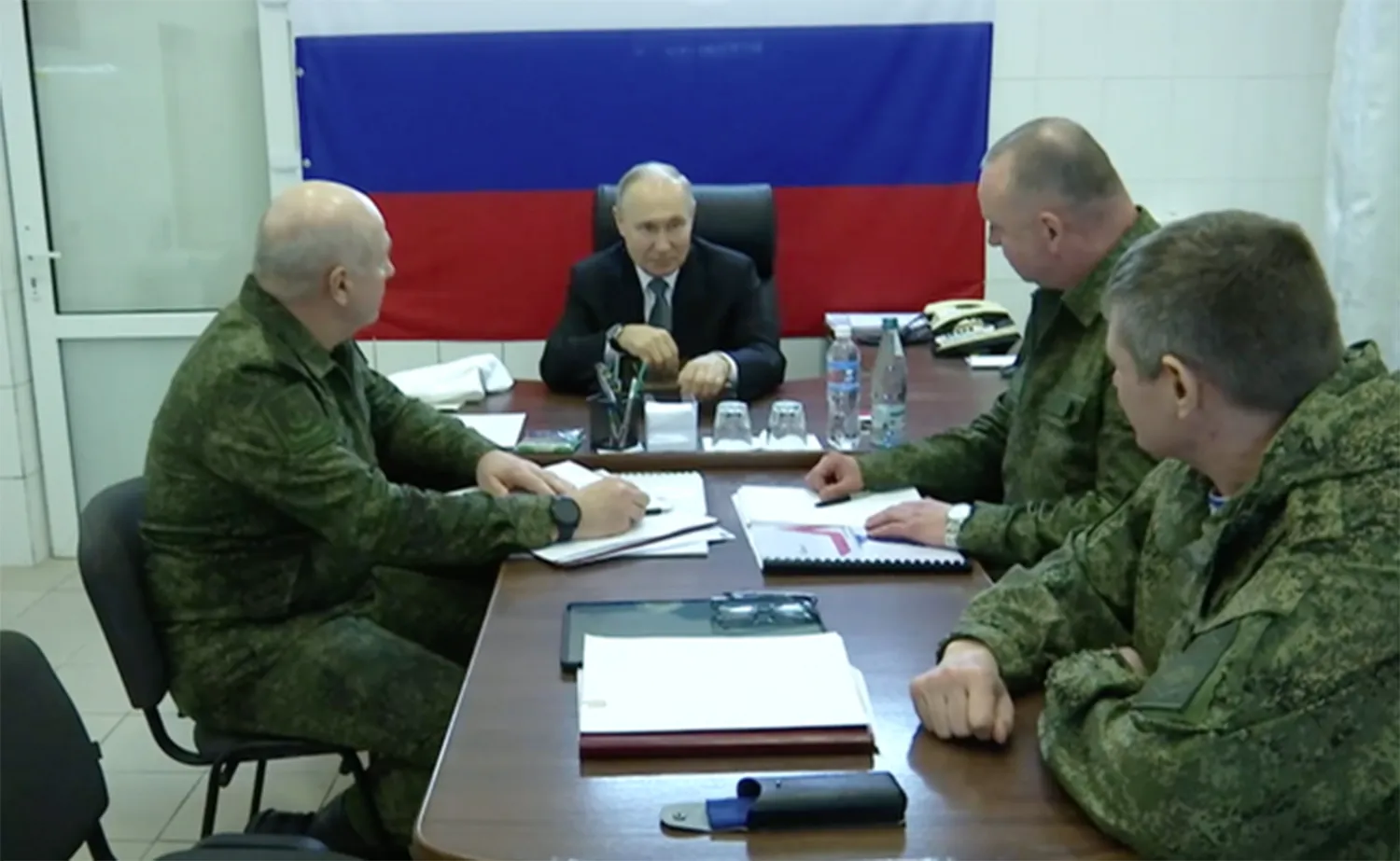
Vladimir Putin during the meeting with the “Dniepr” group commanders (Makarevich on the left), April 2023.
Source: VoTTak[156]

To the left of Putin is Colonel General Mikhail Teplinsky; to the right is Colonel General Oleg Makarevich.
Source: AKIpress News[157]
In light of the structure of the Russian Armed Forces command and of this public meeting with “Dniepr” group commanders just 2 months prior to the explosion, during which the Dam was already mined, there are reasons to believe that Putin may have been aware of plans to destroy the Kakhovka Dam to impede Ukrainian forces. Further, it is worth noting in that context that Article 4 of the Russian Federal Law “About Defense” empowers the Supreme Commander to make decisions regarding the involvement of the Russian Armed Forces and other military formations in carrying out tasks using weapons other than their intended purpose.[158]
On the same basis, it is equally plausible that both Gerasimov and Shoigu were involved in planning the destruction of the Dam. However, based on open-source evidence, it is impossible to determine who ultimately issued the order. Valery Gerasimov, as the Chief of General Staff, was in charge of coordinating the planning of activities for the operational deployment of troops, including in territories Russia considers its own, such as the Kherson Oblast.[159] Shoigu, on the other hand, was exercising control over the Armed Forces through the Russian Ministry of Defense.[160] The extent of Gerasimov’s authority as the commander of the United Group of Forces in Ukraine at that time is unknown, but it is conceivable that he wielded full operational-strategic command over all troops involved in the invasion. Therefore, he would likely be involved in carrying out any orders related to the destruction of the Dam, whether in his capacity as Chief of General Staff or as commander of the United Group of Forces in Ukraine.
The assumption of the involvement of Shoigu and Gerasimov in the Kakhovka HPP blow-up is supported by reports from Russian Telegram channels alleging they ordered the “Dniepr” group commander to defend the left bank of the Kherson Region.[161] This indicates that such decisions are made at least at the level of the Minister of Defense and the Chief of General Staff, while Putin’s visit to Henichesk prior to the explosion suggests his potential awareness of the impending Dam destruction.
In summary, there is a reasonable basis to believe that the destruction of the Kakhovka Hydroelectric Power Plant resulted directly from the detonation of explosives planted by Russian military personnel within the Dam structure. There is no convincing information that would allow one to reasonably entertain alternative scenarios. Furthermore, there exists a strong probability that the order to destroy the power plant originated from representatives of Russia’s highest military-political command.
III. Vehicles of Damage: Flooding and Draining
This Section firstly outlines the 2 main processes that resulted from the Dam breach and led to all the dire consequences, namely (3.1) water movement from the Kakhovka Reservoir; and (3.2) the draining5 of the Reservoir. Next, Section IV will present a study of how the flooding and drying processes have impacted and/or could have impacted people, the environment, the economy and agriculture, and cultural objects.
To assess the maximum extent of flood waters downstream from the Kakhovka Dam breach and the change of the upstream zone, including subsequent drying of the Kakhovka Reservoir, TH and PEJ researchers obtained satellite imagery, open-source intelligence, and data from the Earth Observatory (“EOS Data Analytics”) database.
A detailed explanation of the data and methodology and water movement analysis results can be found in Annex A, attached to this report.
5 Term “draining” is used for the process of water outflow from the Kakhovka Reservoir, while “drainage” refers to the result of the draining of a large area within the Reservoir.
3.1. Water Movement from the Kakhovka Reservoir
The breach of the Kakhovka Dam on June 6, 2023, unleashed a massive inundation across a large territory of Ukraine, affecting both human lives and the environment. This subsection focuses on the flooding resulting from the Kakhovka Dam breach. It encompasses the process of water receding from inundated zones and draining of certain areas. We have divided it into 2 main parts. The first part (3.1.1.) provides a general overview of the extent of water movement from the Kakhovka Reservoir through mapping of the flood zone. It is primarily based on satellite imagery processed by EOS Data Analytics for Truth Hounds and PEJ. The second part (3.1.2.) offers a detailed examination of the water flow. It features high-resolution satellite imagery of specific settlements on both banks and is supplemented by findings from TH and PEJ field researchers and open-source information.

General plan of the entire area of interest with water masks for all available dates, showing water movement for the period from June 5, 2023, to August 29, 2023. The most severe flooding of the area below the Dam is observed in the image from June 9, 2024, then the water gradually recedes. At the same time, a gradual decrease in the water level in the Reservoir is observed.
3.1.1. General Overview of the Water Movement from the Kakhovka Reservoir
Below you can see the mapping of the entire area of interest on a large scale of 1:1,000,000 for different dates: (i) June 5, 2023; (ii) June 9, 2023; (iii) July 5, 2023; and (iv) August 29, 2023. All of the maps are presented in very high (1,200 dpi) resolution, and picture the Kakhovka Hydro Power Plant (HPP), upstream and downstream zones. The city boundaries are also shown to allow for more accurate estimation of the extent of the flooded zone.
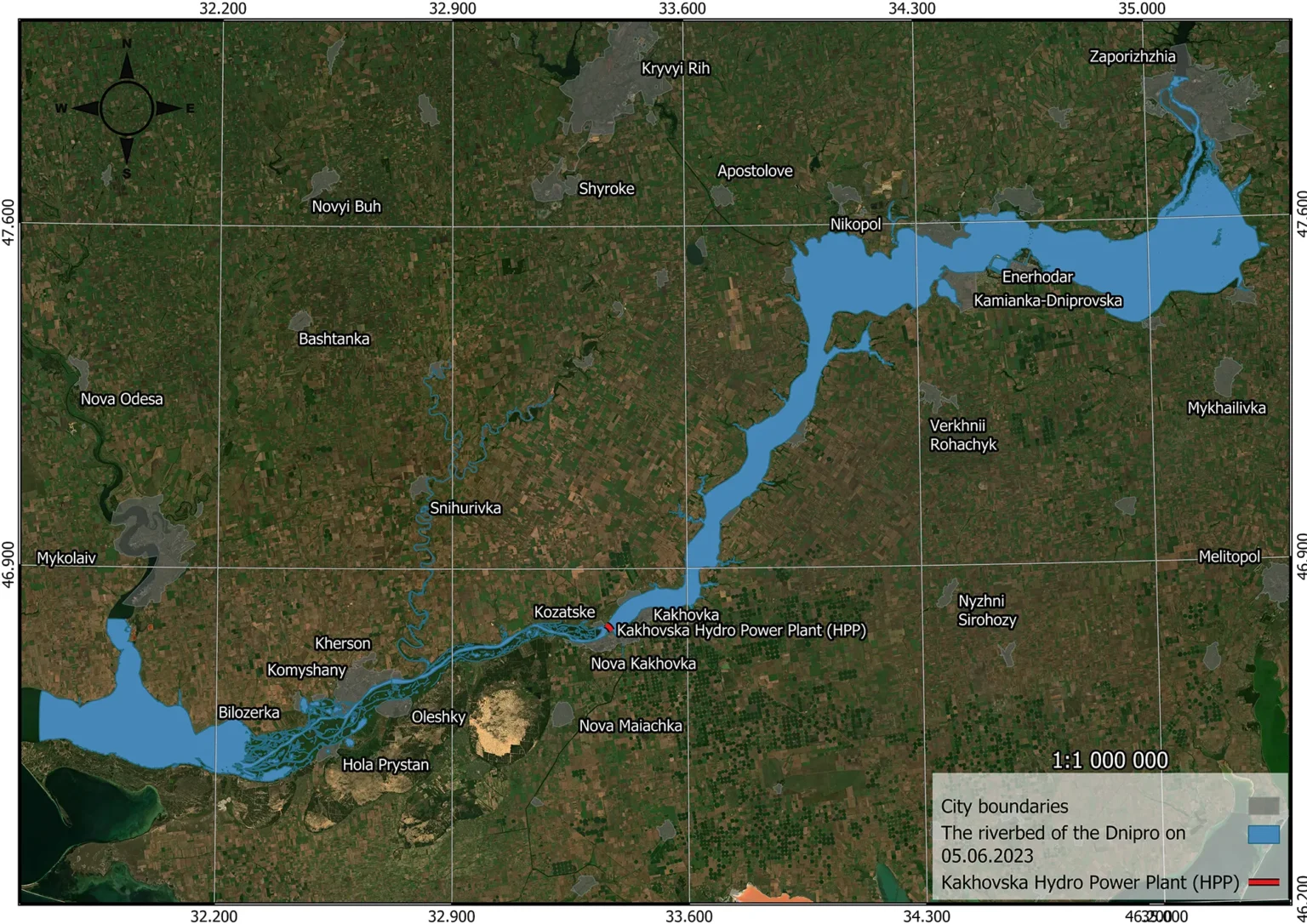
Water mask for the entire territory of interest (geographical scope of water movement analysis) based on the satellite image from June 5, 2023

Difference in water mask for the entire territory of interest (geographical scope of water movement analysis) based on the image from June 9, 2023, the third day after the explosion of the Dam
The difference in water mask (which is a digital layer or dataset that identifies and delineates water bodies such as rivers, lakes, reservoirs, oceans, and wetlands within satellite imagery) for the entire territory of interest above shows that the most significant flooding on both banks of the Dnipro River after the Kakhovka Dam breach took place on June 9, 2023. Notably, substantial flooding was observed in the buffer zone of the Inhulets River, the area downstream of the Dam, and in the area near Kherson and the Oleshky. Additionally, the mapping presented above clearly shows that the area upstream of the destroyed Dam, in Kakhovka Reservoir near Zaporizhzhia, was slowly being drained.
Several assessments of the flooding extent were made on June 9, 2023. The Kherson military administration reported that approximately 600 km² of land had flooded between June 6 and June 9, 2023.[162] The United Nations Satellite Center (UNOSAT), using cumulative satellite imagery, estimated the submerged area to be around 620 km².[163] Similar assessments were jointly made by the UN and the Government of Ukraine,[164] while NASA Harvest reported a slightly smaller flooded terrain of 410-420 km². The joint analysis of PEJ and TH, based on satellite imagery of different types, including optical, radar, and especially high-resolution satellite imagery (see Annex A), revealed that as of June 9, 2023, 405.4 km² of land was flooded due to the Kakhovka Dam breach, equivalent to approximately 56,700 soccer fields.

Difference in water mask for the entire territory of interest (geographical scope of water movement analysis) based on the satellite image from July 5, 2023
The flooding caused by the destruction of the Dam gradually dissipated over the course of June and the following months. The difference in water mask for the entire territory of interest based on satellite imagery from July 5, 2023, demonstrates a substantial drop in water level in the downstream zone from the destroyed Kakhovka Dam, nearly returning to pre-disaster levels. The mapping also shows a considerable decrease in water levels in the upper stream zone, leading to the draining of the Kakhovka Reservoir and Dnipro Riverbed above the Kakhovka Dam.

Difference in water mask for the entire territory of interest (geographical scope of water movement analysis) based on the image from August 29, 2023
The final water mask comparison for the entire area of interest, based on satellite imagery from August 29, 2023, almost 3 months after the disaster, shows a further decrease in water levels both downstream and upstream. However, over 17.8 km² of land remained submerged. Significant drainage is evident in the upstream zone, with the Kakhovka Reservoir and the Dnipro Riverbed notably drained, leaving much of the Reservoir empty.
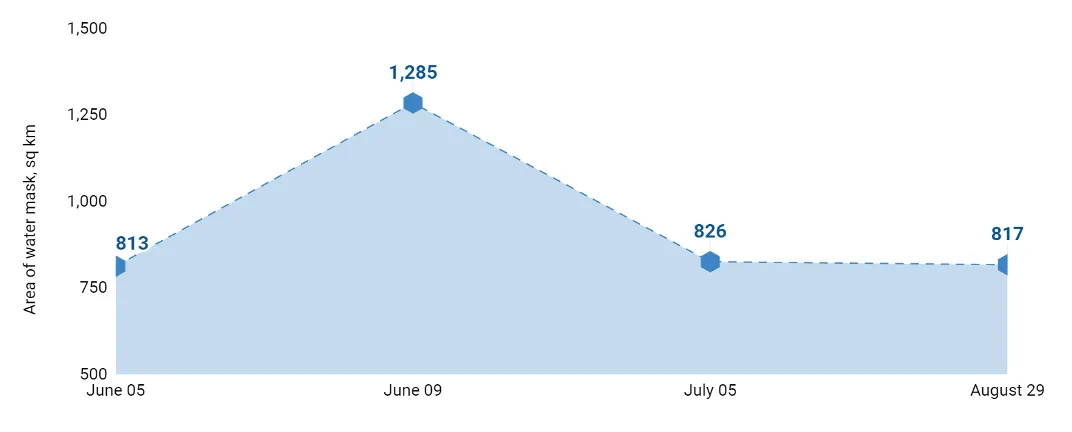
The table below provides information on the total area of water for different dates for analysis of spatial extent (namely, the geographical scope of flood area calculation) and flooding area for different dates (calculated as the difference in water masks for the dates after the explosion and before the explosion).
Date
Sensor
Area of water mask, km2
Diff area of flooding, km2*
June 5, 2023
Sentinel-2
812.8749
0
June 9, 2023
Sentinel-2
1284.9199
+405.4131
July 5, 2023
Sentinel-2
825.7846
+19.8006
August 29, 2023
Sentinel-2
817.048
+17.8368
* Compared to the state before the Dam explosion (image from June 5, 2023)
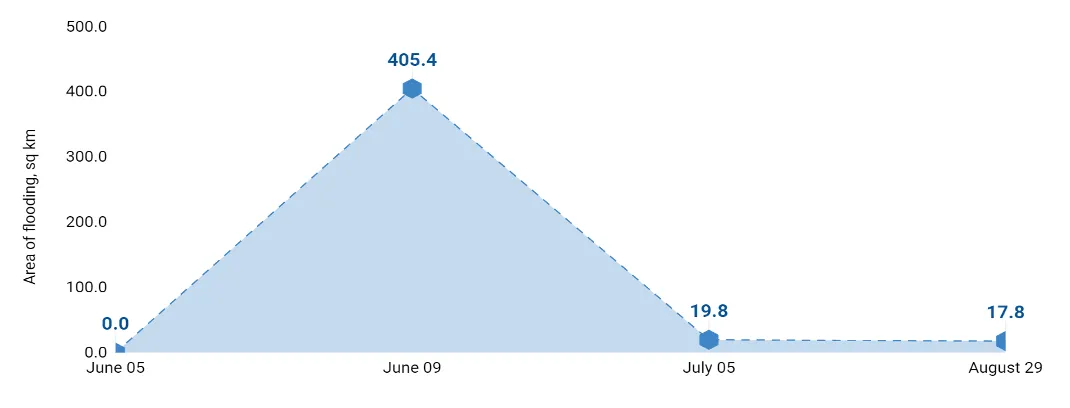
More satellite imagery on the flooding extent can be found in supplementary materials to this report (see Annex A).
3.1.2. Detailed Overview of the Water Movement from the Kakhovka Reservoir
In this part of the report, the water movement from the Kakhovka Reservoir will be analyzed in detail, encompassing (i) the flooding process downstream of the breached Kakhovka Dam; and (ii) receding of the flood water and draining of certain areas both downstream and upstream from the Dam.
Respectively, comprehensive mapping of downstream and upstream zones to the destroyed Kakhovka Dam for different dates: (i) June 5, 2023; (ii) June 9, 2023; (iii) July 5, 2023; and (iv) August 29, 2023, will be included. Also, high-quality and cloud-free high-resolution images of specific locations within the flooded zone will be shown, depicting the extent of the inundation on both banks.

Water mask for the downstream zone (geographical scope of water movement analysis) based on the satellite image from June 5, 2023
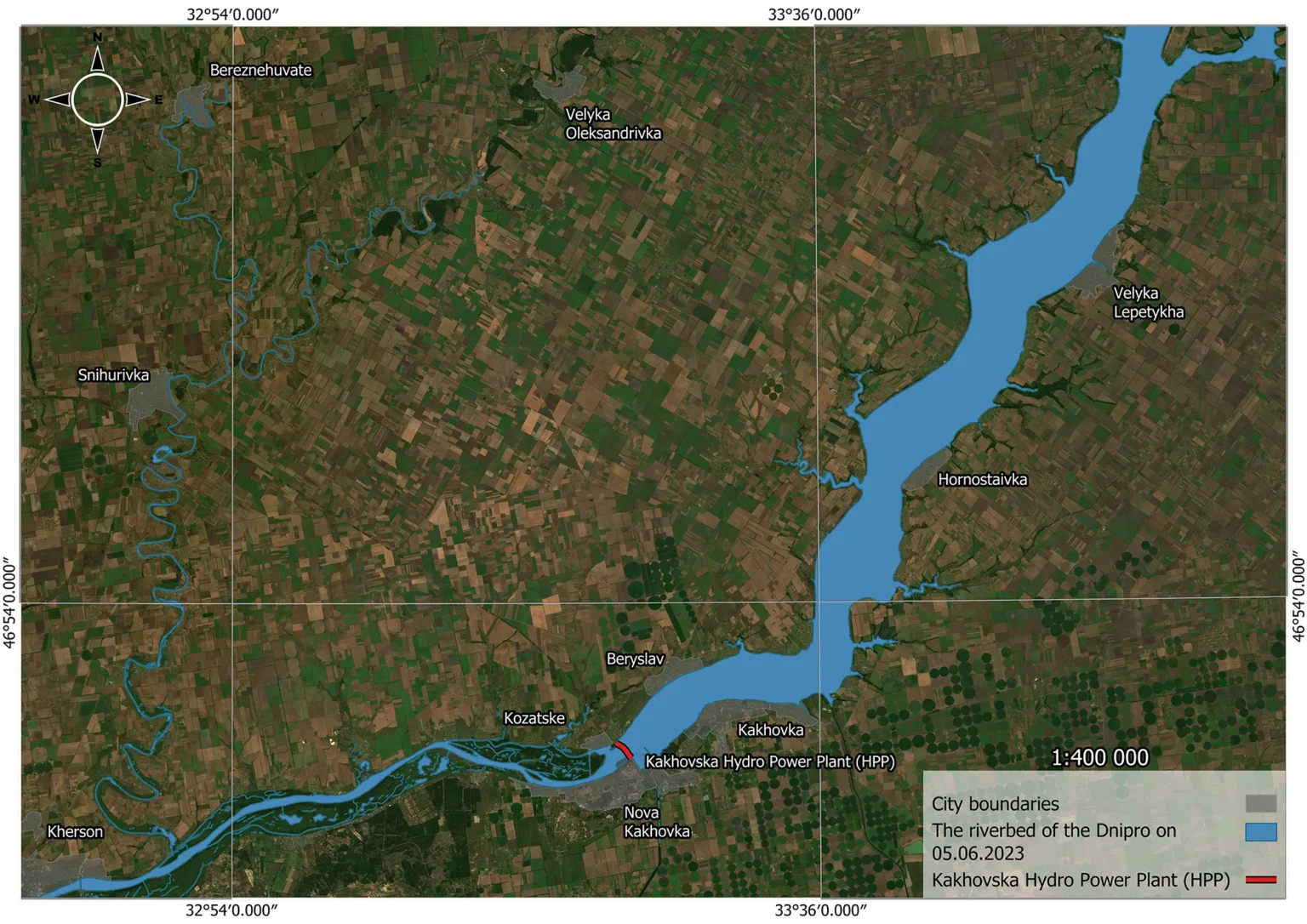
Water mask for the upstream zone (geographical scope of water movement analysis) based on the satellite image from June 5, 2023
a) The flooding process downstream of the breached Kakhovka Dam
The breach of the Kakhovka Dam on June 6, 2023, unleashed a rampant wave of water from the Kakhovka Reservoir downstream into the Low Dnipro River up to the Dnipro-Buh Lyman (estuary), after which some amount of water entered the Black Sea. Due to the rapid burst of water into Dnipro, the water level of the river started rising abruptly, causing the flooding of the settlements along both shores. In particular, by 7:30 AM on June 6, 2023, the Head of the Kherson military administration reported numerous right bank settlements affected by the flowing downstream: Tiahynka, L’vove, and Odradokamianka in Beryslav District; Ivanivka, Mykilske, Tokarivka, Poniativka, and Bilozerka in Kherson District; and the Ostrov neighborhood of Kherson City.[165] By the end of the day, several other areas on the right side of the Dnipro River were inundated, especially the industrial area of Kherson City.
At the same time, the Russian-occupied left bank of Kherson Oblast was far more affected by the water stream. Impacted settlements included, among many, Krynky, Korsunska, Oleshky, and Hola Prystan.[166] The greater impact on the left bank can be explained by the topographic differences between the 2 sides of the Dnipro River since the left bank is much lower than the right bank.[167]
Additionally, the significant water level rise in the lower Dnipro led to the water level increasing in its tributaries, namely the Inhulets and Pivdennyi Buh Rivers. For example, on the first day of the flooding, a water level rise was observed in the Inhulets River near Fedorivka Village (Kherson Oblast), located about 12 kilometers from the mouth of the Inhulets River that flows into the Dnipro approximately 43 kilometers from the breached Dam.
According to an administration of Inhulets River Channels employee,
“On June 6, 2023, [he] received a phone call at approximately 6 AM. [He] learned about the explosion of the Kakhovka HPP. [He] went to work, went to the village with [his] manager, Fedorivka. There, [he and his manager] observed the rise of the water level and took operational analysis of water quality. Already that day after lunch in Fedorivka, the water from Inhulets had spilled and reached the outer gardens of the village.” [168]

General plan with designated areas for which high-quality and cloud-free high-resolution images are available. Some of the zones (locations) are presented in detail below (as an RGB image). Images of all locations are provided in Annex A.

Pre-flooding Geosat image of both banks near L’vove (location 10), resolution 0.75 m
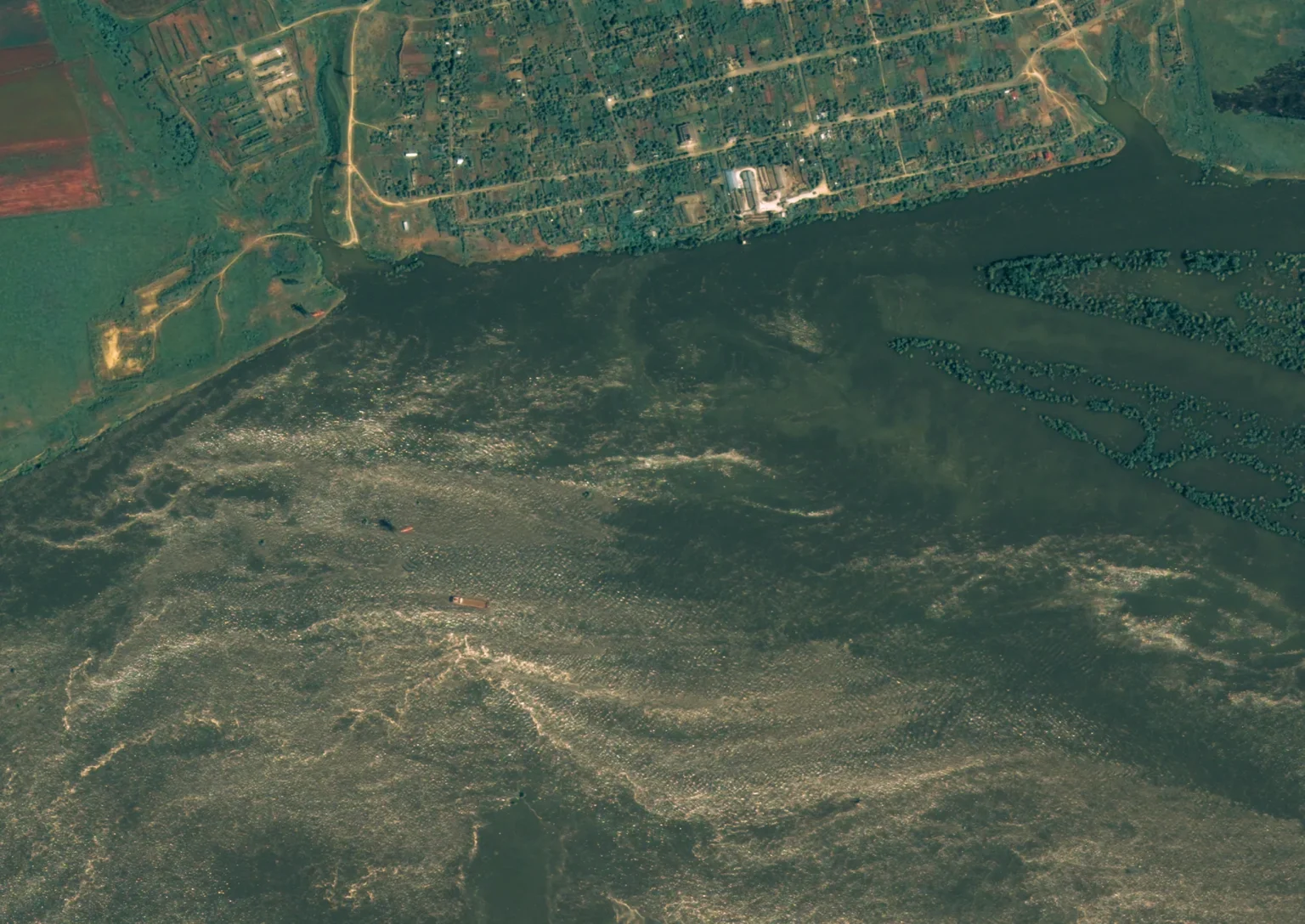
Flooding in both banks near L’vove (location 10), Geosat image from June 6, 2023, resolution 0.75 m
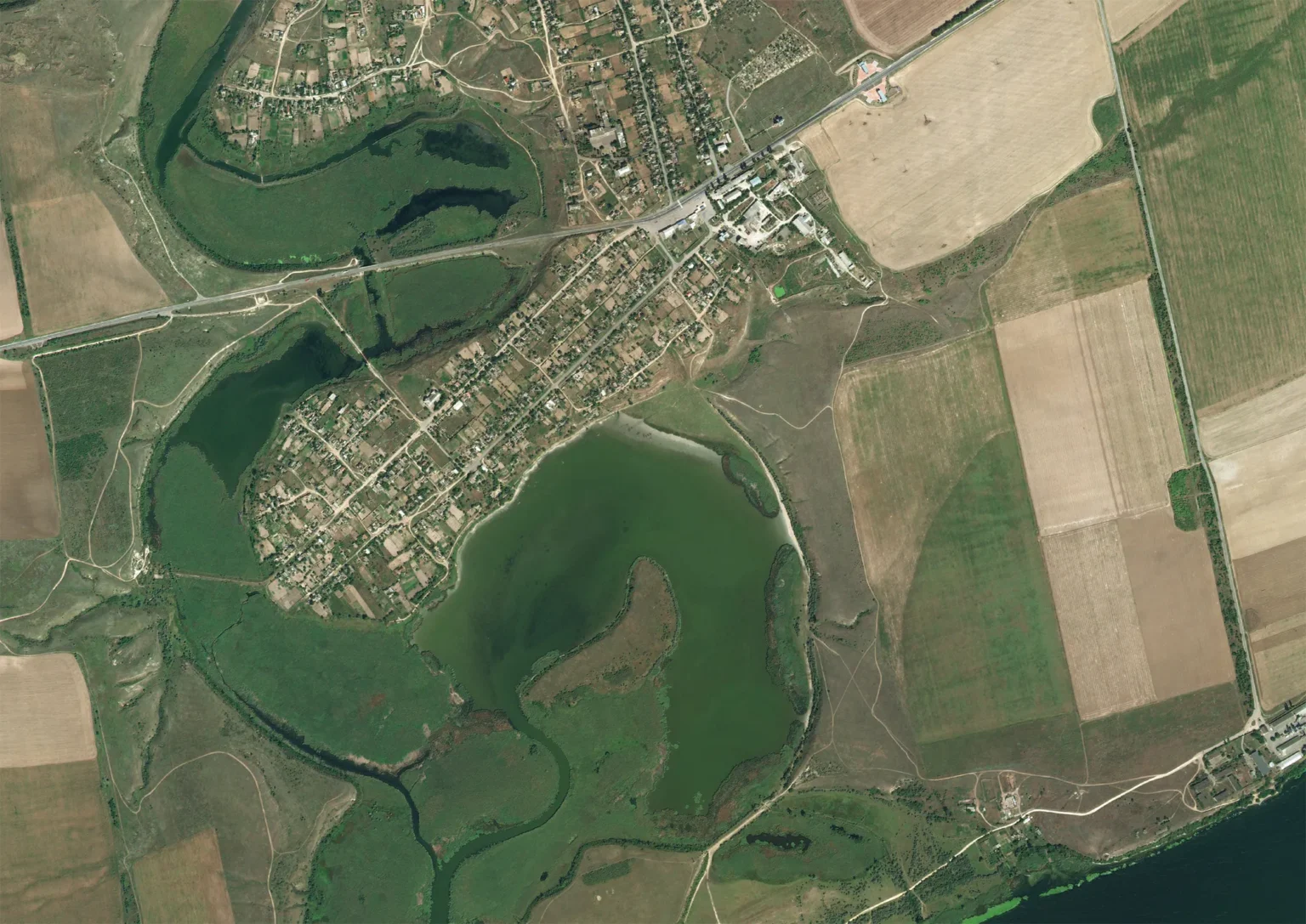
Pre-flooding Geosat image of Tianhynka on right bank of Kherson Oblast (location 7), resolution 0.75 m

Flooding in Tiahynka on the right bank of Kherson Oblast (location 7), Geosat image from June 6, 2023, resolution 0.75 m

Pre-flooding Geosat image of Krynky on the left bank of Kherson Oblast (location 6), resolution 0.75 m

Flooding in Krynky on the left bank of Kherson Oblast (location 6), Geosat image from June 6, 2023, resolution 0.75 m
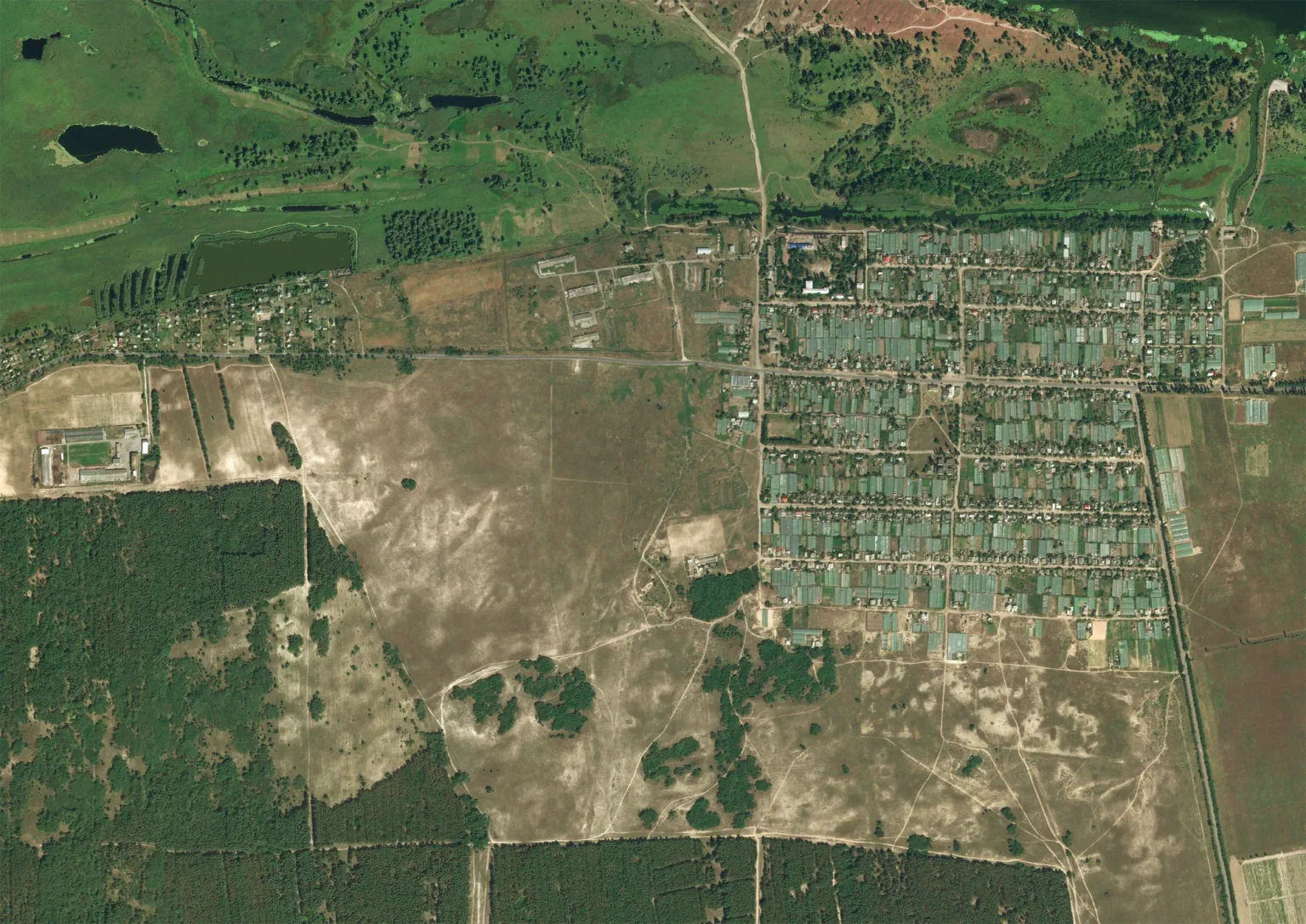
Pre-flooding Geosat image of Korsunska on the left bank of Kherson Oblast (location 9), resolution 0.75 m
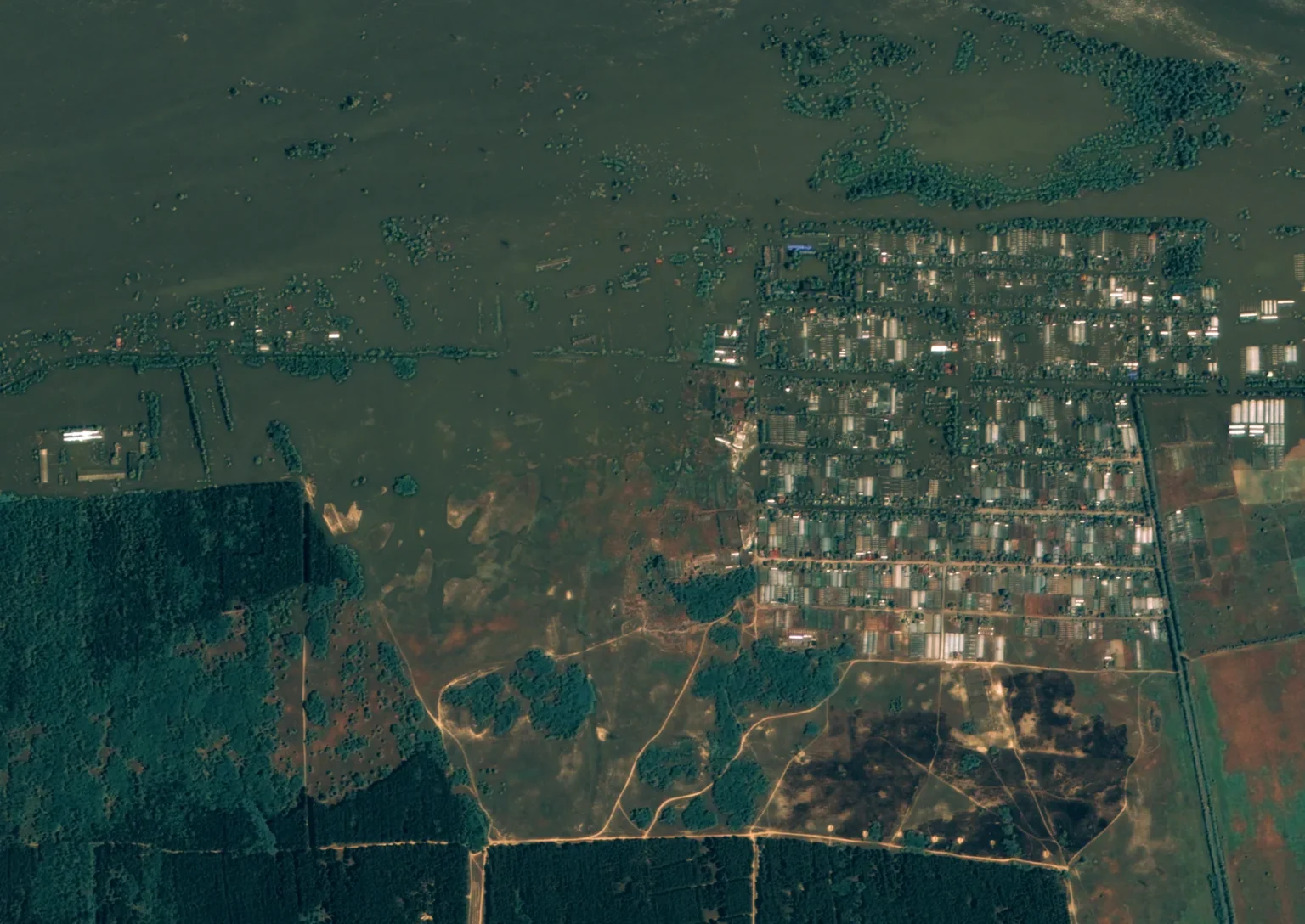
Flooding in Korsunka on the left bank of Kherson Oblast (location 9), Geosat image from June 6, 2023, resolution 0.75 m
By June 7, 2023, up to 51 settlements were affected by the water stream from the Kakhovka Reservoir.[169] In particular, the satellite imagery from June 7, 2023, shows that the water flow reached areas as far as Yelyzavetivka, Hrechanivka on the right bank and Velyka Kardashynka and Kokhany on the left bank of the Kherson Region.[170]
Moreover, a resident of Novovasylivka who was interviewed by PEJ and TH reported that as early as June 7, 2023, the flowing water reached Novovasylivka, which is situated upstream from Yelyzavetivka and is 35,000 meters from the mouth of the Inhulets River:
The UNOSAT added that on June 7, 2023, around 20% of Kherson City was flooded,[172] which is supported by the cloud-free high-resolution satellite imagery EOS Data Analytics processed for TH and PEJ (see below) as well as open-source imagery. Additional satellite imagery of the inundated settlements on the left bank of the Kherson Region is provided below, featuring Hola Prystan and Oleshky.
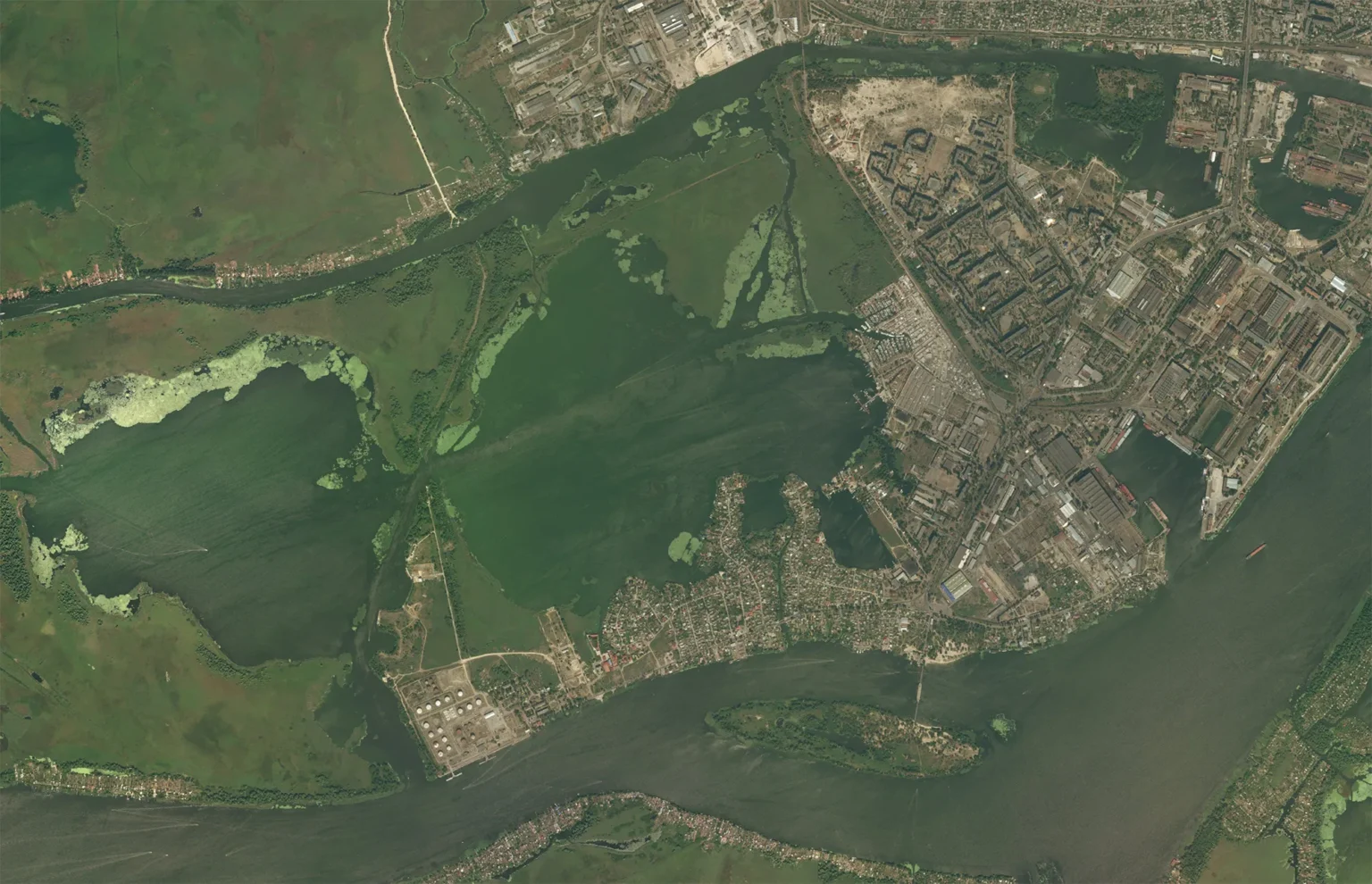
Pre-flooding Geosat image of Kherson Port area (location 2), resolution 0.75 m
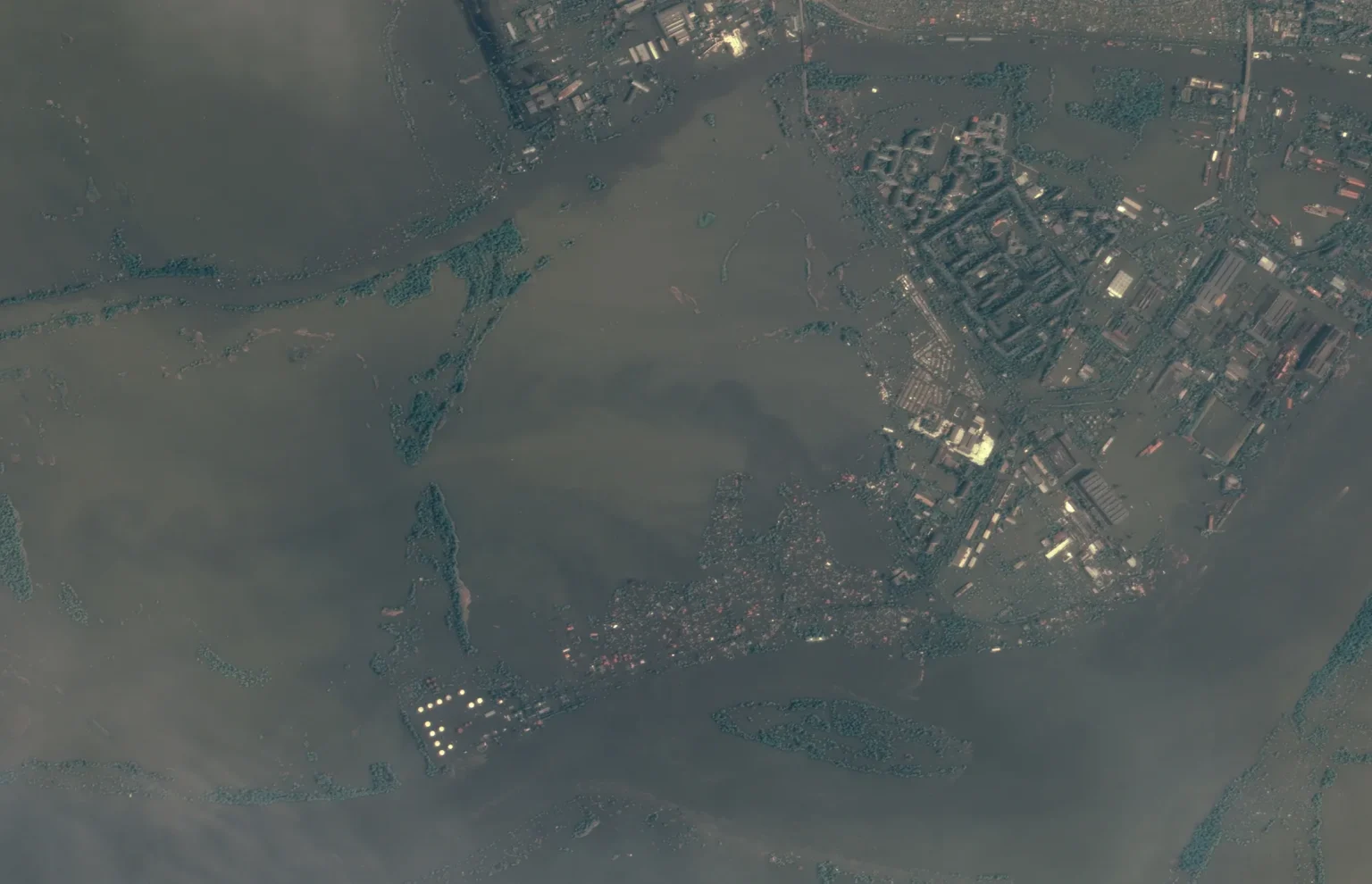
Flooding in Kherson Port area (location 2), Geosat image from June 7, 2023, resolution 0.75 m

Pre-flooding Geosat image of Kherson Port area (location 3), resolution 0.75 m
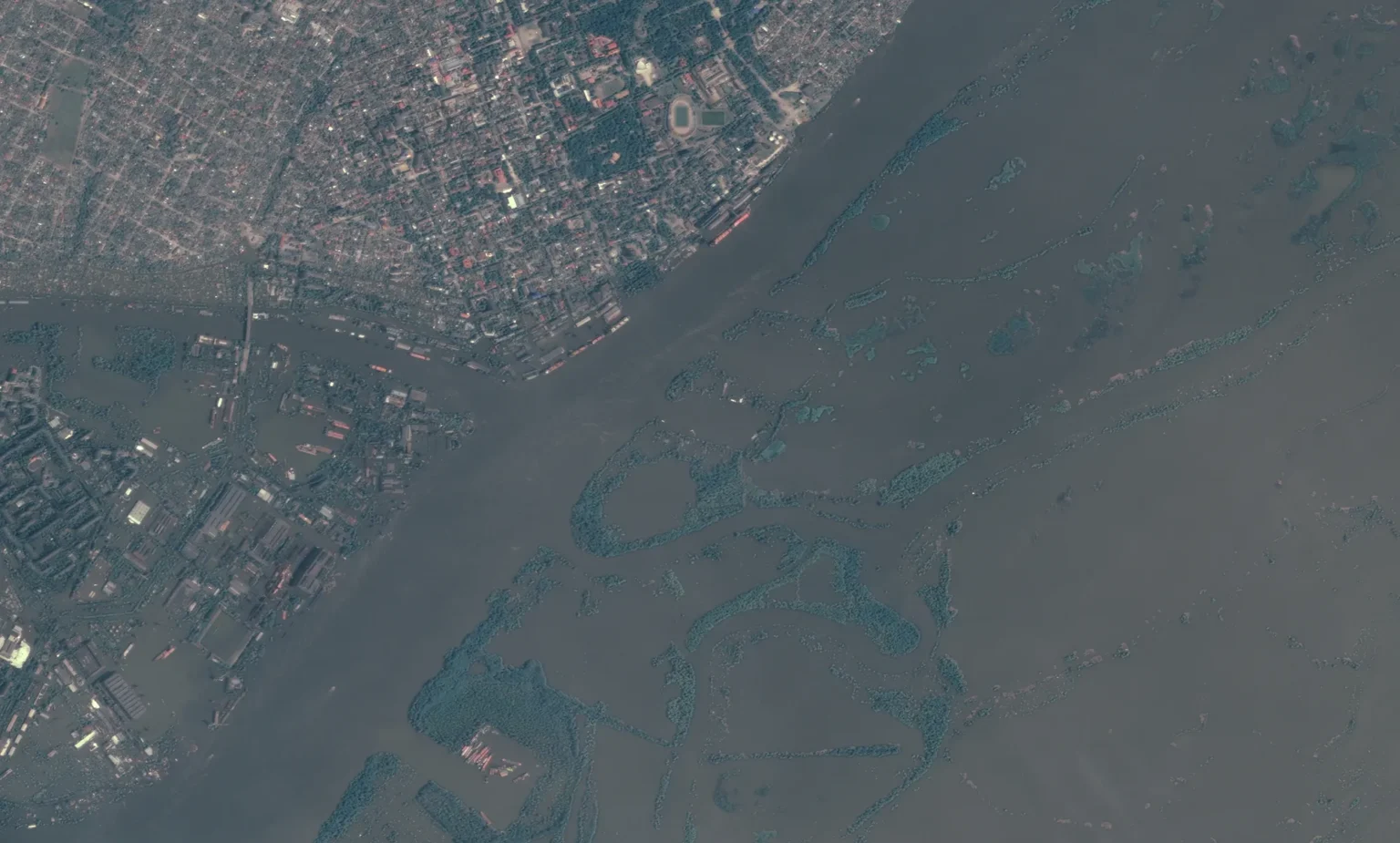
Flooding in Kherson Port area (location 3), Geosat image from June 7, 2023, resolution 0.75 m
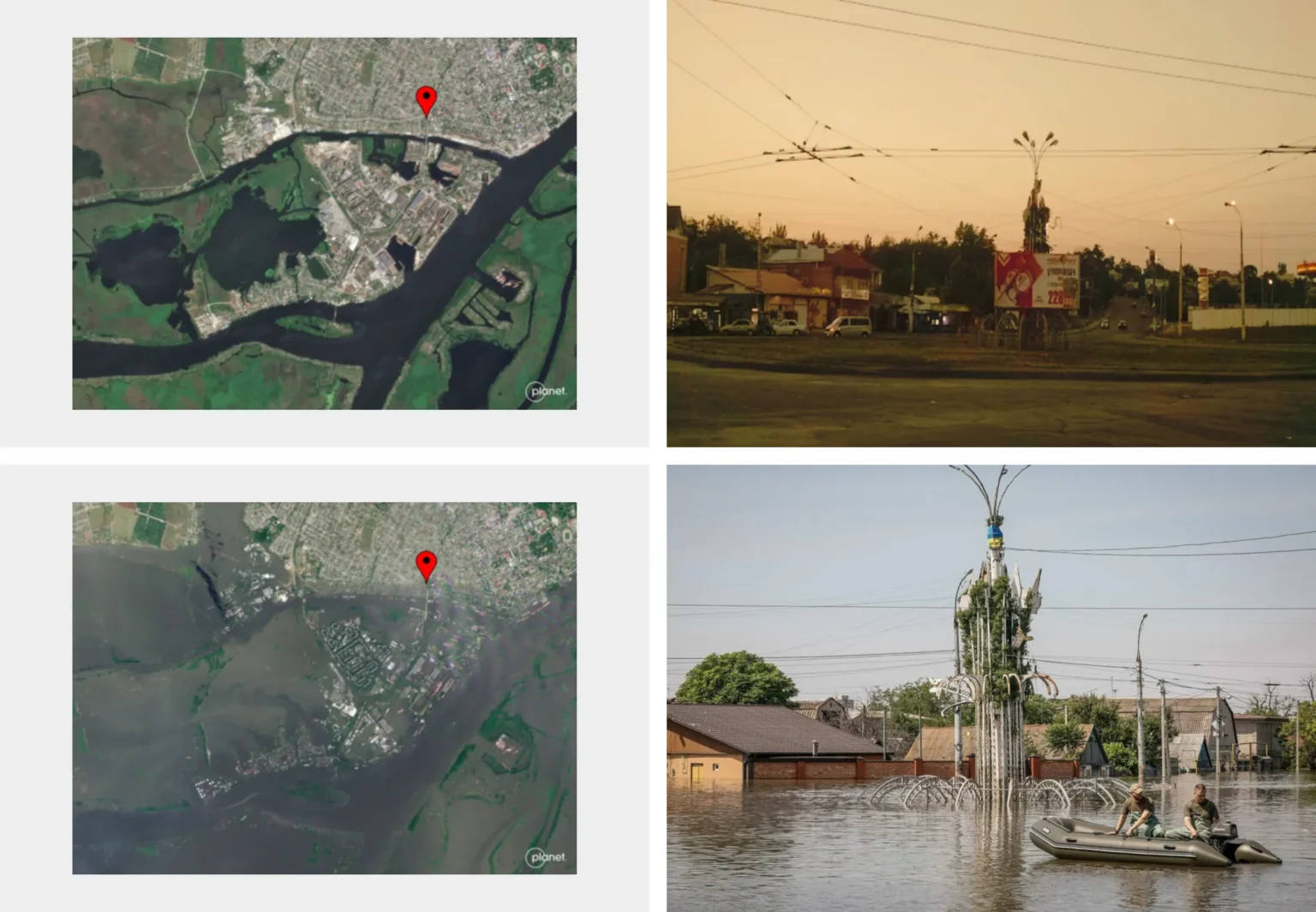
The satellite imagery of the Kherson Korabelna Square on May 15, 2023, and on June 7, 2023 (left).
Photo of Kherson Korabelna Square before and after flooding on June 7, 2023 (right).
Source: Planet Labs and REUTERS/Alina Smutko[173]

Pre-flooding Geosat image of Hola Prystan on the left bank of Kherson Oblast (location 1), resolution 0.75 m

Flooding in Hola Prystan on the left bank of Kherson Oblast (location 1), Geosat image from June 7, 2023, resolution 0.75 m
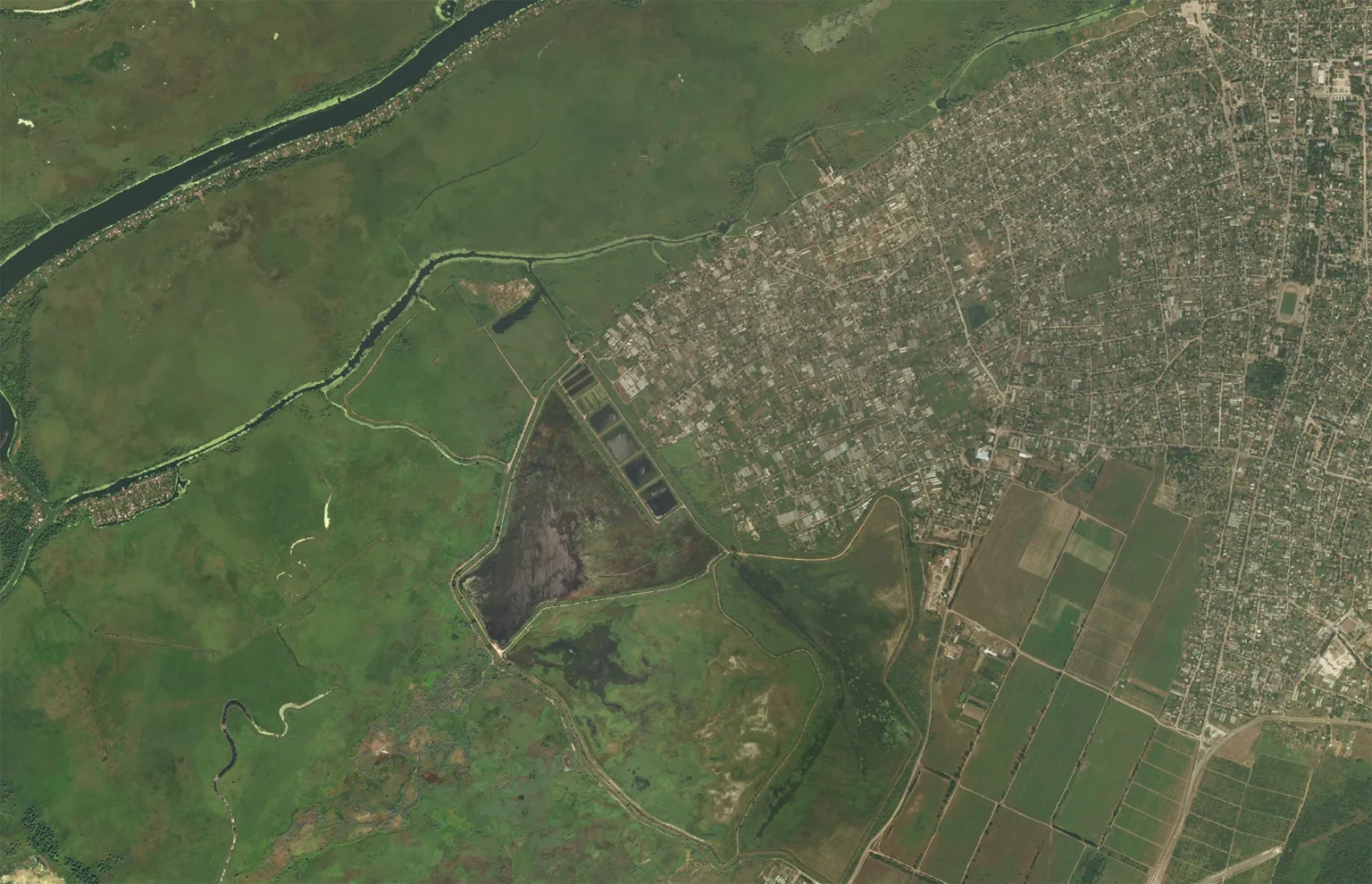
Pre-flooding Geosat image of Oleshky (location 5), resolution 0.75 m
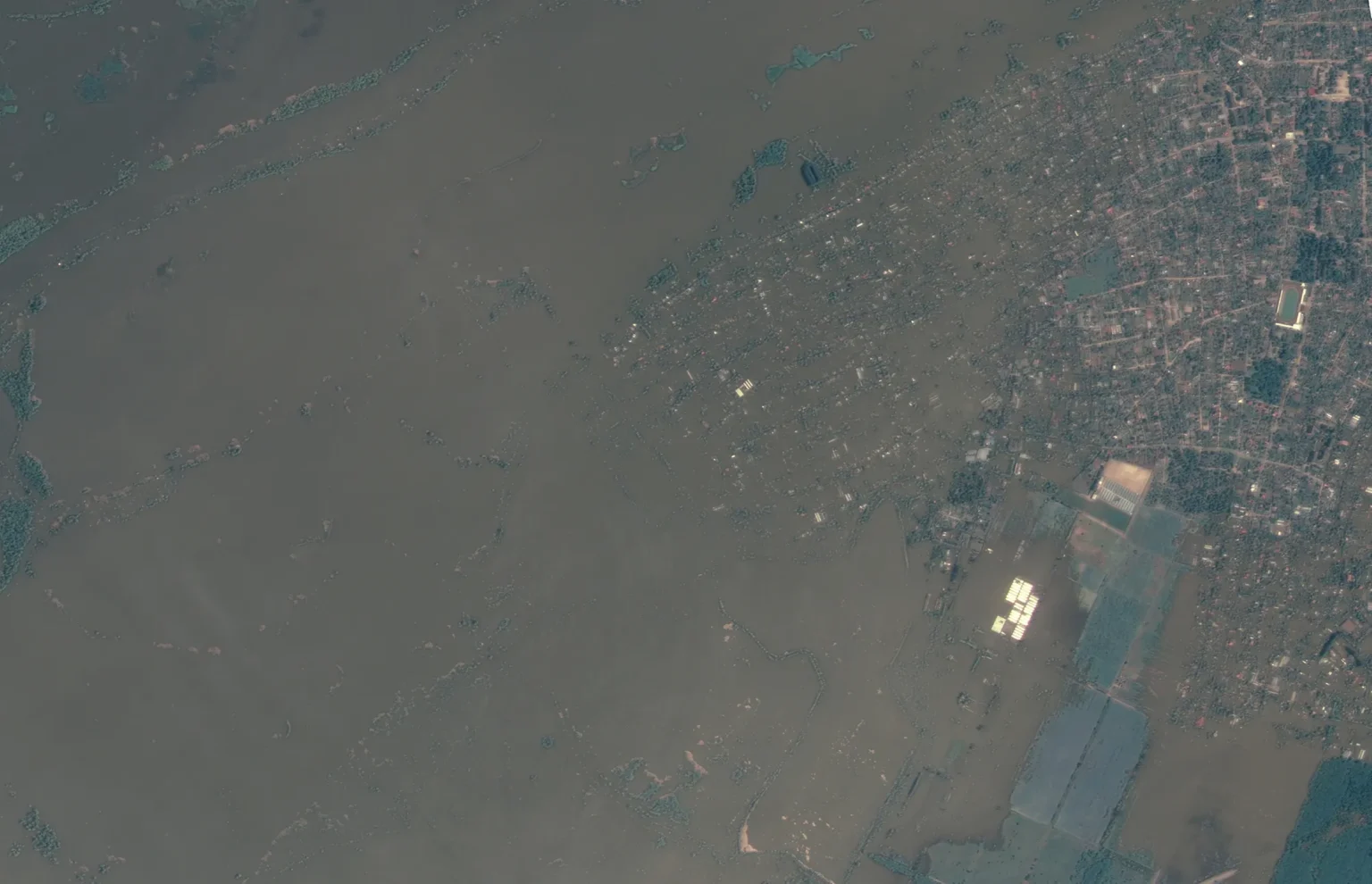
Flooding of Oleshky (location 5), Geosat image from June 7, 2023, resolution 0.75 m
The peak of the flooding in both Kherson and Mykolaiv Oblasts was observed between June 8 and 9, 2023. On June 8, the water level in the Dnipro River at Kherson City surged to 5.68 meters, considerably higher than the pre-flood level of 0.31 meters.[174] Similarly, on June 8–9, the water level in the Inhulets River rose to 12-14 meters, doubling the standard level of approximately 6 meters. While the head of the civil military administration in Snihurivka (Bashtanskyi District, Mykolaiv Oblast), Ivan Kukhta, reported about the 6 meter rise of water in Inhulets from the norm,[175] the people interviewed by TH and PEJ mentioned about a 7-8 meter rise from the guideline value:
The Mykolaiv Regional Office of Water Resources employee reported that the institution was responsible for the hourly monitoring of the water level in Inhulets and Pivdennyi Buh Rivers during the first 3 days of the flooding. The witness mentioned, “In the 80s, this figure [the water level] was 10.25 meters; this was the result of natural phenomena – the rise of the river due to precipitation and floods. This year it [the water level] rose to the level of 13.65 meters. And this already caused the flooding of populated areas; besides, it was a flow of water that washed away everything, a fast wave, and not just a rise. Before the flooding, the average water level was about 6 meters.”[176]
The Ingulets River Canal Administration employee stated, “In general, the highest water rise at our main pumping station near Novovasylivka was about 6 meters – that is, the total water level in the Ingulets River then reached 13.6 meters.”[177]
A resident of Mykilske Village on the right bank of Kherson Oblast mentioned, “The water level was measured every hour. On June 8, 2023, we [witness] went to Inhulets for water… The water rose 7.8 meters higher.”[178]
The flooding emanating from the Dam breach inundated areas as far as Yevhenivka Village (Snihurivska Community), located almost 50 kilometers from the mouth of Inhulets River and 12 kilometers further upstream from the Novovasylivka Village.[179] Several people who were interviewed by TH and PEJ reported about the bridges in Snihurivska Hromada (local community) that went underwater.
A resident of Snihurivka (Bashtanskyi District, Mykolaiv Oblast) recounted, “On June 7–8 [2023], the water in the Ingulets River began to rise; 2-3 days and the field began to flood. It literally flooded completely in 2 hours. Even the bridge in front of Snihurivka across Ingulets was not visible. I moved with difficulty but pulled out the cars that were stuck at the crossing. The garden was also completely flooded. The water rose about 7 meters.”[180]
“By the evening of that day [June 6, 2023], the water in Inhulets [River] reached our bridge, then the water in the river rose to a meter. On the morning of June 7, 2023, at 4 AM, the water had already flooded the bridge, and a little later, the houses on the streets were flooded.”[181]
“On the morning of June 7, 2023, we saw that the water had risen so much that the bridges remained underwater; none of us could leave the village.”[182]
We couldn’t get to the station [Snihurivska Solar Power Plant] because the whole road was flooded, along with the bridges.[183]
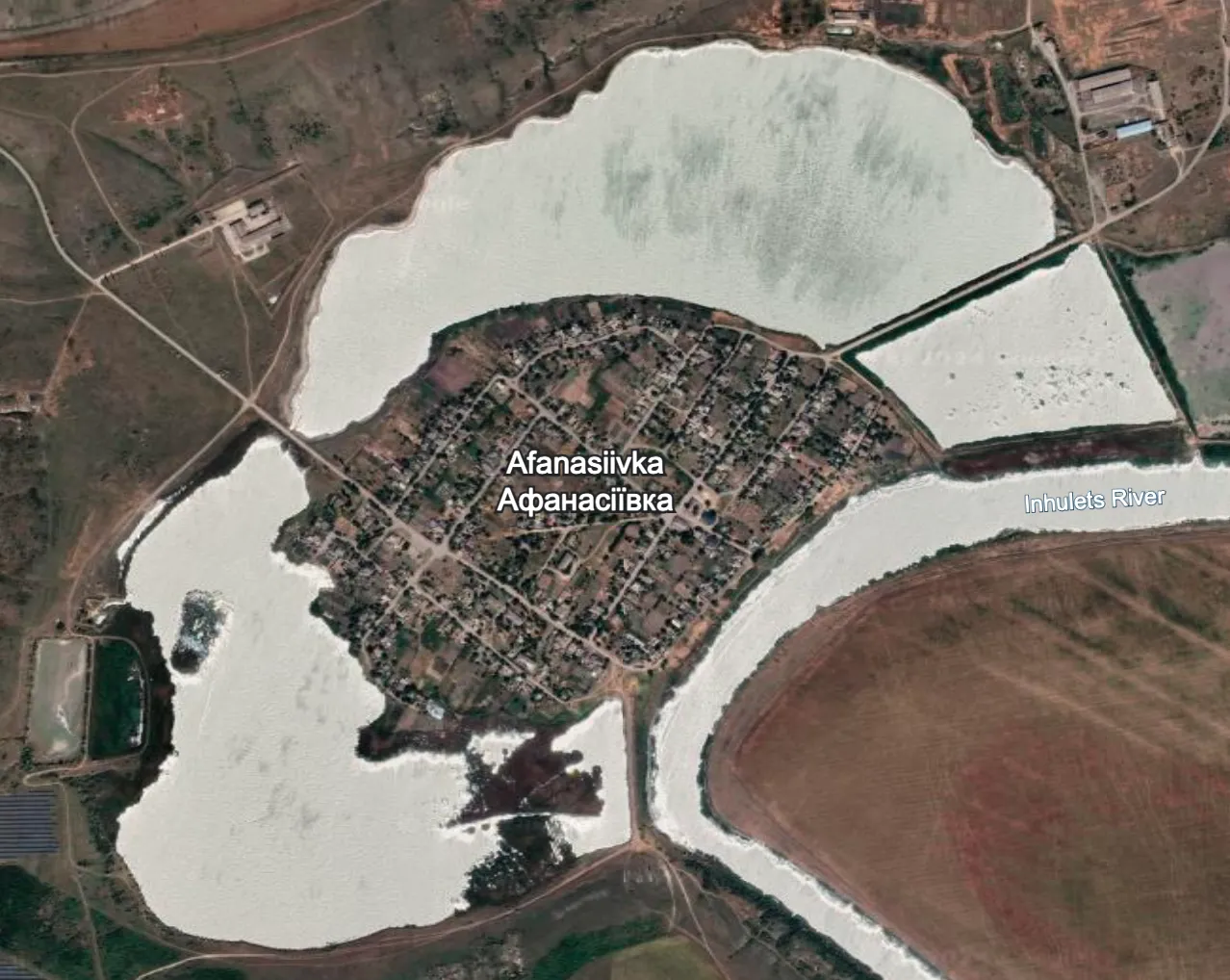
Afanasiivka from a satellite view before June 6, 2023.
Source: Google Earth.[184]

Drone footage of Afanasiivka after the Kakhovka Dam breach.
Source: Suspilne, June 10, 2022[185]
One of the many other bridges that went underwater in Snihurivska Hromada was the newly built Novovasylkivskyi Bridge. In November 2022, when the Russian Armed Forces withdrew from the territory of the local community, they damaged the bridge. Less than 4 months later, the bridge had been rebuilt thanks to the effort of the locals and the United24 Platform.[186]

The Novovasylkivskyi Bridge after the rebuilding.
Source: Ivan Kukhta, March 15, 2023.[187]

The Novovasylkivskyi Bridge when the water had already started receding.
Source: Ivan Kukhta, June 17, 2023[188]
PEJ and TH field researchers have also recorded aerial video footage of the flooded field near the village of Evgenivka, Mykolaiv Region (coordinates: 47.094897, 32.898625).
At the same time, the water stream from the Kakhovka Reservoir led not only to the rise of water level in Dnipro and Inhulets Rivers but also in the Pivdennyi Buh River. In particular, a water level rise was recorded in Nova Odesa, around 70 kilometers from the mouth of the Pivdennyi Buh River, which itself flows into the Black Sea and Dnipro River more than 100 kilometers from the destroyed Kakhovka Dam.[189]

Nova Odesa from a satellite view.
Source: Google Earth[190]
As with the other rivers, the Pivdennyi Buh River experienced its highest water level rise on June 8–9, 2023. On June 8, the Mykolaiv City Mayor reported a 104 cm increase in the river’s water level,[191] surpassing even the historical record of a 91 cm water level increase.[192]
An employee from the Office of the State Agency for Land Reclamation and Fisheries in Mykolaiv Oblast mentioned an even higher water level rise:
“In the center of the city of Mykolaiv near the river, the water rose by about 1.5 meters. It could be observed in many places in the city districts. For example, Namyv District, Nyzhnya Naberezhna, Yacht Club District.” [193]
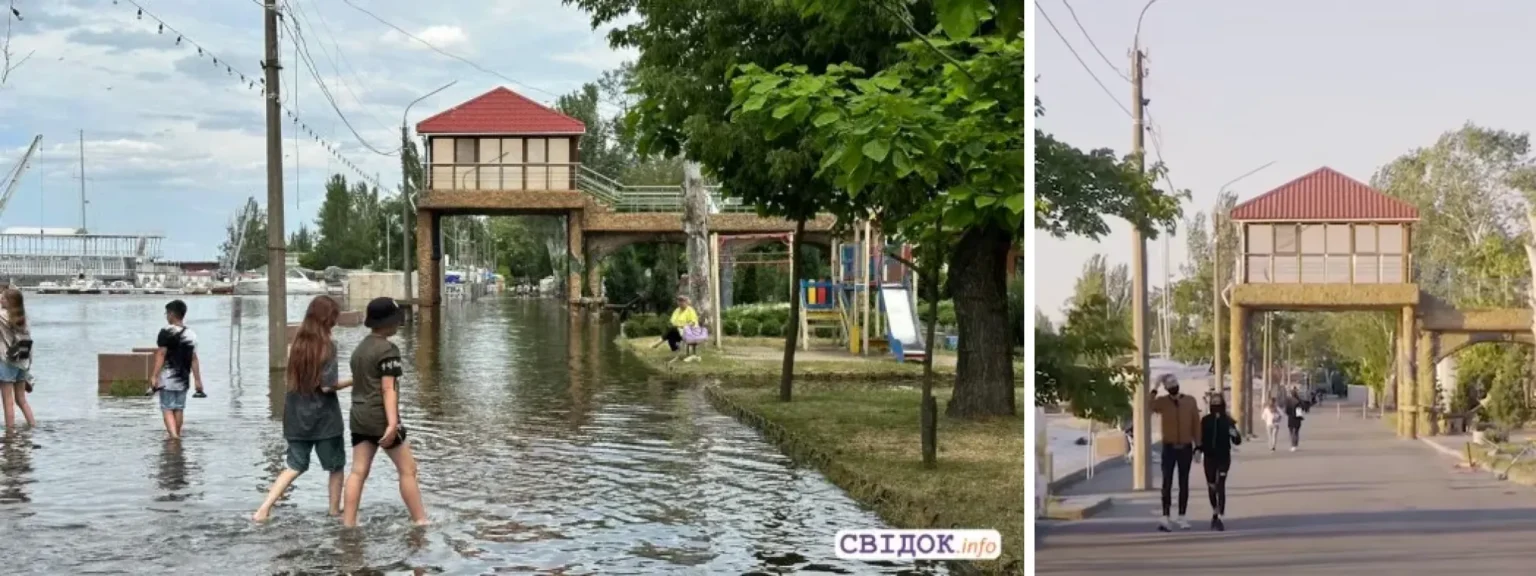
Mykolaiv Yacht Club area in 2021 and on June 8, 2023[194]
As indicated above (see 3.1.1.), the optical, radar, and high-medium resolution satellite imagery TH and PEJ obtained from EOS Data Analytics revealed that as of June 9, 2023, 405.4 km² of Southern Ukrainian territories were inundated due to the Kakhovka Dam breach. A more detailed mapping of the downstream and upstream zones to the destroyed Dam is presented below though difference in water mask on a medium scale of 1:400,000, in very high (1,200 dpi) resolution. Again, city boundaries are included for a clearer understanding of the extent of the flooded areas.
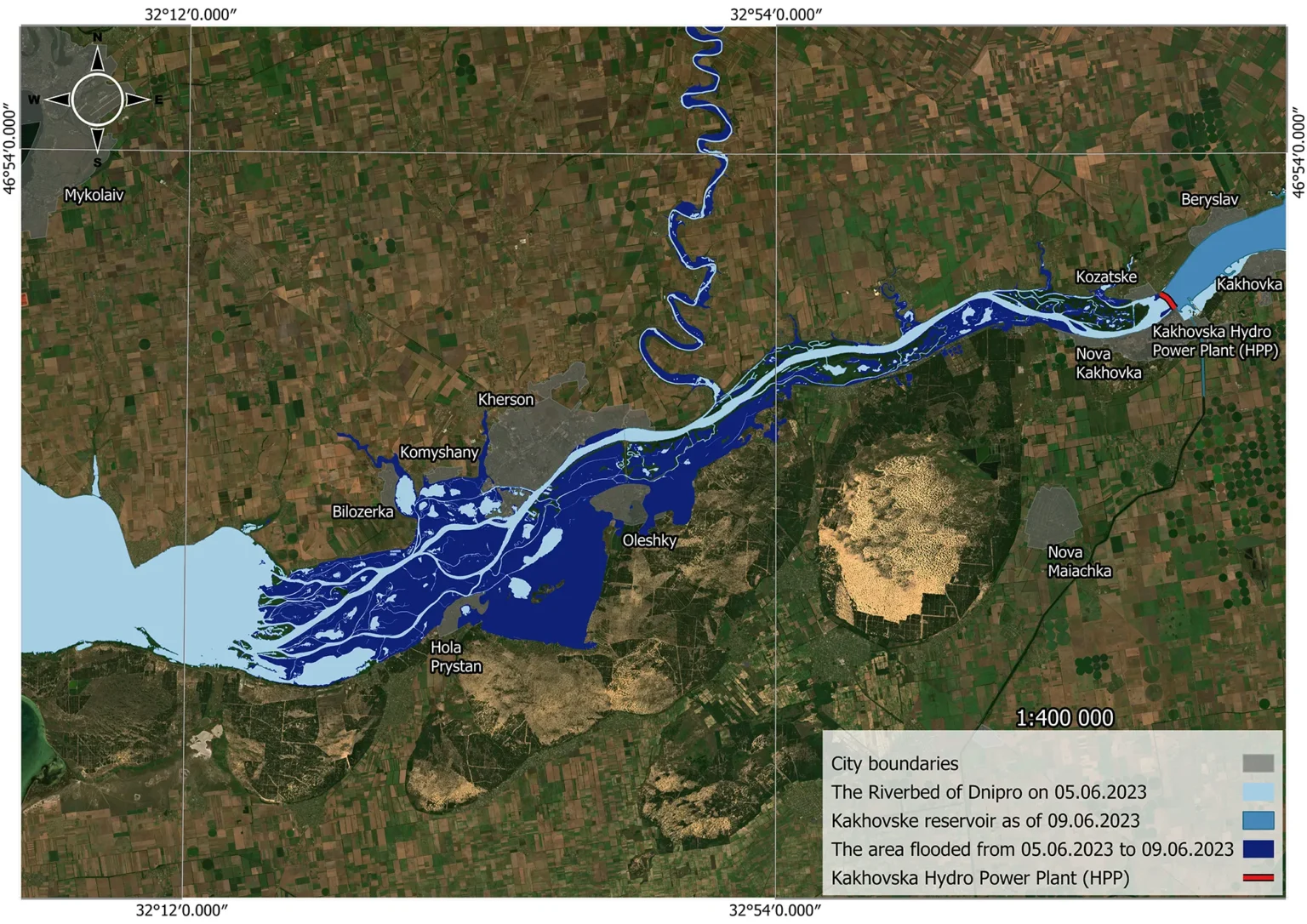
Difference in water mask for the downstream zone (geographical scope of water movement analysis) based on the satellite image from June 9, 2023
A water mask comparison for the downstream zone, based on satellite imagery from June 9, 2023, illustrates that 3 days after the Dam’s collapse, the Dnipro River’s water level had risen critically, causing severe flooding in several areas on both shores of the river. In particular, the comprehensive map demonstrates the complete inundation of the Kherson industrial zone and its vicinity, reaching the Biolzerka and Komyshany settlements. A significantly more severe flooding of the Russian-occupied left bank, especially in the towns of Oleshky and Hola Prystan, can also be observed.
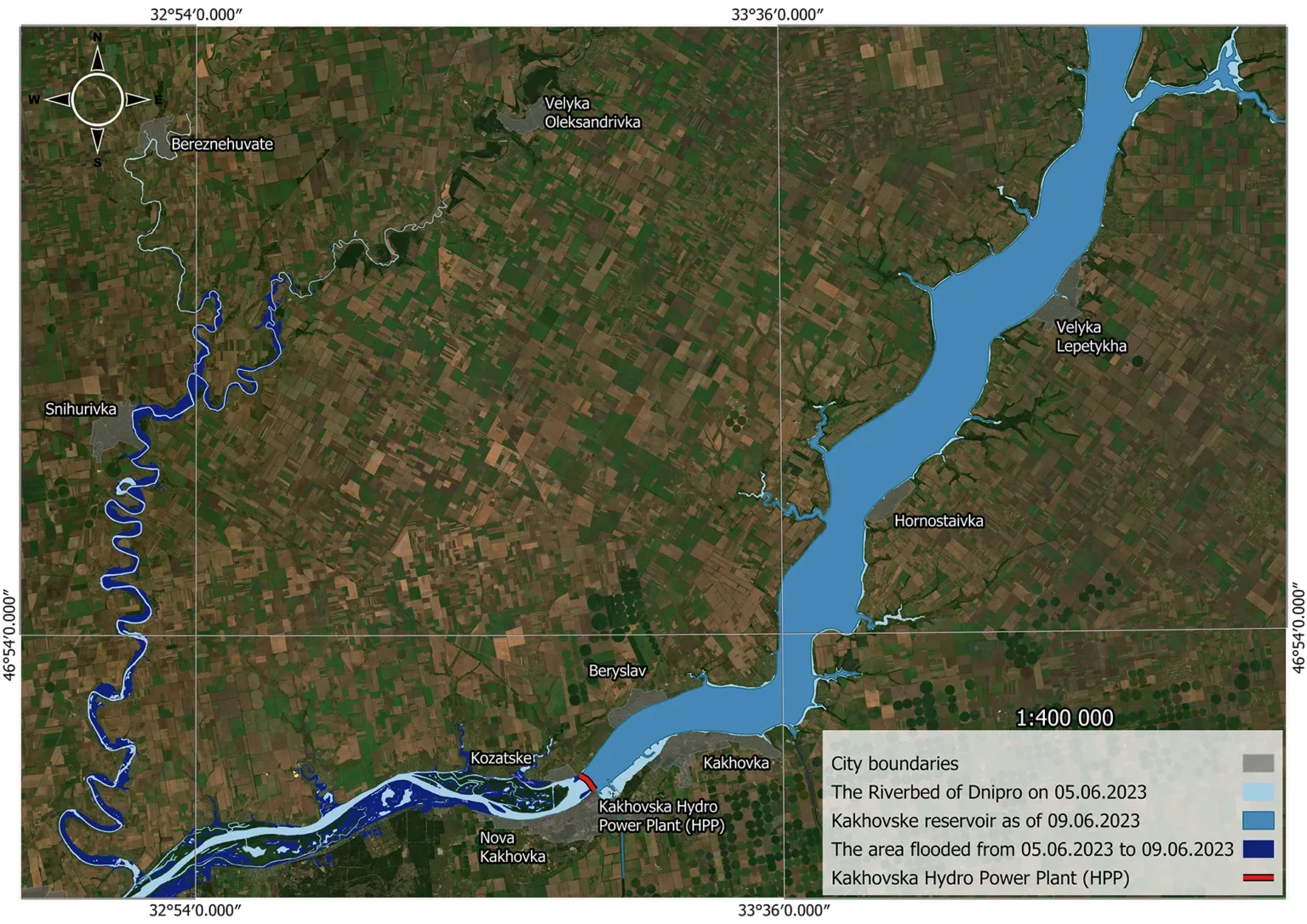
Difference in water mask for the upstream zone (geographical scope of water movement analysis) based on the satellite image from June 9, 2023
In addition to picturing the draining of some areas above the Dam, the difference in water mask for the upstream zone based on satellite image from June 9, 2023, supports the previous findings on the significant water level rise in Inhulets River, which resulted in the flooding of areas much further than just the Snihurivka settlement in Mykolaiv Oblast.
b) Receding of the flooding water and draining of certain areas downstream and upstream of the Dam.
After June 8, 2023, the floodwaters emanating from the Kakhovka Reservoir due to the Kakhovka Dam breach started receding (see 3.1.1.). In particular, from June 9, 2023, the water level in Dnipro River in Kherson started decreasing, having almost reached its pre-flooding level as of June 23, 2023, with a level of 0.37 m.[195] Following the drop in the water level on June 16, 2023, Dnipro River returned to its channel, while low-lying areas of the terrain still remained flooded.[196] Likewise, from June 10, 2023, the water level in Inhulets River started decreasing,[197] and by June 20, 2023, only a 22 cm excess over the baseline value was recorded.[198] Similarly, from June 9, 2023, the water level in Pivdennyi Buh near Mykolaiv began to drop, and by June 26, 2023, there was merely a 5 cm surplus.[199]
This corroborates with the findings of the PEJ and TH field researchers, who visited the flooded territories in the South of Ukraine:
A resident of Novovasylivka Village (Bashtanskyi District, Mykolaiv Oblast) reported, “The water rose for 3 days, from June 6 to 9, 2023. And then it began to fall at about the same pace as it rose.”[200]
The Mykolaiv Regional Office of Water Resources employee reported, “During the 3 days when the mass of water was flowing, we watched the influx of water, watched the wave as it approached, recorded the moment of mass flooding and until the time when the water began to recede.”[201]
The Yuriivka and Afanasiivkas (Bashtanskyi District, Mykolaiv Oblast) chief stated, “From June 10–11, 2023, the water level began to fall.”[202]
Almost one month after the Kakhovka Dam breach, on July 5, 2023, out of the initially 405 km² of flooded territories in Kherson and Mykolaiv Oblasts as of June 9, 2023, 19 km² were still underwater. The difference in water mask for the downstream zone from the destroyed Dam shows that the water level dropped significantly, and the pre-disaster water levels were almost met. For example, by July 5, the water had receded from the previously submerged Oleshky and Kherson City industrial area, though some flooding persisted in Hola Pystan Town. Detailed mapping further demonstrates the drainage of several smaller areas downstream from the Dam.
In the upstream zone, the water mask differences show that on July 5, areas around the Inhulets River remained flooded, stretching far beyond Snihurivka Town. Additionally, the water mask comparison reveals a significant draining of the Kakhovka Reservoir and the Dnipro Riverbed above the Kakhovka Dam.

Difference in water mask for the downstream zone (geographical scope of water movement analysis) based on the satellite image from July 5, 2023
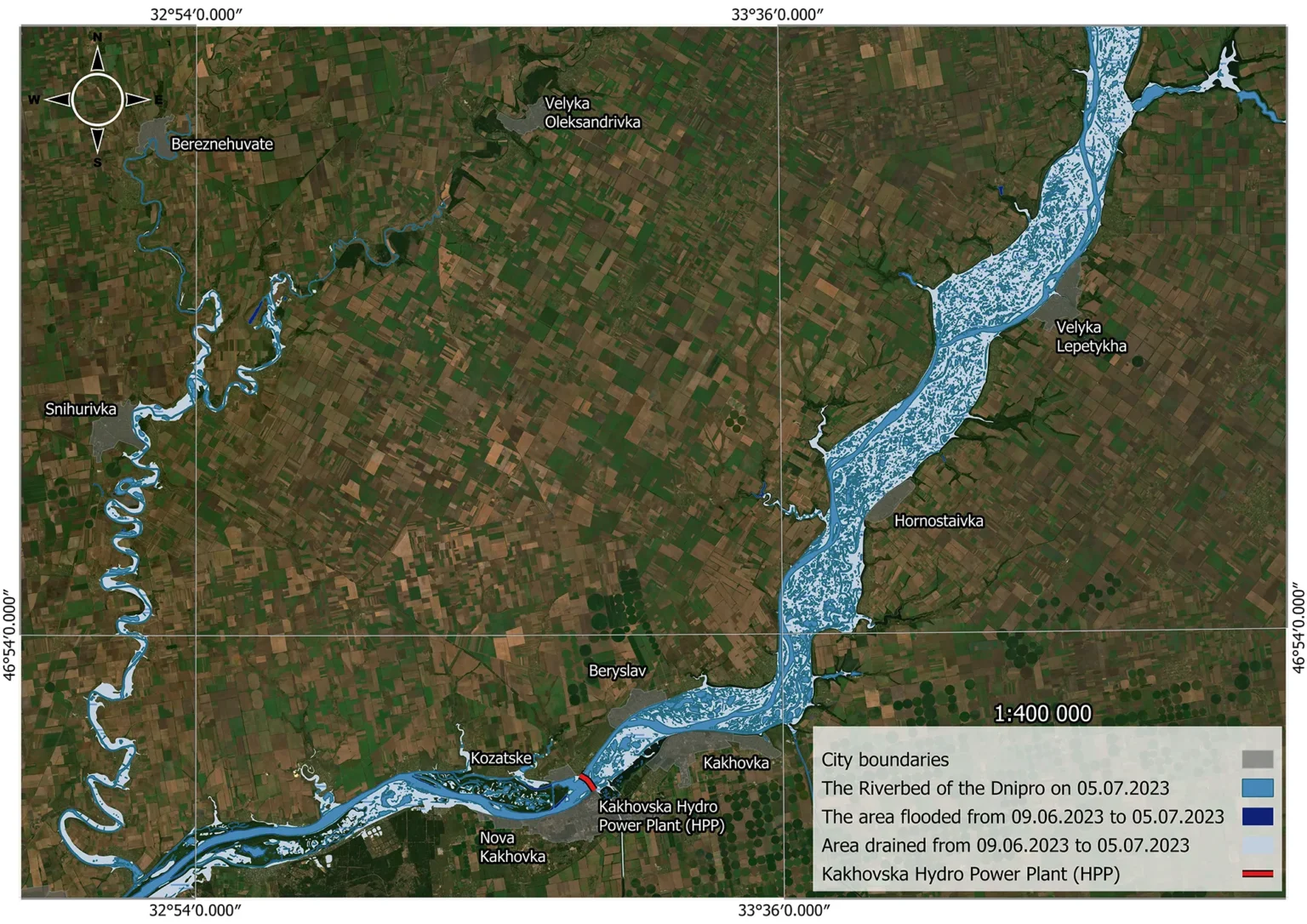
Difference in water mask for the upstream zone (geographical scope of water movement analysis) based on the satellite image from July 5, 2023
As previously noted, on August 29, 2023, nearly 3 months after the Dam’s collapse, 17.8368 km² of land in Mykolaiv and Kherson Oblasts remained flooded. A closer examination of the water levels in the downstream and upstream zones through mask comparison shows a significant decrease in the Inhulets and Dnipro Rivers and Dnipro Riverbed. A large, drained area is visible within the Kakhovka Reservoir itself, which will be further detailed in subsection 3.2 below.

Difference in water mask for the downstream zone (geographical scope of water movement analysis) based on the satellite image from August 29, 2023

Difference in water mask for the upstream zone (geographical scope of water movement analysis) based on the satellite image from August 29, 2023
Overall, the Kakhovka Dam breach on June 6, 2023, unleashed a rapid water stream into the low Dnipro, to the Dnipro-Buh Lyman (an estuary), after which some amount of water entered the Black Sea.
The outflow from the Kakhovka Reservoir caused critical water level rises in the Dnipro and its tributaries, resulting in the inundation of 80 cities, towns, and villages.[203] Simultaneously, the outflow led to significant draining both downstream and upstream of the Dam.
For a detailed analysis of the drainage of the upstream zone, namely the Kakhovka Reservoir, see subsection 3.2. below.
3.2. Draining of the Kakhovka Reservoir
This particular subsection of the report will provide analysis of the drainage of the Kakhovka Reservoir caused by the destruction of the Kakhovka HPP Dam on June 6, 2023. A number of satellite images will be provided below depicting the drainage of the Reservoir land on a timeline.
Also, the impact of the draining of the Reservoir on the nuclear safety in the region, namely the potential and mitigated risks arising from a lack of supply of water from the Reservoir to the Zaporizhzhia Nuclear Power Plant, will be mentioned below. This impact is analyzed in detail in Annex B.

Water mask for the Kakhovka Reservoir (geographical scope of water movement analysis) based on the satellite image from June 5, 2023
The Kakhovka Reservoir, formed in the 1950s, covered an area of 22,155 km² and held a volume of up to 22.6 km³.[204] The Reservoir originally contained over 18 km³ of water, but in the first 4 days following the Kakhovka HPP Dam’s breach, it lost over 14.7 km³ of water.[205]
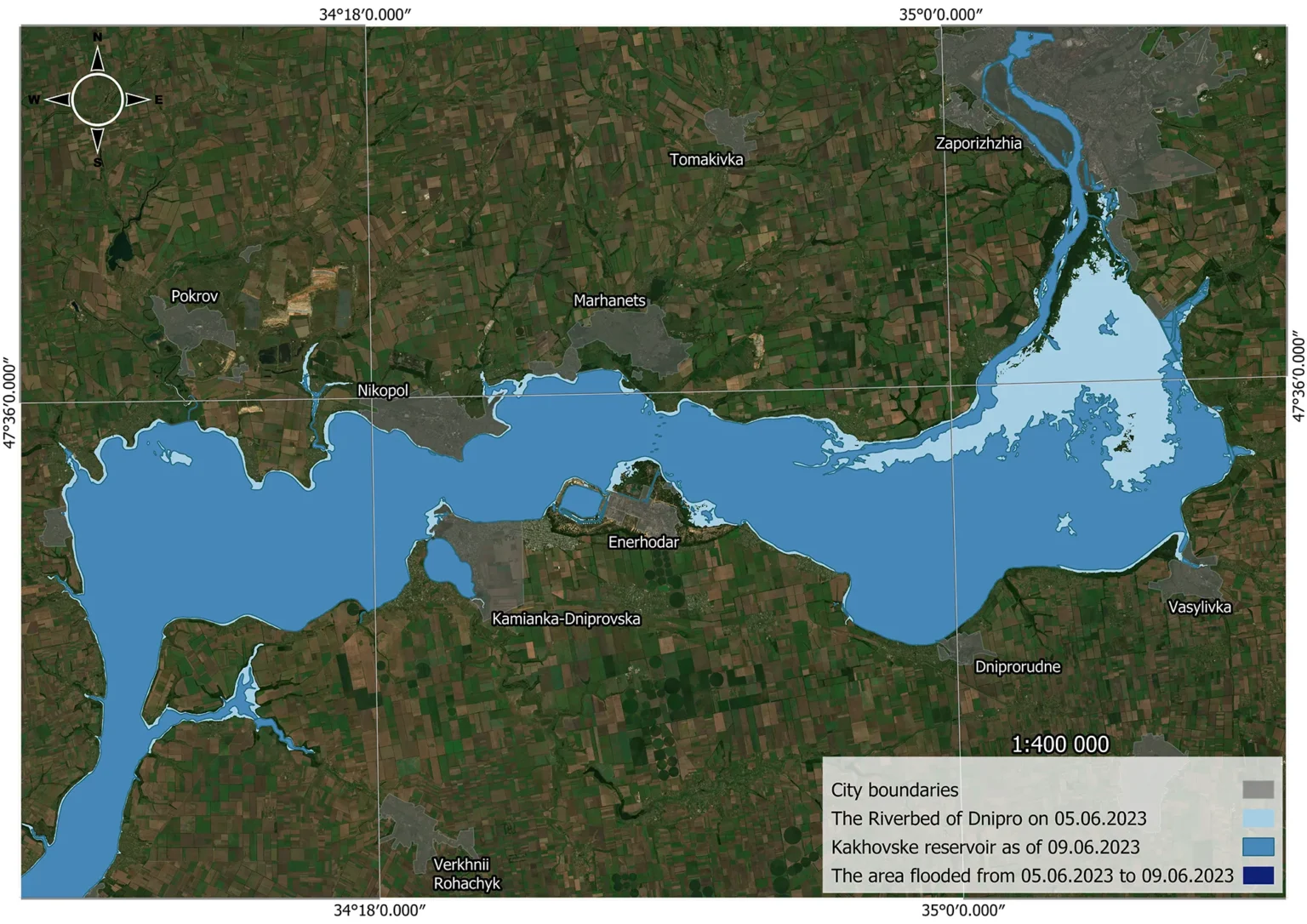
Difference in water mask for the Kakhovka Reservoir (geographical scope of water movement analysis) based on the satellite image from June 9, 2023.
Specific water level monitoring was held by Ukrainian authorities to assess the water drop level within both downstream and upstream zones within the Kakhovka Reservoir.
In the downstream zone, before the disaster, water levels at the Nikopol Monitoring Station stood at 16.76 meters above sea level (“masl”).6 The maximum water level ever registered at the Nikopol station was 16.46 m in late November 2023, and the minimum was 14.18 m on April 4, 1968.[206] After the Dam’s breach, water levels began to decrease, falling to 16.13 meters by June 6, 2023, and then dropping further to 14.48 meters on June 7. By June 11, water levels had dropped drastically, to 9.04 m, causing the station to cease recording the water level as the majority of the Reservoir’s volume had been lost. Historically, before the Reservoir’s construction, the standard water level at the Nikopol station was around 6.0 meters.
Similarly, in the upstream zone, on June 7, 2023, the water level was measured at 17.05 masl. Within 2 weeks, on June 15, 2023, the water levels had dropped to 13.4 meters, and by June 20, they had stabilized at 12.6 meters, indicating a total drop of over 4.5 meters. Such a water level was insufficient for the proper operation of the turbines at the Kakhovka Power Plant; their vibration increased, and their power decreased.[207]
Based on these observations, by the end of June 2023, the Kakhovka Reservoir had drained almost completely into the network of river branches, and it could no longer be considered a Reservoir.[208] Instead, the Dnipro River’s original network of branches reappeared in the area where the Reservoir once existed.[209]
The drainage of the Kakhovka Reservoir negatively impacted the operation of the canal-based irrigation system prevailing in the catchment area of the Reservoir. On June 8–9, 2023, 3 of the 4 main inlets to the Reservoir, which supplied the canal networks, were disconnected: (i) the canal inlet near Marianske, (ii) the inlet to the northernmost canal near Balky,7 and (iii) the inlet to the North Crimean Canal. In the next few days, (iv) the fourth main inlet to the Kakhovsky Canal was anticipated to be disconnected.[210] A week later, the satellite imagery showed that the final inlet to the Kakhovsky Canal, which previously granted hydro supply, was completely disconnected from the Reservoir. Below, you can see the satellite imagery of all 4 inlets disconnected on June 18–20, 2023.
NB: Compared to the previous analysis, “upstream” and “downstream” terms are used in this part of the report to describe 2 distinct areas within the Reservoir and not below/above the destroyed Dam.
6 “Masl” is used as an abbreviation of meters above sea level.
7 Compared to the canals near Marianske and the North Crimean Canal that disconnected on 9 June 2023, the canal near Balky disconnected on June 8, 2023.


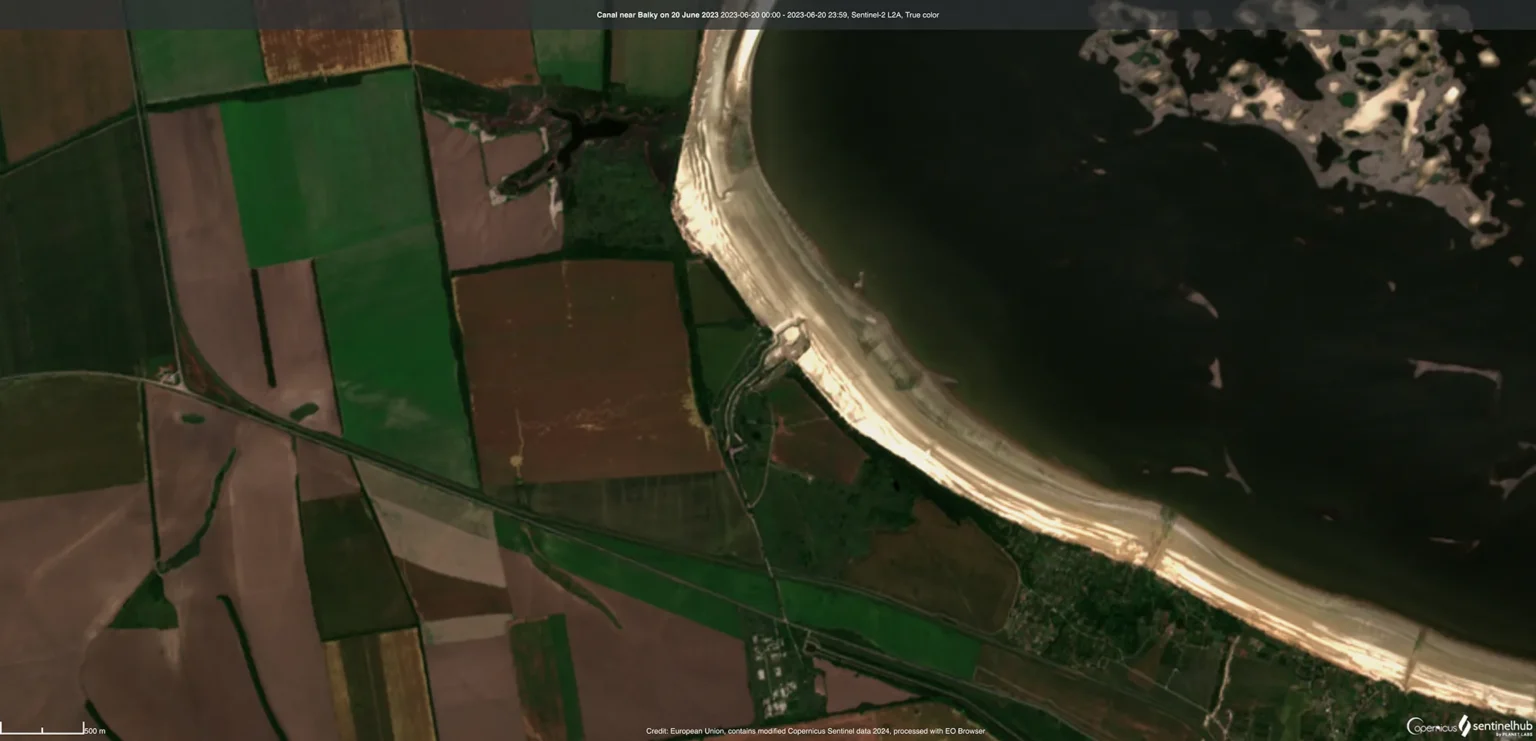
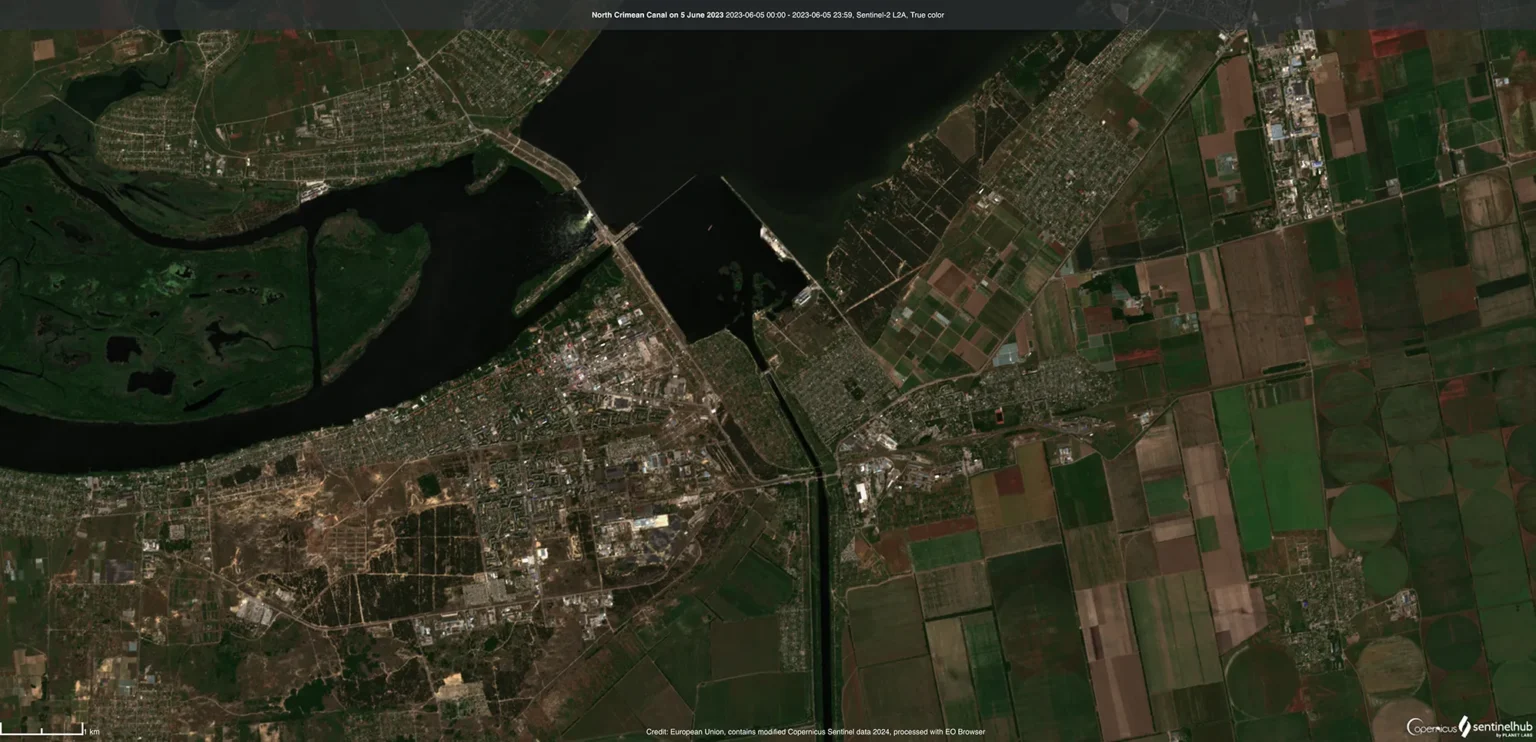
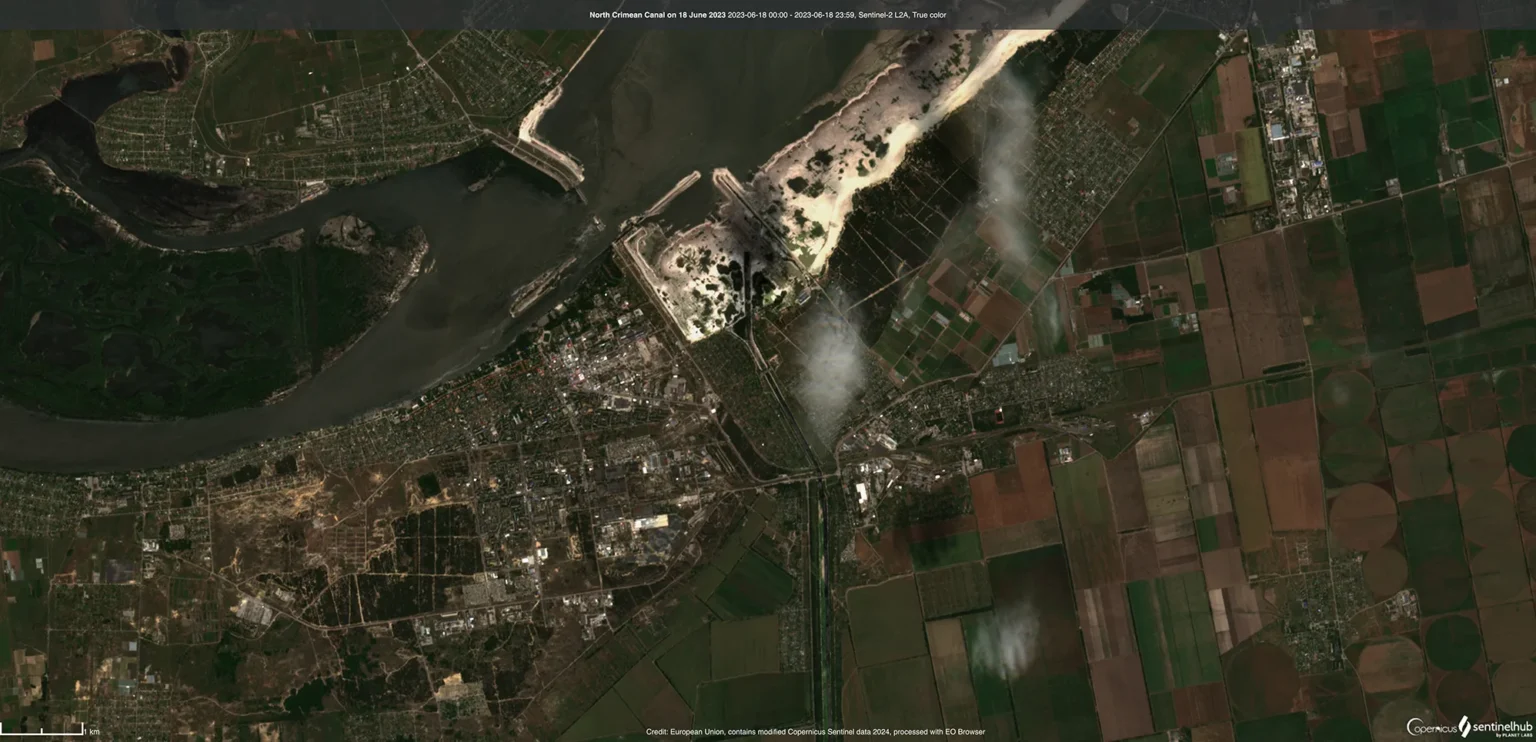

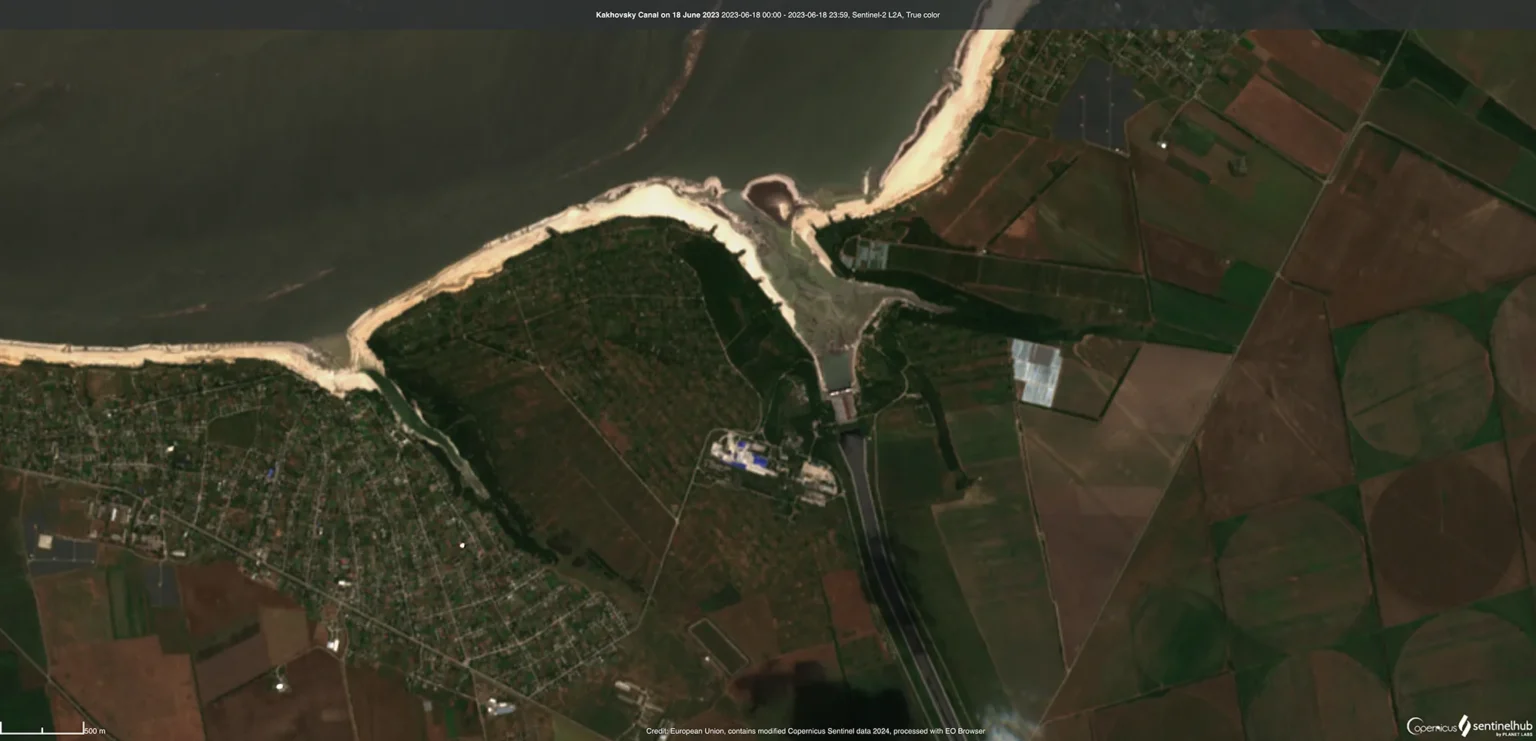
The destruction of the Kakhovka Dam and the consequent drainage of the Kakhovka Reservoir has had a direct impact on the safety hazards and risks at the Zaporizhzhia Nuclear Power Plant (ZNPP).[215] The ZNPP relies on the Kakhovka Reservoir for its water supply. A steady water supply is essential for the plant’s cooling reactors, spent fuel, and safety-related equipment. The Dam also had the capacity to serve as a vital heat sink in the event of a nuclear emergency. The ZNPP uses what, in effect, is a closed-cycle cooling system where the water used for cooling is pumped from the reactor steam condensers via the outlet channel to the cooling pond. Compared to its alternative, the direct cooling system, the closed-cycle cooling system has a higher water consumption due to the losses from evaporation.[216] In turn, these water losses are replaced by the water flow from the Kakhovka Reservoir via the Zaporizhzhia Thermal Power Plant (ZTPP) inlet channel.
Due to the Kakhovka Dam’s breach and the subsequent drainage of the Reservoir, the ZTPP inlet channel and the cooling pond of ZNPP (which had been constructed by cutting off a part of the Reservoir by an alluvial sandy Dam) began to drain.[217] While the standard cooling pond height was at a level of 22 meters, on June 8, 2023, the water level in the pond decreased to 16.66m.[218] Also, during the period between June 9–10, 2023, the water level of the Kakhovka Reservoir dropped below the level in the ZTPP intake channel. By 6:00 AM on June 10, 2023, the water level in the Kakhovka Reservoir was 10.55 m at Nikopol,[219] while in the intake channel, it was 11.08 m.[220] On July 11, 2023, the cooling pond water level was 16.46 m, a decline of 0.2 m after June 8, 2023.[221]
As the Reservoir continued to drain, structures related to the intake of water became visible. In the satellite imagery from July 13, 2023, multiple intake pipes for water to enter the ZNPP channel from the Reservoir were visible. This is supported by satellite imagery from late July 2023 (see Annex B). While there has been some minor variation in the water levels of the Dnipro River channels since June 2023, as of 2024, the intake channel remains cut off from its historical water supply of the Kakhovka Reservoir.
In response to the loss of access to the Kakhovka Reservoir, in summer 2023, the Russian State Atomic Energy Corporation Rosatom began constructing underground wells at the ZNPP site. By September 2023, a total of 11 wells were providing water to the ZNPP at an average rate of 250 m³ per hour.[222] As of April 2024, the ZNPP cooling pond was being supplied with approximately 400 m³/h of water from the sprinkler ponds and the discharge channel of the nearby ZTPP.[223] While the water from the 11 underground wells is sufficient to cool the 6 units in shutdown, it is still not enough to maintain the water inventory in the ZNPP cooling pond.
It should also be noted that Rosatom continued to defy the orders of the State Nuclear Regulatory Inspectorate of Ukraine[224] and maintained one of the ZNPP reactors in intermediate “hot shutdown” mode until April 2024,[225] a state in which accidents can occur more quickly without proper cooling or de-energizing.[226]
As detailed, due to the reactor shutdown status of the Zaporizhzhia nuclear reactors, the immediate impact on nuclear power plant safety of the loss of the Kakhovka Reservoir was limited. At the same time, the safety implications of the destruction of the Kakhovka HPP for the reactors at Zaporizhzhia are profound and, depending on developments at the site, potentially severe. The loss of the Kakhovka Reservoir has significantly contributed to the further reduction in safety margins at the plant. This applies to the current condition of reactors, which remain in cold shutdown mode. However, this would become even more critical if one or more ZNPP reactors were to restart operations. As of April 2024, Rosatom planned to restart reactors at Zaporizhzhia,[227] significantly increasing the risk of a major release of radioactive material.
For a detailed analysis of the impact of the drainage of the Kakhovka Reservoir on the safety hazards and risks at the Zaporizhzhia Nuclear Power Plant, please refer to Annex B.
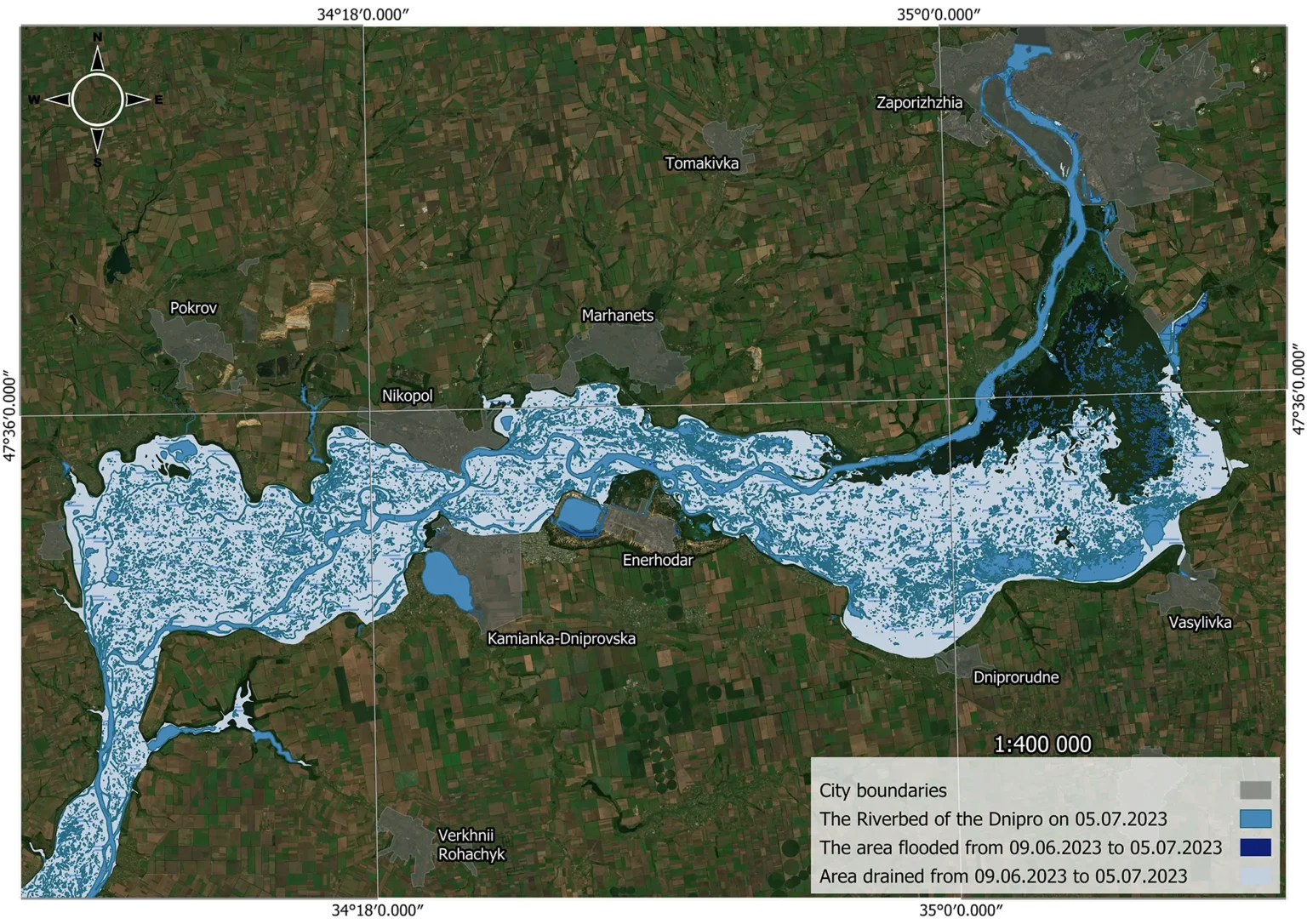
Difference in water mask for the Kakhovka Reservoir (geographical scope of water movement analysis) based on the satellite image from July 5, 2023
The additional satellite imagery of the Kakhovka Reservoir from July 5, 2023, processed by EOS Data Analytics through a difference in water mask, proves again that what once was a huge Reservoir has essentially become a large waterway composed of branches of the Dnipro River.
Having used vegetation indexes calculated on the basis of satellite imagery, specialists of the Ukrainian Hydrometeorological Institute of the State Service for Emergency Situations and the National Academy of Sciences of Ukraine assessed the regeneration of vegetation in what was once the Reservoir bed. The specialists estimated that, as of July 19, 2023, more than 1,700 km² of 2,155 km² of the Reservoir area was drained, meaning that only 12.7 % of the Reservoir’s initial surface area was still underwater. Also, as of July 19, 2023, the re-emerged Dnipro River channel covered an area of approximately 121 km².
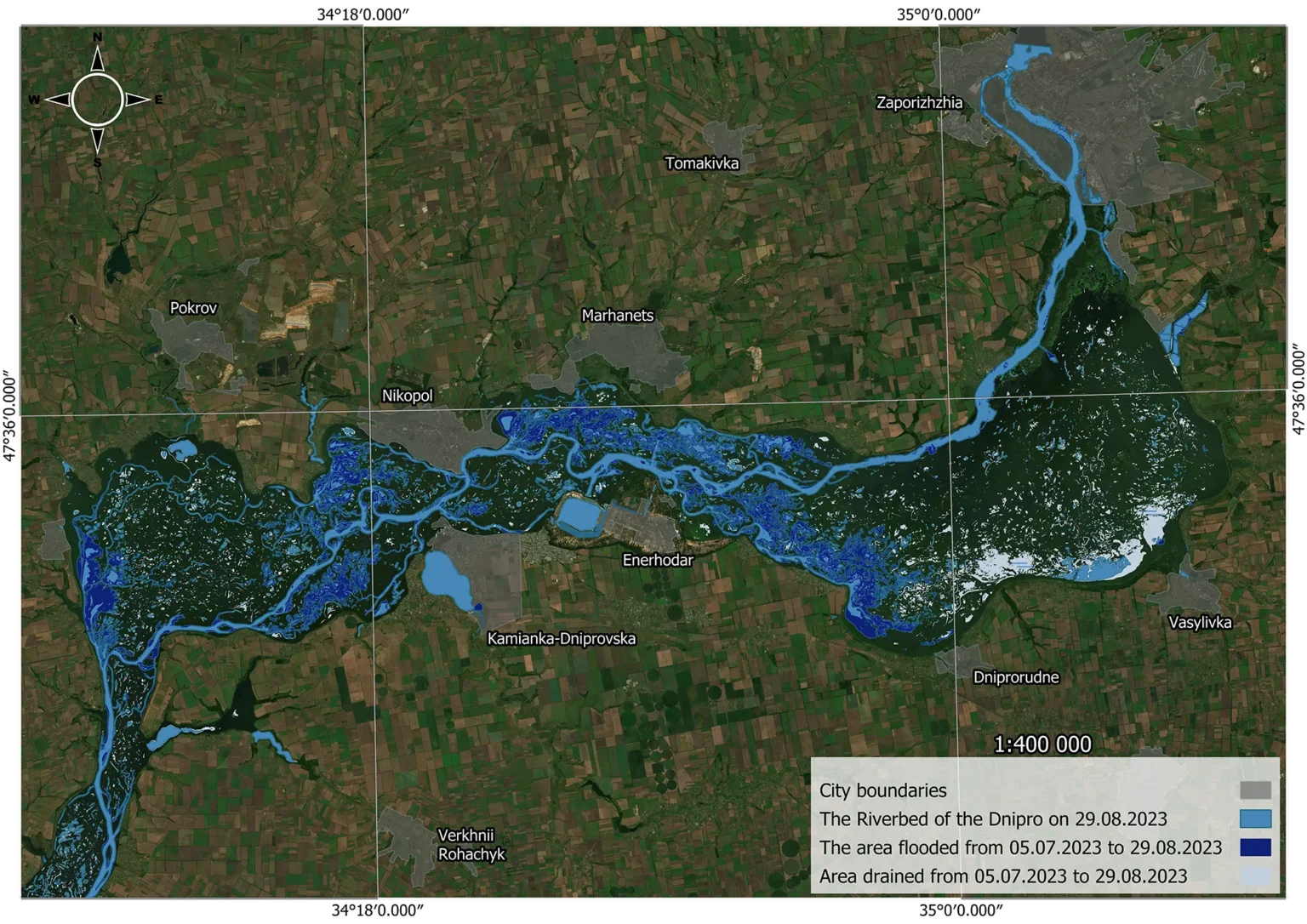
Difference in water mask for the Kakhovka Reservoir (geographical scope of water movement analysis) based on the satellite image from August 29, 2023
The comparison of the water mask based on satellite images from August 29, 2023, almost 3 months after the disaster, illustrates the fragmentation of the Kakhovka Reservoir into isolated bodies of water. While several larger water bodies remain connected to the Dnipro River channel, many medium and small water bodies have become isolated.[228]
Despite initial predictions of the Reservoir becoming a desert, new vegetation has begun to emerge on the drained land. Hryhoriy Kolomytsev, a researcher at the National Academy of Sciences of Ukraine, claimed that his analysis based on the use of vegetation indexes and satellite imagery showed that the Reservoir land turned green. As of early September 2023, the value of the vegetation index was 0.18 on average.8 While some sections of the Reservoir continue to hold water, most of the previously submerged land has become dry and unrecognizable from its former state, presenting both challenges and opportunities for the ecosystem and the communities in the region.[229]
New satellite imagery from March 2024 revealed a natural phenomenon – a certain amount of water returned to the Reservoir, which can be attributed to the melting of snow during the spring season.[230]
8 For clarity, Kolomytsev explained that the value of 0.74 corresponds to very dense green vegetation, e.g., the tropical forest.
IV. A Cascade of Consequences from the Dam’s Destruction
The destruction of dams tampers with nature’s balance and unleashes a cascade of consequences that disrupt ecosystems and jeopardize individuals’ lives and health. The very existence of communities that rely on such ecosystems becomes threatened. The case of the Kakhovka Dam explosion is no exception and further underscores the multifaceted and long-term consequences of such an environmental and human disaster.
This section will describe how 2 main vehicles of damage, flooding and drying, (4.1) impacted the people and property, (4.2) caused environmental damage, (4.3) impacted the economy and global food security, and (4.4) caused cultural damage. Given that the Kakhovka Dam breach is legally qualified as a crime of endangerment in Section V of this document, this section will additionally take into account potential repercussions, i.e., the damage that could have taken place but did not fully materialize due to mitigation efforts.
This study is not limited only to OSINT analysis but incorporates information, data, and witness statements gathered by PEJ and TH during field missions to Kherson,9 Mykolaiv, and Dnipropetrovsk Oblasts. The analysis conducted by PEJ and TH also relies on expert opinions from specialized experts and agencies.
9 Unfortunately, the most affected territories on the left bank of Dnipro are occupied by the Russian occupying forces, which impeded the visits of PEJ and TH field researchers.
4.1. Consequences for People and Property
Human-driven environmental disasters cause destruction and devastation. Such acts are all the more disorienting during armed conflicts, when people’s routines and norms have been disrupted, and peril is constant. When a Dam is deliberately breached, the ensuing flood washes away much in its path, which makes it challenging to document and calculate the full scope of the losses incurred. The number of lives lost in the immediate aftermath of the dam explosion may never be known, but their losses are felt among survivors and compound their trauma and grief.
This subsection touches upon the impact of the Kakhovka Dam disaster on people (4.1.1) and property (4.1.2). It aims to systematize the available data on human suffering and highlight several personal stories that the TH and PEJ teams collected during field missions to the affected areas. Behind every number, there is a human story. Behind each number in the tens or hundreds, there are tens or hundreds of mourning survivors grappling with the aftermath of events.
4.1.1. Consequences for People
This part delves into the manifold ramifications of the destruction of the Kakhovka Dam for the persons residing in the affected areas, encompassing:
- Loss of life;
- Risks to human health and life; and
- Disruption of essential services and lack of vital needs.
While this list does not exhaustively cover all the repercussions, it aims to address some of the primary impacts on individuals.
а) Loss of life
Determining the exact number of lives lost due to the destruction of the Kakhovka Dam remains challenging,[231] even a year after the calamity. Sadly, the grim reality persists that numerous individuals remain unaccounted for.[232] The uncertainty extends beyond direct casualties caused by the inundations, encompassing secondary consequences such as fatalities resulting from floating landmines triggered by the breach.
The UN Office for the Coordination of Humanitarian Affairs (“UNOCHA”) in Ukraine has acknowledged the catastrophic toll, citing an undetermined number of fatalities and injuries and the subsequent surge in humanitarian needs.[233]
i) Casualties on the right bank
The flooding wreaked havoc on both banks of the Dnipro River. Ukrainian authorities confirmed 32 fatalities, 28 injuries, and 39 individuals still missing on the right bank almost 3 months after the disaster.[234] Stories of lost lives surfaced even in areas located as far as 50 kilometers from the Dam, documented firsthand by the field researchers of TH and PEJ.
Among the victims was Denys, an asthmatic resident of Vasylivka Village in Mykolaiv Oblast who perished in the floodwaters.[235] Another heartbreaking incident involved Daryna, an elderly woman in Snihurivka, who, despite attempts to relocate her to safety, returned home and succumbed to the rising waters:
“My husband decided to take a boat to look at my mother’s house. He swam into the yard and saw my mother, whose body was already floating in the front garden. There were soggy documents near her. There was nothing intact in the house; everything was ruined. […] My husband called the police, and they removed my mother’s body.”[236] – Daryna’s daughter
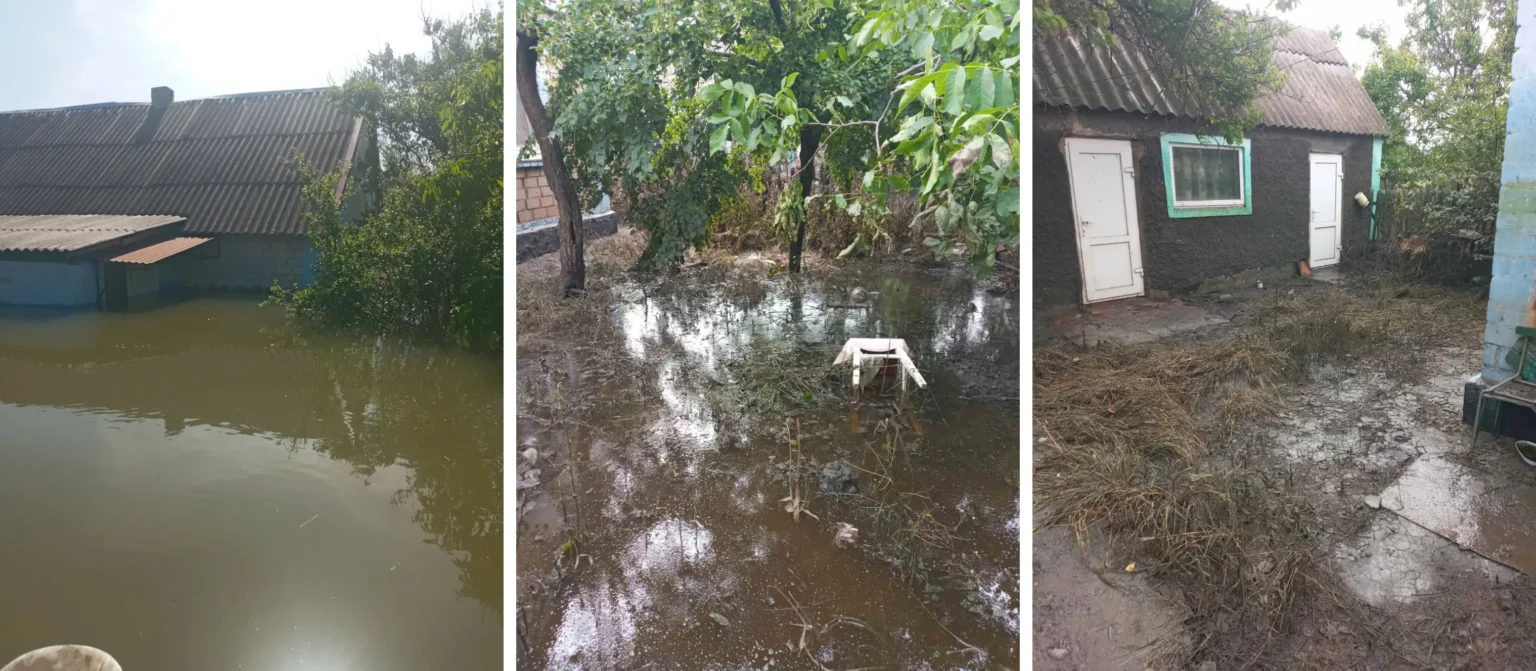
Daryna’s courtyard and house, where her body was found
Source: photo by TH and PEJ field reserchers
Efforts to provide medical aid to those in need were severely hindered by repeated shelling from Russian troops controlling territory on the left bank of the Dnipro.[237] A nurse at the City Hospital in Mykolaiv reported that “Russians have been bombing our rescue operations. Ukrainian medical staff are performing miracles to help as much as we can.”[238] Journalists also witnessed the challenges faced by rescuers in Kherson, encountering constant shelling while evacuating residents and animals from flooded areas.[239]
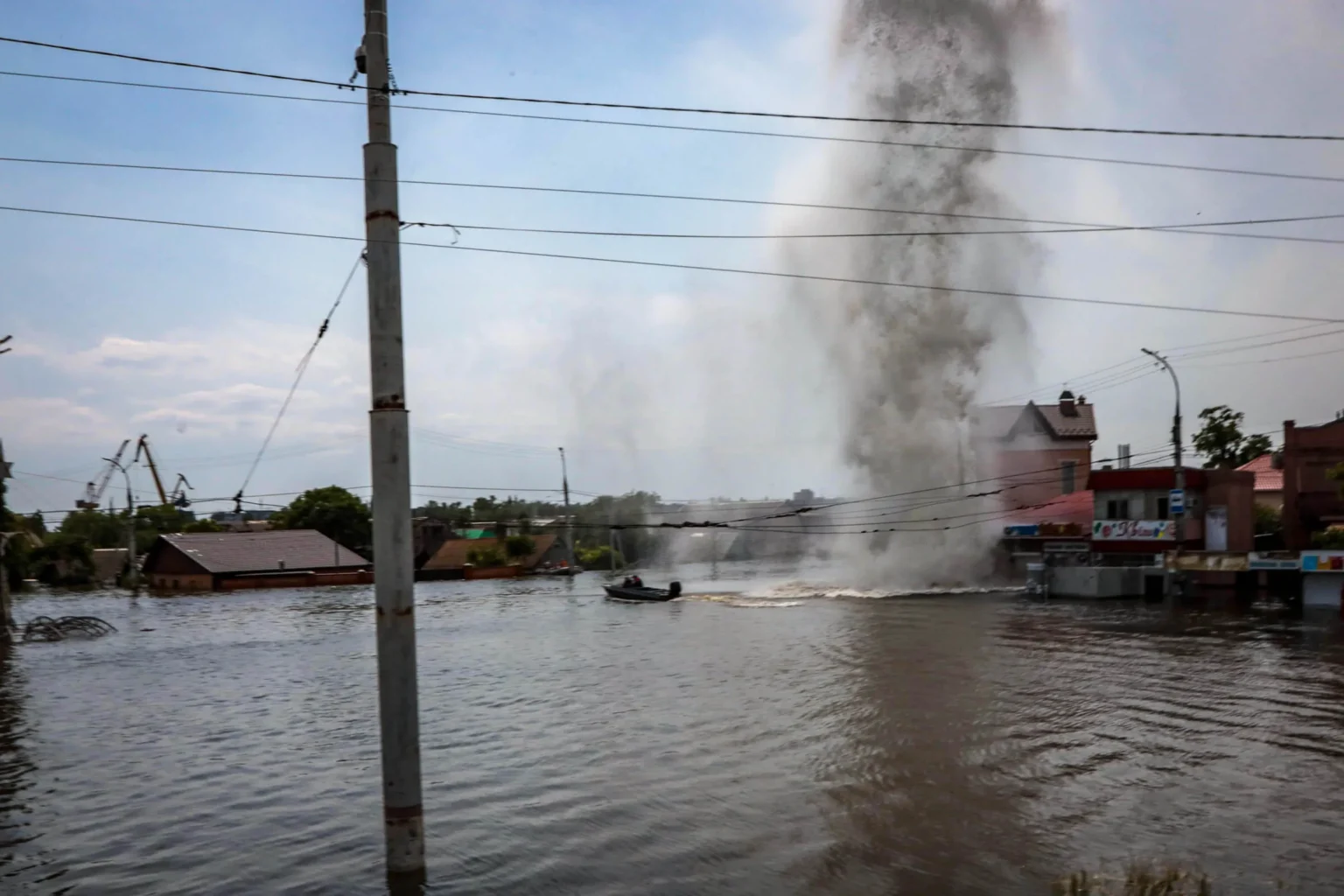
Shelling of the evacuation point on Korabelna Square, June 8, 2023
Photo: Stas Yurchenko, Graty
Still, the actual number of victims could have been higher in the absence of the mobilization of resources from Ukrainian authorities and volunteers who played a crucial role in mitigating casualties. The gradual increase in the water level, coupled with the vigilance of Ukrainian authorities and communities, contributed to a relatively low number of casualties, as observed by the UN Environmental Program (UNEP).[240]
ii) Casualties on the left bank
The left bank of the Dnipro River, which accounted for 68% of the flooded area,[241] experienced even greater devastation.[242] Russian occupying forces reported over 60 fatalities, with an undisclosed number still missing.[243] Independent verification of this data was impossible as Russian occupying forces barred access to international humanitarian organizations.[244]
At the same time, Ukrainian authorities estimated over 500 deaths solely in Oleshky, a small town downstream of the Dam.[245] The high number of casualties was eventually corroborated by an Associated Press (“AP”) investigation, which revealed deliberate and vast undercounting of the actual human cost by Russian occupation authorities.[246]
“Russian authorities took control of the issuance of death certificates, immediately removing bodies not claimed by family, and preventing local health workers and volunteers from dealing with the dead, threatening them when they defied orders.”[247] – AP investigation
The Russian-appointed administration in Kherson downplayed the situation, leaving residents ill-prepared.[248] Russia-appointed Kherson Oblast Governor Saldo, speaking right in front of the flooded streets of Nova Kakhovka, proclaimed, “Everything is fine in Nova Kakhovka; people go about their daily business like any day.”[249]
The situation quickly deteriorated, with locals on the left bank desperately calling for help from rooftops.[250] The AP also reported that occupation authorities were nowhere to be found for the first 3 days of the floods, having seemingly fled despite initially reassuring residents.[251] Moreover, the Russian military prohibited and impeded any evacuation efforts and forcibly occupied local residents’ 2-story homes.[252] Reports indicated that Russian forces even shot at civilians attempting to cross to the right bank and at rescuers trying to reach people in need of life-saving assistance.[253] Besides, countless individuals remained trapped under rubble in their homes.[254]
Despite these challenges, the Ukrainian military and volunteers rescued 112 individuals from the left bank by June 11, 2023.[255] This, though, came at a cost, as some Ukrainian soldiers engaged in rescue operations lost their lives in these operations.[256]
The destruction of the Kakhovka Dam has had a direct human cost on both banks of the Dnipro River. Additionally, the high number of missing persons serves as a reminder of the difficulty in determining the full extent of this tragic event.
b) Risks to human health and life
i) Diseases and infections
The destruction of the Kakhovka Dam caused further deterioration of the already fragile sanitary situation in the region, leading to reduced access to healthcare, challenges in managing chronic diseases, disrupted continuity of care, and exacerbation of mental health conditions.[257] It also caused severe water and soil contamination, posing significant health risks to the civilian population. While some perils materialized, many adverse outcomes were mitigated due to the proactive measures undertaken by Ukrainian authorities, international organizations, and volunteers.
Immediately following the disaster, health officials, rescue workers, and local medical teams warned of various life-threatening hazards, including drowning and the spread of waterborne and foodborne diseases.[258] The primary concern expressed by the World Health Organization (WHO) was the potential for outbreak of illnesses such as cholera, typhoid, and rodent-borne diseases.[259] A person overseeing the management and regulation of fisheries, aquatic ecosystems, and land reclamation activities in Mykolaiv Oblast reported to PEJ and TH field researchers that immediately after the flooding, the concentration of E. coli bacteria in the water was recorded at a level 5,000 times higher than normal, posing a threat of cholera-like diarrheal illnesses.[260]
Contamination of floodwaters and wells by chemicals, pathogens, dead bodies, landfills, and sewage, combined with the mass mortality of fish, heightened the risk of food poisoning and outbreaks of intestinal and infectious diseases.[261] The deaths of livestock and domestic and zoo animals, the corpses of which, in hot weather, contaminate water and soil and pollute the air, posed another danger of spreading infectious diseases.[262]
The floodwaters also carried hazardous substances from the bottom of the Kakhovka HPP and industrial plants, including 150 tons of engine oil.[263] The disruption of wastewater treatment systems exacerbated communities’ environmental and health challenges,[264] particularly in the inaccessible Russian-occupied areas.[265]
Urgent measures were implemented to address critical public health issues. The WHO representative in Ukraine noted the efforts to raise community awareness about water-borne diseases, the issuance of water safety messages, and the provision of informational material on acute intestinal infections and preventive measures.[266] The Ukrainian Ministry of Health warned against using water sources and any other contaminated products in the affected areas, as drinking water sources had been mixed with contaminated floodwater.[267] Local residents informed TH and PEJ field researchers that no major infections occurred because “the population was informed, and everything was organized and under control.”[268]
In September 2023, Igor Kuzin, Chief State Sanitary Doctor of Ukraine, reported that Ukraine managed to prevent outbreaks of infectious diseases. This was partially achieved by delivering 148,000 tons of drinking and technical water to the emergency zone and distributing 237,000 tablets to disinfect drinking water.[269] Despite avoiding a massive spread of diseases and infections, the local population was still affected by the disaster. As one resident of Nikopol noted, “there have been no infectious outbreaks,” but he still reported that “after the Dam was blown up, we had some rotavirus, some stomach upsets due to the change in water, but they were minor.”[270]
ii) Floating landmines
Landmines displaced by floodwaters pose a persistent threat to civilians in the affected areas.[271] The unmarked mines, submerged in water or scattered across the land, present dangers that could endure for decades,[272] especially considering that the flood-affected region is one of the most heavily mined areas in the country.[273]
Reports of floating landmines exploding emerged on the same day of the Dam’s destruction.[274] The risk of explosions and casualties remained high in the following days, particularly as debris may cover the mines when the floodwaters recede, rendering them invisible.[275] The WHO Representative in Ukraine also noted that “the mine maps will not be available to ensure that the coast of the river is clean,” increasing the likelihood of more civilians being killed and maimed by the weapons.[276]
Local people interviewed by TH and PEJ field researchers reported that 2 people in Snihurivka, located 50 kilometers from the Kakhovka Dam, were killed when trenches/dugouts exploded after the water receded.[277] This underscores the devastating and ongoing impact of Dam destruction during wartime.
iii) Vipers
The depletion of the Kakhovka Reservoir led to an influx of vipers into nearby settlements, posing a new threat to public safety.[278] Witnesses reported encounters with vipers in residential areas.
Andriy from Chervonohryhorivka Village, Dnipropetrovsk Oblast, described the fauna’s exodus from the Reservoir to the documenters: “Turtles, snakes – they all escaped, moved. Up to 15 snakes even crawled into houses.[279] Another resident, from Marianske, Dnipropetrovsk Oblast, described the ordeal: “For the past month or two, there have been a lot of vipers in the village – it’s very creepy. One of my friends told me that a man was bitten by one. They used to live only on the shore, but now they are looking for a place to live in the village. I keep running into them in my yard, and once, a viper came out of my house.”[280]
Alina from Hrushivka, Dnipropetrovsk Region, also shared her distress: “Vipers got into our yards. A yellow-bellied, 1.5-meter-long, thick snake twisted around the dog and suffocated it. We used not to be afraid of snakes; they were just small ones that swam around. Now, it’s frightening to go outside; sometimes, they even crawl into the house.”[281]
c) Disruption of essential services and lack of vital needs
In addition to the loss of life, injuries, diseases, and heightened risks to the locals’ well-being resulting from the destruction of the Kakhovka Dam, accessing basic necessities such as drinking water and electricity has become significantly more challenging for the affected population.
TH and PEJ have received countless witness statements highlighting the scarcity or poor quality of drinking water. Its absence is further endangering the lives and health of the locals. Limited access to clean drinking water disproportionately affects vulnerable groups, such as people with disabilities and the elderly.
Reports indicated that if the water level in the Kakhovka Reservoir dropped below 14 meters, over 200,000 people would face disruptions in running water supply, while a further drop below 13 meters would affect over 1,000,000 people.[282]
The Hydrometeorological Service of Ukraine reported a drastic decrease in water levels following the Dam’s destruction. At the Nikopol station, water levels plummeted from 16.76 masl to 9.04 masl by 8:00 PM on June 11, 2023, resulting in a complete loss of the Reservoir’s volume. A similar decline was observed in the upper part of the Kakhovka Reservoir in Zaporizhzhia, with water levels stabilizing at about 12.60 masl by June 20, 2023.[283]
Therefore, regardless of the different areas of the Kakhovka Reservoir, it still went down to a less-than-critical level of 13 meters, and up to a million people lost access to drinking water, as confirmed by a joint Ukrainian-UN report.[284]
TH and PEJ received some accounts of the dire situation in a dozen settlements. Tetiana, a woman from Oleksandrivka Village in Dnipropetrovsk Oblast, recounted they used to enjoy clean, drinkable water. However, following the Dam explosion, the water quality deteriorated dramatically. “After settling overnight, a substantial amount of sediment accumulates at the bottom of a bucket. This water, with a reddish tinge, unpleasant swampy odor, and surface film, is even rejected by our chickens,” she describes.[285]
Oleksandrivka Village water quality after Kakhovka Dam collapse, photo by Tetiana
Vadym, a man from Kapulivka Village in Dnipropetrovsk Oblast, described their situation: “And after June 16, 2023, the water supply stopped. Now we have no options to solve this problem, it is completely unclear what to do.”[286] Another woman recounted, “People are affected by the fact that there is no drinking water, that they have to carry it in their hands. We have a lot of pensioners and 5-story buildings, so we have to carry it to the fifth floor every day.”[287]
TH and PEJ also met a US-based volunteer from the “Aquaducks” NGO, who recounted the challenges faced in Apostolove. He said that out of 2 available sources of drinking water in Apostolove, one ran dry in several weeks, and the second available is not of the best quality and is expected to disappear or freeze in the near future.[288] He warned of potential long-term health consequences from consuming contaminated water: “Over time you will have kidney and liver problems, like cirrhosis of the liver, possible liver cancer, kidney stones, and then an elevated risk of birth defects for pregnant women or women of childbearing age if they’re drinking this water for a long period of time.”[289]
While some communities managed to preserve some water through local initiatives, such as building a self-improvised dam in the villages of Kapulivka and Oleksiivka,[290] or obtained temporary relief through the delivery of water and its storage in water tanks, the primary mitigation effort involves the construction of a new strategic pipeline.
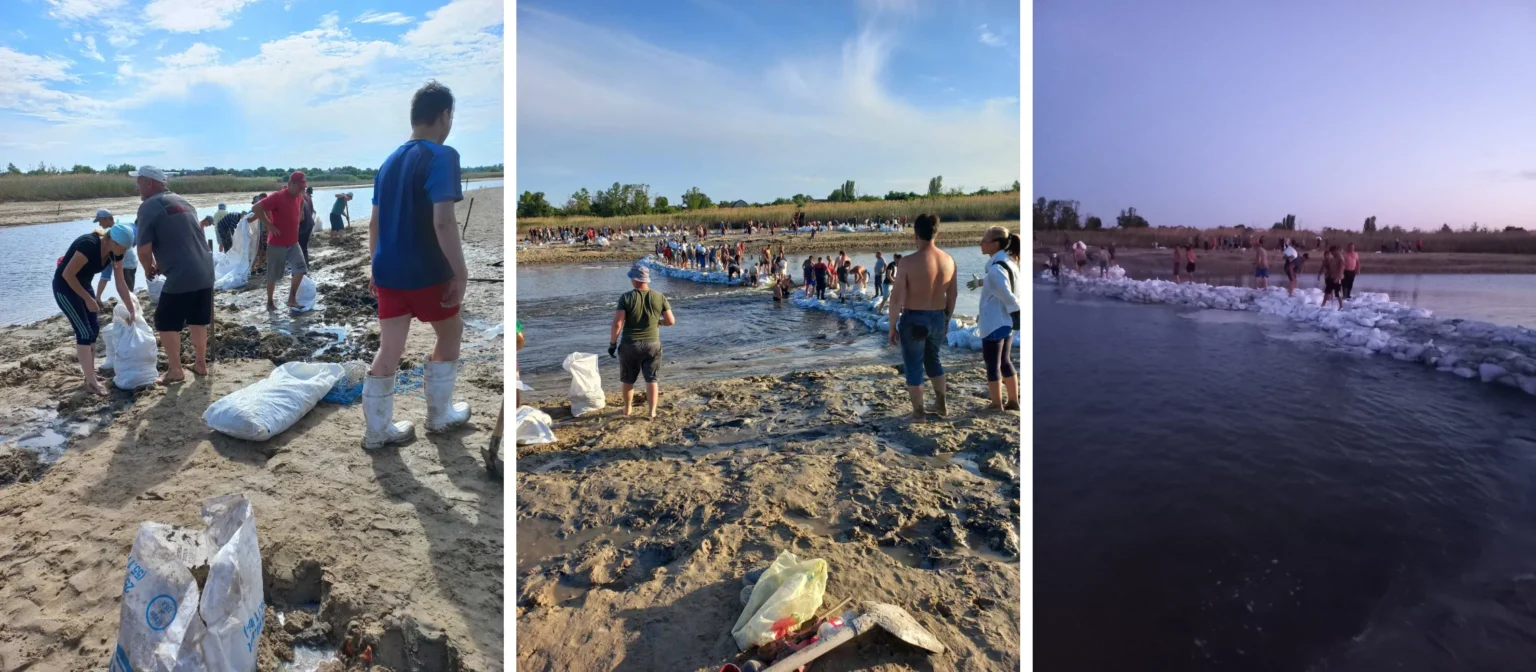
Construction of a self-improvised dam by locals, Kapulivka and Oleksiivka, Dniprotpetrovsk Region, June 2023
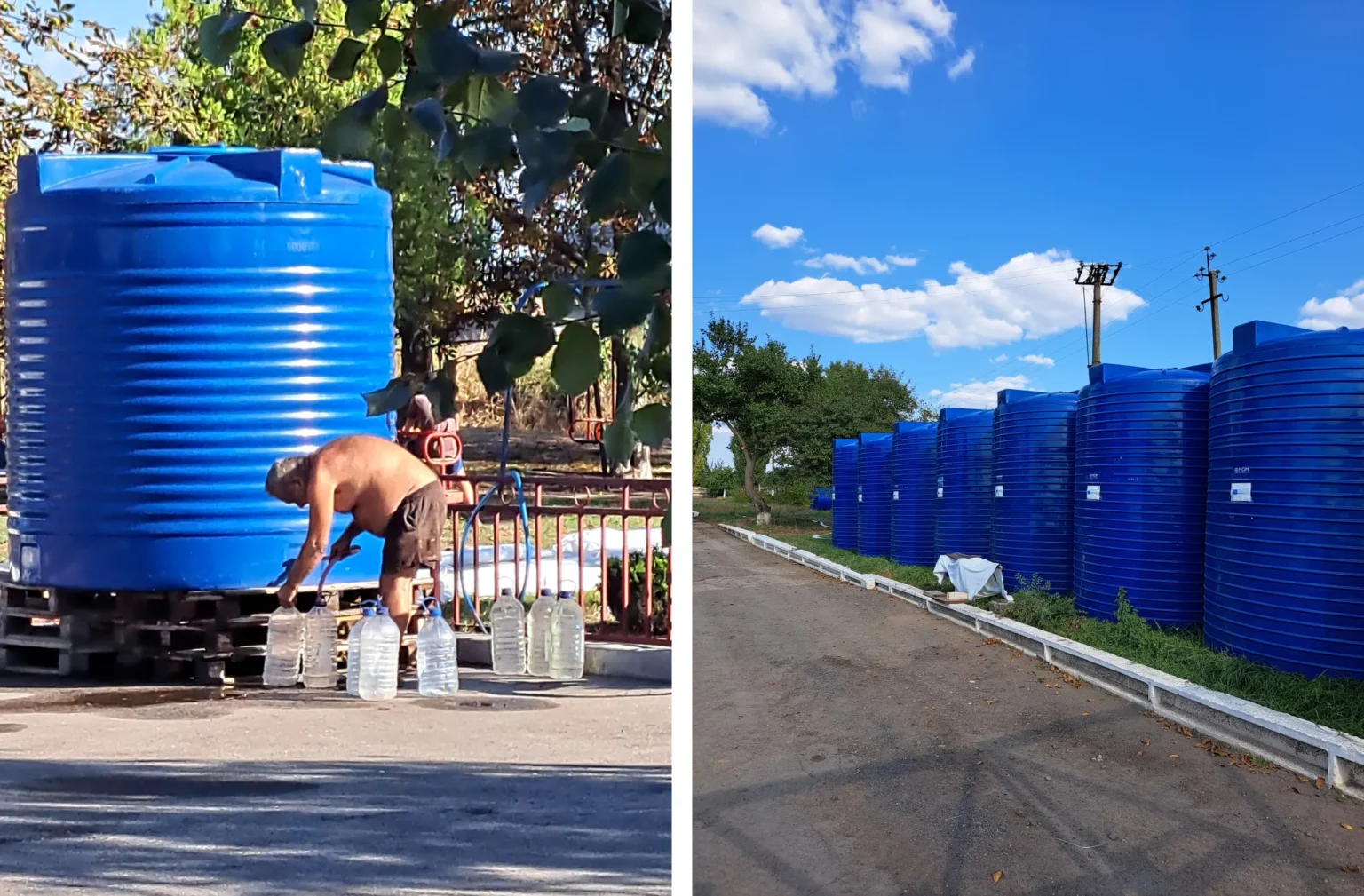
Water tanks for the affected communities in Kapulivka (left) and Nyva Trudova (right), Dnipropetrovsk Oblast
A sign in Nyva Trudova reads: “From 30 August water distribution will be suspended”
Source: photo by TH and PEJ field reserchers
In June 2023, the government allocated 1.5 billion Ukraine hryvnia (UAH) (equivalent to almost 40 million USD) for the construction of new water mains to serve the affected regions.[291] The project aims to establish water mains from Karachunivske Reservoir to various destinations, ensuring access to clean water for at least 1,000,000 people in Dnipropetrovsk, Zaporizhzhia, Mykolaiv, and Kherson Oblasts. Construction of the pipeline commenced shortly after the Dam’s destruction, with plans to deliver 400,000 m3 of water upon completion.[292]
Downstream communities also experienced significant water challenges due to contamination. Flooding compromised wells and boreholes, leaving residents without access to centralized water for extended periods.[293] Upon restoration of the centralized water system, officials issued warnings that the water remained unsuitable for even basic hygiene purposes such as washing, classifying it as technical water only.[294] Additionally, there was no exact information at the time regarding the long-term potability of water from the compromised wells.[295]
Finally, electricity supply disruptions affected up to 140,000 individuals,[296] with nearly 130 transformer substations and 2 solar power plants flooded.[297]
In summary, the destruction of the Kakhovka Dam has inflicted profound and far-reaching consequences on the lives of the affected population. From loss of life and injuries to widespread disruption of essential services such as water and electricity, the Dam’s collapse has plunged local communities into a state of ongoing hardship.
4.1.2 Consequences for Property
The attack on the Kakhovka Dam caused sudden flooding, disrupting and imperiling the lives of people in adjacent communities. The consequences for people are not limited to the loss of life and compromised health, but also encompass the destruction of tens of thousands of homes, which represented the life’s work of many residents.
The affected area stretched for thousands of square kilometers. Water levels reached unprecedented highs not only along the Dnipro River itself but also in its tributaries, like the Inhulets. This resulted in flooding even tens of kilometers away from the Dnipro River and the Kakhovka Dam.
A comprehensive analysis of the impact on buildings was conducted by the Kyiv School of Economics (KSE) Institute and Vox Ukraine.[298] They published a report and created an online, publicly accessible dashboard.[299] The study’s analysis methodology involved satellite imagery, open-source data, and geospatial analysis to determine flood heights.
An estimated 60,509 buildings, encompassing both residential and non-residential structures, were flooded. This represents a total inundated area of approximately 8,588,175 m2. Houses bore the brunt of the damage, with a flooded area of 5,874,448 m2, of which private homes accounted for 70% (4,107,206 m2) of the total. Educational institutions (133,928 m2) and medical facilities (45,302 m2) were also affected. These figures illustrate the disaster’s profound impact on the population, housing stock, and infrastructure of the region. For a detailed overview of the damage caused to infrastructure, including industrial and agricultural facilities, please refer to Section 4.3.1.
For perspective, consider some of the world’s largest buildings: New Century Global Center in China (1,760,000 m2), Dubai International Airport Terminal 3 (1,713,000 m2), and the Pentagon (approximately 610,000 m2). The combined floor area of these structures wouldn’t even equal half the area of buildings inundated by the Kakhovka Dam explosion. In other words, the flooded buildings represent an area nearly equivalent to 5 New Century Global Centers, 5 Dubai International Airport Terminal 3s, or more than 14 Pentagons.
Anna, a resident of Afanasiivka Village (some 50 kilometers from the Dam and 35 kilometers from the mouth of Dnipro), exemplifies the plight of thousands who lost their homes. She recounted the devastation to TH and PEJ field researchers:
“I lost everything I had. There was mud everywhere, the furniture was swollen, and most of the things were damaged. To restore that house now, I don’t know how much I need. It is beyond repair; it needs to be demolished and a new one built. It is now crumbling, the walls are cracked, and the ceiling has almost fallen into the house.” [300]
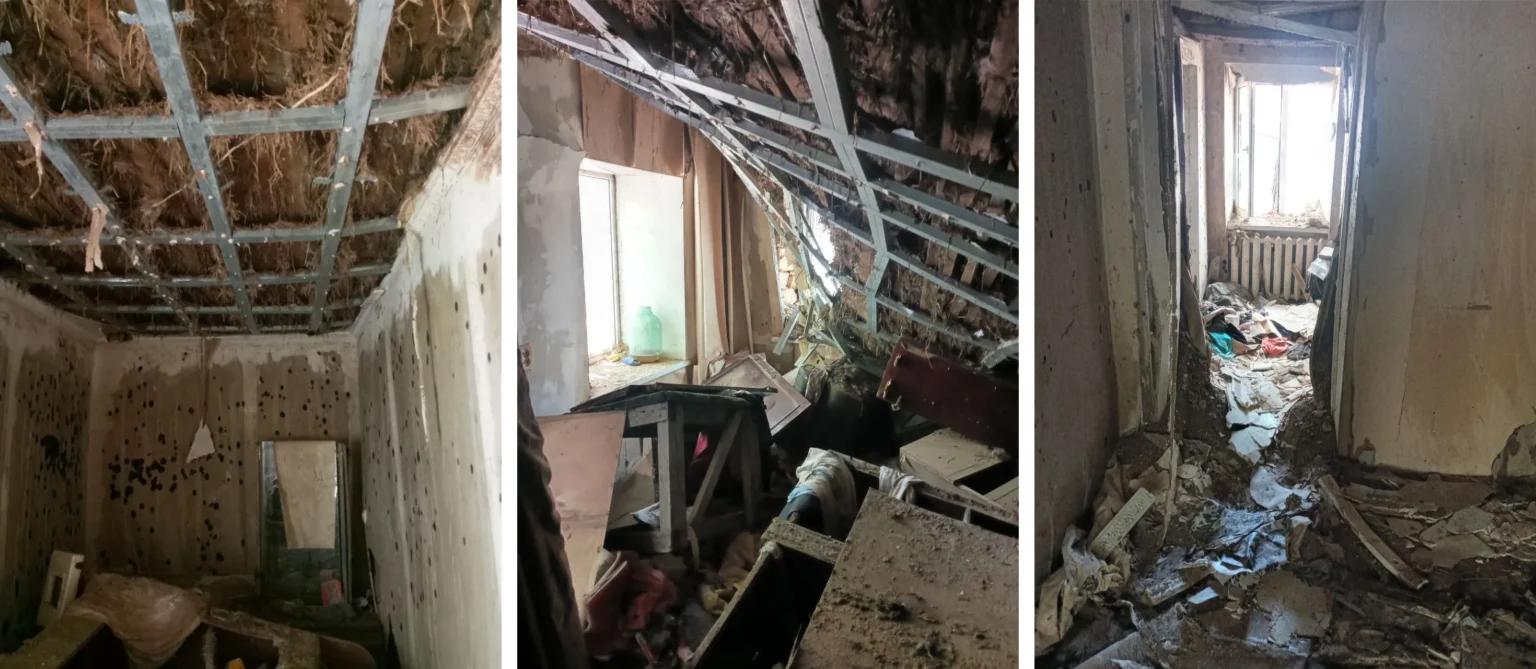
The house of Anna
Source: photo by TH and PEJ field reserchers
Another resident from Kherson’s Korabelnyi District, Valeriia, described her experience:
“On the very first day when the Dam was blown up, or maybe June 7, I called [my neighbor] and she said that they had to leave the apartment, the water had risen by a meter. Our house was flooded, there is no heating and will not be any more soon.”[301] (The interview took place on September 18, 2023, more than 3 months after the disaster).
The flooding also devastated entire roads, which became deserted and abandoned. People, particularly the elderly residents, were forced to flee their lifelong homes. Viktoria, from the village of Novovasylivka, Mykolaiv Oblast, exemplifies this hardship. She recounted the story of her in-laws:
“My parents-in-law (72 and 76 years old) could no longer live in their house, so we had to buy them another house. Their house was also completely flooded. Now it is an empty street; no one lives there.”[302]
These personal stories reveal the human cost behind the statistics. Over 36,010 private houses, 982 multi-story buildings, and 1 dormitory were flooded.[303] Each number represents a story like Anna’s, Valeriia’s, or Viktoria’s. The scale of the destruction and the lives shattered by this disaster are difficult to comprehend. It will take immense effort to rebuild and recover.
4.2. Environmental Consequences
This subsection of the report examines the disastrous environmental consequences the Kakhovka Dam’s explosion has led to, namely: (4.2.1) adverse effects on the water; (4.2.2) detrimental impact on flora, fauna, and natural reserves; and (4.2.3) harmful influence on soils. This subsection is technical in nature to provide a comprehensive overview of the myriad impacts of the Dam’s destruction.
There’s a growing realization that there’s no separation between people and the environment, and this is filtering through to the laws of war [304]
~Kate Mackintosh
4.2.1. Adverse Effects on the Water
a) Reduction of groundwater level
During the first days after the Kakhovka disaster, multiple accounts warned of severe groundwater level decreases in territories of the catchment area of the Kakhovka Reservoir due to the anticipated drainage of the Reservoir.[305] Principally, for the territories of Kherson, Mykolaiv, Zaporishzhia, and part of Dnipropetrovsk Oblasts, the volume of groundwater was dependent on (i) the infiltration of the atmospheric precipitation (rain, snow, etc.), (ii) filtration of the rivers (Dnipro River and its tributaries and the Kakhovka Reservoir), and (iii) additional supply from the economic activity (for example, on irrigation arrays).
At first, many people residing in the named territories reported a rise of the groundwater levels, particularly in their wells:
A Mykolaiv Regional Office of Water Resources employee told PEJ and TH field researchers, “Many people observed the rise of the groundwater level, and we [they] do not know how the situation will change further. Groundwater quality has also deteriorated… The rise of groundwater was as far as the Nechainske OTG [united territorial community] — almost 300 kilometers from Snigurivka to the north. There the water stood up to the cities. Five (5) wells were flooded in Snigurivka.”
Yet, with the drainage of the Kakhovka Reservoir, which, prior to its destruction, had a normal water level of 15-16 m, the groundwater levels and pressure decreased in places that were located in the coastal strip, as well as in other parts of the catchment area of the Reservoir. PEJ and TH field investigators recorded several incidents of drained wells:
A resident of Novoukrainske Village (Kryvyi Rih District, Dnipropetrovsk Oblast) reported, “The water level in the wells also fell. A friend of mine has a 10-meter well with a 25-meter pipe; today it pumped for 15 minutes, and the water is running out, while earlier, you could pump water all day.”[306]
A foreman of the Maryansky Water Supply Section of the Zelenodolsk Vodokanal (Kryvyi Rih District, Dnipropetrovsk Oblast) mentioned, “When the water left Kakhovka, the level in the wells dropped. Many people are cleaning the wells, and 3 teams are currently digging wells in the village. Two (2) wells are being made near the school. They do it at the filtering station. They were thinking of running water from them to a centralized system, but there is a small debit of water; it will not be enough.”[307]
In September 2023, scientists from the Institute Environmental Geochemistry of the National Academy of Sciences of Ukraine (“NASU”) conducted a field trip to the coastal strip of the Kakhovka Reservoir in Kherson and Dnipropetrovsk Oblasts, where they also recorded the critical drop of groundwater level up to 5-8 meters. The scientists also observed completely drained wells on the right bank of Dnipropetrovsk Oblast, namely in Katerynivka, Nikopol, Maryanske, and other settlements.
The certified hydrological expert, with whom PEJ and TH have closely worked, estimated on the basis of a mathematical formula that even if the Kakhovka Dam was rebuilt and the Reservoir was filled with water, it would take at least 33.5 years to re-establish the former groundwater levels in the catchment area of the Kakhovka Reservoir.10
A detailed hydrogeological analysis on the issue of decreasing groundwater levels in the aftermath of the destruction of the Kakhovka Dam can be found at the end of our report in Annex C.
10 Expert analysis of the impact caused on water resources and environmental elements as a result of the Kakhovka Dam’s destruction, see Annex C.
b) Salinization in surface and groundwaters
Currently, the salinity of surface waters after the Kakhovka HPP Dam damage has not changed significantly and is almost in the same range as in 2021. In June 2023, right after the Kakhovka HPP Dam’s breach, water salinity ranged from 166-271 mg/dm3. On July 16, 2023, the maximum value was 273 mg/dm3. At that time, the chloride ion content, which defines the water-salt balance of living organisms, was also at its highest, at 74 mg/dm3, while it did not exceed 27.3 mg/dm3 before the disaster.[308]
For comparison, from the Kakhovka Reservoir’s filling in the 1950s to the Dam’s breach, the salinity of water in the Reservoir increased by an average of 275 to 380 mg/dm3, with maximum values in the southern part reaching 600-800 mg/dm3.[309] Respectively, the salinization of the Lower Dnipro is more of an adverse phenomenon, than the outcome of the Dam’s destruction.
As the scientists point out, the lack of water for ecological runoff (caused by the Kakhovka Reservoir dewatering and the subsequent absence of the water discharge through the Kakhovka HPP in the future) raises another problem: the upstream movement of saline water from the estuary toward the Dnipro River course. Negative phenomena associated with this might include a decrease in dissolved oxygen, an increase in hydrogen sulfide, fish freezing, salinization of bottom soils, death of benthic organisms, etc., and require an upward revision of the minimum ecological flow in case of the HPP’s reconstruction.[310]
While there was no marked salinization of surface water, the Dam’s destruction has severe and devastating implications for the salinization of groundwater supplies. The salinization of the groundwater of the productive aquifers is very unfavorable in its consequences for areas of the Dnipro and mainly Kherson Oblasts that naturally suffer from water deficits. Although the Kakhovka Reservoir was an artificial construction, it helped to balance the water budget in the mentioned areas, serving as an extra recharge zone for the main groundwater collector, spread within the Lower Dnipro catchment area – the Neogene Aquifer Compleх.
The aquifer complex in the Neogene geological system, composed mainly of limestones, marls, and sandstones, has a regional distribution and is widely used by locals of Zaporizhzhia, Dnipro, and Kherson Oblasts across the Kakhovka coastal areas as a freshwater supply source. This complex is naturally high in salinity. The Kakhovka Reservoir’s water level drop, along with the absence of extra recharge, is impairing water exchange in the upper hydrogeological zone. This, coupled with soil salinization from sudden drying, climate effects, and the impact of the Kakhovka Dam breach will cause salt (chlorides and sulfates) to build up in 70% of the Neogene Aquifer in areas prone to salt formation. Thus, the Neogene Aquifer Complex is likely under the threat of quality deterioration.11
- According to a technician of the Mykolaiv Regional Office of Water Resources, while the norm for surface river water, which provides water salinity, was 350 mg of chlorides per m3, there was an excess – up to 500 mg³.[311]
- The director of the communal enterprise that supplies water to Kapulivka and Pokrovske Villages in Dnipropetrovsk Oblast reported, “Water from ordinary wells [was] mostly bad and hard; [his] acquaintances from Kapulivka recently sent water from their well for a sample – they had 9 grams of salt per cubic dm3; this is very salty water. For example, at the old well in the pumping station, the indicator [was] 1.25 grams of salt per dm3 of water.”[312]
The statements of local residents interviewed by TH and PEJ are supported by the results of field research of the Institute of Environmental Geochemistry of the National Academy of Sciences of Ukraine published in September 2023.[313] The Institute established that the groundwater that was used by the residents on the right bank of the Dnipropetrovsk Oblast did not meet the requirements established for drinking water in terms of mineralization (“salinity”) criteria. In most cases, the mineralization of water samples varied between 1,360-3,720 mg/dm3, while the established threshold value for drinking water in Ukraine is 1,000 mg/dm3.[314]
In the same way, according to NASU’s laboratory analysis, conducted through random examination points (mainly water supply network in the private sector) along the Kakhovka Reservoir right bank, the groundwater that was used by the population of the surveyed settlements, did not meet the requirements established for drinking water in terms of mineralization (“salinity”) criteria. In most cases, the mineralization of water samples varied from 1,360-3,720 mg/dm3; as noted, the established threshold value for drinking water in Ukraine is 1,000 mg/dm3.[315]
Salinization is expected also to be cyclical due to the use of highly saline groundwater for irrigation – salinity will increase due to the residuals of the undiluted salts in soils as a result of evaporation prevalence over the precipitation.
Consequently, salinization of the upper water exchange zone, together with soil salinization may lead to water-related and salt-related degradation of the territories and make them unusable for any economic activity.
c) Desalination in the Black Sea and its tributaries
Immediately after the Dam’s breach, the salinity of the northern part of the Black Sea was reduced. According to the laboratory tests of the State Environmental Inspectorate of the South-Western District of Ukraine (“State Environmental Inspectorate”), which collected seawater samples in 3 different locations in and near Odesa, as of July 10, 2023, the seawater salinity had decreased almost 3 times below the standard level.[316] Consequently, warm and fresh water from the Kakhovka Reservoir entered the Black Sea 3 to 4 days after the Dam breach and reached the Odesa Sea Coast, decreasing the normal seawater salinity from 17-18 parts per million (“ppm”)12 to 4 ppm on June 9, 2023.[317] A Senior Researcher at the Institute of Marine Biology, Dr. Son, mentioned that the water surging from the Kakhovka Reservoir into the Black Sea reached areas near the Cape of Velykyi Fontan and beyond, which influenced the level of salinity in the Sea.[318] The amount of the freshwater that entered the Black Sea after the Dam’s breach can be compared with the spread of polluted waters to the northwestern Black Sea shelf area of 7,300 km2 (see below).[319] As a result, the marine organisms that live in the bottom sediments (called hydrobionts), which cannot move and change their location, were exposed to conditions that were much less salty than usual for about a week.
From June 18, 2023, salinity in the Black Sea began to rise again due to mixing, and during the last week of June 2023, the surface water layer moved from the coastal zone to the open sea, a more favorable phenomenon for sea life. In its place, colder, saltier, and cleaner deep water moved toward the coast. This movement caused the salinity to increase back to 18 ppm while the water temperature dropped to 12°C. This return of saltier water was beneficial for marine organisms, as it created more favorable living conditions compared to the decrease in salty water caused by the Kakhovka Dam breach.
11 Expert analysis of the impact caused on water resources and environmental elements as a result of the Kakhovka Dam’s destruction, see Annex C.
12 From latin – per mille “in each thousand,” indicates parts per thousand (‰).

Salinity levels in the Black Sea from June 3, 2023, to July 8, 2023
Source: UNEP (2023) scale, created on the basis of State Agency of Water Resources data (2023)[320]
Volume of the Water Spread from the Kakhovka Dam
However, in addition to the plume of freshwater, dirty water, contaminated by sediments from the Kakhovka Reservoir (see 3.3.) and the Dnipro Riverbed, as well as debris and pollutants from the flooded areas, entered first the Dnipro-Buh Estuary (Lyman), which is a large body of water. Only afterward did the contaminated waters begin flowing out of the estuary to the northern part of the Black Sea.[321]
On June 8, 2023, the Odesa military administration reported that the debris (e.g., particles of the destroyed buildings and wood) that had been carried away by the water stream from the Kakhovka Reservoir appeared near the shores of Odesa Oblast. For instance, Mykolaiv Regional Office of Water Resources employee told TH and PEJ investigators, “The desalination wave went to the seas, approached Koblevo” (which is located on the border of Odesa and Mykolaiv Regions).[322]
Already on June 9, 2023, the debris approached the beaches of Odesa City.[323] Such a volume of water spread can be explained by the moderate winds from the eastern and northeastern directions prevailing during the nights of June 8 and 9, 2023. The weak winds and change of water stream direction during the day led to the expansion of polluted water.[324]
With the use of satellite imagery, the Ukrainian Scientific Center of Ecology of Sea (“UkrSCES”) estimated that on June 15, 2023, within a week after the Dam’s breach, the contaminated waters reached the Danube River, covering around 7,321 km2 of the northwestern part of the Black Sea.[325]
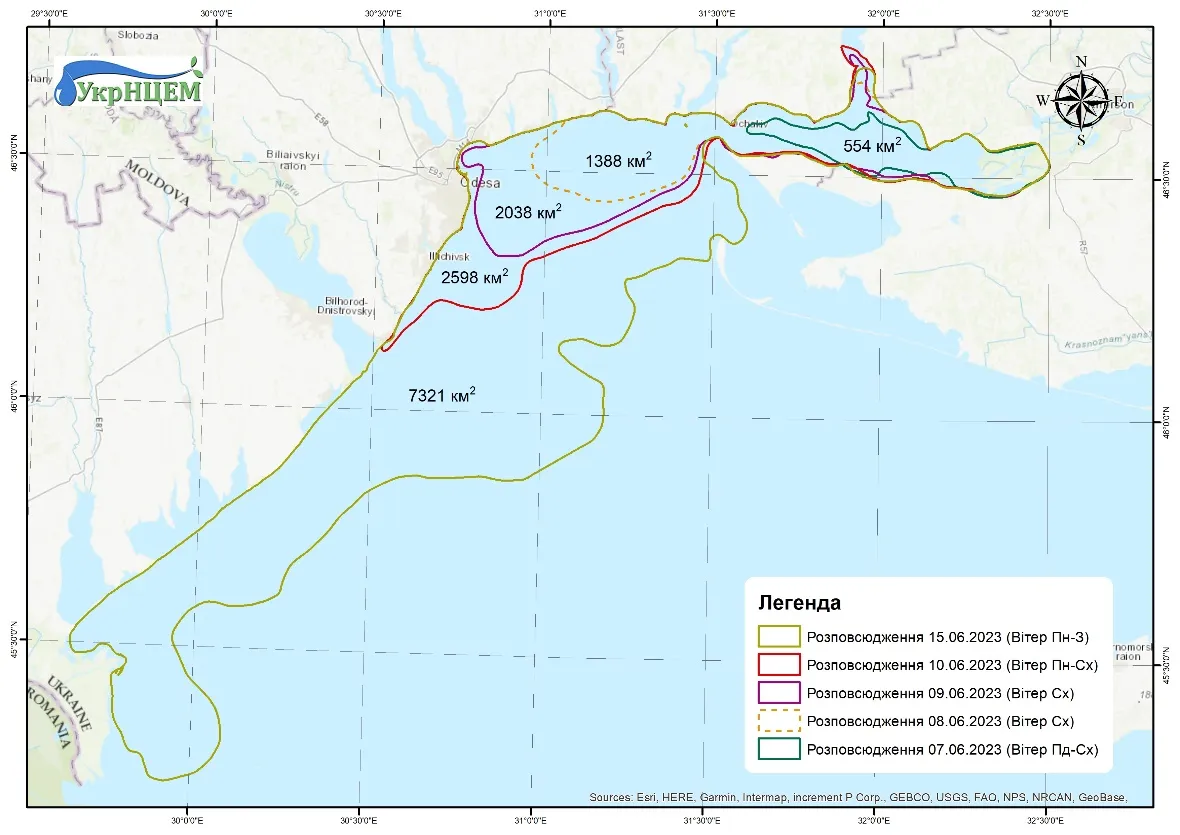
A map based on satellite imagery showing the timeline of the spread of contaminated waters to the Dnipro-Buh Estuary and the northwestern part of the Black Sea.
Source: UkrSCES[326]
The Institute of Marine Biology of the National Academy of Sciences of Ukraine (“Institute of Marine Biology of Ukraine”) reported a slightly lower volume of water spread as of June 15, 2023 – nearly 6,000 km2 of contaminated seawater. They also visually highlighted the water spread to the coastline of other states.
d) Contamination of water
i) Mechanical pollution of water (with debris, sediments, and coarse-grained parts)
The rampant wave of water unleashed from the Kakhovka Reservoir on June 6, 2023, flooded settlements on both banks of the Dnipro River, inundating numerous buildings and simultaneously sweeping away a substantial quantity of debris.
To estimate the volume of debris carried away by the water stream from the Reservoir, models of the produced amount of disaster waste were created. One of the primary models was introduced by UNEP, which is the version of the US Environmental Protection Agency Incident Waste Decision Support Tool adapted to the circumstances of armed conflict. Such a customized version assumes that due to the materials and financial constraints faced by the local population in the flooding zone, many non-structural building materials, furnishings, and other items are highly likely to be reused or recycled rather than discarded in landfills. As a result, a reduced amount of disaster waste is calculated. The UNEP model projected that the total amount of disaster waste swept away by the flood was 1,077,000 m³.[327]
Another model of calculation of the amount of waste was presented by the UN Development Program (“UNDP”) in the aftermath of the Kakhovka Dam’s breach. This model calculates disaster waste based on the number and size of buildings in the flooded area, taking into account their type of use. The amount of debris is estimated per m2 depending on the severity of the flooding. Also, the UNDP model counts all types of flooding: completely, partially, and potentially inundated buildings. The UNDP modeling generated a higher number than the UNEP modeling, estimating 2,894,000 m³ of debris to have been carried away.[328] However, it is important to note that due to the inability to directly survey certain areas in the South of Ukraine, both models can provide only approximate estimations of the amount of debris produced.
The water flow from the Kakhovka Reservoir not only washed away debris but also carried downstream a mixture of bottom sediments from the Reservoir and flooded areas. This resulted in increased water turbidity, with the presence of numerous small fractions and colloidal fine-grained particles, which were determined to be mainly iron and manganese oxides. The increased turbidity may pose a risk that the aquatic ecosystem’s trophicity will grow, thus leading to microbiological growth, microalgae blooms, and general deterioration in conditions for biological communities.

Tap water in a plastic bottle – the visual representation of the water turbidity level (the turbidity is high compared to the normal water quality) in Novoukrainske Village (Kryvyi Rih District, Dnipropetrovsk Oblast)[329]
In many cases, despite the microbiological effect on water pollution, colloidal particles (i.e., dispersed insoluble particles) bring an increased amount of hazardous components, namely heavy metals, and their compounds. In particular, concentrations of heavy metals in water and sediments of the Kakhovka Reservoir were consistently higher than in other Ukrainian Reservoirs,13 primarily due to the insufficiently treated wastes from regional industrial activities such as metallurgy and chemistry.[330] Additionally, a pre-disaster study highlighted elevated levels of pesticides and retardants in the Dnipro River Basin, including terbuthylazine, nicosulfuron, fipronil, and carbendazim.[331]
Building on this context, a post-flooding study conducted by Arnika (a Czech non-profit organization) and its partners assessed sediment samples from the drained Reservoir and flooded areas. This investigation revealed an exceedingly high concentration of chromium and arsenic14 in all collected samples. Notably, one of these samples came from Antonivka Town in Kherson Oblast, which had experienced flooding from the Reservoir.[332] This study correlates with the earlier findings of the UkrSCES, which found that sediment samples from the Dnipro River, nearby flooded areas, and the Dnipro-Buh Estuary collected between June and July 2023 contained levels of toxic metals (zinc, cadmium, cobalt, and arsenic) that exceeded safety thresholds.[333]
It is believed that the primary sources of sediment dispersion from the Reservoir were the erosion of the pre-Dam riverbed upstream and the river corridor downstream rather than the Reservoir sediment delta itself. Initial assessments by the UNEP suggested that sediments transported directly from the Reservoir substrate were minimal, as there was relatively little sediment present before the disaster according to previous scientific findings.[334] Moreover, as the water surface elevation gradually decreased, it is likely that most of the Reservoir’s sediments remained undisturbed.[335]
Despite possibly a small volume of sediments being carried from the Reservoir, the laboratory tests conducted by the Ukrainian authorities immediately in the aftermath of the Dam’s destruction still showed an increased concentration of the suspended solids in the Black Sea and its tributaries. Data from the State Environmental Inspectorate showed that the concentration of suspended solids in the water samples collected on June 7, 2023, from Inhulets River, near Novosofiivka Village and Snihurivka Town (Mykolaiv Oblast), surpassed the norm.[336] On June 8, 2023, the new water samples that were taken from the Inhulets in Snihurivka again demonstrated the excess of the permissible concentrations of suspended solids.[337] On June 9, 2023, the concentrations were slightly lower, although still higher than the standard level. On the same day, the State Environmental Inspectorate also emphasized the increased number of total dissolved solids in the Inhulets River, which, besides the flooding impact, was explained by the river’s initial surface water quality.[338] As a water body, the Inhulets River is predominantly defined by the anthropogenic pressure (being the receiver of wastewater from mines, sewage, and industrial drainage) that is created along the river stream. This corroborates with the information collected by PEJ and TH field investigators during their missions to the affected territories.
In particular, a technician from the Mykolaiv Regional Office of Water Resources mentioned that water quality in the Inhulets River deteriorated due to the suspended slags in the bed of the river, as Inhulets served as a river-receiver of mine water wastes.[339]
On June 10, 2023, an analysis of water samples collected by the State Environmental Inspectorate from the Inhulets River indicated the concentration of suspended solids had returned to its pre-disaster norm.[340] This was corroborated by laboratory tests taken from the Inhulets River on June 13, 2023.[341]
Regarding the Black Sea, seawater samples collected on June 10, 2023, by the State Environmental Inspectorate from 3 locations in the Odesa Oblast showed that the concentration of suspended solids exceeded standard limits by 1.1 to 1.6 times.[342] Subsequent samples taken on June 13, 2023, in the same areas revealed that the accumulation of suspended solids had increased to 1.6 to 2.6 times the permissible levels.[343] From June 20, 2023, the concentrations of suspended solids had somewhat stabilized, yet fluctuations continued. By June 26, 2023, the concentrations of the suspended solids were above the norm in only one of 3 samples collected in the Black Sea.[344]

The concentration of suspended solids in the Black Sea.
Source: UkrSCES, based on State Environmental Inspectorate data[345]
13 Except the Zaporizhia Reservoir.
14 The only sample that had a moderate concentration of arsenic was the piece collected near the Zaporizhzhia Sailing School.
NB: The analysis on the volume of water as it spread (containing debris, sediments, and coarse-grained particles) is presented in the subsection above (c), which analyzes the dispersion of fresh waters from the Kakhovka Reservoir to the Black Sea.
ii) Pollution from the flooded hazardous facilities.
Immediately in the aftermath of the Kakhovka Dam breach, Ukrainian authorities reported that 150 tons of transformer oil from the Kakhovka HPP entered the Dnipro River. The risk of an additional 300 tons of oil being released into the river from the HPP was highlighted.[346]
This corroborates the findings of PJSC (“Private Joint Stock Company”) Ukrhydroenergo,15 which reported that the Kakhovka HPP equipment and oil storage contained 465 tons of oil that was likely to have been dispersed downstream to the Black Sea.[347] These findings were also supported by the REACH humanitarian initiative, which found that 465 tons of transformer oil from the Kakhovka HPP had ended up in water.[348]
Beyond the mere oil release from the Kakhovka HPP into the Dnipro River, which likely spread downstream to the Dnipro-Buh Estuary and further to the Black Sea, the river and sea waters were contaminated due to the flooding of numerous hazardous facilities. Such “hazardous facilities” include cemeteries, waste disposal sites, sewage treatment facilities, oil refineries, mines, chemical manufacturing sites, agricultural facilities, gas stations, and fuel depots.
Satellite imagery was used to prepare several estimates of the number of inundated hazardous facilities by the water stream from the Kakhovka Reservoir:
- At the outset, GreenPeace reported about 32 fossil fuel and agricultural facilities were affected by the rapid water stream from the Kakhovka Reservoir.[349]
- The Conflict and Environment Observatory (“CEOBS”) identified 88 inundated hazardous facilities, including 49 on Ukrainian-controlled territories and 38 on the Russian-occupied left bank.[350]
- The initial estimates of the REACH humanitarian initiative included more detailed information on 134 flooded hazardous sites, including 54 oil facilities and 24 industrial hazardous facilities.[351]
- A slightly higher number of inundated facilities was reported by the Ecodozor informational platform, supported by the Swizz Zoī Environment Network, OSCE, UNEP, and REACH – 194 hazardous facilities.[352]
- A very detailed analysis of the affected areas containing pollution sources was presented by the United Kingdom Centre for Ecology & Hydrology (“UKCEH”) and HR Wallingford (“HRW”). Within the flood impact zone, it identified 1,087 potential pollution sources, ranging from industrial, farming, landfill, and wastewater pollution, as visible on the map below.
15 Ukrhydroenergo is the largest hydropower generating company in Ukraine, 100% owned by the State. It controls 10 power plants on the Dnipro and Dnister rivers, including the Kakhovka HPP until its occupation.

Located polluted sources within the maximum hydraulic flood zone of Kakhovka Dam breach mapped by UKCEH and HRW, based on the use of 23 geospatial datasets.
Source: FDCO/OpenStreetMap[353]
Among the whole list of hazardous facilities within the flooded territory of the Kakhovka Dam provided by Ukrainian authorities, CEOBS (88), Ecodozor (192), REACH (134) and satellite imagery, UNEP identified 54 facilities as potential pollution hotspots.[354]

Map overview of the 54 potential pollution hotspots due to the Kakhovka Dam breach.
Source: UNEP[355]
Oil Storage Sites
Besides the release of a large amount of oil from the Kakhovka HPP, a number of oil storage facilities were flooded, including gas stations, oil refineries, and fuel depots.
It is clearly evident on the abovementioned map that the Kherson City port area (sea and river), which served as a key storage site for oil, was one of the biggest water contamination hotspots. The Ministry of Environmental Protection and Natural Resources of Ukraine (“MEPNRU”) reported that the Kherson Oil Refinery in Port Naftohavan (46.60000753082153, 32.5484823427616) was affected by the water stream. However, it remains unclear what amount of oil, if any, was present at the refinery during the flooding.
Below are a few examples of the potential pollution hotspots in the flooding zone.

Satellite imagery of the Kherson Oil Depot in Port Naftohavan on April 25, 2022.
Source: Google Earth
A potential oil pollution hotspot was also identified near the Kherson port area in the Korabelnyi District (46.4023, 32.3405) – specifically, the Kherson Oil Refinery. While pre-flooding satellite imagery shows that many huge fuel tanks were located at the site, it is unknown whether any oil was inside the tanks or whether their integrity was affected due to flooding. Moreover, the refinery does not clearly appear in the flooding zone mapped jointly by EOS Data Analytics, TH, and PEJ.
Satellite imagery of the Kherson Oil Refinery in Kherson on August 28, 2022.
Source: Google Earth
As it was mentioned in Section III, the left bank of the Kherson Region is geographically situated lower than the right bank, which is why there was more intense flooding of the left bank. Among the 15 gas stations identified in the flooding zone by MEPNRU, 4 were located on the Russian-occupied left bank, in Oleshky.[356] At later stages, several other potential contamination sites were found to be inundated on left bank, including oil refineries and oil storage sites in addition to gas stations. One of the many identified hotspots was the Glusco fuel storage area in Oleshky (46.625226, 32.789267). While the pre-flooding satellite imagery demonstrates several oil tanks at the site, once again, it remains uncertain whether any oil was present there or if the integrity of these tanks was affected by the water stream.
Satellite imagery of the Glusco fuel storage area in Oleshky on 08.05.2022.
Source: Google Earth
Likewise, many oil facilities in the nearby town of Hola Prystan were inundated as well, including several gas stations. This likely led to an even greater amount of oil entering the water.
Oil products are among the most common and dangerous substances that pollute natural waters. Oil products adversely affect human and animal health and aquatic vegetation. They negatively impact the physical, chemical, and biological conditions of water bodies. They have a toxic and, to some extent, narcotic effect on life forms, affecting the cardiovascular and nervous systems. The greatest danger is posed by polycyclic condensed hydrocarbons such as benzopyrene, which are characterized by carcinogenic properties. The presence of carcinogenic hydrocarbons in both fishery and drinking water is unacceptable.


Chemical Industry Facilities
Another significant source of water pollution was the inundation of chemical industry facilities. Following the Kakhovka Dam breach, MEPNRU reported that due to the flooding, liquid fertilizer storage containers (urea-ammonia mixture) at the Limited Liability Company (“LLC”) Pallada Shipyard shipbuilding enterprise (46.62155441257991, 32.60343736136591) in the Kherson City port area were damaged, resulting in the release of chemicals into the environment. On February 23, 2022, 3,470.68 tons of fertilizers were stored at the site, which might have entered the water (Dnipro River) after the inundation.
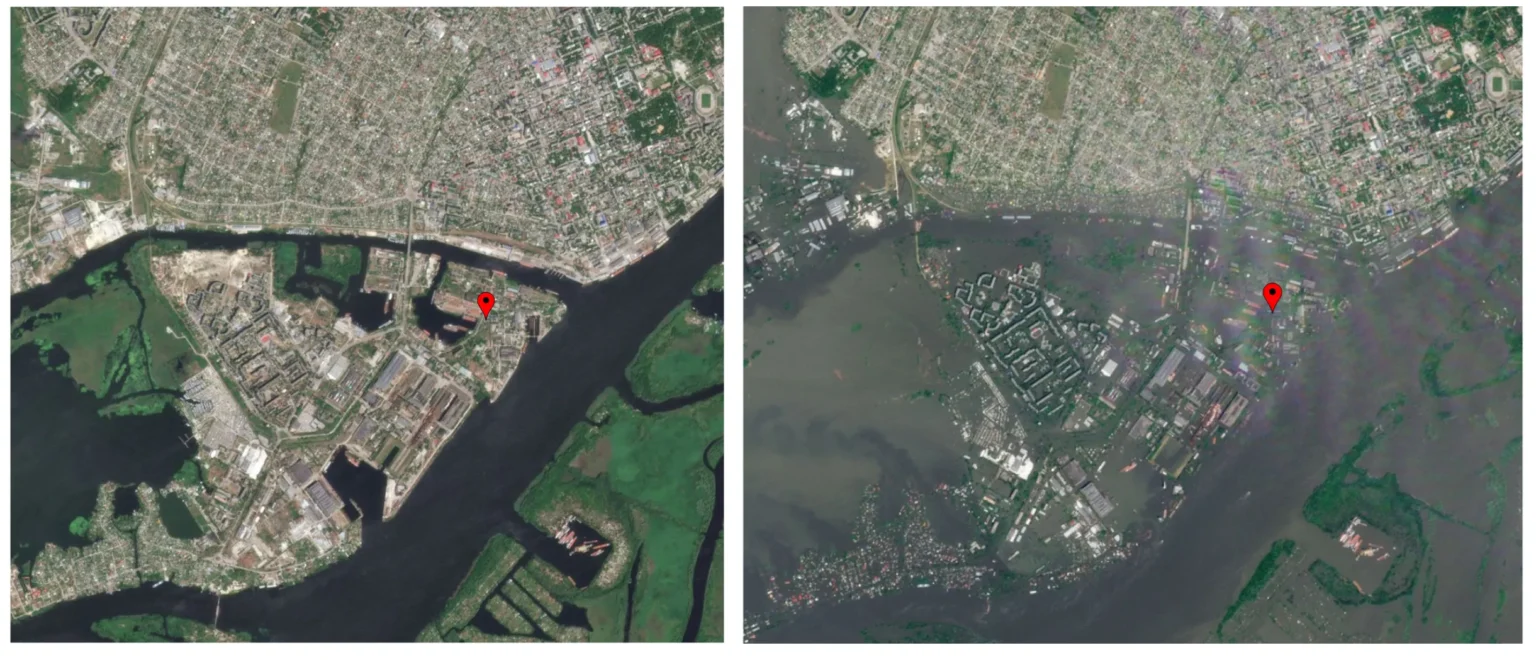
Satellite imagery of the Pallada Shipyard in Kherson on June 5, 2023 (left) and on June 7, 2023 (right).
Source: Planet Labs[359]
Additionally, at the moment of the flooding, sandblasting waste was present in 3 ships that were moored in the Kherson Sea Trade Port on the left bank of Kherson City.[360]
The Polimin-Yuh private enterprise in Oleshky (46.3753, 32.4550), known for manufacturing paint, printing ink, varnishes, and mastics, was also identified as a potential water pollution hotspot. Although it is unknown whether these chemical products were on-site during the flooding, Ecodozor flagged the enterprise as a “high-risk” source of water contamination and reported that the facility experienced flooding up to a maximum depth of 5 meters.[361]

Satellite imagery of the Polimin-Yuh private enterprise in Oleshky on May 8, 2022.
Source: Google Earth
Agricultural Facilities
As mentioned above, many farming sites located along the shore of the Dnipro River were affected by the water stream from the breached Kakhovka Dam. In its report, UNEP identified that a livestock farm site near Korsunka Village (on the left bank of Kherson Oblast) was affected by the water flow. Although there was no information on the presence of livestock at the site, Russian propaganda channels themselves reported that in occupied Korsunka alone, 200 pigs with piglets and 80 cows and calves likely went underwater.[362]
Satellite imagery of a livestock farm near Korsunka on May 8, 2022.
Source: Google Earth
Similarly, on the right bank, Europe’s largest Chornobaiv poultry farm was identified by UNEP as a potential pollution hotspot.[363] However, pre-flooding reports indicate that there were no poultry present at the time of the flooding.[364]
The introduction of drowned animals and their manure into water significantly degrades its quality. Decomposing organic matter releases excess nutrients such as nitrogen and phosphorus and harmful pathogenic microorganisms. The excess of nutrients (eutrophication) results in excessive algae growth that depletes oxygen in the water, endangering aquatic life,[365] while the presence of pathogens poses serious health risks to both wildlife and humans.In addition, the eutrophication process degrades surface water quality and, as a result, leads to a decline in biodiversity and harms aquatic ecosystems.16
Sewage Treatment Facilities, Waste Disposal Sites, and Cemeteries
The sewage treatment facilities flooded by the breach of the Kakhovka Dam were a key contributor to the water pollution. One potential hotspot was the Oleshky wastewater treatment plant on the left bank of Kherson Region (46.622327, 32.769576).
16 That is a potential subject of matter in light of the Water Code of Ukraine and the Water Framework Directive 2000/60/EC.

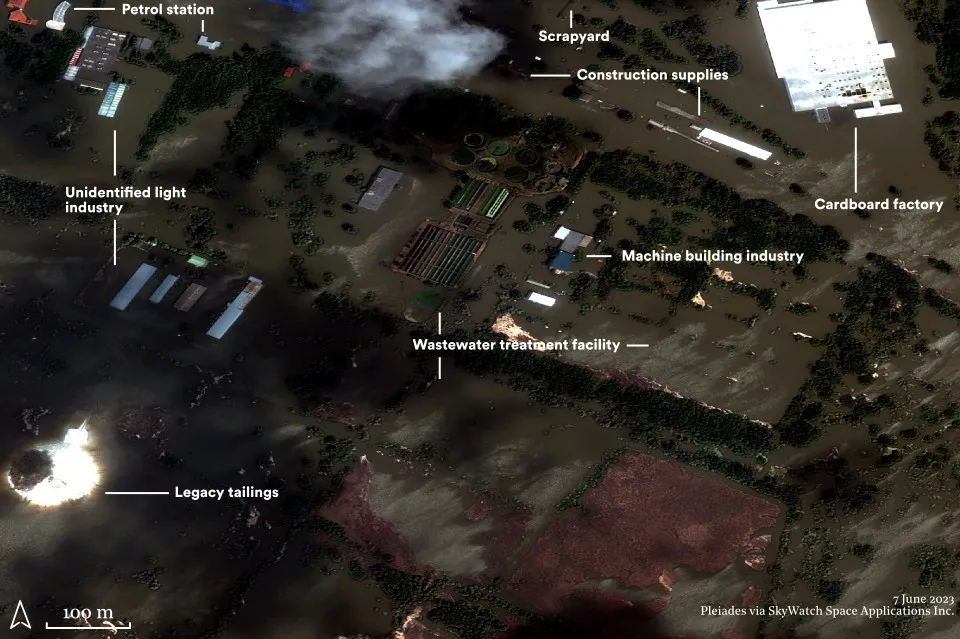
Satellite imagery of the Oleshky wastewater treatment in May 2022 and on June 7, 2023, after the flooding.
Source: CEOBS[366]
There were also additional sources of water pollution, namely waste disposal sites and cemeteries located in the flooding zone of the Kakhovka disaster on both banks.
For instance, when asked about the flooding of Oleshky, Mayor Yevhen Ryschuk mentioned the following: “We had a problem with cemeteries in Oleshki even before the flooding. The groundwater level was high, and the dead could not be buried deeply. What is happening there now is a real disaster. These are sandy soils that are easily washed away.” Since most of the private houses in Oleshky had cesspools, the mayor added that it was highly likely that the feces from these cesspools had floated into the Dnipro.[367]
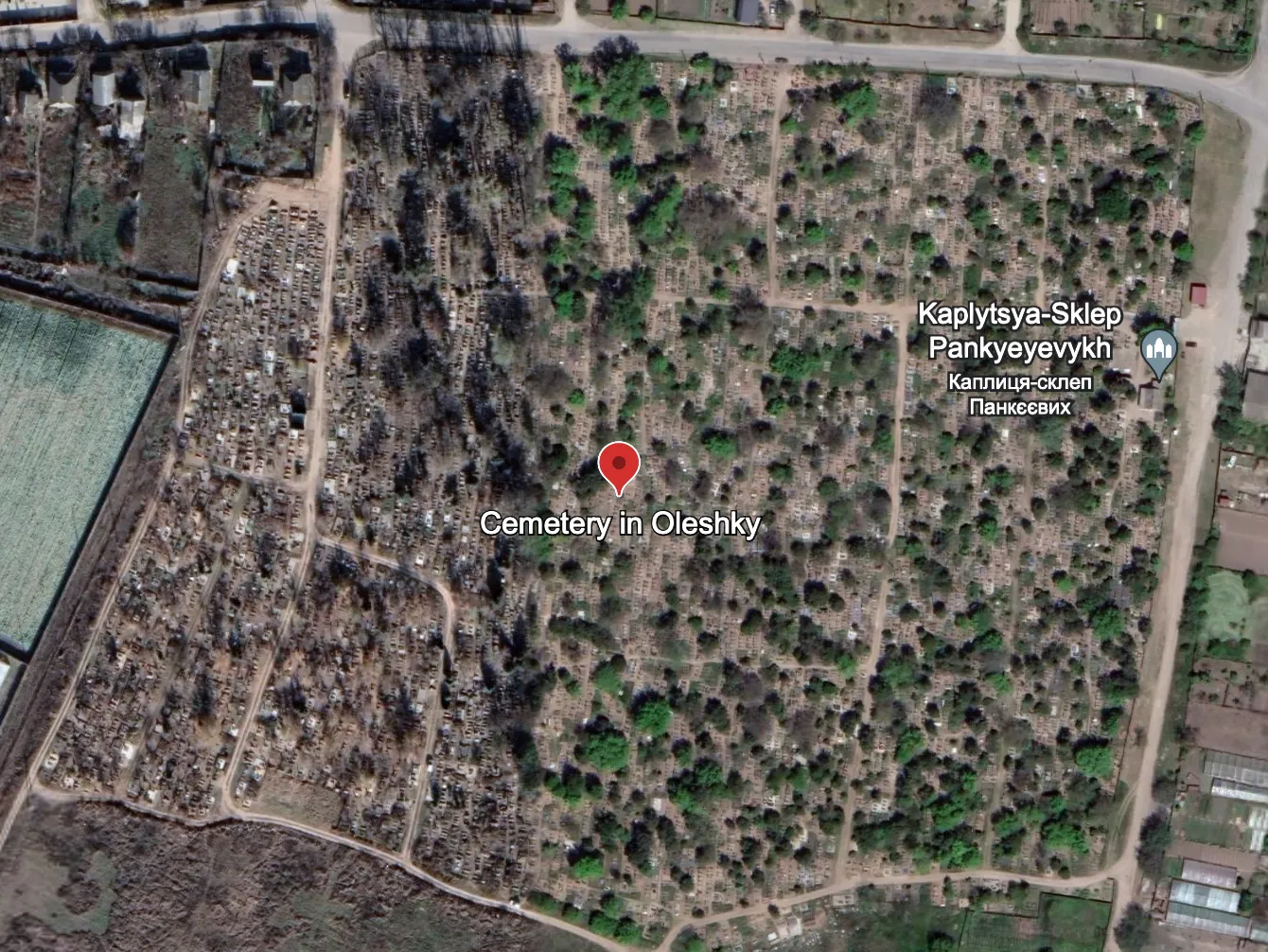
Satellite imagery of the cemetery in Oleshky on May 8, 2022.
Source: Google Earth
Since the left bank of the Kherson Region is still under Russian occupation, there is a scarcity of information on pollutants released into the water after the inundation of the hazardous facilities by the Kakhovka Dam water stream, especially compared to the water contamination assessments done in Ukrainian-controlled territory.
In the aftermath of the Kakhovka Dam breach, several laboratory tests were conducted by the Ukrainian authorities. These indicated a severe reduction in water quality in the Dnipro River, its tributaries, and the Black Sea.
The Mykolaiv Regional Office of Water Resources technician interviewed by TH and PEJ investigators mentioned that “[the Regional Office] monitored and observed what impact fresh water would have and how the water changed its quality, taking into account that it eroded certain areas. For example, it flooded cattle burial grounds, some gas stations, cesspools, and garbage dumps. That is, we controlled the quality of the water.[368]
To illuminate all consequences of the surface water quality deterioration caused by the Kakhovka Dam breach to the identified surface water bodies within the Lower Dnipro River subbasin and Black Sea waters, it is necessary to differentiate types of the pollution that might define certain status (either chemical or ecological status) of water bodies (according to the national water legislation – State Water Code of Ukraine).[369] Therefore, the following subsections are divided into 2 parts, representing risks of water quality deterioration caused by (ii.1) pollution with hazardous substances, and (ii.2) organic and nutrient pollution.
ii.1) Pollution with hazardous substances
Hazardous substances are believed to have the potential to cause toxic effects on life forms after their decomposition. Hazardous substances include heavy metals and pollutants such as oil products that can accumulate at the bottom of water bodies and, under certain physical and chemical conditions, are able to migrate through soils, water bodies, plants, etc., accumulating in greater concentrations and causing renewed hazard for biota and humans.
According to the State Environmental Inspectorate of the South-Western District of Ukraine, on June 7, 2023, the concentrations of oil products and iron exceeded the permissible concentration levels in the water samples collected from Inhulets River, near Novosofiivka and Snihurivka (Mykolaiv Oblast).[370] On June 8, 2023, new water samples that were taken from the Inhulets River in Snihurivka had even higher concentrations of iron.[371] By June 9, 2023, the concentration of iron in Inhulets had decreased but still exceeded the guideline value.[372] The new water samples collected on June 10, 2023, from Inhulets River demonstrated that iron concentrations returned to within the guidelines for acceptable safe limits, which was also later confirmed by water samples collected from the river on June 13, 2023.[373]
Regarding the Black Sea, immediately after the disaster, the State Environmental Inspectorate was actively studying the seawater samples from 3 different locations. On June 9, 2023, in 1 of the 3 seawater samples collected, the concentrations of oil products exceeded the permissible levels 6.6 times (0.33 mg/dm3), while the concentration of iron surpassed the norm in 2 seawater samples from 2.2 to 12.4 times (0.11 to 0.62 mg/dm3).[374] From June 10, 2023, the State Environmental Inspectorate found the concentrations of oil products in the seawater samples to have met the pre-disaster level, yet the concentrations of iron were still above the standard level until June 13, 2023.[375]
The latter estimates were supplemented and corroborated by the study of the water and bottom sediments samples from the Dnipro River, flooded areas, the Dnipro-Buh Lyman (estuary) and Black Sea by the UkrSCES. In particular, on June 14, 2023, UkrSCES recorded that the concentration of copper (17.9 μg/l),17 Zinc (44.8 μg/l), and arsenic (1.81 μg/l) had exceeded the permissible concentration levels.[376] On June 15, 2023, UkrSCES recorded that the concentrations of petroleum products, toxic metals (zinc, cadmium, and arsenic), and chlororganic compounds (lindane and polychlorinated biphenyl) exceeded their reference values.[377] The new samples taken on July 4–5, 2023 indicated a rapid decrease of the concentration of petroleum products, zinc, and arsenic, while the accumulation of cobalt exceeded the concentration limits by 4 times, and copper concentrations remained critically high.[378]
In general, the significant concentration of oil products, toxic metals (zinc, copper, and arsenic) and specific chlororganic compounds (lindane and polychlorinated biphenyls, also known as PCBs) can be toxic to numerous marine species, impacting their reproductive abilities, growth, and other vital functions. Specifically, the persistence of these pollutants in water or their bioavailability in the food chain allows for the bioaccumulation of heavy metals, causing higher concentrations in marine mammals and humans. For instance, consuming seafood or drinking water with elevated copper or/and zinc levels can lead to various health issues among people, affecting their liver, heart, kidneys, or nervous systems.[379] Prolonged exposure of humans to cadmium, for example, can lead to its accumulation in kidneys, resulting in kidney disease, fragile bones, and lung damage.[380] Additionally, PCBs pose dangers to numerous species of aquatic organisms, including fish and invertebrates, by accumulating in their body tissues and causing damage to their nervous systems that can lead to paralysis and death.[381]
іі.2) Organic and nutrient pollution
In most cases, the organic water pollution is associated with waste waters that enter surface bodies from sewage systems, farms, and agricultural sectors. In the case of the Kakhovka Dam’s destruction, the major sources of organic pollution were flooded sewage systems from settlements, pollution from industrial facilities, and waste from livestock farms. Excess nutrient pollution in water is typically assessed by measuring nitrogen and phosphorus compounds.
The State Environmental Inspectorate’s analysis of water samples from June 7, 2023, revealed that the concentration of ammonium and nitrites in the Inhulets River near Novosofiivka and Snihurivka in the Mykolaiv Oblast surpassed the established permissible levels.[382] Water samples collected on June 8, 2023, from the Inhulets River in the area of Snihurivka showed a further increase in the already elevated levels of ammonium and nitrites.[383] On the same day, the water samples collected from Pivdennyi Buh River in Mykolaiv had more ammonium nitrogen than usual.[384] On June 9, 2023, water samples collected from Inhulets River showed a moderate decrease in the concentration of named compounds; however, there was still a deviation from the standard norms.[385] New water samples from the Inhulets River, collected on June 10, 2023, indicated that the levels of the named elements fell back within safe limits after previous exceedances.[386] This finding was corroborated by further testing of the river’s water on June 13, 2023.[387]
As mentioned above, following the disaster, the State Environmental Inspectorate closely monitored seawater samples from 3 different locations in the Black Sea. On June 9, 2023, the inspectorate found that the ammonium nitrogen level in one of these samples was 2.7 times above the permissible limit.[388] On the same day, the Institute of Marine Biology of Ukraine noted that ammonium concentrations near Koblevo Village (Mykolaiv Oblast) were double the accepted norm.[389] The high concentrations of ammonium in the sea and river waters in the first days after the breach indicated that a certain amount of water had entered the sea and rivers from sources of intensive mineralization of organic matter (e.g., sewage systems, cesspools, and livestock farms).[391] From June 10, 2023, the State Environmental Inspectorate found the concentration of ammonium in the seawater samples had returned to its pre-disaster level.[392]
NB: Only in the seawater sample collected on 13 June 2023 from Velykyi Fountain in Odesa city, the concentrations of iron were not exceeding the standard level anymore.
17 “μg” abbreviation stands for microgram.
NB: Only in the seawater sample collected on 13 June 2023 from Velykyi Fountain in Odesa city, the concentrations of iron were not exceeding the standard level anymore.

The concentration of (a) ammonium (N-NH4), (b) nitrates (NO3 ), and (c) phosphates (PO4) in the area of Langeron Beach (Odesa City) in June 2023.
Source: State Environmental Inspectorate data[393]
Similarly, from June 8 through June 17–18, 2023, UkrSCES recorded an increased concentration of biogenic compounds in northwestern part of Black Sea, namely phosphates (PO4), nitrites (N02), ammonium nitrogen (NH4), and silicate (Si04) concentrations.
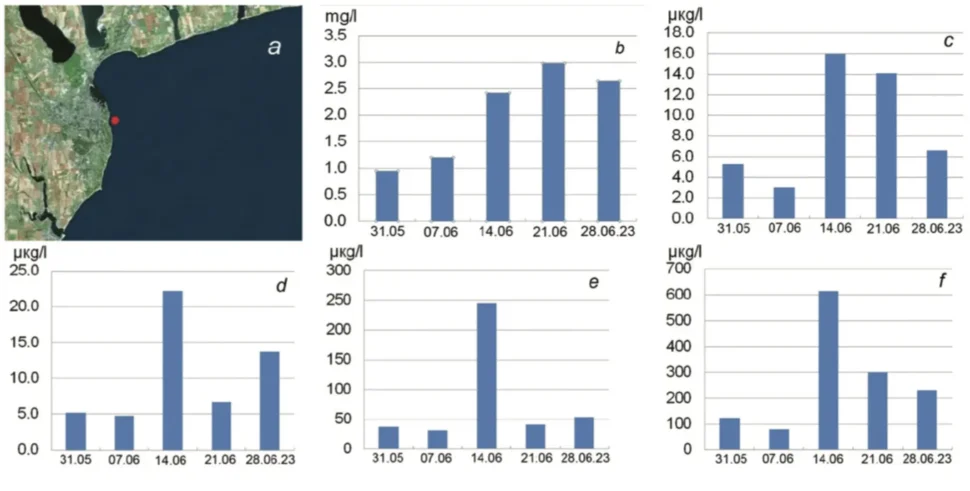
The concentration of (c) phosphates (PO4), (d) nitrites (NO2), (e) ammonium (NH4), and (f) silicate (SiO4) in the Black Sea near Odesa City yacht club in June 2023.
Source: UkrSCES[394]
Algal Bloom in the Northwestern Part of the Black Sea
The large inflow of contaminated freshwater into the northwestern part of the Black Sea, comprising dissolved organic matter and biogenic substances, led to the intensive development of cyanobacteria and algae in the seawater near the coast of Odesa Oblast. According to the Institute of Marine Biology of Ukraine, from June 6 to 11, 2023, a first phase of algal bloom was observed (development of planktonic microalgae) in the Gulf of Odesa. While before the Dam’s breach, the Jaaginema kisselevii (cyanobacteria), Cylindrotheca Closterium, and Skeletonema costatum (diatoms) were present in the seawater, with influx of freshwater from the Kakhovka Reservoir, these cyanobacteria and diatoms began to develop, reaching the algal bloom of 1.6-3.3 million cells per dm3 in the areas of the Koblevo Village (Mykolaiv Oblast), Fontanka and Langeron Beach (Odesa Oblast).[395] The UkrSCES, however, emphasized the decrease in the diversity of marine diatoms, especially dinoflagellate (dinophyta) algae, and recorded an increased shift from the standards for freshwater cyanobacteria (blue-green algae), amounting to 2⁄3 of total algae in seawater. In particular, due to the entry of freshwater from the Reservoir, the volume of 3 toxic cyanobacteria,[396] Aphanizomenon flos aquae, Dolichospermum flos aquae, and Microcystis aeruginosa began to rise abruptly in the northwestern part of Black Sea, while before the Dam’s destruction, these cyanobacteria had been merely present in seawater.[397] On June 14, 2023, green spots of microalgae were recorded in the seawater near Odesa Oblast, caused by the blooming of Aphanizomenon flosaquae, Dolichospermum flos aquae, and Microcystis aeruginosa, with a total biomass of around 7 g/m3 in seawater.[398] This corroborates with the findings of the Institute of Marine Biology of Ukraine, which on June 18, 2023 recorded a biomass of 4.449 g/m3 of Aphanizomenon flos aquae, 1.088 g/m33 of Microcystis aeruginosa, and 2.158 g/m3 of Dolichospermum flos aquae in seawater near Odesa Oblast (Langeron Beach).[399]
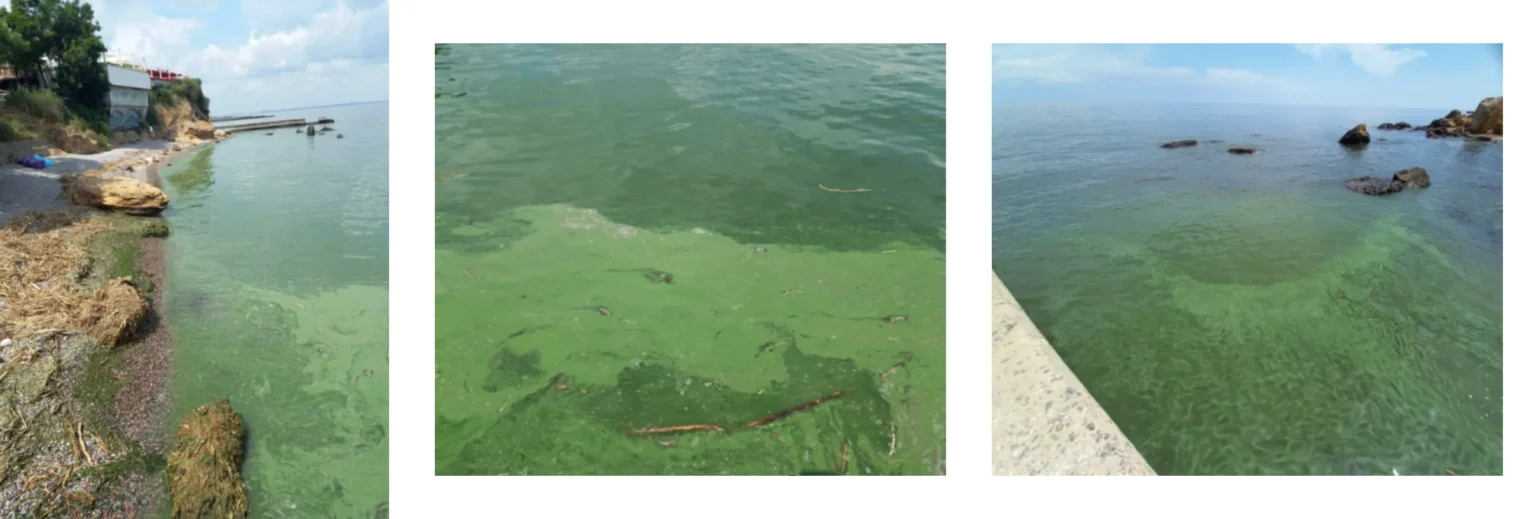
(Micro)algal bloom in the Gulf of Odesa as of June 14, 2023.
Source: UkrSCES[400]
From June 14–18, 2023, the Institute of Marine Biology of Ukraine also recorded a high amount of a toxic dinoflagellate (dinophyta) Prorocentrum Cordatum in biomass of 0.459 g/m3.[401] Beyond the dominant algae, more than 20 subtypes of marine and freshwater algae were recorded in the northwestern part of Black Sea in June 2023.[402]

Black Sea water samples showing the volume of algae blooms throughout June 2023, after the breach of the Kakhovka Dam.
Source: UkrSCES[403]
The concentration of Chlorophyll-a, which is the indicator of the algal bloom in water, reached critical levels during mid-June 2023. While the standard average index of Chlorophyll-a for the northwestern part of the Black Sea is 1.2 mg/m2, on June 15, 2023, the index doubled, according to the Institute of Marine Biology of Ukraine. On top of that, in some parts of the Black Sea, located downstream of the river waters from the Dnipro-Buh Estuary, the Chlorophyll-a index was over 100 mg/m2, which exceeded the norm by more than 90 times.[404] UkrSCES reported that the satellite imagery from June 24, 2023, indicated an intensive algal bloom in the northwestern part of the Black Sea, spreading to the waters of Romania, Bulgaria, and partially Turkey.[405]

Processed satellite imagery of the northwestern part of Black Sea, showing the water spread from Dnipro-Buh Lyman (estuary) to the northwestern part of Black Sea[406]
After a certain time, due to the greater development of phytoplankton than any other microorganisms, the organic compounds that were dispersed into the Black Sea were able to be “digested” by phytoplankton, which led to the decrease of these organic compounds.[407]
At the start of July 2023, the volume of the freshwater algae in Black Sea dropped, having amounted to no more than 1⁄3 of the total algae in seawater.[408] The UkrSCES reported that, although the algal bloom remained in the seawater, on July 5, 2023, the biomass of Aphanizomenon flos aquae, the main causative agent of the bloom, was 2 times lower than it had been on June 14, 2023, and constituted 2.7 g/m3. During the same period, the marine species of dinoflagellate started to develop, including the heterotrophic dinoflagellate Diplopsalis lenticula and photosynthetic dinoflagellate Prorocentrum micans.[409]
Simultaneously, due to the increased concentration of organic matter and subsequent development of microalgae in the northwestern part of the Black Sea in June 2023, the biochemical oxygen demand (“BOD”) considerably increased. In particular, while the standard BOD index for the water in Gulf of Odesa is 1.87-2.11 mg/l, at the end of June 2023, this index reached nearly 3 mg/l (see the scale below).[410]
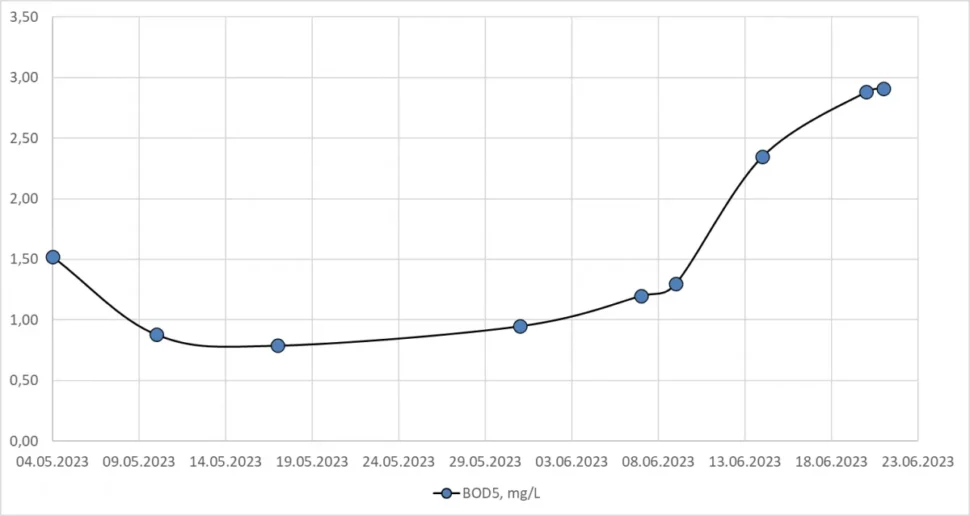
Biochemical oxygen demand (BOD5) index in the Gulf of Odesa (northwestern part of Black Sea) on a timeline scale.
Source: UkrSCES[411]
The latter estimates corroborate the information PEJ and TH investigators collected during their trip to the affected territories.
A technician from the Office of the State Agency for Land Reclamation and Fisheries in Mykolaiv Oblast testified, “In June, we [the institution] saw an increase in algae due to organic and inorganic substances entering the water, which in turn caused oxygen levels to drop in Inhulets, Vysona, and slightly (but not critically) in [Pivdennyi] Buh [Rivers]. We [the institution] recorded oxygen levels of 3 and 2 mg per liter of water. At the same time, the minimum norm is 4 mg per liter (with the norm of 6-8 mg common in this region). This caused the fish to move to more comfortable conditions. There were isolated deaths, but no mass suffocation. On the Inhulets and Vysun Rivers, we have not yet seen any negative effects on fish. We’ll see in the spring when the next spawning season comes [what the impact will be on marine life]. These consequences will be evident for several years.”[412]
Despite the high BOD5 index in the Gulf of Odesa and the risk of dissolved oxygen (“DO”) levels decreasing, the DO levels were within the acceptable limits (of at least 4 mg/dm3), per the State Environmental Inspectorate.[413] At the same time, in Inhulets River and Dnipro River (both upstream and downstream), the DO index started to decrease immediately in the aftermath of the disaster,[414] dropping below the 4 mg/dm3 norm already on June 11–13 2023. In particular, on June 11, 2023, the inspectorate recorded 3.9 mg/dm3 DO in Inhulets River (near Dariivka Village), and 3.6 mg/dm3 DO in Dnipro River upstream (near Dubovyi Hai Park).[415] On June 13, 2023, the State Environmental Inspectorate of the Southern District (“State Environmental Inspectorate”) recorded 3.8 mg/dm3 DO in Dnipro River downstream (near Kherson City).[416]
According to reports from the State Environmental Inspectorate, DO levels in the downstream portions of the Dnipro River complied with guideline values as of June 14, 2023.[417] However, low DO levels continued to be recorded in upstream sections of the Dnipro River until the end of July 2023.[418] In the Inhulets River, the DO levels still demonstrated deviations from the standard as of August 2023.[419]
iii) Bacterial river and sea water pollution
The breach of the Kakhovka Dam resulted in the waterlogging of municipal facilities (such as cemeteries, landfills, toilets, cesspools, and cattle slaughterhouses), as well as settlements, warehouses, and agricultural land flooding. Thus, the release of hazardous chemicals and infectious agents into the adjacent water environment, together with water flow into the Black Sea, was inevitable and poses a threat to the population.
Around 40 water quality monitoring points for surface water bodies in the Odesa, Mykolaiv, and Kherson Regions, installed along the riverbed, seacoast, and in flooded zone, permitted the detection of hazardous substances in the first days after the Dam breach, such as salmonella, rotavirus, helminth eggs, larvae, and E. coli.[420] Namely, the Escherichia coli is known for threatening the spread of cholera-like digestive illnesses among the population.
Results of sampling carried out after the breach by the Centers of Disease Control and Prevention show that bacteria and viruses (lactose-positive E. coli, E. coli, cholera-like vibrio, amoebae, giardia, enterococci, rotavirus, salmonella, astrovirus, cryptosporidium, trichocephalosis, toxocariasis, strongyloidiasis, human roundworm, and staphylococci) that may cause human disease were present in the river basin and in the Black Sea.[421]
The number of pathogens present in the water was so high that even at the end of July 2023, positive results for cholera-like vibrio bacteria were observed in water samples. The water samples were tested daily and weekly at the reference monitoring posts. According to the results of the studies, pathogenic vibrios reached the beaches of Odesa. They were found in particular in the water near the Big Fountain.[422]
Along with rampant bacteria, a massive fish die-off posed a serious sanitary and epidemiological threat to the affected region. However, Ukrainian authorities managed to avoid large-scale disease outbreaks and epidemics in the immediate aftermath of the event, thanks to the combined efforts of the disease control and prevention regional centers (authorized by the Ministry of Health of Ukraine); 97 rapid response teams for biological, chemical, and radiation threats that were formed immediately to mitigate such consequences; epidemiologists and sanitary doctors called to assist; and the actions of the Ministry of Internal Affairs of Ukraine.[423] Because of this rapid, effective response, immediate severe health consequences seem to have been minimal.
The water from drinking water objects was only recommended for the technical needs consumption.
- A resident of the Afanasiivka Village in Mykolaiv Oblast explained that she only used the water for non-personal uses such as providing her livestock with water.[424]
- A resident of Kryvyi Rih District reported about contamination of a river nearby: “The water in the river is more polluted, silted up – it takes time for the river to recover, so now we use more reagents (chlorine) (3 tons per month) and coagulants (70 liters per day).”[425]
Despite these immediate measures, the threat of a deterioration in the sanitary and epidemiological situation remains high on the one-year anniversary of the Dam’s explosion. The main risk factor is the potential of further degradation of isolated water bodies formed on the territory of the former Kakhovka Reservoir. The water stagnation, together with the worsening climate conditions, are factors of potential re-emergence of particularly dangerous infections (cholera, malaria, typhoid, anthrax from agricultural sources, etc.) in the surrounding areas.
iv) Pollution from the flooding of military materials
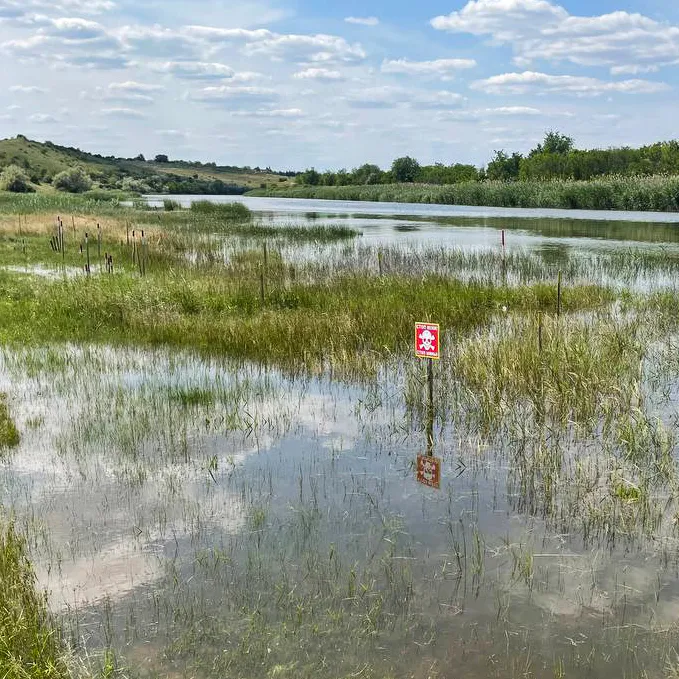
Submerged minefield in Kherson Oblast due to the Kakhovka Dam breach.
Source: The HALO Trust[426]
As previously stated, the floodwater inundated a wider area on the left bank than on the right bank. Within these affected territories, many fortified positions and trenches built by the Russian military on the shore were washed away, including mines, ammunition, and other military equipment. According to the Conflict and Environment Observatory (“CEOBS”), among 117 military objects, including trenches, recorded on the left bank of the Dnipro River, 47 were identified as flooded.[427] The HALO Trust, an organization involved in the demining of the right bank of the river controlled by Ukraine, reported the complete flooding of at least 3 minefields in Mykolaiv Oblast, while the total number of previously found mines in the region was 5,000 units, including 464 on the riverbanks.[428] The HALO Trust asserted that the water stream arriving from the Kakhovka Reservoir was powerful enough to dislodge the land mines, and, in certain circumstances, cause 10-kg anti-vehicle mines to detonate.[429] Already on the first day of the flooding, there was public footage of floating landmines detonating.[430] Similarly, on June 8, 2023, the Ukrainian authorities and military command reported floating landmines and unused ordnance near the shores of the Odesa Oblast.[431] In its analysis, UNEP also reported on the dislodging of land mines but emphasized that, compared to anti-vehicle mines, it is unlikely that anti-personnel mines were dispersed because they are expected to remain in place, covered by sediment or soil.[432]
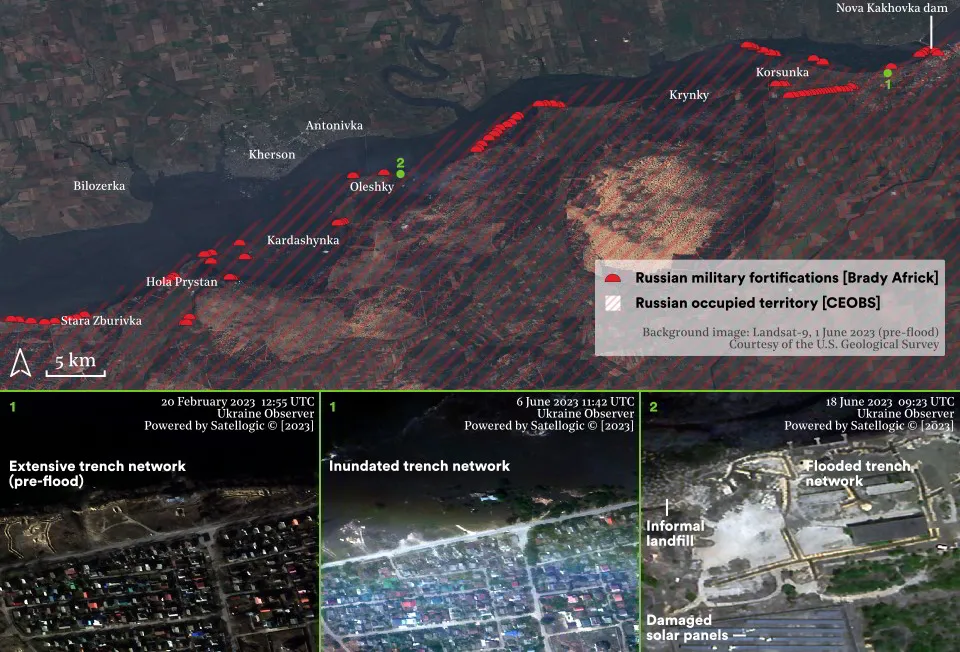
Satellite Imagery of flooded Russian trench work on the left bank of Dnipro.
Source: CEOBS, July 2023[433]
In general, the displaced military material, such as mines, munition and unexploded ordnances pose the explosive risks not only for people but other for living organisms, such as aquatic animals. In fact, numerous mines from World War II that are being found in the Baltic Sea are still active and operational.
Displaced military material by the Kakhovka dam water stream is expected to degrade and be submerged under soil and debris of the sea and rivers, which makes it highly difficult to detect and remove it. According to UNEP evaluations, landmines shifted into Black Sea waters face accelerated corrosion from high coastal salinity, and they are to be buried under silt and soil on the seabed.
In prospect, this military waste is likely to cause contamination of the water. According to 2017 OSCE reports, pollution from munitions has already led to increased concentrations of mercury, vanadium, cadmium, and non-radioactive strontium, as well as elevated gamma-radiation, in the sediment of the Karlivske and Kleban-Bytske Reservoirs in Donetsk Oblast. Further scientific studies are crucial for assessing the potential risks of water pollution from military debris washed away by the rapid water flow from the Kakhovka dam. A recent Dutch study investigated the degradation of military materials at the Eastern Scheldt munitions dump site in the Netherlands. This study found elevated levels of ammunition-related compounds near abandoned munitions (both metals and organic substances), although the concentrations were too low to exceed environmental quality standards. This finding aligns with a UNEP analysis, which referenced a Swiss study noting the slow release of metals and explosive products from ammunition over time. Moreover, the Dutch study highlighted that the relatively low concentration of ammunition-related compounds at the Eastern Scheldt site could be attributed to the fewer munitions dumped there compared to other sites, as well as dilution effects from strong local water currents.
Notwithstanding the likely slow degradation of the dislodged military materiel by the flood stream from Kakhovka Reservoir, the clearing of the waters from it would be a challenging task, concerning the technical impediments in identifying the material and the high-cost for expert labor and operational machinery.
4.2.2. Detrimental Impact on Flora, Fauna, and Protected Areas
The consequences for biodiversity following the explosion of the Kakhovka HPP are among the main factors that define it as a large-scale environmental disaster. This is particularly true for the region’s flora and fauna. All living organisms coexist in nature, resulting in the formation of biotopes, i.e., habitats with a well-established and balanced system of interaction between all living things.18 External interference in these processes can lead to these systems becoming unbalanced and degraded.
Over the period of the Kakhovka HPP’s existence, a number of ecosystems formed in its water area and along its shores. These were adapted to the habitats created after the construction of the Dam. A disaster of the magnitude of the Kakhovka Dam destruction has massive and catastrophic consequences for thousands of plant and animal species and for nature in general. This is particularly the case for the many species that existed in the aquatic environment that could not move independently when water was suddenly released from the Reservoir, which led to their immediate and simultaneous death. In total, 38 rare habitat types protected by the Berne Convention were identified in the area before the Kakhovka Dam was destroyed.18
The impacts on flora and fauna were caused by 2 main phenomena: water outflow and drying of the area upstream of the Dam and flooding of areas downstream of the Dam along the Dnipro. These created fundamental changes in the hydraulic regime and character of the Dnipro Riverbed and neighboring tributary rivers, including complete or partial loss of habitats, and changes in the overall soil moisture and soil formation processes. This is true both in areas freed from water and in areas temporarily flooded during the outflow.
In terms of water outflow and drainage (a), the following consequences will be considered: (i) degradation of the aquatic and coastal environment of the Kakhovka Reservoir and neighboring waterbodies because of the water outflow, (ii) pestilence of fish, (iii) destruction of spawning grounds and permanent habitats for fish, (iv) impacts on birds and bird nesting colonies, and (v) impacts on nature reserves as a result of water outflows.
In turn, the catastrophic flood (b) resulted in negative impacts on (і) flora; (ii) fauna; (iii) birds, fish, and other animals; (iv) pollution of oil and hazardous substances; and (v) flooding and destruction of habitats within protected areas.
It is challenging to assess the full impact of the disaster when only a year has passed since it occurred. Environmental damages can only fully be observed and evaluated in the long term. In addition, the situation was complicated by the impossibility of conducting an initial assessment area was, and remains, largely inaccessible due to active hostilities in the region, both immediately after the Dam was blown up and now. This makes it all the more difficult to conduct a full-scale study of its consequences. The visible effects that were recorded after the explosion represent only a small fraction of other large-scale and long-term changes. These have implications for the living conditions and survival of populations of animal and plant species that had previously existed in a harmonious environment, with established habitats and food chains. The Dam’s explosion also disrupted the ecosystems, soils, and hydrological regime of the area.
a) Consequences for flora and fauna because of the water outflow
This section will discuss the impacts of water outflows, which are a separate issue from flooding. The territory within which the Kakhovka Reservoir was located belongs mainly to the southern climatic region of the steppe zone and has a rather arid natural regime, with a total level of precipitation of 400 to 500 millimeters per year.[434] The area is characterized by a rather high evaporation rate, which in different years ranges from 450 to 1,100 millimeters (depending on temperature and wind conditions).[435] In such circumstances, the region consistently faces a scarcity of fresh water. This shortage, particularly in dry years, and especially if these conditions persist, results in the dehydration of river floodplains, a reduction in groundwater levels, and dehydration and salinization of both upper soil layers and underground aquifers. The latter fact is the reason why in many areas around the Kakhovka Reservoir, aquifers cannot be used as a source of drinking water due to excessively high salinity and hardness.
The construction of the Kakhovka Reservoir was intended to partially solve this problem by providing a fresh water supply for the districts and settlements adjacent to the area and organizing irrigation on arable land. During the period of the Reservoir’s existence (from 1955 to June 6, 2023), the local erosion base in the adjacent regions was the Reservoir water level, and the near-surface aquifers received additional recharge both through infiltration from the Reservoir area and through a decrease in the intensity of rainwater outflow through the underground aquifer system toward the Dnipro Riverbed.
This, on the one hand, partially improved the local drinking water supply in rural areas around the Reservoir due to greater accessibility and higher aquifer levels in wells and boreholes. On the other hand, in low-lying areas along the valleys of steppe rivers, it led to increased soil salinization due to the rise in the level of saturated aquifers. The entire territory of the Kakhovka Reservoir and the adjacent areas draining directly into the Reservoir basin belongs to the Pontic Steppe Province of the Steppe Zone according to the geobotanical zoning of Ukraine.[436] According to the hydrological zoning, it is part of the Nyzhniobuz’ko-Dniprovsky Region of insufficient water availability (right bank) and the Prychornomorsk Region of extremely low water availability (left bank).[437]
i) Degradation of the aquatic and coastal environment of Kakhovka Reservoir and neighboring waterbodies because of the water outflow
The most obvious negative impact in this context is the shallowing of the Reservoir with a total water volume of 18 km³. Consequently, more than 1,700 km² of land were laid bare, which was catastrophic for the aquatic environment of Reservoir.18 Experts say that almost all aquatic organisms, including crayfish, aquatic mollusks, fish, algae, higher aquatic plants, insect larvae that develop only in the aquatic environment, plankton, and benthos have died as a result of the degradation of their habitat and the total destruction of habitats.18 Such effects were noticeable in settlements on the banks of the Reservoir as well. For example, in the village of Chervonohryhorivka, Nikopol District, a resident noted the following: “The fauna that lived in the Reservoir, turtles, snakes – they all escaped, moved, crawled into houses, and 15 snakes each. But 70% of them died.”[438]
As a result of the incident, the territories occupied by the Kakhovka Reservoir were drained by 80%, with a number of negative consequences.19Among them:
- A massive simultaneous die-off of mollusk communities, dominated by Dreissena polymorpha, that covered large areas of the Reservoir bottom with a dense layer, i.e., with a density of up to 10,000 individuals per m². The total loss could reach more than a trillion adults;
- Water-free bottom areas are a convenient substrate for the rapid settlement and spread of aggressive invasive plant species, both herbaceous (g., Ambrosia artemisiifolia, Grindelia squarrosa, Asclepias syriaca, Solidago canadensis) and shrubs and trees (e.g., Robinia pseudoacacia, Ailanthus altissima, Amorpha fruticosa, Acer negundo, etc.); and
- Soil degradation, which is manifested, on the one hand, in drainage, drying out, and salinization of fertile soils along the banks of the former Reservoir and, on the other hand, in the destruction of complex organo-mineral complexes of bottom sapropels (which are dark soils rich in organic matter). After the water leakage from the Reservoir, the inherent complex of microorganisms (as well as the fauna complex specific to bottom silt) was completely destroyed. The dried surfaces of bottom sediments became desert-like surfaces for a long time, which undergo further dehydration, uneven shrinkage, and deep cracking. In dry periods of the year, such surfaces are subject to wind erosion, and during windy weather, large amounts of fine dust are raised from deserted surfaces. These can be transported over long distances and serve as a source of air pollution, as well as affecting the weather and causing local microclimate changes.
The reason for these effects is significant drainage and deep restructuring of the soil cover, which will be further discussed in detail (see 4.2.3), on soil consequences). However, it is appropriate to say that such a sharp decrease in humidity leads to direct negative consequences for flora and fauna. A striking example is the satellite study of the Normalized Difference Moisture Index (“NDMI”), an indicator used to determine the moisture content of vegetation and monitor drought, which has changed dramatically. This is particularly evident in the satellite images provided in Section 4.2.3(a).
When you compare the measurements of the same area taken in July 2020 and July 2023, it is evident that almost the entire area of the Kakhovka Reservoir has acquired negative values (closer to the open ground). The increase in the drained areas based on satellite data obtained in the summer after the HPP explosion, compared to the historical values of annual variability based on the analysis of satellite data using overlay analysis, is about 45%.19
There is a discussion among scientists about further greening the bottom of the Kakhovka Reservoir. Some of them point to a significant threat of spreading invasive plant species such as erigeron canadensis, ambrosia artemisiifolia, solidago gigantea, etc. Conversely, others note that most of the invasive plants in Ukraine are not associated with river valleys, and, accordingly, the drained areas will be covered with local plants.20 It should be noted that in the first growing season after the Reservoir was drained, relatively low activity of invasive species was observed, but this may be due to the fact that the disaster occurred in the summer, when some plant species lost the ability to spread or germinate in the areas released by the draining. In addition, some invasive species, such as robinia pseudoacacia, spread very quickly by root shoots, and therefore a surge of their spontaneous and massive settlement on the surfaces of the former Reservoir may occur later, in several years or even decades, provided that stable natural plant communities dominated by other species are not formed during this time.
We will only be able to assess the full impact after some time has passed, when the new flora has had more time to establish itself. Ukrainian and foreign scientists are actively working to minimize the consequences of the disaster, which might mitigate some of the dangerous consequences that could have otherwise ensued. For example, on August 22, 2022, the Ministry of Environmental Protection and Natural Resources of Ukraine reported, “The bottom of the former Kakhovka Reservoir was covered with clover, alfalfa, and other plants. They were sown by the park’s conservationists to prevent dust storms and the spread of alien species.”[439] Although this was a local pilot experiment, it showed good potential for minimizing the impacts by sowing the vacated seabed areas with native and valuable meadow plants that would prevent invasive species from entering such areas.
In addition to the Reservoir basin itself, neighboring bays, gullies, and rivers have also been affected by the drying, causing widespread consequences for the neighboring water bodies and the entire water web system that connected to the Reservoir.
It seems that one of the most affected of all the water bodies are the bays and gullies along the Dnipro upstream of the Kakhovka HPP, even if they are located at a considerable distance from it. One such example is the Oleksiyivska Bay (the estuarine area of the Chortomlyk River, a right tributary of the Dnipro). The consequences of the disaster were felt greatly, as demonstrated by explanations of residents of the villages of Oleksiyivka and Kapulivka, located on the bay. These statements were collected by joint TH and PEJ missions.
Inhabitants played an important role in preserving the water level and local habitat. They started building a homemade dam on the same day. A witness describes the situation:
“A lot of people came together, about 500 people. Entrepreneurs provided bags; everything was organized. We built the dam with our own hands from 12 noon to 10 PM. We filled the bags with sand and laid them down; men and women worked hard. I am proud of our people. And so on the very first day, we were able to stop the water – we manually made a dam of 5 meters. The next day, on June 7, large enterprises provided equipment, gravel, and rubble and fixed the dam.”[441]
This was also confirmed by a resident of the neighboring village of Kapulivka: “It moved 20-30 centimeters a day, as we recorded at the fish farm.”[442]
A little further downstream, near the village of Marianske, lies the Marianske Bay, where a similar picture was observed. An employee of the local water utility noted the following sequence of events:
“Every hour I went to the dam [between the 2 parts of Maryanske]to measure the water level. No one knew what the consequences would be, what exactly had been blown up. In the first hours, the level was falling by 1.20 to 1.30 meters per hour. After 8-10 hours, it was already 80-90 centimeters per hour. Then the water dropped so that the bottom of the canal was dry. The normal level there has always been 2.5 meters, and the bottom was about 4.5 meters. That was the water level, 4.5 meters, at the time of the explosion, and the water was even over the wooden bridge that was built to replace the one that had been blown up earlier.”[443]
The most striking consequence is the destruction of habitat with degradation of the living environment, not only in the Reservoir itself but also in many tributaries around it. According to very preliminary estimates, about a quarter of the new plants are invasive. Almost the entire area is occupied by a probable hybrid of white willow (a native species) and alien brittle willow. It is replacing white willow on the Dnipro, but this hybrid species is not as clearly invasive.[444]
It is difficult to predict precisely how the further development of flora and fauna will develop in the areas affected by the Kakhovka catastrophe. An example is the 2 neighboring Mylivska and Kamianska (also Novokairovska) gullies, for which the consequences to date have been different. In the case of the former, complete drainage occurred, and willow plants developed on the bottom. As for the latter, a certain water level was preserved, although after the Dam was blown up, its level dropped by 9.5-10 meters. Floodplain wetland vegetation has formed around this gully.[445]
The release of water from the Kakhovka Reservoir had a huge impact on the water supply system of neighboring areas, even those not located directly on the shore.
The destruction also had a more global impact on the local flora and fauna (not just the draining of the Reservoir), which directly depend on the level of humidity and precipitation.
ii) Fish mortality
The Kakhovka Reservoir, like the lower floodplains of the Dnipro River, was one of the largest sites of commercial farming and natural distribution of freshwater fish in Ukraine.18 After the water had gone, almost all the fish either went downstream with the water or remained on the dry bottom. In the case of the former, the most likely consequence is that the fish were washed into the Black Sea, where they died due to the impossibility of living in salt water. Other fish began to die en masse due to the lack of water, causing significant damage not only to the economic situation of local entrepreneurs but also to the biodiversity of the Kakhovka Reservoir’s aquatic habitat.
“We should preserve every scrap of biodiversity as priceless while we learn to use it and come to understand what it means to humanity”
~Edward Osborne Wilson
18 According to the findings provided by the Ukrainian Nature Conservation Group.
19 Expert analysis of the impact caused on water resources and environmental elements as a result of the Kakhovka Dam’s destruction, see Annex C.
20 According to the findings provided by the Ukrainian Nature Conservation Group; Expert analysis of the impact caused on water resources and environmental elements as a result of the Kakhovka Dam’s destruction, see Annex C.
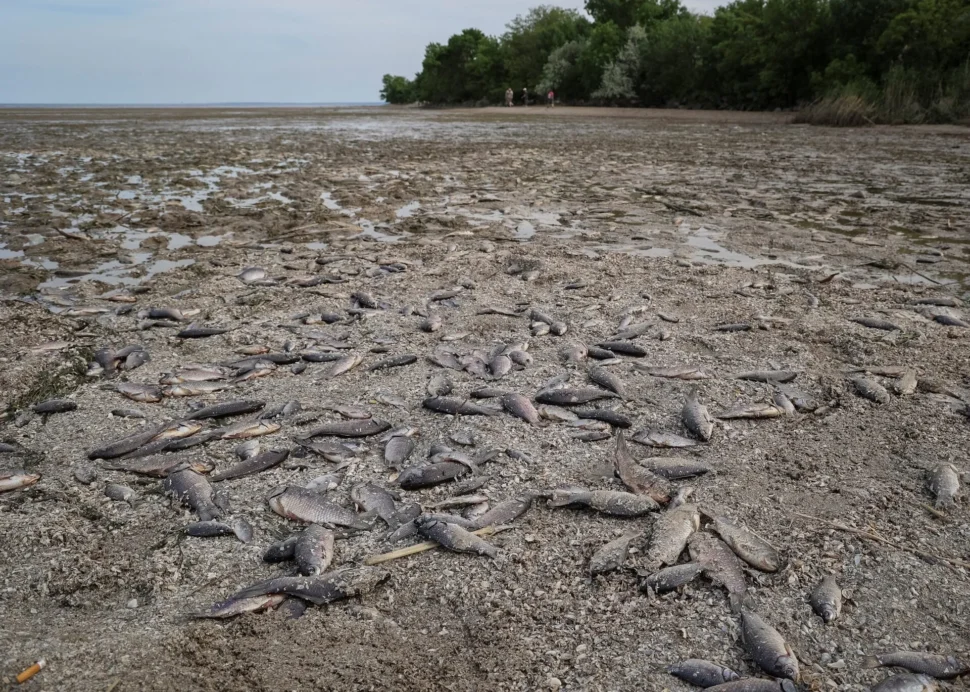
Dead fish are seen on the drained bottom of the Nova Kakhovka Reservoir after the Dam breached in the village of Marianske in Dnipropetrovsk Region, Ukraine, June 7. REUTERS/Sergiy Chalyi [446]
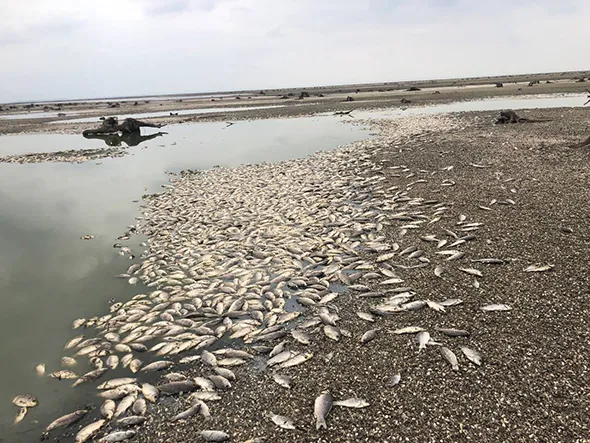
Image of dead fish after drainage of the Kakhovka Reservoir published by the Zaporizhzhia Fisheries Patrol on June 15, 2023, near the village of Lysohirka, near Zaporizhzhia[447]
A resident of the village of Oleksiivka, Nikopol District, testified to the following: “There was a lot of dead fish. It smelt very bad, so we made burial grounds, demolished them ourselves, and covered them up.” [448]
A resident of the village of Marianske, Krivorizhskiy District explained the situation as follows: “When the fish pestilence started, there was a risk that the fish would decompose. We helped with our transport; volunteers collected the fish, took them out, and buried them in pits.”[449] Another resident from the same village stated: “When the water went down, we had a lot of dead fish. Not tons, but tens of tons. In the early days, people still collected fish in bags, but then it was banned and [authorities] centrally collected and took [the dead fish] somewhere.”[450]
iii) Destruction of spawning grounds and permanent habitats for fish
At the time of the Dam’s explosion, the Kakhovka Reservoir served as the habitat for a diverse array of fish species, numbering at least 43, among which 20 species held significant commercial value, including roach, common bream, white bream, common rudd, European carp, and crucian carp (with an annual catch reaching up to 2,600 tons).18 All spawning grounds and the majority of the water, which was crucial for sustaining the fish population, have been decimated as a result of the destruction and subsequent water outflow.18
The majority of species engage in spawning during late spring and early summer. For that reason, this season aligns with the implementation of a spawning ban. This ban enforces a specific “silence” regime on water bodies, prohibiting fishing and imposing restrictions on motorboat movement, among other precautionary measures.18 In 2023, the spring and summer spawning ban was in effect from April 1 to June 30 in the vast majority of water bodies in Ukraine, including the Kakhovka Reservoir.[451]
According to the Head of the Department of Ichthyology, Fisheries Regulation, and Land Reclamation of the State Agency for Land Reclamation and Fisheries in Mykolaiv Oblast:
“The effects of the HPP explosion on spawning levels will be visible in 3 years. We are talking about crucian carp, ram, perch, rudd, bream, and other fish. In other words, in 3 years, we will probably not see these fish that are 3 years old. Their eggs will probably just be washed away by the water flow. At the next spawning season, it will be noticeable which fish are going to spawn, what caviar is on the spawning grounds, etc.”[452]
Consequently, due to the swift draining of the Reservoir, nearly all juvenile fish in shallow waters were stranded and faced inevitable death, thereby compromising their potential long-term spawning outcomes.
iv) Impact on birds and bird nesting colonies
Birds, like other animals, have been negatively affected by both drought and flooding. In this subsection, the most pronounced consequences are the negative impact on their habitat, breeding grounds, and migration.
In its report of June 7, 2023, the Ukrainian Nature Conservation Group predicted the possible disappearance of several bird species in the Reservoir, including Ardeola ralloides, Casmerodius albus, Ardea purpurea, and others.[453] The bird populations rely on the so-called “kuchuhury,” which are islands in the center of the Reservoir where birds live and breed. Previously, they were isolated from the land by water, but now their area has become vulnerable to predators and people.[454] This affects not only the ability of birds to live in a certain area but also to successfully breed.
A significant number of birds were likely forced to migrate to other coastal areas.
For example, a resident of Tokivske Village, which is not located on the Reservoir’s shore, testified, “We have a reserve of regional significance, the Kamianske Coastal River Complex [located even further than Tokiske from the Reservoir], covering 2,600 hectares. … The birds that used to live in the Reservoir have come to us.”[455]
As noted by UNEP in its Rapid Environmental Assessment of Kakhovka Dam Breach Ukraine, 2023, “The Kakhovka Reservoir was an important part of the ‘Dnipro Natural Longitudinal Corridor,’ which is the largest meridional eco-corridor in Ukraine.”[456] Its importance lies in the fact that it is one of the 3 main migration routes for birds, connecting the northern region of Polissya and parts of Belarus and Russia with the Black Sea coast. Consequently, such abrupt changes in water levels and habitat for local birds may have a negative impact on bird migration routes. The sudden change in configuration and internal landscape over the former Reservoir, which has been a stable and distinct landmark for birds for over half a century, may lead to disorientation of birds during flights.[457]
v) Consequences for nature reserves due to water outflow

Map showing the effect of floodwaters on the environment. Potentially affected areas derived from UNOSAT pre-flood/flooded water extents and digitized pre-flood Reservoir boundaries.
Emerald Network and Ramsar site boundaries from The World Database on Protected Areas[458]
The catastrophic drainage of the Kakhovka Reservoir had large-scale and long-term consequences for the natural complexes of all protected areas located within the former water area, along its coast, and/or in the zone of the Reservoir’s impact on the ecological conditions of protected habitats. In particular, in the section downstream of the Dnipro River from the Dnipro HPP Dam to the Kakhovka HPP Dam are 2 national nature parks: Velykyi Luh (in the upper part of the Reservoir, along the left bank of the Dnipro River) and Kamianska Sich (in the lower part of the Reservoir, along the right bank of the Dnipro River, as well as along the main valley and tributaries of the Kamianka River, with a total area of 29,017 hectares). In addition, there are 23 reserves of national and local importance (landscape, botanical, ornithological, entomological, general zoological, and forest) with a total area of 9,411 hectares. They include 3 natural monuments, 2 protected tracts, and 1 park monument of landscape art.[459]
The affected areas include both the Reservoir’s typical shallow and deep-water habitats, where representatives of the fish, fauna, mollusks, crustaceans, and microbial communities have died in large numbers. It also includes rare habitats of coastal wetlands with underwater and surface thickets of higher plants. These regionally rare species such as Nuphar lutea, Salvinia natans, Trapa natans, etc.
For example, in similar, accessible areas below Zaporizhzhia, massive dead rhizomes of Nuphar lutea, a plant whose thickets were the basis of the Reservoir’s underwater “gardens” demonstrating a high level of biodiversity, were recorded on the bare bottom soil.
For all protected areas located partially or entirely along the Reservoir’s coast (such as the Mai Hora Reserve, Lysa Hora Forest, etc.), the water leakage and the significant sudden decrease in the erosion base have created a new threat of increased erosion processes and the formation of new landslides.
For reserves more distant from the Reservoir shores, such as Bohdanivskyi, Kamianskyi Riparian and River Complex, and Bilozerske Tract, the consequences in the first year after the Dam’s destruction seem to have been minimal However, in the long term, there are a number of threats to their biota associated with a radical restructuring of the hydrological regime in this area.
Fish spawning grounds within the protected areas that included water surface areas were harmed. In the Velyki Kuchuhury and Mali Kuchuhury tract, bird nesting sites were partially destroyed. This can be compensated for in the future by creating similarly suitable nesting sites in the drained Reservoir area. However, at the current transitional stage, until young stands of trees suitable for nesting colonies grow in the newly drained areas, birds of some species that establish nesting colonies in mature trees are in a very difficult situation because their usual habitats are no longer available, have been destroyed, or are unsuitable for nesting. This is particularly challenging due to the loss of island isolation – as in the Mali and Velyki Kuchuhury tract of the Velykyi Luh National Park – and since habitats have not yet been formed.
In general, the natural complexes of national parks and other protected areas have suffered large-scale and irreversible losses of primary biodiversity due to the draining of the Kakhovka Reservoir. They will continue to experience further long-term restructuring of ecosystems at all levels. The course of such processes is very difficult to predict, but over the coming decades, this area may, as a result of natural revitalization and restoration, form even more diverse and rich complexes of floodplain ecosystems that will nonetheless differ significantly from those destroyed during the draining of the Reservoir.
b) Consequences for flora and fauna of flooding
This section will discuss the impacts of flooding, which are distinct from those of the rapid water flows discussed in 4.2.2(a). According to the UNOSAT, about 520 km² were flooded as of June 7, 2023.[460] The flood had a negative impact on (і) flora; (ii) fauna; (iii) birds, fish, and other animals; (iv) pollution by oil and hazardous substances; and (v) the destruction of habitats within protected areas.
i) Consequences for flora because of flooding
Due to the flooding of more than 520 km²,[461] including 120 km² of forests,[462] many locally common plant species are threatened with extinction.
The area downstream of the Dnipro is characterized by its aridity and sandiness, and therefore flooding puts the habitat at risk. The areas at risk include the Oleshky Sands Park, which is part of the Emerald Network of Europe and is one of the largest areas of psammophytic (sandy) steppes and sand dunes (kuchugur) in Europe.[463] As noted by the scientists of the Ukrainian Nature Conservation Group, many native species of the region are at risk of extinction because of the flooding, such as the Centaurea breviceps, Jurinea laxa, Thymus borysthenicus, as well as the Bug-Dnipro endemic species Alyssum savranicum, Crataegus alutacea, Agropyron dasyanthum, and Goniolimon graminifolium. The flooding will also impact populations of wild orchids listed in the Red Data Book of Ukraine, including Anacamptis coriophora, A. picta, A. palustris, Dactylorhiza incarnata, and Epipactis palustris.18
As a result of the flooding, a significant part of the region’s birch and oak forests has been put under threat. The giant oaks of the Kherson Region, situated in the Zburiv Forest near the Dnipro Riverbank, might be unable to endure prolonged flooding. The elevation of groundwater levels throughout the southern region will not only elevate soil moisture but also exacerbate salinity levels.18 One of the potential consequences is the final and permanent destruction of the remaining relic remnants of natural forests, also known as the Hileya, from Herodotus’ Histories.18 Unfortunately, due to the fact that these territories are under the control of the Russian occupation forces and therefore out of reach, it is impossible to fully assess the negative consequences.
ii) Consequences for fauna because of flooding
Over the past 90 years, the floodplain of the Dnipro River in Ukraine has been regulated with the construction of 6 Dams. As a result, the floodplain become populated by animals with limited capacity to escape flooding. The sudden rise in water levels, particularly in low-lying areas and on islands, drowned many terrestrial animals (mammals, reptiles, insects, etc.) and colonies of many bird species.17 According to the Ministry of Environmental Protection and Natural Resources of Ukraine, about 20,000 animals may have died as a result of the Dam explosion (ed. – probably refers to vertebrates, as losses among invertebrates were much higher).[464]
The sudden discharge of a huge volume of freshwater into the Black Sea could lead to massive deaths of marine organisms due to a sharp change in salinity and other physical and chemical parameters of the water environment. An additional negative factor was the rapid movement of the freshwater shaft, which was accompanied by a water hammer and a powerful mixing of water masses in the sea. As a result, animal habitats were destroyed or imbalanced over the entire area of the sea from the Dnipro-Bug Estuary to the Danube Delta for at least one year.
Immediately after the Dam was blown up, scientists spoke of a significant impact on ant species unique to the region. Almost all the places where scientists have previously observed the ant species Liometopum microcephalum are buried underwater.[465] Similar concerns arose regarding the potential extinction of Tapinoma kinburni, another local species of ant.[466] This also applies to a significant number of terrestrial animals, including reptiles, which, according to Ukrainian Nature Conservation Group scientists, are particularly sensitive to rising water levels and habitat changes.17 Some of these species are listed in the Red Data Book of Ukraine, including Vipera renardi, Dolichophis caspius, Elaphe sauromates, and Coronella austriaca. Additionally, certain species are listed in Appendixes II and III of the Bern Convention, such as Lacerta agilis and Eremias arguta.[467]
Repeatedly, animals carried by the water have been found downstream. Examples include newts, marsh turtles, and snakes in the port of Odesa.[468] Moreover, on June 14, 2023, the Ministry of Environmental Protection and Natural Resources of Ukraine published photos of dead Red Data Book newts found by employees of the Tuzly Estuaries National Park. Many of them died because it was impossible for them to live in salt water, and the survivors were relocated to a suitable environment to mitigate additional damage.[469]


The same applies to mammals and other animals that inhabited the flooded areas. As the Minister of Environmental Protection and Natural Resources of Ukraine noted, “Horses, fallow deer, deer, wild boars, roe deer, muskrats, beavers, foxes, hares, and birds… wings do not guarantee birds survival after this disaster. Those who miraculously survived are forced to leave their habitat, look for a new place, and adapt to new conditions.”[472] Scientists say that about 70% of the world’s population of Nordmann’s birch mouse (Sicista loriger) was under the flooded area, which could lead to the extinction of this species or at least a significant reduction in its numbers.[473] There are also concerns for the blind mole-rat (Spalax arenarius), with approximately 50% of its population affected by flooding. The Falz-Fein thick-tailed jerboa (Stylodipus telum falzfeini), a rodent species endemic to the region, faces similar challenges.[474]
The flooding also killed about 300 animals in the Kazkova Dibrova Zoo. Although it was located in the occupied territory, the Russian administration did not take any steps to evacuate the animals in a timely manner. By the time the employees came to work in the morning, the zoo had already been flooded.[475]
In the long term, amphibians may be the group of animals most affected by the sudden release of the entire volume of the Kakhovka Reservoir through the lower Dnipro and the Dnipro-Bug Estuary. Their populations are generally very vulnerable to any changes in the habitat regime and recover very slowly after a decline in numbers. The greatest concern is the high probability of complete extinction of the endemic Lower Dnipro population of the Danube newt (Triturus dobrogicus), a species listed in Appendix II of the Bern Convention, the IUCN Red List, and the third edition of the Red Data Book of Ukraine (2009).
iii) Consequences for birds and fish
The section of the lower reaches of the Dnipro River from the Kakhovka HPP Dam to the mouth is the key portion of the river for the sustenance and reproduction of natural populations of fish fauna. The natural character of the channel and floodplain has been preserved in this section. This section of the Dnipro, with its array of branches, bays, floodplain lakes, and marshes, had favorable conditions for the growth and reproduction of many fish species. There was a clear distribution of habitats for different species at different stages of their life cycles. However, the abnormal, powerful flood caused by the explosion and destruction of the Kakhovka Dam led to the destruction of virtually all of these habitats. Large volumes of water inundated the region with garbage, waste, and vast quantities of eroded soil, particularly areas situated downstream of the Dnipro below the city of Kherson. Consequently, the physicochemical properties of the water masses underwent sudden and significant changes.
According to leading ichthyologists, the drainage of water from the Reservoir resulted in the complete extinction of more vulnerable and rare fish species. This includes the lower Dnipro population of sea pike perch (Sander marinus) and critical declines in populations of more common, commercially valuable species found in the Dnipro and the Dnipro-Bug Estuary below the Kakhovka HPP. In particular, according to Prof. Serhii Afanasiev, Director of the Institute of Hydrobiology of the National Academy of Sciences, who is also a member of a working group established at the NASU to assess and predict the consequences of the disaster (for aquatic bioresources), “In total, about 8,000 tons of commercial fish died from the water hammer from Kherson to the Dnipro-Bug Estuary.”[476] The part of the fish fauna that was in the contact zone where the freshwater of the Dnipro meets the salty sea water suffered the most: during the passage of the flood wave (water wall), most of these fish and other aquatic organisms were carried by an abnormally powerful current into the saltwater zone, where freshwater species quickly die.
According to scientists and fisheries experts,[477] “After the Dam destruction, the significant water flow velocity during dewatering resulted in flooding of the lower sections of the Reservoir from Kherson, Oleshki, Gola Prystan, and further to the Dnipro Estuary. On June 9, 2023, the rate of water level decline in the upper section of the Kakhovka Reservoir allowed many fish to respond to the change in hydrological regime and mostly leave the shallowed areas. However, the majority of limnophilic species groups moved downstream, to the Dnipro Estuary, or got to the newly formed floodplains beyond the former shoreline. The fauna of the Reservoir, carried away by the flow of water into the floodplains formed below the Kakhovka HPP Dam, mostly died with the further lowering of the “flood” wave and washing ashore.”[478] Many fish remained in the temporary newly formed water bodies, which became deathtraps for them when these bodies lost their connection to the main Dnipro Riverbed.
According to the most optimistic forecasts, it will take at least 10 to 12 years to restore the stocks of the main commercial aquatic bioresources to the state they were in before the disaster.
It is also important to note the impacts on waterfowl and wading bird populations of the lower Dnipro River. Numerous river islands and the Dnipro floodplain in the area from the Kakhovka HPP to the Dnipro-Bug Estuary provided favorable conditions for nesting and breeding for more than 50 species of birds, most of which are listed in Appendix II of the Bern Convention on the Conservation of Wild Flora and Fauna and Natural Habitats in Europe. At the time of the Kakhovka Dam explosion, all these species either had fledglings or nesting clutches. For those species whose chicks are not adapted to swimming at an early age, the floodwaters killed all the offspring. The floodwaters also killed most of the broods of waterfowl, as the chicks could not cope with the powerful current, lost their parents, became disoriented, lost access to food sources, and died.
Both fish and birds also experienced depletion of food sources, changes in water chemistry (especially in the Dnipro-Bug Estuary and adjacent areas of the Black Sea), and the release of toxic substances from semi-submerged pesticide warehouses, household waste, and industrial waste that entered the Dnipro and Black Sea in large quantities after the flooding of populated areas and industrial zones along the Dnipro banks.[479]
iv) Oil and dangerous hazards pollution
Considerable amounts of potentially hazardous environmental pollutants (i.e., oil, other chemicals, cattle cemetery waste, etc.) were released into the water as a result of the high water flow. Water pollution by such substances is discussed in more detail in Section 4.2.1(d), but here is a brief overview of the main pollutants and the potential impact of such pollution on flora and fauna.
According to Ihor Syrota, CEO of Ukrhydroenergo, the state-owned company responsible for the maintenance of Kakhovka HPP, the plant had more than 450 tons of oil in its units and transformers.[480] Immediately after the explosion, about 150 tons of oil and grease entered the water, with the risk of potential leakage of another 300 tons, as confirmed by Fabrice Martin, Country Director at CARE Ukraine.[481] In turn, REACH claimed that at least 465,000 tons of transformer oil had leaked from the Kakhovka HPP.[482]
In addition to the direct leakage of oil from the Dam, other sources of pollutants, such as chemical plants, oil depots, petrol stations, cattle cemeteries, etc., located downstream, must be taken into account. Pollutants dispersed from these sources include ammonia, antibiotics, biodiesel, chlorine, isopropyl alcohol, kerosene, oils and solvents, and various petroleum products.[483]
Heavy oil has a tendency to adhere to beaches, shores, plants, and organisms such as birds. When it becomes stuck or forms a floating slick on the water’s surface, oil can suffocate everything beneath it.[484] The components present in oil can adversely affect the reproduction of organisms, mucous membranes, respiratory systems, and organ function. Furthermore, exposure to oil can lead to weight loss, behavioral changes, and ultimately, the death of aquatic organisms and plants.
v) Consequences for nature reserves
The shockwave and water wall formed after the Kakhovka HPP Dam was blown up caused biodiversity losses and the direct destruction and degradation of ecosystems and landscapes in the protected areas that fell into the catastrophic flooding zone (from Nova Kakhovka to the coastal waters of the Black Sea inclusive).
Ecosystems and populations of living organisms in national nature parks and other protected areas outside the Dnipro Estuary have also been affected by these processes, most of which are key nature conservation areas of the Northern Black Sea Region of the highest level, such as the Black Sea and Danube Biosphere Reserves, Nyzhniodniprovsky National Nature Park, Tuzly Estuaries, and Sviatoslav’s Biloberezhzhia.
The total area of protected areas that were directly or indirectly affected by the flash floods is more than 205 thousand hectares of land. This land includes 2 biosphere reserves, 4 national nature parks, 5 botanical reserves, 1 hydrological reserve, 2 general zoological reserves, 4 landscape reserves (3 of which are of national importance), and 1 forest reserve (with relict groves of Dnipro birch). It also encompasses 1 botanical, zoological, and hydrological natural monument and 3 protected tracts.[485]
The area of land that was directly flooded by the Dnipro water cannot be determined for certain. Some areas were flooded for a short time, which is now difficult to recognize from satellite images, as are areas with dense grass or tree and shrub cover that were flooded. But even in places where the depth of the flood water was minimal, complexes of soil organisms died due to the displacement of air by water. The high sandbanks (dunes), which rise several meters or even tens of meters above the Dnipro floodplain, were inaccessible to floodwaters. However, such areas have also experienced negative environmental changes due to abnormally excessive watering of the dune bottoms and the subsequent transformation of water levels and quality in the underlying aquifers.
The Nyzhniodniprovsky National Nature Park was the most affected by the catastrophic flood caused by the Dam explosion. More than 95% of its total territory is located in the Dnipro floodplain and was flooded. Powerful water flows that burst out from under the hydroelectric Dam eroded the fertile soil layer in the flooded area, destroyed living organisms that formed floodplain ecosystems (soil algae, higher plants, fungal mycelium, unicellular animals, soil invertebrates, and vertebrates), disrupted or destroyed habitat connections in the flooded areas, and changed the primary stratigraphy of genetic horizons in the soil. All types of habitats in the park, without exception, were affected by the flood.
In addition to the above-mentioned total changes in ecosystems caused by the flooding, we observed the deaths of representatives of rare fauna species that are objects of special protection in the national park, such as European mink (Mustela lutreola), badger, and Nordmann’s birch mouse (Sicista loriger).[486] For such species as Eurasian beaver (Castor fiber), Eurasian otter (Lutra lutra), and Mediterranean water shrew (Neomys anomalus), specific habitats with burrows were destroyed (washed away, flooded), which housed both young and adult animals trapped after flooding and soil collapses.
4.2.3. Harmful Influence on Soils
The Kherson Region is primarily known for its agricultural production in the fields of vegetables, fruits and melons, and the soil composition plays an important role in the region’s life, both economically and culturally.
Both upstream and downstream soils were affected by the destruction of the Kakhovka Dam. In particular, upstream soils experienced (a) soil dehydration and salinization resulting from the drying of upstream territory. Downstream soils, on the other hand, were negatively impacted by (b): (i) washing away of fertile soil cover, (ii) soil salinization, and (iii) pollution with heavy metals and other contaminants.
Of note, some of the environmental impacts that were anticipated before or immediately after the Dam was blown up were not as severe as initially anticipated.
a) Soil dehydration and salinization resulting from the drying of upstream territory
The water outflow from the Kakhovka Reservoir resulted in extensive drainage of soils surrounding the Dnipro riverbed and its tributaries, resulting in the development of unstable sandy-clay soils.21 According to scientists, as a result of the incident, the areas occupied by the Kakhovka Reservoir, as well as the riverbed and downstream areas of the Lower Dnipro, were drained by 80%.21
Abrupt drying causes a number of negative consequences and is a factor in the development of chemical and wind erosion of soils, as well as the development of the following processes: 1. rapid spread of aggressive invasive plant species, especially shrubs and trees; 2. depletion of soil cover; and 3. desertification with the opening of the sandy bottoms with further changes in the microclimate.
UNEP confirms that one of the possible consequences of drying are sandstorms and exacerbations of the impacts of climate change. This could put additional stress on vegetation, which plays a crucial role in stabilizing sediment deposits and increase the risk of desertification in neighboring regions.[487] As of July 12, 2023, representatives of the Ukrainian Nature Conservation Group noted the desertification of the seabed and provided relevant images.[488] Meanwhile, the same scientists visited the drainage site of Kakhovka Reservoir and nearby gullies in autumn 2023 and noted an improvement in the situation and an increase in the number of plants.[489]
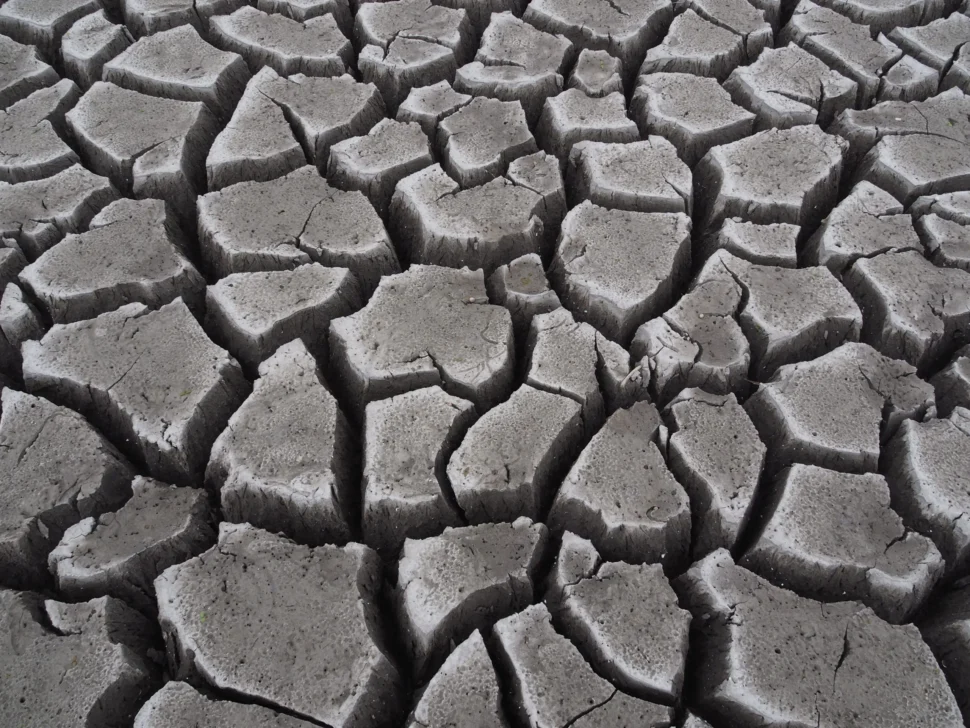
Photos of the dried-up bottom of the Kakhovka Reservoir published by the Ukrainian Nature Conservation Group on July 12, 2023[490]
The high risk of wind erosion, deflation, and desertification is confirmed by satellite imagery, which was prepared for the study area using a differential humidity index. The satellite study of the Normalized Difference Moisture Index (NDMI), an indicator used to determine the moisture content of vegetation and monitor drought, has shown dramatic changes from before and after the Dam’s destruction. According to the NDMI methodology, negative values, i.e., values close to -1, correspond to an open ground zone. Values close to zero indicate an aquatic environment.21
Comparing the measurements of the same area in July 2020 and July 2023 shows that almost the entire area of the Kakhovka Reservoir has acquired negative values. This also applies to a large part of the territory to the south in Zaporizhzhia and Kherson Regions. The following images confirm the fact of the planar development of drought and degradation of the surface soil and vegetation layer as a result of drying caused by the dewatering of the Kakhovka Reservoir and the irrigation canal system, which is shown through a negative value of the index. The increase in the coverage of drained areas based on satellite data obtained in the summer following the HPP explosion, is approximately 45% compared to the historical values of annual variability derived from overlay analysis of satellite data.21
21 Expert analysis of the impact caused on water resources and environmental elements as a result of the Kakhovka Dam’s destruction, see Annex C.
22 Generated by Sentinel Hub in Expert analysis of the impact caused on water resources and environmental elements as a result of the Kakhovka Dam’s destruction, see Annex C.
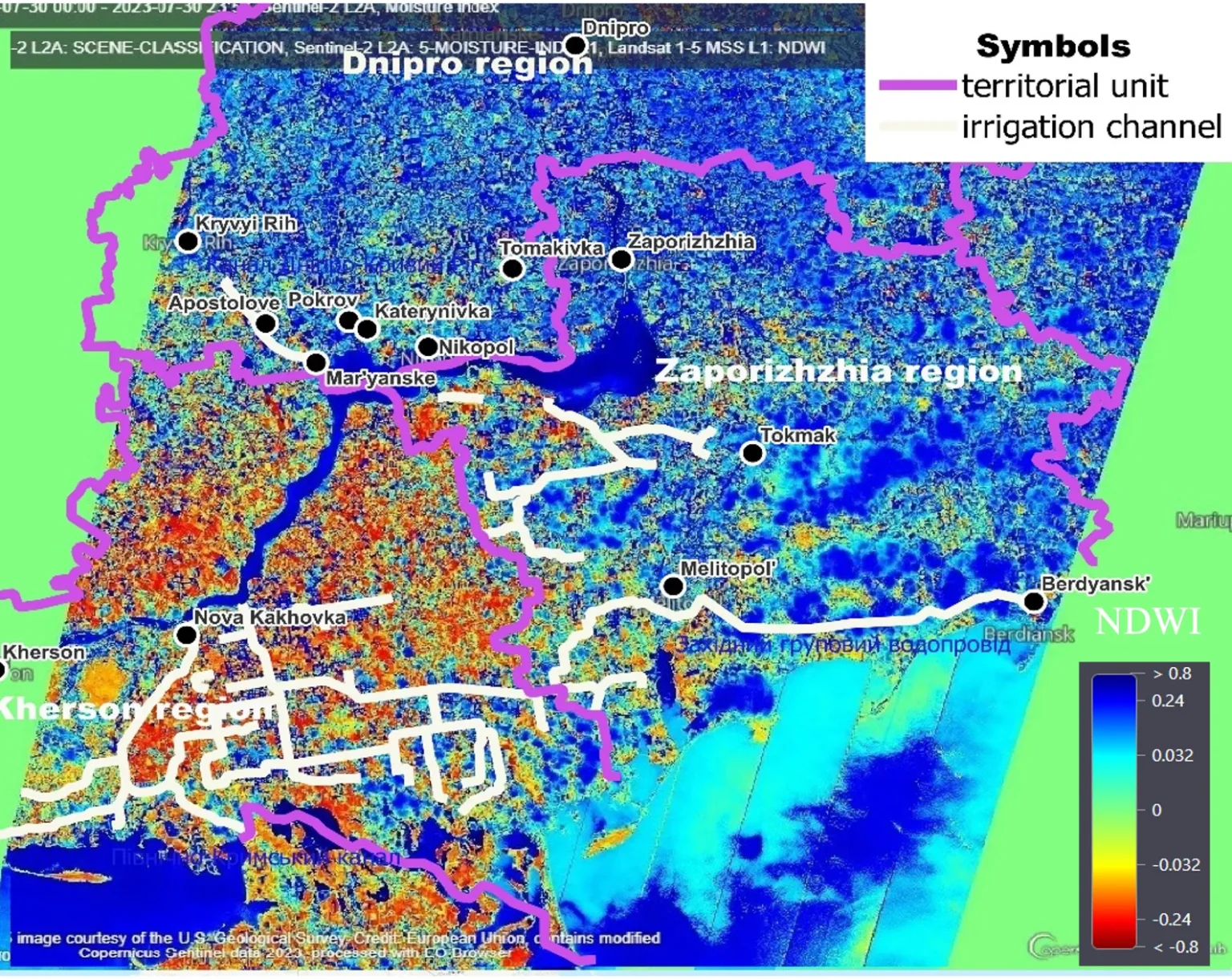
a – Analysis of the subsurface soil moisture content within the areas adjacent to the Kakhovka Reservoir for the period July 202022
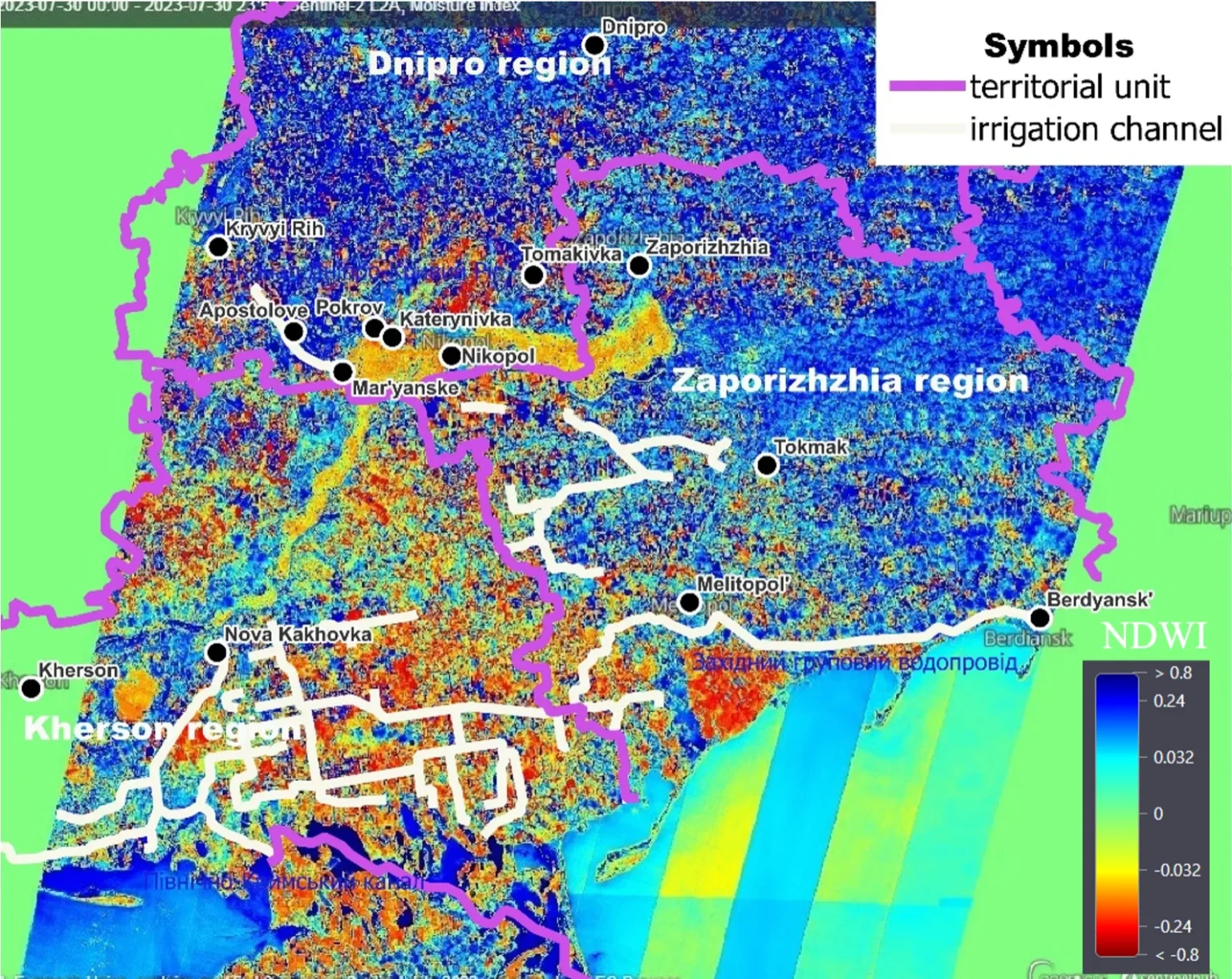
b – Analysis of changes subsurface soil moisture content within the areas adjacent to the Kakhovka Reservoir as a result of the Kakhovka Dam destruction, for the period July 202321
The explosion of the Dam has negative implications for soil health. The territories of Dnipropetrovska, Zaporizhska, and Khersonska Oblasts, which are located within the catchment area of the Kakhovka Reservoir and the Lower Dnipro, are in a climatic zone with insufficient annual moisture levels and are characterized by unfavorable conditions for the formation of the water balance. This affects the volumes of water resources. The deficit in the climate water balance threatens desertification of territories. This would have been possible even if the conditions (surface and groundwater runoff formed by such hydraulic engineering solutions as the construction of the Kakhovka Dam and regulation of the Lower Dnipro River flow) that existed before the disaster had been maintained.21
According to the PAX the dehydration of the soil will lead to the loss of vegetation and an increase in harmful toxic substances in the soil. All these factors will lead to soil salinization, a decrease in soil productivity, and the degradation of arable lands, putting harsh limits on the capacity for farming in the region.[491]
As noted by the United Nations Food and Agriculture Organization (“FAO”), there is a risk that precipitation will not provide sufficient irrigation for normal agricultural production. In turn, if the disruption to the irrigation system persists for several seasons, soil salinity is likely to escalate further. Consequently, the absence of irrigation, alterations in cropping patterns, or even abandonment of land in certain areas could exacerbate soil erosion, triggering a chain of environmental and social repercussions.[492]
The drying of the Kakhovka Reservoir bed, which occurred as a result of the damage to the Dam, led to the formation of unstable drained soils of sandy clay composition. These are more prone to wind and solar erosion because of their light, fine-grained composition. Satellite images revealed that the areas occupied by the Kakhovka Reservoir, as well as the riverbed and downstream areas of the Lower Dnipro, are dried by 80%.
The failure of the Kakhovka irrigation system endangered about 1.1 million hectares of irrigation systems, with a design area of 1.9 million hectares.21
Abrupt soil drying has a number of negative consequences, such as facilitation of the rapid spread of invasive plant species, depletion of fertile soil cover, desertification with the opening of sandy bottoms, and salinization.
Soil salinization has serious short- and long-term consequences for the southern region. In the absence of additional soil moisture from the freshwater of the Kakhovka Reservoir, soils prone to salinization will experience an intensification of chlorine and sulphate salt accumulation. The process of salt accumulation will spread in the zones of hypothetical salt formation within 70% of the Neogene aquifer. The aquifer complex in the Neogene sediments is the main one for the exploitation as a source of fresh water within the study area (adjacent to the Kakhovka Reservoir and Lower Dnipro areas of the Dnipropetrovska and Khersonska Oblast); however, according to geological settings, it contains aquitard in the upper section that are characterized by the naturally high salt content due to the sedimentation process. Together with insufficient rock washing (that was produced before thanks to the infiltration and extra groundwater recharge from the Kakhovka Reservoir and the Kakhovka melioration complex) and added soils salinization due to abrupt soil drying and climate impacts, the Neogene aquifer complex quality is likely to deteriorate.
Salinization will also be cyclical due to the use of highly saline groundwater. Salinity will increase due to a shift in the water balance due to the lack of infiltration and intensification of evaporation for irrigation.
Salinization of the upper water exchange zone, along with soil salinization, will lead to water-related and salt-related degradation of the territories, making them unusable for any economic activity.
b) Consequences for soil because of flooding
The sudden discharge of a substantial volume of water from the Kakhovka Reservoir, blending with assorted pollutants, resulted in notable soil damage due to pollutant deposition, salinization, and disturbance of the moisture and groundwater equilibrium.
i) Washing away of fertile soil cover
The soils surrounding the Kakhovka Reservoir are classically considered to be among the most fertile in Ukraine. This also applies to the areas downstream in the Kherson Region.[493]
With the arrival of a significant flow of water, scientists noted the partial washing away of fertile soil cover, which would affect land fertility after the water receded.[494] In addition, some of the silt accumulated at the bottom of the Reservoir was washed out after the Dam was damaged and deposited in the flooded areas of the lower Dnipro River and the Dnipro-Bug Estuary as a blanket of fine sediments.
Soils leaching leads to structural changes in arable soil that make them unsuitable for further cultivation.
ii) Soil salinization
The European Soil Data Centre defines soil salinization as “the process that leads to an excessive increase in water-soluble salts in the soil,” which reduces soil fertility.[495] After the explosion of the Kakhovka HPP and flooding, scientists argued about the potential salinization of the soil downstream.
Ukrainian Nature Conservation Groups presume that the floods will trigger a substantial elevation in the water table across the southern region of Ukraine. This surge will not only augment soil moisture but also induce soil salinity, posing a threat to vegetation.18
Salinization of soils downstream of the Dnipro River after the flooding of these lands is the result of secondary salinization. Excessive soil moisture in this area will obviously lead to the activation of the dissolution of salts that are naturally found in larger quantities in the water-bearing rocks of the southern region – the Black Sea Region (Kherson Oblast), thereby provoking an increase in the salinity of groundwater in the upper water exchange zone. Increased salt content in groundwater and stagnant conditions of the territories formed as a result of excessive water income are factors of salt accumulation in soils. Such processes require constant monitoring and the organization of a monitoring network.
Meanwhile, it is worth noting that scientists lack information on salinity downstream, as the main body of the flooded soil is on the left bank of the Dnipro, which is not accessible as it is controlled by the Russian Armed Forces. At the same time, the territories under the control of the Ukrainian army are often inaccessible for investigations due to the ongoing hostilities in the region.
iii) Pollution with heavy metals and other contaminants
The chemical composition of the riverbed sediments and soils of the areas adjacent to the former Kakhovka Reservoir was studied by international and national experts. The results of the laboratory tests, which were carried out independently of each other, revealed a general trend indicating that the soil sediments of the coastal areas and the river-bed sediments of the dried Kakhovka Reservoir contain increased concentrations of heavy metals that significantly exceed the hygienic and threshold values (“TV”) established by Ukrainian legislation.
Studies performed by international23 experts indicate the presence of manganese and cadmium, as well as lead and arsenic, in concentrations exceeding the TV in soil samples taken from the coastal areas of the Reservoir estuary and downstream of the destroyed Dam along the Dnipro course.
As long as the organic matter and the processes that accompany the vital activity of the manganese and other metals such as photosynthesis and decomposition of phytoplankton and microorganisms play a significant role in the migration of these components in soluble and colloidal forms. The transfer of manganese and other metals by natural waters leads to their accumulation in bottom and coastal sediments, which leads to an increase in the concentration of these substances in them. For example, the main form of migration of manganese compounds is suspensions, the composition of which is determined by the composition of the rocks drained by the water.
According to research conducted by the Institute of Environmental Geochemistry of NASU[496] in the fall of 2023, it was found that, compared to the soils of coastal areas, where background geochemical concentrations of heavy metals meet the established standards, riverbed sediments exposed to the surface as a result of the shallowing of the Kakhovka Reservoir are characterized by an increased gross content (up to 30%) of the following elements: thallium, manganese, nickel, cadmium, bromine, lanthanum, ytterbium, gallium, tin, tungsten, lithium, and scandium.
Thus, the picture of the features of pollution of the Kakhovka Reservoir territories is as follows: The main danger is posed by the bottom (reservoir bed) sediments of the Kakhovka Reservoir being exposed to the surface. Silt sediments that have accumulated over many decades through the transfer of Dnipro waters and the accumulation of colloidal solutions of heavy metals and other hazardous components from numerous discharge points of industrial enterprises located along the Reservoir shores have been exposed. The ability of these elements to further migrate in the form of bound salts in the geological environment poses a risk of their entry into local aquifers and, as a result, into food and the human body.
23 Findings provided in the preliminary study “Environmental consequences of the destruction of the Kakhovka HPP” by Flaviano Bianchini.
4.3. Consequences for the Economy
In this section we explore the economic dimension of the consequences stemming from the destruction of the Kakhovka Dam. Below you will find general economic considerations (4.3.1.) as well as specific analysis of the losses incurred by the agricultural sector of Ukraine (4.3.2.).
4.3.1. Economic Consequences of the Kakhovka Dam Explosion
An accurate assessment of direct damage and losses in all sectors of the economy is still impossible due to Russia’s occupation of Ukrainian territories. As noted, some of these, particularly on the left bank in the Kherson Region, have been significantly affected by flooding because the explosion at the HPP and the drainage of the Kakhovka Reservoir.
One of the most comprehensive assessments of losses was conducted by the Government of Ukraine and the UN within the framework of the Needs Assessment after the disaster.[497] According to data from the Government and the UN, the size of direct damage to infrastructure and assets amounts to $2.79 billion USD, and the size of losses exceeds $11 billion US dollars.
In this subsection, we analyze the economic consequences, covering changes in economic activity, financial stability, and livelihoods in the affected regions. Specifically, we focus on a) losses for energy and hydropower; b) impact on local businesses in affected regions – trade, industry, and fishing; c) damage to municipal infrastructure, including the impact on hydraulic engineering, water supply, and drainage; as well as d) harm inflicted on social infrastructure. The assessment of the consequences of the Dam explosion on agricultural activity is considered in a separate subsection (4.3.2).
In each subsection, we consider sectoral loss assessments conducted by the Government of Ukraine, the UN, as well as Ukrainian and international non-governmental organizations (“NGOs”). We also utilize facts about losses incurred by individual enterprises, known from open sources or statements taken from employees of these enterprises or local authorities obtained during joint field missions of TH and PEJ.
a) Losses in the energy sector
As a result of the Dam’s destruction, an important source of clean energy for the south was lost. Although the HPP had already been disconnected from Ukraine’s main power grid in October 2022, the explosion resulted in the loss of significant capacity.[498] It played a significant role in regulating peak loads, particularly in the Kherson and Mykolaiv Oblasts. On average, the plant generated 1.5-2 billion kWh of electricity per year, with a capacity of 343.2 MW.[499] The destruction of the Kakhovka HPP reduces reserves for automatic frequency restoration in Ukraine’s power system, thus making system balancing more expensive.[500]
Immediately after the Dam explosion, the Ukrhydroenergo Private Joint Stock Company (“Ukrhydroenergo PJSC”) announced that the plant could not be rebuilt.[501] According to the company’s estimates, the reconstruction of the Kakhovka HPP would cost $1-1.2 billion.[502] (Figures in this section are expressed in USD.)
According to joint data from the Government of Ukraine and the UN, the total losses of the energy sector from the Dam explosion exceeded $3.8 billion.[503]
Firstly, due to the destruction of the plant, Ukrhydroenergo PJSC lost revenues equivalent to $96 million. At the same time, the enterprise incurred a loss of $138 million due to the inability to sell electricity supply and ancillary services. However, these financial losses could be higher, estimated at approximately $828 million, as it will take at least 6 years before the full restoration of the Kakhovka HPP is possible. Another $3.9 million will be spent by “Ukrhydroenergo” on service works at other affected hydroelectric power stations along the Dnipro River Canal System.
Secondly, Ukraine’s largest nuclear power plant, Zaporizhzhia Nuclear Power Plant (“ZNPP”), used water from the Reservoir connected to the Kakhovka HPP. The threat to ZNPP’s operation means that the state operator, Energoatom, will miss out on $3.6 billion in revenue. Currently, to meet ZNPP’s needs, existing water Reservoirs, alternative reserve water sources, and new drilled wells are being used.
The destruction of the HPP directly affected the energy sectors of the Kherson and Zaporizhzhia Regions. Prior to the full-scale invasion of the Russian Federation into Ukraine and the disaster at the Kakhovka HPP, these 2 regions were significant electricity producers in Ukraine, with 23% of the country’s total generating capacity as of the end of 2021.
According to estimates from the Government of Ukraine and the UN, the current damage inflicted on the energy infrastructure amounts to $1.26 billion, and it is entirely attributed to the Kherson Oblast.[504] In addition to the destruction of the Kakhovka HPP itself, this includes damage to other energy facilities caused by flooding. For example, the infrastructure of the electricity distribution system suffered losses of $44 million. However, these data are incomplete because the Government does not have access to the temporarily occupied territories.
Regarding losses in the oil and gas sector, the flood destroyed at least 17 gas stations and 2 oil depots, resulting in approximately $12 million in losses. The damage caused to several gas regulating stations and the centralized heating system is estimated at $4 million by the Government and the UN.
The overall reconstruction needs in the energy sector are estimated at $1.8 billion. This sum includes only energy sector damages to territories controlled by the Ukrainian government, as it is currently impossible to fully assess the damages in the left bank Kherson Region.
Additionally, according to the statements gathered by TH and PEJ, the infrastructure for solar energy generation in the Mykolaiv Region was destroyed. The company “Energo-Syla Group,” which operates ground-based solar power stations, reported that the Ingul and Afanasiivka ground-based solar power stations in the Bashtanskyi District were damaged due to the flood. As a result of flooding and equipment damage, the Afanasiivka Station operated at 30-40% of its capacity.[505]
b) Impact on local business
i) Trade and industry
According to official estimates from the Government of Ukraine and the UN, the destruction of the Kakhovka HPP caused damage to the trade and industrial sector amounting to $7.4 million.[506] In this case, 65% of the damage affected the industrial sector, particularly small private firms, while the remaining portion impacted trade in the Kherson Region downstream from the Dam.
According to estimates by the KSE Institute, VoxUkraine, and Azenzuz Vision based on satellite imagery and geospatial data, the flood resulted in the inundation of structures covering a total area of 8,588,175 m2.[507] That is approximately the area of 60,500 buildings. The largest affected area is occupied by residential buildings, including private houses and apartment buildings. The second-largest area is occupied by industrial and agro-industrial complex objects with a total area of 1,670,730 m2. In total, there are 1,434 buildings, out of which 258 are completely submerged.
The areas most affected by flooding include the Kherson, Kakhovka, and Skadovsk Districts in the Kherson Region, as well as the Mykolaiv District in the Mykolaiv Region.[508] In the Kherson District, the affected settlements include Kherson, Oleshky, Dniprovske, Sagy, Antonivka, Kozachi Lagery, Krynky, Poyma, Yantarne, Zymivnyk, and Pidstepne. In the Kakhovka District, the affected settlements include Raiske, Nova Kakhovka, Korsunka, Dnipriany, and Kozatske. Among these, the city of Kherson has the highest number of completely submerged structures.
Specifically, buildings and structures designated for the following purposes were completely or partially submerged: machinery manufacturing (126); food, beverage, or tobacco product manufacturing (75); chemical substance and chemical product manufacturing (24); construction material manufacturing (14); electrical household appliance manufacturing (12); textile manufacturing (5); woodworking, paper, or printing product manufacturing (3); and glass and glass product manufacturing (1). Additionally, 90 buildings and structures intended for agricultural activities (crop farming, animal husbandry, or forestry) were impacted. Among the completely submerged structures were a major producer of soybean oil, LLC “Tavria Agroinvest,” and the building of the Novokakhovska Electric Machinery Plant.[509]
Additionally, as a result of the Dam explosion, some enterprises in the Dnipropetrovsk Region were affected and forced to halt operations. For instance, in the village of Maryanske in the Kryvyi Rih District, water overflowed from the loading terminal of one of Ukraine’s largest agroholdings, “Nibulon.”[510] Additionally, the loading terminal of the company in the village of Kozatske in the Beryslav District of the Kherson Oblast was flooded.[511]
The Government of Ukraine and the UN estimate the total losses to the trade and industrial sector at $77 million over the course of 18 months.[512] Theis figure reflects the decrease in business activity in 2022 and takes into account both the flood and the water scarcity in the Kherson and Dnipropetrovsk Oblasts. The Dam breach affected the crucial shipbuilding sector in Kherson and Mykolaiv. Additionally, a significant export industry, the metallurgical sector, was mainly concentrated in the Dnipropetrovsk and Zaporizhzhia Regions following extensive destruction in the Donetsk Region.
For example, Ukraine’s largest metallurgical plant, “ArcelorMittal Kryvyi Rih,” faced a shortage of technical water, leading to a halving of production. The enterprise had to operate at 15-20% of its pre-war capacity. Ferroalloy and pipe plants in Nikopol, upstream from the Dnipro River, also required access to water.[513]
Shipping was critically affected as well: the Kakhovka HPP facilitated logistics along the Dnipro River. Its locks enabled navigation not only in the vicinity of the hydroelectric power plant but also along the entire length of the river. Immediately after the Dam breach, the Ukrainian Navigation Administration announced that the Dnipro would cease to be navigable below the Kakhovka lock for an extended period, as it was the last Dnipro lock that allowed ships to exit toward the open sea.[514] The deep-water route from the Black Sea to Zaporizhzhya served as an artery for vessels from around the world. According to various estimates, the destruction of the Kakhovka HPP rendered the use of the Dnipro for logistics impossible for the next 5 to 15 years.[515]
ii) Fishing sector
Overall, the Government of Ukraine and the United Nations estimate the damage and losses inflicted on the agricultural sector at $406.6 million.[516] Of this amount, 8%, or $31.5 million, represent the damage and losses incurred by the fishing and aquaculture sector. Fishing activity in the Kakhovka Reservoir was critical for food security and livelihoods in Ukraine because Russian aggression limited fishermen’s access to sea and river waters. In 2021, fish catches in the Kakhovka Reservoir accounted for 7.8% of the total fish catch in Ukraine, while catches in the estuary and delta areas accounted for 13% of the total catch.
According to the Ministry of Agrarian Policy, the destruction of the Kakhovka HPP resulted in the destruction of all 85 fish farms located downstream: 49 in the Kakhovka Reservoir and 36 in the Dnipro-Bug Estuary system.[517] Fish in the Kakhovka Reservoir were completely wiped out, and those carried downstream into the lower reaches of the Dnipro within the Kherson and Mykolaiv Regions ended up stranded on floodplains.
According to the Ministry of Agrarian Policy, the total amount of losses from direct loss and loss of offspring due to deteriorating living conditions caused by the discharge of water from the Kakhovka Reservoir amounts to 9.8 billion UAH or approximately $247 million. In total, at least 11,388.3 tons of fish were lost.
The destruction of the Kakhovka HPP led to the flooding of the only state-owned sturgeon breeding facility in Ukraine, the “Production-Experimental Dnipro Sturgeon Fish Breeding Plant,” named after academician S.T. Artiushchyk.”[518] The plant was located in the village of Dniprovske in the Kherson Region and annually provided for the stocking of over 1.5 million young sturgeon.
In addition to that, there were 2 other state-owned fish farms in the Kherson Region: the “Novokakhovka Sturgeon Fish Farm” near Nova Kakhovka and the “Kherson Experimental Fish Farm for Breeding Young Sturgeon” near Hola Prystan.[519] Unfortunately, due to the Russian occupation of the left bank of the Kherson Region, there is no precise information available regarding the losses incurred by these enterprises due to flooding.
At the Management of the State Agency of Land Reclamation and Fisheries in the Mykolaiv Region, it was reported that, due to flooding, aquaculture entities in the region suffered losses in fish stocks, infrastructure, and potential revenue. The largest of these enterprises – farming enterprise “Leleka,” LLC “Sphinx-Yug,” and farming enterprise “Zhemchuzhyna” – were located in the Snihurivskyi District along the Inhulets River. Each of these enterprises estimates its losses due to the destruction of the Kakhovka HPP at around 9-10 million UAH or approximately $220-250 thousand. Additionally, entrepreneurs in the fishing industry purchase quotas from the state for the use of water resources. For example, in March 2023, fishery enterprises in the Mykolaiv Region purchased lots worth 900,000 UAH or approximately $23 000. However, due to the flooding, they were unable to commence fishing operations and generate profits.[520]
Local entrepreneurs in the Dnipropetrovsk Region also reported significant losses for the industry and sudden unemployment. According to one witness in the village of Maryanske in the Kryvyi Rih District, the explosion of the hydroelectric power plant led to a massive fish die-off, resulting in the bankruptcy of the fishing industry.[521] Another entrepreneur from Maryanske confirmed that his income decreased by approximately 90%, as did that of many of his colleagues.[522] After the destruction of the Kakhovka Reservoir, the local fish factory in the village of Pokrovske, Synelnykove District, went bankrupt immediately, leaving 30 employees jobless.[523] Witnesses also reported that the complete cessation of operations at fish farms and the consequent loss of jobs occurred in the villages of Kapulivka in Nikopolsky District and Hrushivka in Kryvyi Rih District.[524] Fish farms in the village of Chervonohryhorivka in Nikopol District, which employed approximately 50 hired workers, were left unable to operate for an extended period.[525]
c) Infrastructure damage
i) Communal infrastructure
According to estimates by the KSE Institute, VoxUkraine, and Azenzuz Vision based on satellite images and geodata, the total area affected by flooding amounted to 8,588,175 m2.[526] The largest area is occupied by residential buildings, including private houses and apartment complexes (5,874,448 m2), followed by industrial facilities (1,670,730 m2),and infrastructure (902,933 m2).
The most affected were warehouse facilities (garages and warehouses, 1,320 buildings), urban infrastructure (markets and public transport stops, 102 buildings), seaports (41 buildings), bus stations (3 buildings), police stations (3 buildings), and fire and rescue stations (1 building).[527]
The Ukrainian Government and the UN calculated that the municipal services and communal infrastructure sector incurred damages totaling $127.8 million.[528] As a result of the destruction of the HPP, affected municipal enterprises ceased or limited the provision of services to the population.
Following the Dam explosion, municipal enterprises’ assets were flooded and damaged, mainly in the Kherson and Mykolaiv Regions. The city of Kherson and the areas of the Kherson Region occupied by Russia were particularly hard hit.[529] The most heavily flooded locations include the city of Nova Kakhovka, the village of Raiske, and the cities of Hola Prystan and Oleshky.[530]
ii) Hydrotechnical melioration
Water from the Kakhovka Reservoir was diverted by 4 major canal systems: the North Crimean Canal, the Kakhovka Main Canal, the Dnipro-Kryvyi Rih Canal, and the North-Rogachyk Irrigation System.[531] The North Crimean Canal, until its closure in 2014 following the Russian annexation of the peninsula, provided 80-85% of the freshwater supply to Crimea. According to reports from the occupying authorities in Crimea, the destruction of the Kakhovka HPP did not significantly affect the water supply to the peninsula.[532]
The Dnipro-Kryvyi Rih Canal, through pumping stations, supplied Dnipro River water to the Southern Reservoir near Kryvyi Rih, from which water was supplied for 70% of the city’s needs.[533] The Kakhovka main canal supplied water to one of the largest irrigation systems in Ukraine and provided water to villages in the Kherson and Zaporizhzhia Regions. However, the main station of the canal was systematically attacked by Russian forces from the beginning of the full-scale invasion, so as of 2023, the canal was only partially operational. The North-Rogachytska irrigation system provided water to 164 thousand hectares of agricultural land in the northern part of the Zaporizhzhia Region, but as a result of the Dam explosion, it operates only partially.
According to the Ministry of Agrarian Policy and Food of Ukraine, the losses of state property of irrigation systems and canals amounted to 150-160 billion hryvnias. However, the full amount can only be determined after the territories are de-occupied.[534] The Kakhovka Reservoir served as the source of irrigation for 94% of the systems in the Kherson Region – 74% in the Zaporizhzhia Region, and 30% in the Dnipropetrovsk Region.[535] The Kakhovka Main Canal serviced 326,000 hectares, while the North Crimean Canal serviced 39,700 hectares of agricultural land.
Overall, the Kakhovka Reservoir supplied water to irrigation systems and animal husbandry covering a total area of 584,000 hectares. Therefore, according to estimates by the KSE Institute, indirect revenue losses for agriculture will increase by $182 million per year. Other sectors of the industry will incur up to $49 million per year in expenses, not including losses from the destruction of crops, livestock, and fish amounting to $25 million.[536]
iii) Water supply and drainage
The Government and the UN separately assessed the losses for the water supply and sanitation sector, as the destruction of the Dam posed a threat to 80 settlements in the Kherson, Mykolaiv, Dnipropetrovsk, and Zaporizhzhia Regions.[537] Overall, the physical damage inflicted on the water supply and sanitation sector is estimated at $65.92 million USD. Sewage pumping stations, treatment facilities, and units for purifying drinking water were mainly affected.
Workers from local enterprises in the Kherson, Mykolaiv, and Dnipropetrovsk Regions also reported losses incurred by the water supply and sanitation infrastructure. For example, the Inhulets River Canal Management is responsible for supplying water for the needs of the population and agricultural enterprises through irrigation canal systems in the Kherson and Mykolaiv Regions. Due to the flooding of 2 pumping stations, the Inhuletska and Yavkynska stations, the enterprise incurred losses of approximately 2 million UAH or approximately $50 000 for the cleanup of the disaster aftermath.[538]
In the Dnipropetrovsk Region the communal enterprise “Zelenodolsk Vodokanal” was completely dependent on the Kakhovka Reservoir: water was supplied through the Dnipro-Kryvyi Rih Canal. After the Dam explosion, the enterprise had to use the reverse supply of water from the Zelenodolsk Reservoir.[539] According to the company, now they bear additional costs of up to 100,000 hryvnias per month for electricity bills. Also, after the blow-up of the power plant, costs for laboratory work increased. According to rough calculations, the additional costs of the water utility currently amount to approximately 3.5 million hryvnias, which is approximately 20% more than previously allocated for the work of “Zelenodolsk Vodokanal.”
Additionally, as a result of the Dam explosion, damage was reported to the “Dnipro-Kryvyi Rih” Canal itself. In the village of Maryanske in the Dnipropetrovsk Region, the engine room and the cable track equipment of the canal was flooded. It was unsafe for the staff to maintain the operation of the equipment, so the pumps of the Dnipro-Kryvyi Rih Canal did not work for some time after the plant was blown up.[540]
In the village of Hrushivka, Dnipropetrovsk Region, the water supply system was damaged. Hrushivka Water Pumping Station used water from the Kakhovka Reservoir. The station provided water to 20 villages. In addition, it provided self-delivery to villages where there was no water supply (villages of Apostolovskyi, Nikopolskyi, Pokrovskyi Districts) and supplied water for irrigation of agricultural lands. After the explosion of the HPP, the enterprise had to allocate resources to extract water from the Pidpilna River to provide water. The cost for this amounted to UAH 15 million. Additionally, the enterprise employed 300 workers, and after the cleanup of the consequences of the explosion, it had difficulty paying salaries to its personnel.[541]
In the Nikopol District of the Dnipropetrovsk Region, the utility company PKKP «Dzherelo» used to supply water to the villages of Kapulivka and Pokrovske and provided infrastructure maintenance in several other villages. Before the Kakhovka HPP was blown up, it took water directly from the Kakhovka Reservoir and purified it at the Pokrovsk Pumping and Filtering Station. Since the pumping station stopped its work, the company hasn’t received any income, but it still bears the costs of water transportation and repair work. After the Dam explosion all expenses of the enterprise were covered by the Pokrovsk Village Council.[542]
Therefore, in addition to direct damages to water supply and sanitation infrastructure, the explosion of the Kakhovka HPP affected the ability of municipal enterprises to function properly and provide necessary services to the local population in 4 regions. The expenses for mitigating the disaster’s consequences adversely impacted the resilience of these enterprises and their ability to pay their staff. Consequently, the population employed in state irrigation and aquaculture enterprises faced sudden unemployment.
iv) Social infrastructure: health care and education
In the Kherson Region, serious disruptions in the provision of medical services and the supply of medications have been recorded since the beginning of the full-scale invasion due to the Russian occupation of the region, as well as the destruction of medical infrastructure as a result of shelling. Additional destruction caused by the catastrophe at the Kakhovka HPP further complicated the situation.
Fully assessing the damages caused by the flooding resulting from the explosion of the Kakhovka HPP is still impossible due to temporary control by Russia over the occupied territories. However, the UN and the Government of Ukraine roughly estimate the damage inflicted on healthcare infrastructure at $650,000. (Monetary amounts in this section refer to USD values.) At the time of the assessment, the destruction of only 2 facilities in the Ukrainian-controlled parts of the Kherson Region was confirmed: a completely ruined outpatient clinic and damaged equipment at the tuberculosis dispensary.[543]
KSE Institute, VoxUkraine, and Azenzuz Vision attempted to assess the flood damage to medical facilities on both banks of the Dnipro.[544] Their assessments are based on satellite imagery and geodata. They estimate that the flooding affected a total area of 45,301 m2 of healthcare facilities. This includes 82 buildings, with the majority being hospitals, rehabilitation centers, and clinics. The cities most affected by the flooding of medical facilities are Hola Prystan, Oleshky, and Nova Kakhovka.
However, in addition to this, the Government and the UN emphasize the losses associated with urgent measures to restore the continuity of services and mitigate potential health risks. This includes strengthening epidemiological surveillance of the population’s health, ensuring compliance with water quality standards, and so on. These losses are estimated at $64.6 million.[545]
Regarding educational institutions, 37 educational facilities in the Kherson and Mykolaiv Regions were either damaged or destroyed due to flooding. The losses to the sector amounted to $51.97 million, with 54% occurring in territories under Ukrainian control and 46% in territories occupied by Russia.
KSE Institute, VoxUkraine, and Azenzuz Vision calculated that a total of 133,928 m2 of educational institution premises were flooded, including buildings of schools (44), kindergartens (40), universities and institutes (6), gymnasiums and lyceums (6), and others. Most buildings were damaged or completely destroyed in the cities of Nova Kakhovka, Oleshky, Kherson, and Hola Prystan, as well as in the village of Antonivka.
However, in addition to direct losses to educational infrastructure, the consequences of the disaster are also visible in the fact that many children are leaving educational institutions. Interruptions in schooling negatively impact teachers’ incomes, increase caregivers’ expenses, and exacerbate educational inequality.
4.3.2. Consequences for Agriculture
This subsection provides an analysis of the losses incurred by Ukraine’s agriculture due to the destruction of the Dam. The results of this work include the calculation and assessment of both immediate and long-term losses in Ukraine’s agriculture sector resulting directly from the destruction of the Dam.
The flooding affected 5,000 hectares of sown fields resulting in losses of $5.4 million. Additionally, we have calculated that the disruption of irrigation systems dependent on the Kakhovka Reservoir results in $367.9 million in annual losses.
a) Agriculture in the south of Ukraine
The agro-climatic zoning of Ukraine is based on precipitation levels and average temperatures. Ukraine has 3 main zones: steppe, forest-steppe, and Polissia, which is more humid and characterized by concentration of swampy plains. The steppe is the driest and most arid zone.
In the southern part of the steppe zone, there is a combination of low precipitation and high temperatures, leading to high aridity and creating a zone of risky agriculture. This zone, characterized by a very dry climate, is located in the Odesa, Mykolaiv, Kherson, Zaporizhzhia Regions and is partially robust in the Dnipropetrovsk Region.
The presented map indicates the locations of the most drought-prone areas. Drought severity here is measured using the Vorobyov Index.24
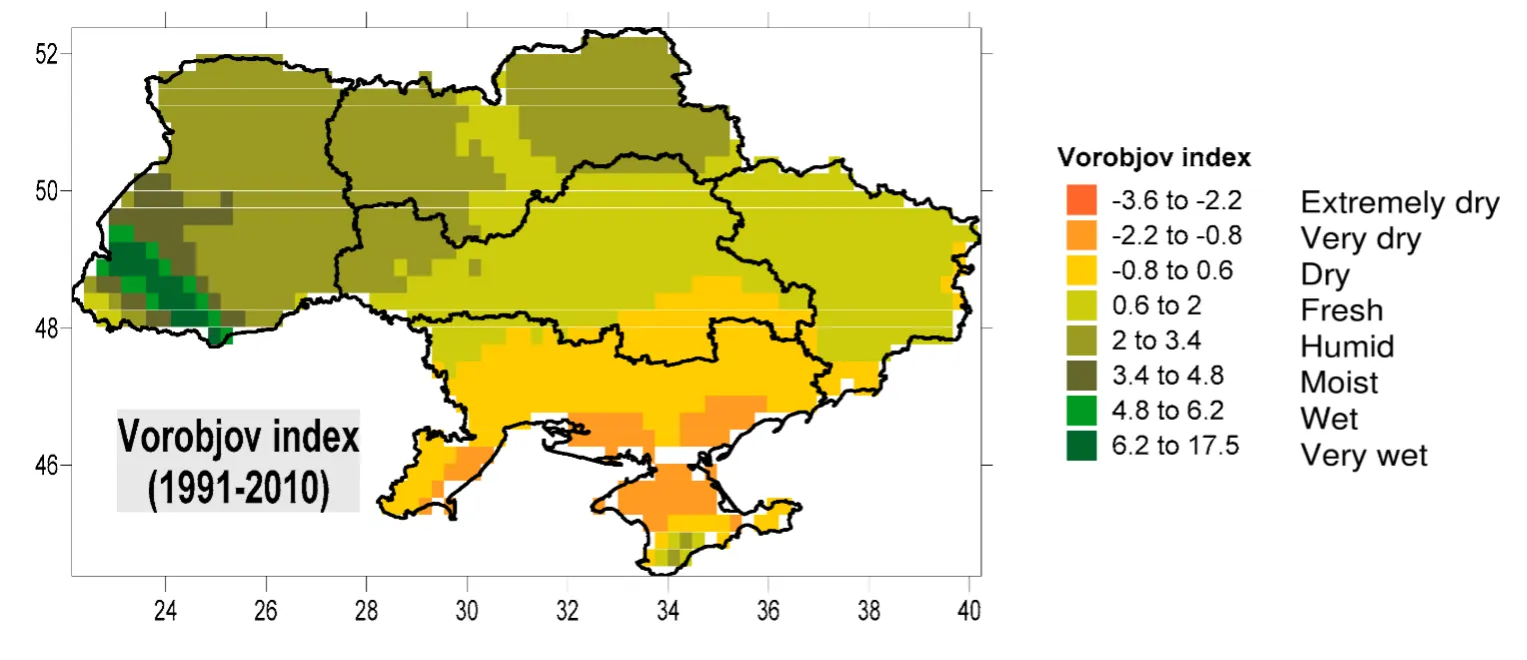
It is precisely in these drought-prone zones in which the majority of irrigation systems are located.[546]
24 The Vorobjov Water Availability Index is a measure used to assess the availability of water resources in a particular area.
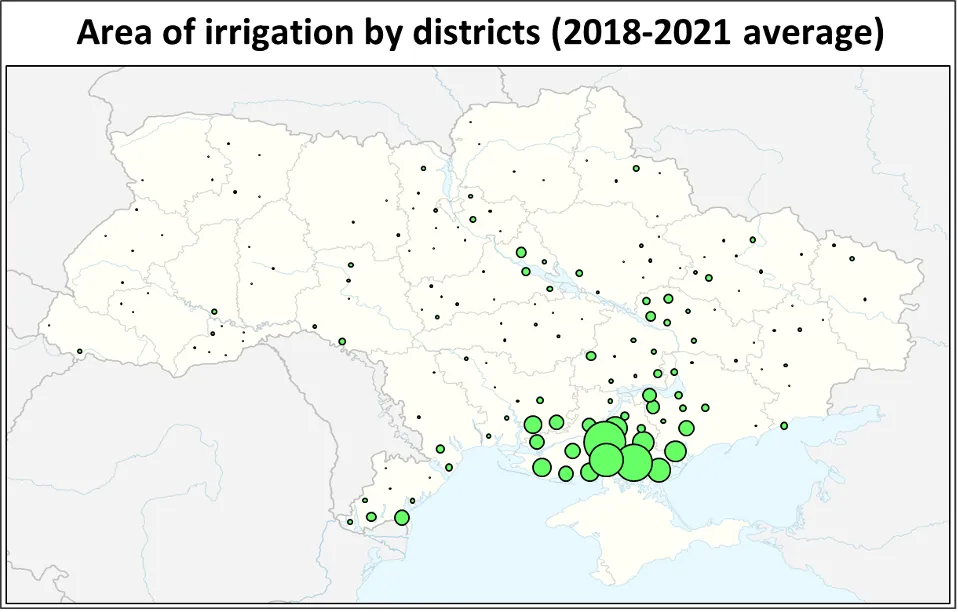
Among the 3 regions whose irrigation relied on the Kakhovka Reservoir (Kherson, Zaporizhzhia, and Dnipropetrovsk Regions), it is the Kherson Region that is the most dependent on irrigation. It can be said that roughly 1/3 of the production of all agricultural crops in the Kherson Region depends on irrigation. In some districts, this share exceeds 50%, making the presence of irrigation critical for economic activity in rural areas.[547]

b) Estimated area and cost of flooded crops
In the first days following the Dam breach, a flood occurred, resulting in the inundation and loss of agricultural crops. Most of the affected area remains under Russian occupation, complicating the calculation of losses. That said, the estimated total crop loss amounts to 5,000 hectares of sown fields ($5.427 million) as extrapolated from the data available for Snihurivka Territorial Community along the Inhulets River.25
c) Losses due to disruption of irrigation
In the weeks after the Dam was destroyed, the water level in the Kahovka Reservoir drastically dropped, and the Reservoir essentially ceased to exist. Consequently, the irrigation system was rendered inoperable as water intake points were inaccessible.
The main irrigation infrastructure, which relied on the Kahovka Reservoir, is situated on the left bank of the Dnipro River and has been under occupation for over a year. The absence of irrigation has already led to production losses in agricultural crops and will continue to impact future yields, with long-term consequences. The lack of water in the Kakhovsky splicing system affects not only the irrigated fields, but also the greenhouses, which cannot function without water supply. Therefore, in our calculations, we analyzed these 2 segments – irrigation and greenhouses.
Before the full-scale invasion of the Russian Federation in February 2022, Ukraine had around 379 thousand hectares of croplands depending on the irrigation. 78% (297 kHa) of those lands depended on the Kakhovske Reservoir.[548]
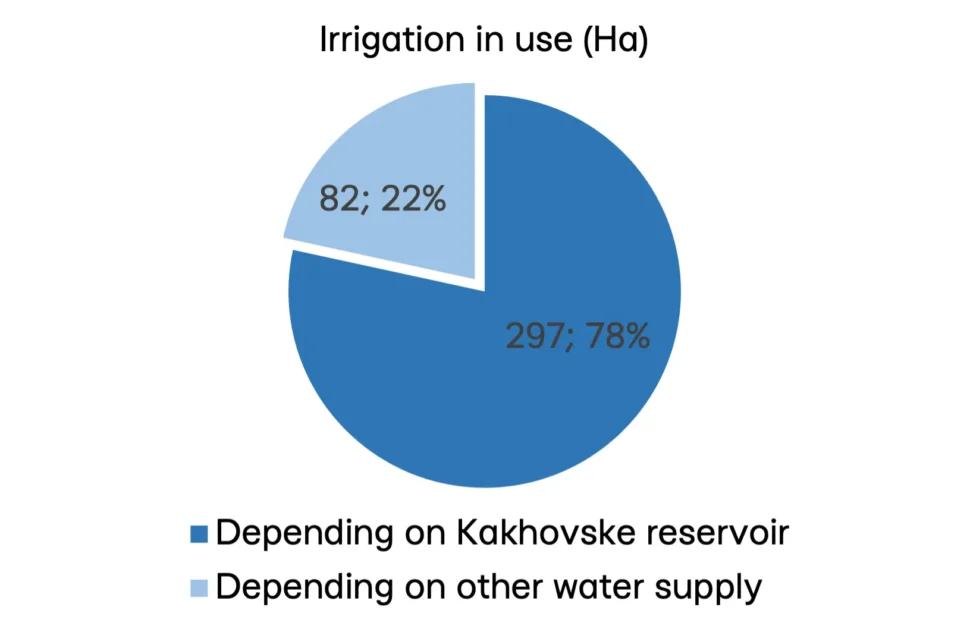
25 The calculations of the approximate losses incurred by agricultural sector as a result of flooding are presented in Annex D. This a rough calculation based on the limited amount of data only indicating the general idea of flooding related losses for agriculture.
Charts presented in this Section are developed by PEJ based on the data from the State Statistical Department of Ukraine. All the data, calculations, and graphs are available in Annex E.
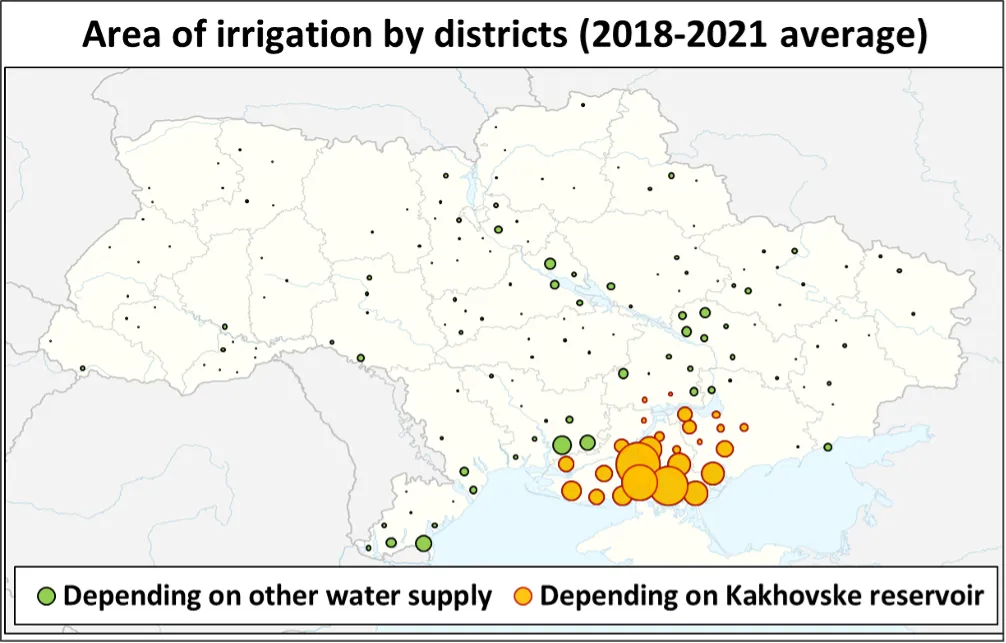
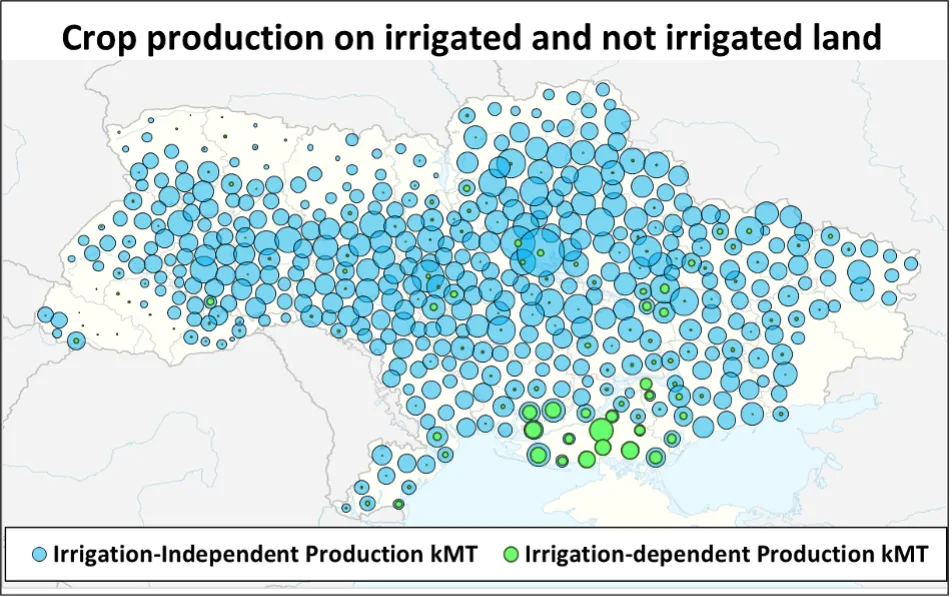
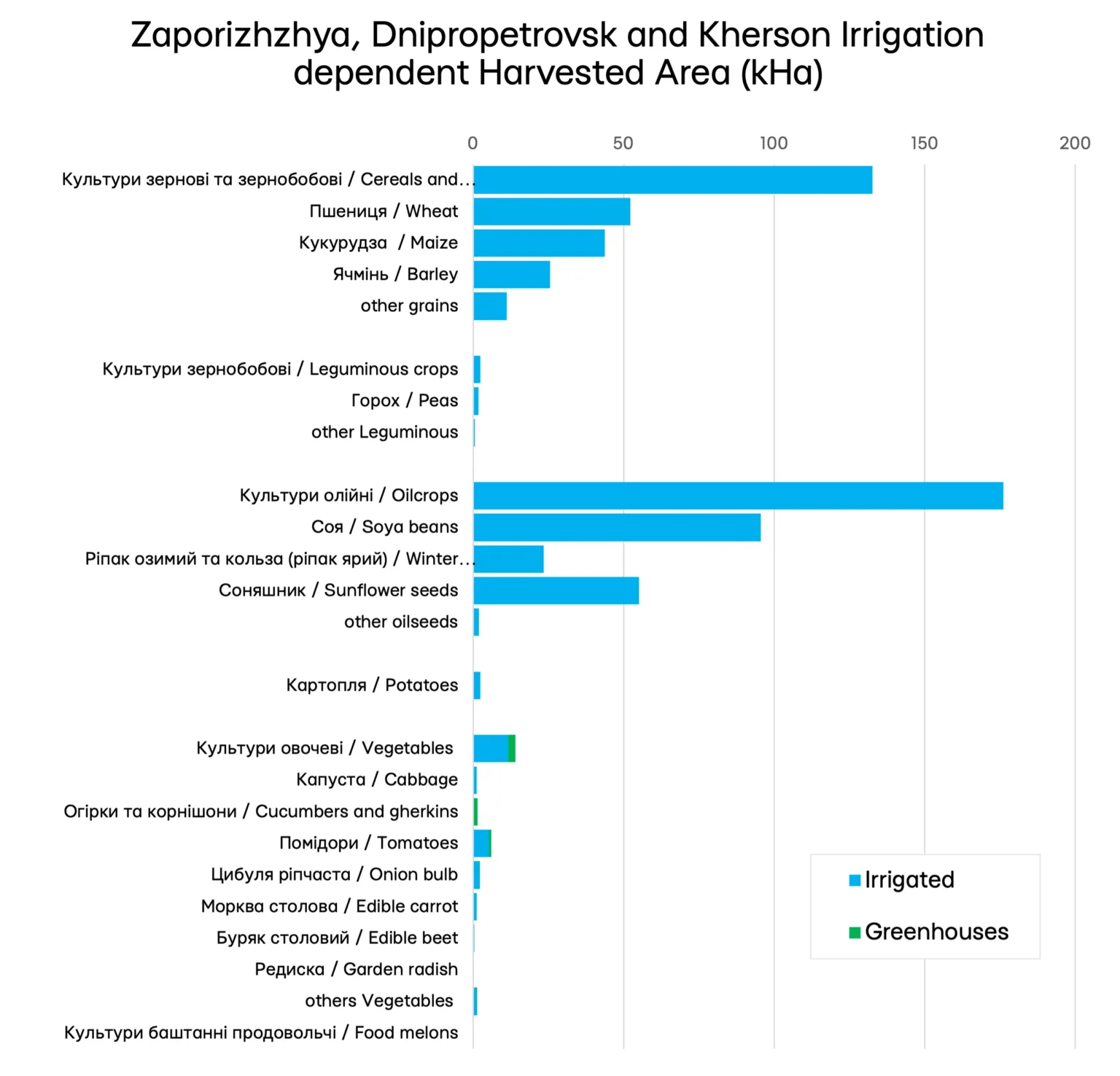
Rates of the irrigation-dependent production are illustrated below:[552]

Additionally, within each region, an analysis was conducted on the dynamics of both crop areas and production:[553]
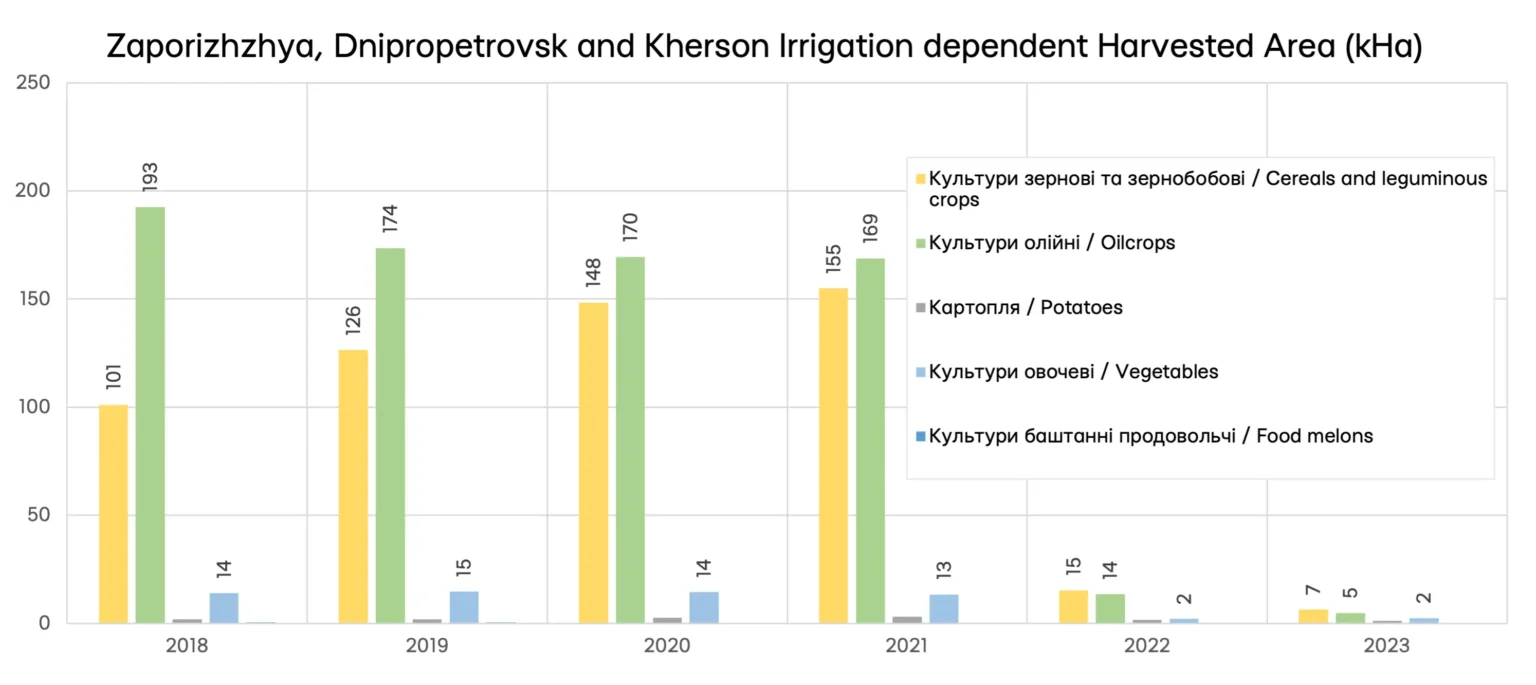
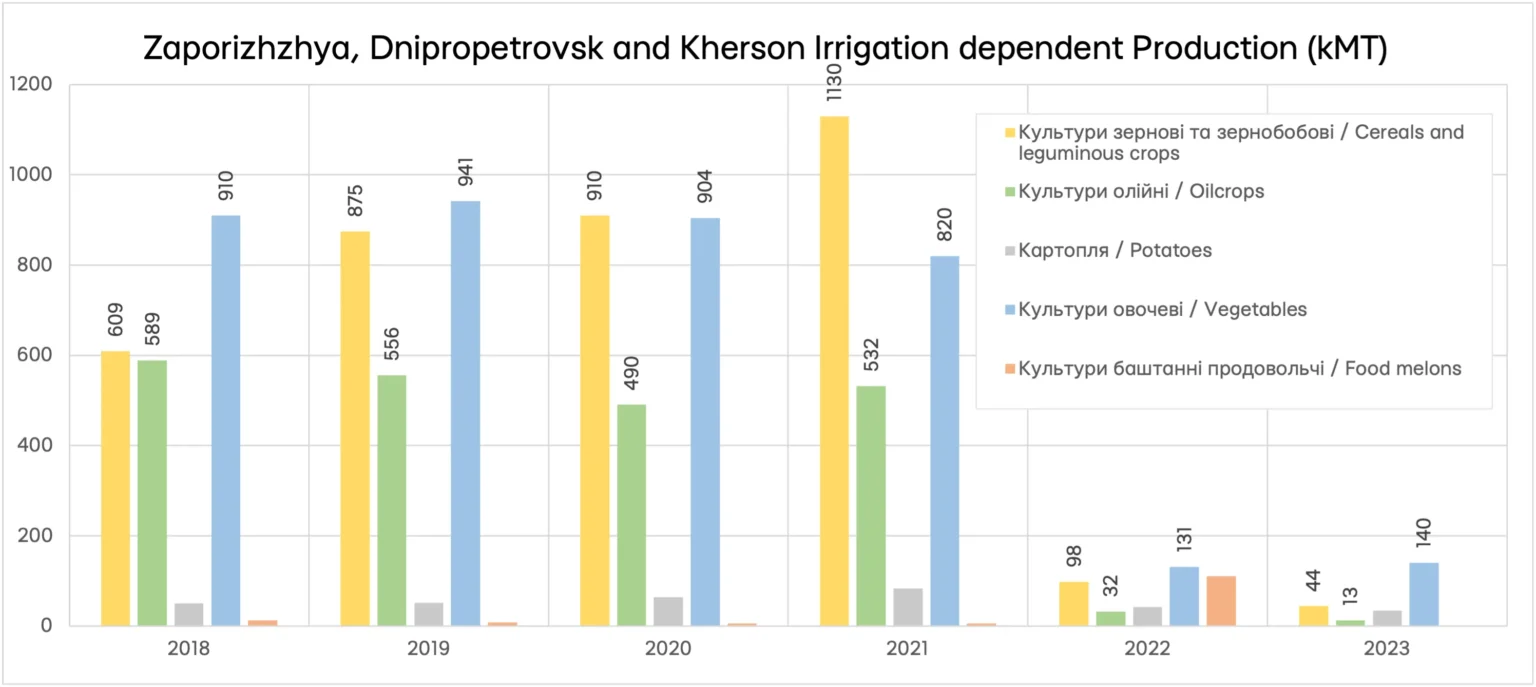
We evaluated the decrease in irrigation between 2018–2021 and 2023:[554]
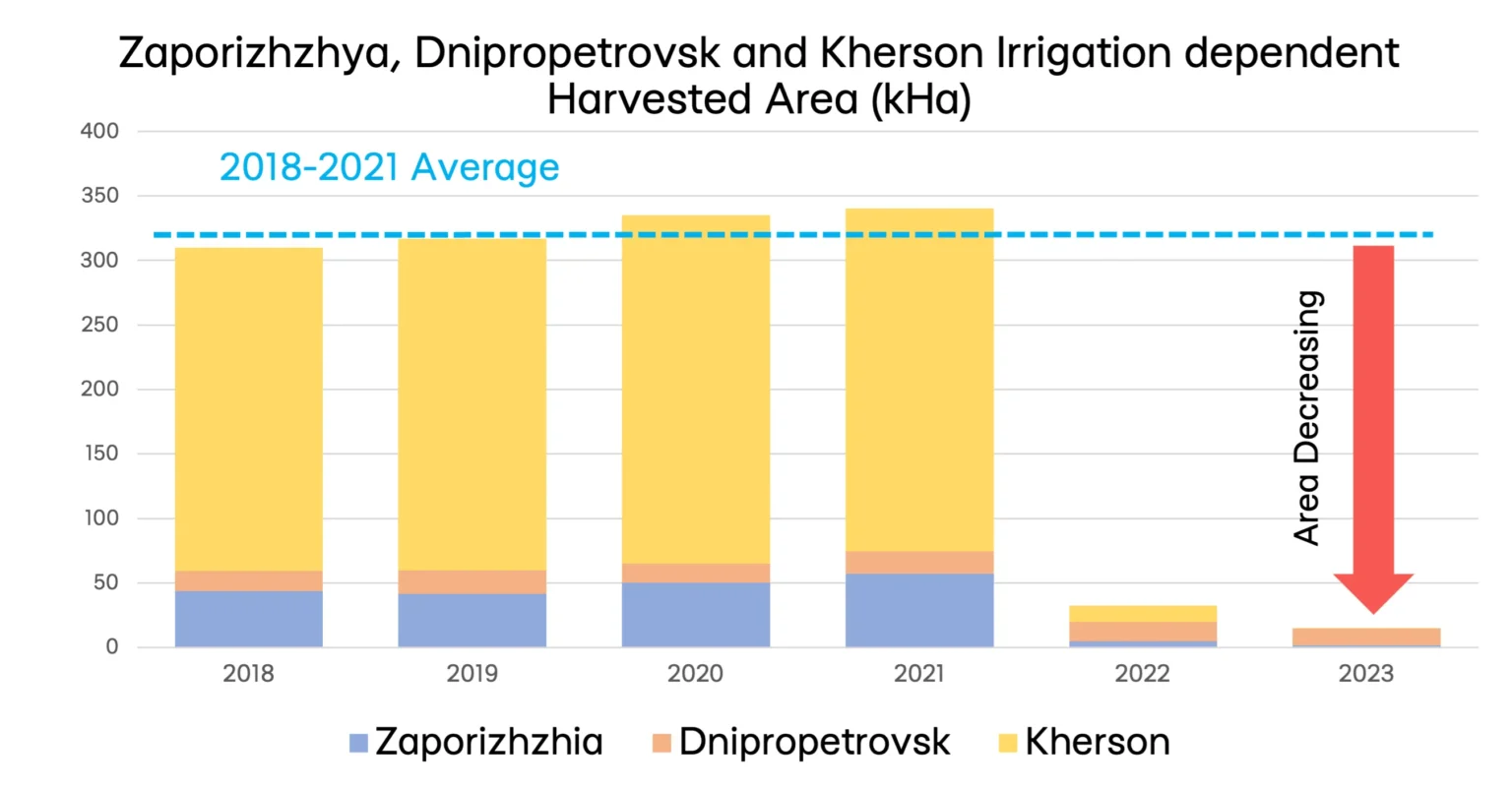
In 2022, the irrigation area decreased due to the military actions, and partially because the Ukraine Statistics Department did not have access to the whole area and therefore could not measure it. In 2023, the data was partially available for Dnipropetrovsk irrigation area.
The next step was to determine the decrease in irrigation area:[555]

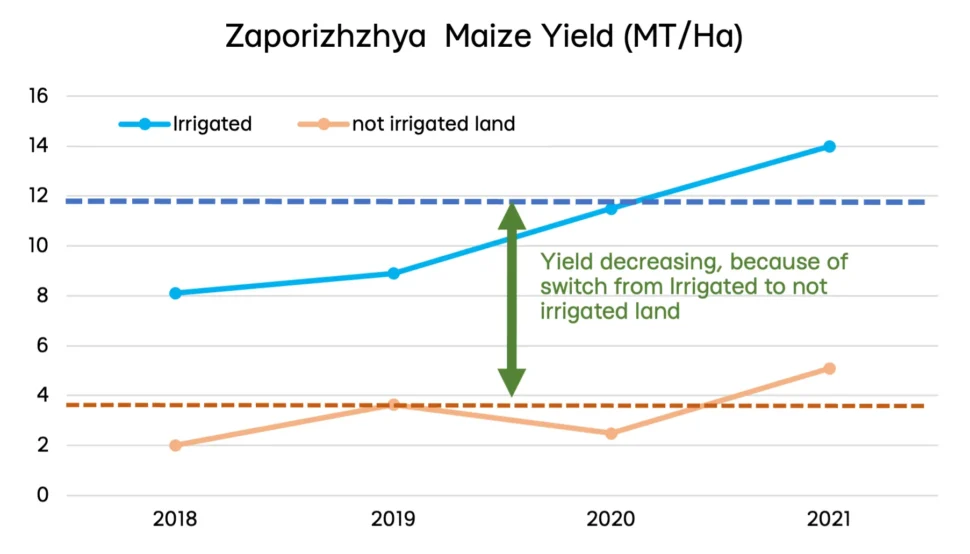
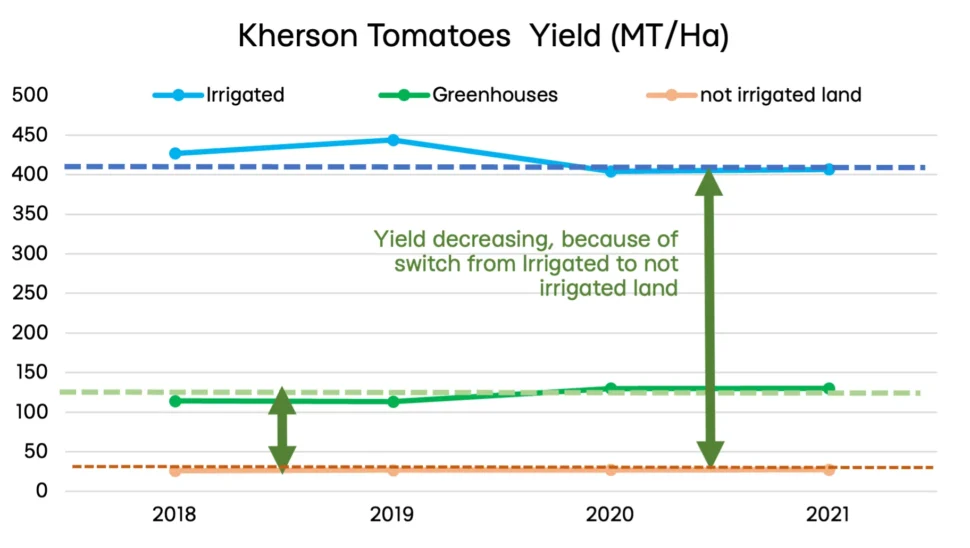
Consequently, we could convert [irrigation area decreasing] and [yield decreasing] into [production decreasing]. The logic of calculating losses is as follows: we make an assumption that in the territories where irrigation has disappeared, crops will be grown without it, which will result in a lower yield.
Next, we use the official prices of agricultural enterprises to convert the value of the tons lost into US dollar equivalents.[556] As shown, the Dam’s destruction will lead to long-term depression of agricultural capacity in the impacted regions. This has the immediate consequence of destroying wealth and will likely impede prospects for long-term recovery since much of this area had been reliant on agriculture for economic output.
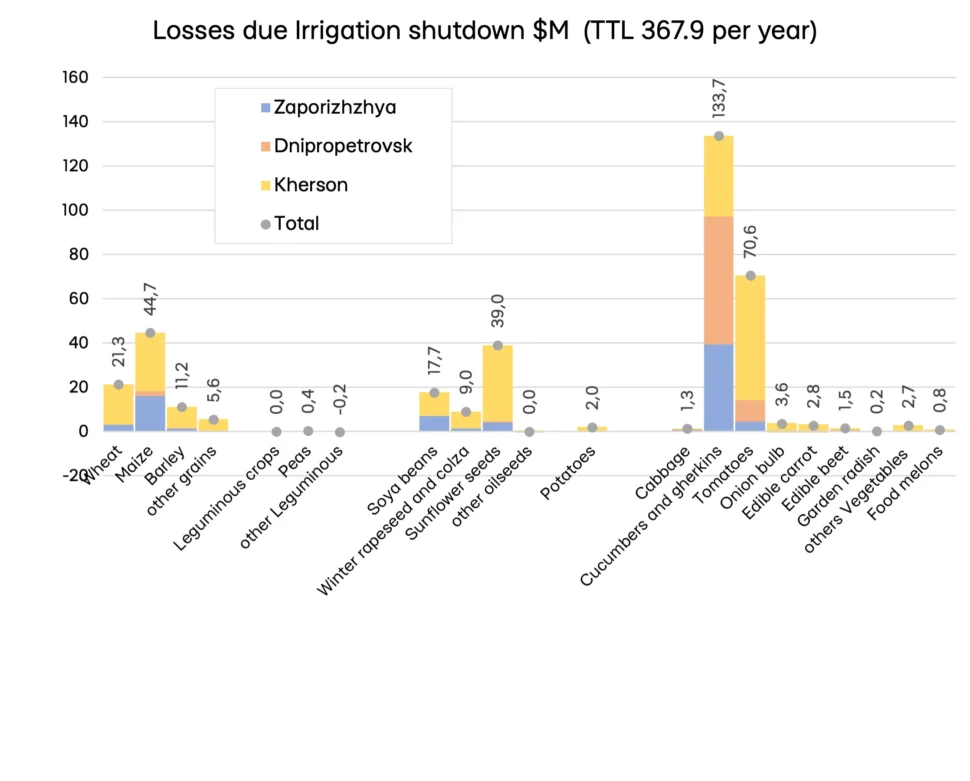
4.4. Consequences for Culture
The monuments of the Kherson Region trace the area’s historical evolution from the Eneolithic Period (the fourth through third millennia BCE) to modern developments, including the destruction of traditional cultural landscapes in the late 20th century. The collapse of the Kakhovka HPP Dam and subsequent flooding resulted in significant damage to sites that chronicle the region’s inhabitants across various historical periods. The Kherson Regional Inspectorate for the Protection of Historical and Cultural Monuments has reported that 78 immovable historical and archaeological sites, as well as monumental art structures, were completely submerged. This includes the monument of urban planning and monumental art of national importance, the “Historical Centre of Nova Kakhovka,” and more than 10 museums and memorial buildings.[557]
According to the Kherson Regional Inspectorate for the Protection of Historical and Cultural Monuments and the NGO AMADOCA, the most severely affected archaeological sites included some of national importance such as the Late Scythian Poniativske Settlement, ancient Settlements of Skelka, Hlyboka Balka, Zolotyi Mys, and Yahorlytske Settlement; remains of the late medieval fortification “Site of the Tyahyn Fortress”; and the location of the Cossack fortification of the first third of the 18th century, “Oleshkivska Sich.” According to the Kherson Regional Inspectorate for the Protection of Historical and Cultural Monuments and the NGO AMADOCA, the most severely affected archaeological sites included some of national importance such as the Late Scythian Poniativske settlement, ancient settlements of Skelka, Hlyboka Balka, Zolotyi Mys, and Yahorlytske; remains of the late medieval fortification “Site of the Tyahyn Fortress”; and the location of the Cossack fortification of the first third of the 18th century, “Oleshkivska Sich.” The newly discovered cultural heritage sites, archaeological sites of the Early Iron Age and ancient times, such as the settlements of Velykyi Potiomkinskyi Island, “Antonivka II,” Bilozerske settlement, “Settlement in the Bublykova Balka Tract,” Oleksandrivske settlement, “Sofiivka I,” Stanislavske settlement, “Krynky,” and Tyahynske settlement were also submerged. Additionally, the burial complexes of the third through second millennia BCE, including mound burials near Vynohradove Village (12 mounds), Hola Prystan Town (4 mounds), Velyka Kardashynka Village (1 mound), Zburivka Village (19 mounds), Dnipryany Village, and the soil necropolis of the second through third century CE called “Poniativskyi”; and the Velyka Kardashynka Ash Pit (2nd millennium BCE) faced flooding threats.Additionally, the burial complexes of the third through second millennia BCE, including mound burials near Vynohradove Village (12 mounds), Hola Prystan Town (4 mounds), Velyka Kardashynka Village (1 mound), Zburivka Village (19 mounds), Dnipryany Village, and the soil necropolis of the second through third century CE called “Poniativskyi”; and the Velyka Kardashynka ash pit (2nd millennium BCE) faced flooding threats.
Sites used for the construction of fortifications by Russian troops, which resulted in through cuts in cultural layers and the destruction of the sod layer, are under greater threat due to the lack of conservation measures typically used during archaeological excavations. (According to the NGO “Crimean Institute for Strategic Studies,” this occurred in the cases of the Yagorlytske settlement, the Velyka Kardashynka ash pit, and the Tyahynske settlement.)[558]
Historical monuments that have been flooded or submerged can be divided into several groups:
- Memorials in honor of events related to World War II and heroes of the Soviet Union, including: the monument in honor of the soldiers-liberators (artillery gun ZIS-3); memorial sign in honor of the 50th anniversary of the victory; memorial sign at the location of the partisan detachment of O.Y. Hirskyi and O.K. Ladychuk, monument to the soldiers-liberators (Oleshky); monument in honor of the soldiers-fellow villagers (Solontsi); monument in honor of the soldiers-fellow villagers (Sagy); Memorial of Glory; monument in honor of countrymen who died on the fronts of World War II; memorial sign in honor of victims of Nazism; memorial sign in honor of teachers, graduates, and students who died during World War II (Hola Prystan); monument in honor of soldiers-fellow villagers (Velyka Kardashynka); and monument in honor of soldiers of the Red Army (Nova Kakhovka).
- Graves of the participants of World War II, which include the mass grave of Soviet prisoners of war, the graves of Red Army soldiers, the mass graves of Red Army soldiers, and the monument in honor of countrymen soldiers; the mass grave of Nazi victims; the mass grave of participants of armed conflicts of 1917–1921; tomb of the underground fighters A.A. Pohrebniak and D.E. Kadynskyi; mass grave of the Red Army soldiers (Oleshky); mass graves of the Red Army soldiers and a monument in honor of the soldiers-fellow villagers; Tomb of the Hero of the Soviet Union I. I. Boyko (Sagy); memorial complex: the mass grave of the Red Army soldiers; the grave of fighter pilot E.M. Larionov and the monument in honor of the soldiers-fellow villagers (Vynohradove); mass grave of soldiers, the Red Army Tomb of Twice-Hero of the Soviet Union P. Pokryshev (Hola Prystan); mass grave of the Red Army soldiers (Velyka Kardashynka); mass grave of the Red Army soldiers and monument in honor of the soldiers-fellow villagers (Nova Kakhovka); the mass grave of fellow villagers who were underground fighters and a soldier of the Red Army; the Memorial Complex: a mass grave of soldiers of the Red Army and a monument in honor of soldiers-fellow villagers (Dnipriany); the mass grave of soldiers of the Red Army (Korsunka).
- Memorials dedicated to events and figures of the Soviet Union, including a memorial sign in honor of combatants in Afghanistan, a monument in honor of the first mechanizers (tractor “Universal”) in Oleshky; Tomb of the Hero of Socialist Labor O.F. Kovalenko (Vynohradove); a memorial sign in honor of the 100th anniversary of the foundation of the sanatorium Hopry; a memorial sign in honor of combatants in Afghanistan (combat reconnaissance patrol vehicle 295).
- Graves of prominent figures of Southern Ukraine and places associated with them, which include the monument to the engineer-inventor F.A. Pirotskyi; tomb of the engineer-inventor F.A. Pirotskyi; and the tomb of M.M. Pankeyev, the former mayor, and his wife V.I. Pankeyeva (Oleshky).
- Memorials to the victims of the Soviet regime, including a memorial sign to the victims of the Holodomor of 1932–1933; a memorial sign to the victims of the Chornobyl disaster (Oleshky); and a memorial sign in honor of the victims of political repressions and the Holodomor (Dnipriany).
- Other historical monuments, including the house in which O.P. Dovzhenko lived (Nova Kakhovka), the building of the sanitarium where the hospital of the Danube Military Flotilla was located (Hola Prystan), the house where academician V.M. Vinogradov worked, and the hospital building and the grave of doctor K.I. Elyashev (Oleshky).
Some historical monuments from the first 3 groups fall under the Law of Ukraine “On the Condemnation of the Communist and National Socialist (Nazi) Totalitarian Regimes in Ukraine and the Prohibition of Propaganda of Their Symbols.”[559] Because of this, they do not automatically appear in the State Register of Immovable Monuments of Ukraine. However, until the issue of inclusion in the Register is considered (which can only be done after an on-site survey), such objects have the status of newly discovered and are subject to the Law of Ukraine “On Protection of Cultural Heritage.”[560]
Historical monuments are threatened by flooding for several reasons: destruction due to currents, damage from floating objects, and soil washing under the monuments. Historical buildings are subject to the same threats, but the greatest damage is caused by waterlogging of mortars, building materials, and structural elements, which leads to rapid destruction.
Among the structures of monumental art that suffered as a result of the destruction of the Kakhovka HPP Dam, there are monuments dedicated to political and public figures and events of the Soviet Union era. They include the monument in honor of Red Army soldiers in Nova Kakhovka, monument to twice-hero of socialist labor M.A. Braha; monument to twice-hero of socialist labor I.I. Strelchenko in Hola Prystan, and monument to the hero of the Soviet Union P.L. Litvinov in Oleshky. It also includes monuments to Ukrainian cultural figures, such as the monument to Taras Shevchenko and monument to Mykola Kulish in Oleshky, monument to Ostap Vyshnia in Krynky, monument to Taras Shevchenko in Hola Prystan, monument to Taras Shevchenko, and monument to O. Dovzhenko in Nova Kakhovka.
Monumental art dedicated to political and public figures and events of the Soviet Union era is subject to the same legal norms under Ukrainian law as historical monuments glorifying the actions of the Soviet Union and its political and state leaders.
The monumental art objects that are part of architectural and urban planning complexes deserve special attention because of the high level of destruction caused to them by water. We wanted to make particular note of the Polina Raiko’s House (artistic design) in Oleshky and the monument of urban planning and monumental art of national importance “Historical Center of Nova Kakhovka.” (See photo in Section 1.4.) According to information from open sources, the newly designated cultural heritage site “House of Polina Raiko (artistic design)” is the subject of protection. Having no artistic education, at the age of 69, Polina Raiko began to paint and painted her own house, summer kitchen, gates, fences, and garage doors. In these, she depicted her own life, her family, pets, and nature paintings. The paintings on the walls of the house, the only artistic heritage of the artist, were almost completely destroyed due to the high water level and its impact on both her art and the supporting structures of the building.[561]
The “Historical Centre of Nova Kakhovka,” which contains more than 200 culturally significant objects, was perhaps the most affected by the flooding as a consequence of the destruction of the Kakhovka Dam. The only urban planning complex built in 1951–1956, which is the historical core of the city, was submerged. The ensemble of buildings of the Central Square of Nova Kakhovka, the complex of buildings of the coastal zone of Nova Kakhovka, and the buildings of blocks No. 8, 9, 24, 25, 26, and 27 along Dniprovskyi Avenue (more than 40 buildings in total according to preliminary information,) were flooded. Elements of the decorative ornamentations of the buildings, which belong to the complex of monumental art objects of the national site “Historical Center of Nova Kakhovka,” are falling off the facades and are destroyed as a result of flooding.[562]
According to the Ministry of Culture and Information Policy of Ukraine, 12 museum institutions were in the flood zone: Gavdzinskyi Art Gallery of the City Council Nova Kakhovka; Museum of the History of the City in Nova Kakhovka; Museum of the History of the Kozatske Village of the City Council of Nova Kakhovka (a separate subdivision of the Department of Culture of the City Council of Nova Kakhovka); House-Museum of A. P. Bakhuta of the City Council of Nova Kakhovka; Municipal Institution “Oleshky Local History Museum” of the Oleshky City Council in the Kherson Region; Museum of Military Glory of the 87th Stalingrad, Perekop, Order of the Red Banner, and Order of Suvorov (II Class) Rifle Division in Oleshky; house where the writer Ostap Vyshnia lived in Krynky, Oleshky District; Museum of the Hero of the Soviet Union Major General P.O. Pokryshev in Hola Prystan; Museum of History in Chulakivka of Hola Prystan District; Museum of History in Kruhloozerka of Hola Prystan District; Cossack Museum of Village History and Memorial Complex of P. Vydryhan’s family, 29 Shevchenko Street, Kozatske Village; and People’s Museum of History of Kakhovka District in Mala Kakhovka.[563]
In addition to the threats listed above to the buildings of museum institutions, many suffered the destruction of substantial portions of their collections due to the flooding of exhibition spaces and storage facilities. Currently, there is no information on the fate of the collections of the flooded museum institutions located in the occupied territory of the Kherson Region.
As you can see, for Kherson and the south of Zaporizhzha Regions, the Kakhovka irrigation system was critical to total crop production:[549]
V. War Crime of Excessive Damage to the Environment
5.1. Introduction
The protection of the natural environment can be considered a critical facet within the legal infrastructure of the Rome Statute of the International Criminal Court (“the ICC” or “the Court”). The well-recognized function of international criminal law (“ICL”) as a whole is to safeguard against “the most serious crimes of concern to the international community” that threaten “the peace, security, and well-being of the world.”[564] For years, “peace and security” were 2 well-established values within the realm of international law, to be protected for the sake of “mankind.” However, the drafters of the Rome Statute further introduced the phrase “well-being of the world,” in the Preamble, thus replacing the word mankind. As highlighted by leading scholars, the drafters’ choice reflects their clear intention to address not only the security of people but also the well-being of the natural environment surrounding them.[565]
The Rome Statute stands as the first and only instrument among the statutes of international courts or tribunals that expressly mentions damage to the environment within its definitions of crimes. Although it falls short of addressing the crime of ecocide, the Rome Statute still criminalizes the intentional launch of an attack in the knowledge that such an attack will cause widespread, long-term, and severe damage to the natural environment that would be clearly disproportional to the military advantage anticipated (Article 8(2)(b)(iv)).[566] The absolute prohibition of employing methods or means of warfare that are intended or may be expected to cause widespread, long-term, and severe damage to the environment is considerably rooted in International Humanitarian Law (“IHL”), namely Articles 35(3) and 55(1) of Additional Protocol I to the Geneva Conventions (“API”).[567]
The destruction of the Kakhovka Dam has led to severe consequences for the environment, the whole extent of which is difficult to comprehend at this stage as discussed in the previous sections. Those responsible for this multifaceted catastrophe may face prosecution under various ICL provisions. Aside from the war crime of excessive damage to the environment, examples identified by commenters include attacking civilian objects,[568] destroying the enemy’s property,[569] intentionally using starvation of civilians as a method of warfare,[570] or even a crime against humanity of forcible displacement or other inhumane acts.[571]
The present report focuses exclusively on the issues related to the qualification of the attack as a violation of Article 8(2)(b)(iv) of the Rome Statute (“Article 8(2)(b)(iv) RS”), specifically pointing at disproportionate damage to the natural environment. This provision requires the object of an attack to be of a military nature. Generally, environmental features do not have a military function; however, under certain circumstances, their location might enable them to contribute effectively to military action, thus qualifying them as military objects.[572] In the case of the Kakhovka HPP Dam, it primarily served a significant civilian purpose as an environmental feature. At the same time, due to its strategic location, the Dam had critical importance for military operations of both parties to the conflict, thereby allowing it to qualify it as a military objective.
Article 8(2)(b)(iv) is the sole provision in the entire Rome Statute that directly protects the intrinsic value of nature in times of armed conflict. Investigating and prosecuting the attack on the Kakhovka Dam under this provision will, therefore, best align with the objective to both grant the environment the protection it deserves and focus on cases of environmental destruction outlined as one of the priorities of the ICC Office of the Prosecutor (“OTP”).[573] At the same time, it is without prejudice, i.e., it does not rule out the possibility that the destruction of the Kakhovka Dam may constitute other international crimes, as referenced above.
In this section, we evaluate whether the Kakhovka Dam incident meets the gravity threshold enshrined in the Rome Statute (5.2) and outline the general characteristics of a war crime of excessive environmental damage (5.3). To establish the latter, it must be proven that there was an attack (5.4), that the environmental damage was expected to be excessive compared to the anticipated military advantage (5.5), and that the perpetrators had the requisite intent (5.6). There is ample evidence of all of the referenced war crime elements.
5.2. Considerations Related to the Gravity Threshold
Although the crimes elaborated in the Rome Statute are all of a serious nature, a case may be declared inadmissible where it “is not of sufficient gravity to justify further action by the Court.”[574] This determination provides wide discretion to the Court, which will assess all circumstances on a case-by-case basis, including the context of the crimes and the charges put forward by the prosecutor.[575] In this section, we flag both quantitative and qualitative factors that may be relevant to the gravity assessment.
The conduct at issue involves a deliberate attack on the installation containing dangerous forces, which enjoys an additional layer of protection under Article 56 of the API. The breach of the Dam immediately resulted in release of a massive volume of water at a rate of approximately 30,000 m3/second, with a velocity of deluge about 15 km/h.[576]
Above all, the flooding caused a vast amount of civilian casualties and suffering.26 The Ukrainian Ministry of Defense reported 32 people killed, 28 injured, and 39 missing in areas controlled by Ukraine.[577] Russian media reported 57 people killed and 175 injured in areas controlled by the Russian Federation.[578] However, investigative journalists reported that the true count exceeds hundreds of people drowned in the occupied territories.[579] The number of people displaced reached approximately 4,000 individuals.[580] The total extent of the victimization may encompass even more individuals who experienced difficulties with access to drinking water and/or lost their property or businesses, as comprehensively presented in Section IV.
Information that occupation authorities tried to cover up the number of casualties resulting from the flooding indicates further aggravating factors. According to the journalist investigation conducted by the Associated Press (“AP”), the occupation administration prohibited local medical personnel in Oleshky from issuing death certificates for flood victims and local volunteers from searching for and burying the drowned.[581] Whether similar patterns were present in other affected communities cries out for further investigation.
The breach of the Dam disrupted the fragile balance between local ecosystems and more global ones. Therefore, the impact of the reviewed conduct on the natural environment is also disturbing. Its consequences encompass the degradation of the aquatic environment of the Kakhovka Reservoir; detrimental impact on the water, including salinization of soil and underground waters; flooding of the Emerald Network natural environment sites; and extinction of certain species of flora and fauna after the inundation.27 Additionally, the situation impacts the international community, as the release of water from the Kakhovka Reservoir affected the ecosystem of the Black Sea, resulting in the desalination of its waters.[582]
Another relevant factor is the importance of the Kakhovka Dam and Kakhovka Reservoir for the economy of adjacent communities and for global food security. The Dam’s breach reportedly affected over 10,000 hectares of agricultural lands on the banks of the Dnipro River.[583] It also disrupted 94% of irrigation systems in Kherson, 74% in Zaporizhzhia, and 30% in Dnipropetrovsk Oblast, affecting future agricultural activities in the region.[584] This caused a spike in global wheat prices, which rose by 10%, 2 weeks after the Dam’s destruction.[585]
Viewed holistically, the constellation of circumstances indicate that the destruction of the Kakhovka Dam reaches the appropriate jurisdictional threshold under the Rome Statute to justify the attention of the ICC.
5.3. General Characteristics of Corpus Delicti
5.3.1. A Mix of Various IHL Provisions
Article 8(2)(b)(iv) RS stands as a unique and original war crime provision, lacking a verbatim equivalent within the IHL landscape. Although primarily rooted in the well-established principle of proportionality under IHL, Article 8(2)(b)(iv) is a fusion of several IHL provisions. Specifically, it draws heavily from Article 51(5)(b) concerning proportionality and Articles 35(3) and 55(1) of API regarding damage to the natural environment.[586]
Article 8(2)(b)(iv) RS criminalizes:
“Intentionally launching an attack in the knowledge that such attack will cause incidental loss of life or injury to civilians or damage to civilian objects or widespread, long-term and severe damage to the natural environment which would be clearly excessive in relation to the concrete and direct overall military advantage anticipated.”
Therefore, in assessing the proportionality requirement, the military advantage anticipated is juxtaposed to the 3 distinct (upon the wording of this provision) considerations:
- Loss of life or injury to civilians;
- Damage to civilian objects; and/or
- Widespread, long-term, and severe damage to the natural environment.
In contrast, the well-established IHL principle of proportionality, from which Article 8(2)(b)(iv) RS partially derives, prohibits:
“An attack which may be expected to cause incidental loss of civilian life, injury to civilians, damage to civilian objects, or a combination thereof, which would be excessive in relation to the concrete and direct military advantage anticipated.”[587]
Thus, contrary to the Rome Statute provision, it compares the military advantage with only 2 main factors:
- Loss of civilian life or injury to civilians; and/or
- Damage to civilian objects.
Although Article 51(5)(b) of the API does not explicitly mention the environment, such an omission is justified by considering the environment as an inherently civilian object.[587] Accordingly, the environment is presumed to be civilian in nature, capable of conversion into military objectives and subject to the protections afforded to civilian objects.[589]
This interpretation aligns with Rule 43 of Customary IHL, which prohibits attacking a military objective if it is expected to cause excessive incidental damage to the environment without requiring such damage to reach a specific threshold of widespread, long-term, and severe (“WLS”).[590]
In contrast, the threshold for WLS damage to the environment is explicitly set in Articles 35(3) and 55(1) of API. However, it constitutes an absolute prohibition, and no military advantage could justify such a scale of damage. Article 35(3) of API reads as follows:
“It is prohibited to employ methods or means of warfare which are intended, or may be expected, to cause widespread, long-term and severe damage to the natural environment.”
While any anticipated environmental damage must be proportional to the expected military advantage, damage exceeding this WLS threshold is never justifiable.[591] This rule is also codified as a customary one,[592] although there are ongoing debates on this rule applying to non-parties to the API.[593]
Concerning damage to the environment, the Rome Statute appears to combine elements of Article 35(3) of API (WLS) with Article 51 of API (principle of proportionality), although these seem to be 2 distinct rules under current international law.[594] Thus, it is questionable whether a new threshold for this war crime has been created in the Statute.[595]
The ICC Statute has actually been criticized for being more restrictive than Article 35(3) of API, as the damage must satisfy not only the “widespread, long-term and severe” requirement but also the disproportionality test.[596] Some commentators suggest that “while the criminal punishment of environmental damage may be considered to be progress, the codification as a whole clearly constitutes a setback compared to the primary rules.”[597]
On the other hand, some scholars argue that the inclusion of environmental considerations in the proportionality assessment within the Rome Statute aligns with other authorities, referring to the jurisprudence of the International Court of Justice (“ICJ”) and International Criminal Tribunal for the former Yugoslavia (“ICTY”).[598] However, and critically importantly, neither the ICTY nor the ICJ requires such damage to reach the threshold of WLS; they simply juxtapose the military advantage against any environmental damage.[599]
Thus, despite ongoing debates regarding the customary nature of the absolute prohibition on WLS environmental damage, there seems to be a consensus that certain environmental damage, even below the threshold of WLS damage, may still be deemed disproportionate.
In our analysis, we will abide by the wording of the Rome Statute and focus on demonstrating widespread, long-term, and severe damage to the environment. However, it is worth keeping in mind that the absence of WLS damage in a particular case does not necessarily preclude the possibility that ordinary environmental damage, either alone as damage to civilian objects or in conjunction with harm to civilians or other civilian objects, could still be deemed clearly excessive in relation to the military advantage anticipated, thereby satisfying the criteria for a war crime under Article 8(2)(b)(iv) RS.
5.3.2. Crime of Endangerment
Article 8(2)(b)(iv) RS prohibits attacks that are capable of damaging the natural environment. The criminality of such acts derives not from the harm inflicted, but from the fact that the kind of attack launched would typically pose a risk of environmental damage.28 Such offenses are rather rare in ICL and are known as crimes of endangerment.[600]
The above interpretation is based on reading of Article 8(2)(b)(iv) RS in its ordinary meaning.[601] Whenever a crime under the Rome Statute requires an act to produce a certain result, this should be explicitly mentioned in the relevant provision.[602] Conversely, the objective elements of the reviewed provision are exhausted by “launching an attack,” while environmental damage is referenced only as a component of the perpetrator’s knowledge. Such an “inchoate” character of this offense also fits into the wider objective of the Rome Statute not only to punish international crimes ex post facto but also contribute to their prevention.[603]
The proposed reading of Article 8(2)(b)(iv) RS also aligns with the established practice of international criminal tribunals engaging proportionality provisions. Since the US Military Tribunal at Nuremberg, the approach has been to review military decisions to engage certain targets only on the basis of information reasonably available to a commander at the time.[604] To this point, the ICTY Trial Chamber in Galic noted:
“The rule of proportionality does not refer to the actual damage caused nor to the military advantage achieved by an attack, but instead uses the words “expected” and “anticipated.”[605]
In practical terms, the offense prescribed by Article 8(2)(b)(iv) RS is committed as soon as the attack is launched, irrespective of its actual consequences.[606] For this reason, our legal analysis will focus on the facts known immediately before the attack.
5.4. Destruction of the Kakhovka Dam as an Attack
The initial requirement for the war crime of excessive environmental damage is that the perpetrator launches an attack.[607] Although neither the Rome Statute nor the Elements of Crimes (“EOC”) define the term “attack,” the Commentaries to the Rome Statute[608] and the ICC’s jurisprudence[609] elucidate that the meaning of “attack” in Article 8 should be derived from Article 49(1) of the API.
Article 49 of the API defines “attacks” as “acts of violence against the adversary, whether in offence or in defence.” The International Committee of the Red Cross (“ICRC”) commentary clarifies that the words “whether in offence or in defence” imply that the term “attack” in IHL encompasses defensive actions, broadening its scope beyond its ordinary meaning.[610] Thus, the term does not require an adversary to engage in any offensive movement or maneuvers toward the objective.[611] Even if the Russian military forces contend that they did not assault the Dam as part of an offensive operation but rather sought to protect themselves from potential counter-attacks, this does not negate the possibility of framing this act as an “attack,” as defensive actions fall within this term.
Given that Article 49 of the API contains no exemptions, the critical criteria for an “attack” are whether the act was (1) violent, and (2) directed against the adversary.29
5.4.1. Destruction of the Kakhovka Dam is an “Act of Violence”
The term “acts of violence” denotes physical force[612] and covers the use of weapons.[613] However, “acts of violence” are not limited to kinetic means and methods of combat.[614] The Rome Statute Commentary, when discussing cyber operations as “attacks” under IHL, stipulates that:
“Such [cyber] attacks could be, for example, the opening of a floodgate of a Dam, which leads to the death of persons in the flooded areas – it can’t make a difference whether such casualties are caused by a bomb or by means of a cyberattack. What defines an attack is not the violence of the means – as it is uncontroversial that the use of biological, chemical or radiological agents would constitute an attack, but the violence of the effects or consequences, even if indirect.”[615]
Section II of this report demonstrates that the Kakhovka Dam breach was directly caused by blowing up of the Dam using kinetic force, specifically bomb detonation. Therefore, the Kakhovka Dam’s collapse removal did not involve merely the act of opening a floodgate by non-military means, but rather the complete destruction of the Dam using explosives.
Furthermore, the substantial release of water upon the Dam’s destruction also qualifies as a violent act, as the use of explosives resulted in casualties and significant environmental harm, primarily due to violent effects that include flooding downstream of the Dam and depletion of the Reservoir above it.30
Therefore, the Kakhovka Dam destruction entailed violence both in its means and consequences.
5.4.2. Destruction of the Kakhovka Dam was Directed “Against the Adversary”
This element presupposes that the physical violence “has to be directed against the adversary with the intent or expectation to cause such damage.”[617] As for the term adversary, it covers both enemy personnel and military objectives, as well as civilians and civilian objects.[618]
The attack on the Kakhovka Dam was intended, or at least expected, to cause physical damage to the adversary, i.e., Ukrainian military, civilians, and civilian objects, including the environment. The Russian forces intended to inundate and harm the Ukrainian military within the area vulnerable to flooding, particularly on the islands,[619] and expected massive civilian damage to the populated areas as well.31 Thus, Russian military forces directed their acts of violence against the adversary, and the Kakhovka Dam incident satisfies both criteria of the “attack” and qualifies as one.
5.4.3. Post Scriptum: Dispelling Any Doubts about the Attack
Following the destruction of the Kakhovka Dam by Russian forces, some scholars, while not disputing the violent nature of the act, argued that it might not qualify as an “attack” due to its occurrence within occupied territory.[621] They supported their claims with references to the preparatory works and the Commentary on Article 56 of the API. Our report does not aim to avoid engaging with this assertion, so this part of the report specifically addresses this issue.
Article 56 of the API prohibits making dams, dykes, and nuclear electrical generating stations “the object of attack.” The initial draft of this provision protected these objects against both attack and destruction.[622] In turn, the Commentary to Article 56 provides that “the deletion of the word “destroy” accomplishes at least part of the object of […] proposals to reserve the rights of a Party to the conflict in its own territory. Thus, a defending Party is not precluded by this Article from destroying a Dam or dyke under its control as a part of an effort to halt or impede an advancing force.”[623] However, as proven in Annex F, the actual intention of the parties was to reserve such a right to destroy their own dams only in one’s sovereign territory, not an occupied one.[624]
Still, it is precisely the eventual deletion of the term “destroy” that induced the scholars to stipulate that “generally IHL does NOT regard as attacks the sabotage of a party’s own dam.”[625] Some scholars further suggested that Russia could argue for such an interpretation regarding the Kakhovka Dam, given its location in territory under Russian control, despite this territory being objectively under Ukrainian sovereignty.[626] Regardless, they refrained from definitively concluding that the Kakhovka incident did not qualify as an “attack.”[627]
A crucial clarification often overlooked in this regard is found within the Commentary to Article 56 itself. It acknowledges that in some cases, actions within one’s controlled area may still qualify as an “attack.” Specifically, it explicitly states:
“It is arguable, that the destruction by a Party of a dam or dyke under its control is an attack within the meaning of [Article 56] if it is intended to inundate enemy personnel rather than merely to interpose an obstacle halting or delaying the enemy’s movement. This interpretation would also control the actions of a Party fighting in its national territory as well as that of an Occupying Power.”[628]
In fact, the Commentary to Article 49 of the API also takes into account these nuances, specifying that the destructive acts within a belligerent’s own territory, even if violent, fall short of being labeled an “attack” as they are not mounted “against the adversary.”[629] The key word here is “as,” which underscores that violent acts within one’s controlled area are not automatically excluded from the definition of “attack” as long as they are directed “against the adversary.”
The Commentary presumes that all actions within a belligerent’s own territory are not directed against the adversary, which is the sole reason why they fall short of being labeled an “attack.” However, if an act originating from one’s controlled area is proven to affect the adversary, it will constitute an “attack” under Article 49 of the API. This aligns with the stance that nothing per se precludes acts by occupants against objects within the territory from being “attacks.”[630]
For instance, the ICRC Commentary explicitly stipulates that, in general, the placing of mines (usually carried out within a belligerent’s controlled area) constitutes attacks,[631] and indeed, whenever a person is directly endangered by a mine laid, an attack has occurred.[632] Similarly, the deliberate destruction of a dam, even within one’s controlled territory, that causes widespread flooding, constitutes the typical type of kinetic attack covered by this term.[633] Illustrative of this, in the 1990s Croatian conflict, Serb forces allegedly planted explosives in the Peruča Dam, and “as the explosives were reportedly activated, this operation would ostensibly qualify as an attack.”[634]
On the facts of the present case, not only were the mines/bombs planted, but they were indeed activated, which caused a massive explosion and the destruction of the whole Dam. Most importantly, one of the Russian military’s goals was to attack the Dam in such a way as to drown the Ukrainian military.[635] This is undoubtedly evidenced by the initial belief of the Russians that they had managed to strategically blow up a small part of the Dam to flood the Ukrainian military positioned on the islands in the Dnipro Delta.[636] The Russian military and propagandists rejoiced that the Kakhovka Dam had inundated the Ukrainian army’s positions on the islands.[637] Only upon realizing the complete destruction of the Dam and its subsequent devastating effects did Russian authorities and military bloggers dramatically alter their rhetoric and begin to accuse Ukrainians of damaging the Dam.[638]
Therefore, the concept of “attack” extends to violent acts conducted within a controlled area provided they were directed against the adversary, i.e., intended to harm the adversary. The destruction by the Russian military of the Kakhovka Dam was at least partially intended to harm, and indeed harmed, the Ukrainian military personnel, civilians, and civilian objects, including the environment, and therefore amounted to an attack in the sense of Article 49 of the API and Article 8(2)(b)(iv) RS.
All of these conclusions are also supported by very detailed findings and arguments attached as Annex F. In order to keep the main text concise, we have decided to move the in-depth analysis of the preparatory works for Protocol I, as well as the extensive discussion of the ICC jurisprudence on the meaning of the term “attack,” to Annex F.
5.5. Prohibited Nature of the Attack: Disproportionate Environmental Damage
This subsection addresses the second portion of the material element envisaged in Article 8(2)(b)(iv) RS, namely, the characteristics making up the criminal nature of the attack. The proportionality principle embodied here lies in the clear excessiveness of the anticipated collateral environmental damage:
The attack was such that it would cause […] widespread, long-term, and severe damage to the natural environment and that […] such damage would be of such an extent as to be clearly excessive in relation to the concrete and direct overall military advantage anticipated…”
Accordingly, environmental repercussions from the Kakhovka Dam destruction (4.5.1) and the anticipated military advantage (4.5.2) will be weighed in light of the proportionality principle as specified in the EOC (4.5.3).
5.5.1. Assessing the Possibility of Environmental Impact
Any military activity is likely to be accompanied by some degree of environmental damage. For instance, the use of explosive weapons often causes vegetation to burn, abandoned military scrap could pollute groundwater, and explosive remnants frequently limit access to agricultural land.[639] However, not every military attack with an expected environmental impact, even if it is disproportionate, is subject to prosecution before the ICC.
The reviewed element of Article 8(2)(b)(iv) sets a specific threshold for attacks to prove criminal: they shall be capable of causing “widespread, long-term and severe damage to the natural environment” (“WLS damage”). In this subsection, we argue that the attack on the Kakhovka Dam falls under this ambit. Our argument will proceed in 2 stages, starting with an analysis of the standard and continuing with its application to the facts established in Section 4.2.
a) Elucidation of the standard
The standard of WLS damage is neither self-explanatory nor clarified in the Rome Statute or the ICC Elements of Crimes.33 Despite being formulated back in 1974, Additional Protocol I, it has never been applied by the ICC or any other international criminal tribunal. Minding this gap, we delve into the context of Article 8(2)(b)(iv) to translate the standard into more practical terms.[640]
Our main point is that there is no specific quantitative threshold, such as a defined number of km2 affected, that qualifies as WLS damage. Instead, the illegality of an attack affecting the natural environment must be demonstrated on a case-by-case basis and in light of the IHL framework for the protection of the natural environment. We will also consider the scope of the “natural environment” and factors that should be taken into account when applying the WLS standard.
i) Possibility of environmental damage
The EOC expands on the material element of the offense requiring that the attack “was such that it would cause” environmental damage.32 This conditional formulation indicates that the expected damage need not necessarily materialize;[641] however, the attack must be capable of causing the required degree of environmental harm. This type of actus reus is rather unusual and has not been interpreted or applied by international criminal tribunals thus far.
According to the practice of national courts, the capability to pose danger shall be assessed on a case-by-case basis, considering the nature of the attack and surrounding circumstances.[642] Moreover, the analysis shall focus on the facts known at the time the attack was commenced, rather than its subsequent consequences.[643] The characteristics of the hydraulic system of which the Kakhovka Dam is an essential element, the characteristics of the ecosystems within and adjacent to the mentioned hydraulic system, and the amount of explosives planted and their arrangement shall be the primary reference points for analysis.
This manner of assessment helps to avoid survivorship bias and considers all the possible results that did not materialize. To this extent, all the events following the explosion are an expression of myriad possible outcomes not capturing the full range of potential contingencies.
ii) Case-by-case approach
Some commentators claim that the requirement of WLS damage falls short of the legality principle due to the ambiguity of its formulation.[644] Their claim relies on the assertion that neither the Rome Statute nor the API clearly define a quantifiable threshold for environmental damage. This would entail specifying exact measures such as km2, timeframes, or degrees of intensity. While recognizing this ambiguity, we argue that it is an indelible feature of Article 8(2)(b)(iv).
That said, it is natural that drafters of legal provisions cannot predict all possible circumstances in which a rule will apply and cannot provide for an absolutely objective and precisely measurable threshold.[645] This justifies the use of evaluative standards, the content of which is established individually for each case on the basis of relevant circumstances.[646] Such a gradual clarification of criminal liability norms through judicial interpretation as such does not contradict the principle of legality.[647]
Evaluative criteria are not uncommon in the Rome Statute and have been previously dealt with by the ICC.34 Previously, the Court defined the content of such standards on a case-by-case basis. For instance, interpreting the term “widespread” in the context of crimes against humanity the Court opined that:
“The assessment of whether the attack is widespread is neither exclusively quantitative nor geographical, but must be carried out on the basis of all the relevant facts of the case.”[648]
Applying this approach to the WLS damage threshold makes it unnecessary to construe this standard as requiring a certain amount of km2 or months. Instead, application of the rule requires a holistic assessment based on all the relevant circumstances of the case. This nevertheless could not be completely arbitrary and shall be construed in light of the pertinent IHL framework on protection of the environment reviewed below.
iii) Not an ordinary battlefield damage
The WLS damage requirement discussed in this subsection has its basis in Articles 35 and 55 of API.[649] These provisions contain modifiers of environmental damage identical to Article 8 (2) (b) (iv), namely, “widespread, long-term and severe.”[650] While these terms provide no further clarity,[651] their drafting history is an invaluable source to assist our interpretation.
The aim of the mentioned API provisions is to address the “serious disruption of the natural equilibrium permitting life and the development of man and all living organisms” resulting from ecological warfare.[652] It was widely assumed among the drafters that this means something more than “battlefield damage incidental to conventional warfare.”[653] For instance, short-term damage from artillery bombardment is not prohibited.
This guideline explains not only the general logic of the standard but also informs the application of the separate WLS modifiers. For example, demonstrating that the potential geographical scope of environmental damage anticipated from the Kakhovka Dam differed from what is usually expected as ordinary battlefield damage would indicate the “widespread” modifier. Identical considerations apply to the “long-term” and “severe” aspects of the standard.
iv) Natural environment and environmental damage
There is no agreed definition of the “natural environment.” neither in international law generally nor in the specific fields of IHL or ICL.[654] The reason for that is a continuous change of the environment itself and our evolving understanding of this complex phenomenon.[655] Despite this general ambiguity, the ICRC has distilled certain understanding implicit in the drafting history of Additional Protocol I:
“The natural world together with the system of inextricable interrelations between living organisms and their inanimate environment, in the widest sense possible.”[656]
This definition of the natural environment includes Earth’s components, such as living organisms (biosphere), water (hydrosphere), gases (atmosphere), and soil and minerals (geosphere).[657] It also encompasses natural elements created by human intervention, including foodstuffs, agricultural areas, drinking water, and livestock.[658] This qualifies the Kakhovka Reservoir, the connected irrigation system, and the agricultural areas affected by the failure of the Kakhovka Dam as a part of the natural environment.
Moreover, this wide definition explains the environment not as the mere sum of living and inanimate objects but emphasizes the system of interrelations between them. In other words, the natural environment is also characterized by the equilibrium between its components, the state of affairs permitting the development of life.[659] Viewed from this angle, environmental damage includes harm incurred by living organisms, degradation of other natural components, and the serious disturbance of the natural equilibrium.
v) Dimensions of environmental damage
The assessment of whether certain environmental damage qualifies as WLS shall include both direct and indirect consequences in light of the contemporary knowledge about the effects of damage on the natural environment.[660] Legal analysis will, thus, inevitably rely on expert advice to explain the composition of affected ecosystems, the links between their components, and expected damage. Here, we explain the parameters of damage to which the terms “widespread,” “long-term,” and “severe” refer.
The term “widespread” means the “scope or area affected.”[661] The literature mentions several hundreds of km2 as sufficient; however, this criterion is not strictly limited to geographical area affected. To this extent, the “scope affected” could also manifest itself in global effects of rather local environmental damage,[662] volume of such damage, ways of its distribution etc. Not only the damage occurring over the large area might qualify as widespread, but also relatively smaller yet widely dispersed “pockets” of environmental harm would qualify.[663]
The criterion of “long-term” damage refers to its “time or duration.”[664] The preparatory materials to the API indicate that persistence of environmental harm for decades (20–30 years at minimum) would suffice, while a more precise threshold will be impossible to identify.[665]
The term “severe” refers to the “extent or intensity of the damage.”[666] Among various dimensions this criterion may encompass, adverse effects endangering the viability of species, in particular human beings, will be the most indicative.[667] Other relevant factors include disruption or harm done to natural and economic resources or other assets.[668] This element is closely tied to the longevity of environmental damage since short-term consequences would not qualify as severe.[669]
vi) Cumulative standard
Use of the conjunction “and” to combine “widespread, long-term, and severe damage to the natural environment” in Article 8(2)(b)(iv) requires that each modifier met a legal threshold. This will be indisputably the case when all damage satisfies all 3 criteria simultaneously. That said, there is a margin for flexibility since, for example, the severity of the damage will be generally present with the long duration of effects. Moreover, the widespread nature of environmental damage would be intertwined with severity and duration if it concerns the extinction of species.
b) Possible WLS environmental damage
As discussed above, the objective element reviewed in this subsection poses a daunting task in assessing whether the attack was capable of causing WLS damage to the natural environment. While the factual part of this report is extensive, it is surely not exhaustive given limitations of the NGO fact-finding processes compared to formal investigations. That said, this subsection provides lines of arguments with indicators of the WLS damage distilled from the data accumulated in the factual part of the report.
i) Area affected by the failure of the Kakhovka Dam
The attack of a kind launched against the Kakhovka Dam poses a danger of widespread environmental damage due to the very characteristics of the installation. This argument hinges on establishing the Dam’s characteristics and demonstrating that the attack was designed specifically to trigger its failure.[670]
As already mentioned at the beginning of this report, the Kakhovka Dam shall be viewed as an essential component of a larger hydraulic system, which includes the Dam itself, the Kakhovka Reservoir, and the irrigation system supplying water throughout Kherson, Dnipropetrovsk, and Zaporizhzia Oblasts as well as Crimea.[671] One of the Dam’s functions was to retain water in the Reservoir, which was then distributed to users directly or through the irrigation channels. The Kakhovka Reservoir also serves as a living space for aquatic species,35 for instance fish; contributes to the well-being of adjacent ecosystems;35 and plays an important role in groundwater formation.36 Additionally, the water in the Reservoir is used to run mechanisms of the hydraulic power plant built in the Dam. However, these benefits come with a cost, as the creation of the Dam accumulated the kinetic energy of the Dnipro River’s natural flow into the enormous potential energy of the Reservoir, thereby constantly posing a flooding risk to the downstream territories.[672] Thus, the Dam acted as a linchpin preventing the collapse of the hydraulic system.
As the linchpin is removed (i.e., the Dam is destroyed), there is nothing to prevent gravitational forces from pulling the body of water contained in the Reservoir toward the Black Sea resulting in simultaneous flooding downstream and drying upstream. Given the colossal scale of the hydraulic system, this directly triggers an uncontrolled causal chain spatially encompassing the volume of the Kakhovka Reservoir (2,155 km2),[673] the territories in the way of the flooding up to the Black Sea (approximately 400 km2),37 as well as agricultural areas cut off from irrigation (28,629 km2).[674] These calculations should also include riparian ecosystems adjacent to the Reservoir, the underground dimension of the impact following the connection of the Reservoir with the groundwaters, and the possible impact on the ecosystem of the Black Sea.38
The flooding and drying themselves do not constitute environmental damage as they represent different angles of water movement. For instance, flooding could pass through uncultivated land without any adverse effect. Instead, where flooding and drying impact ecosystems, pockets of environmental damage occur, scattered across the area described above. The duration and severity of those pockets of harm are further explored below.
The scope of the area affected resulting from the failure of the Kakhovka Dam is extraordinary compared to the impact of regular battlefield weapons. The area of the Kakhovka Reservoir ecosystem alone (2,155 km2) has more digits than the threshold usually referred in the literature (several hundred km2).39 No conventional rocket can have kinetic impact over hundreds of kilometers, from Zaporizhzhia, where the Kakhovka Reservoir starts, all the way to the Dnipro’s mouth at the Black Sea. Even before the Dam’s collapse, experts predicted that its failure would result in “one of the possibly biggest non-nuclear demolitions in history.”[675]
ii) “Pockets” of long-term and severe environmental damage
Following the collapse of a hydraulic system such as the Kakhovka Dam, water movements result in numerous environmental damage “pockets,” each with varying characteristics depending on the location and nature of ecosystems affected. We identified groups of these “pockets,” which manifestly meet the long-term criterion for irreversibility of damage. Those pockets can be used as indicators of the severity criteria because they involve extinction of living organisms or degradation of natural elements.
The Kakhovka Reservoir harbored a diverse array of aquatic organisms, including fish, crayfish, aquatic mollusks, algae and higher aquatic plants, insect larvae specific to aquatic environment, plankton, and benthos.39 Many of these species held protected status under the Bern Convention, qualifying the Kakhovka Reservoir as an Emerald Network site,[676] i.e., a habitat of species under the risk of extinction at the European scale. The shallowing of the Reservoir would prove fatal for the abovementioned aquatic organisms. This is not a mere disturbance of environmental balance, but a complete irreversible erasure of a complex ecosystem of the Reservoir and adjacent riparian areas.
In contrast to drying, flooding leaves no chance for survival of terrestrial species. Once the Dam was destroyed, water rushed downstream to the Lower Dnipro, which is also part of the Emerald Network.[677] As presented in details above, this endangers almost all known habitats of 2 species of ants, the linden arrowhead dragonfly, the Empusa pennicornis mantis, and the Kluge colpus wasp.[678] The inundation area also covers a significant portion of habitats of endangered vertebrate species, amphibians and reptiles.[679] This may have caused possible irreversible extinction of whole species.
As elaborated in Section 4.3.2., another significant consequence of the Kakhovka Dam’s collapse is the impact on the agricultural areas. One of the Dam’s functions was to provide water for irrigation systems, creating favorable conditions for agriculture in the dry climate of Southern Ukraine.[680] The shallowing of the Reservoir cut off irrigation channel intakes, making it impossible to deliver water to the fields. This consequence is naturally irreversible, as it requires the restoration of the Dam and the Reservoir, which is impossible until hostilities seize completely – potentially leading to an indefinite period without irrigation water.
c) Further considerations
The consequences outlined above exemplify the widespread, long-term, and severe damage that an attack on an installation such as the Kakhovka Dam would cause. They are representative because different dimensions of the described damage are intertwined. While smaller-scale attacks such as artillery fire could kill animals, the irreversible extinction of species is only achievable through an attack with a kinetic effect encompassing whole regions.
The failure of the Kakhovka Dam would certainly result in many more direct and indirect consequences satisfying the WLS requirement enshrined in Article 8(2)(b)(iv) of the Rome Statute. Our analysis thus merely provides a starting point for considering the whole extent of the criminal nature of the reviewed attack, including climate consequences, impact on underground waters and freshwater resources, impact on the ecosystems of the Black Sea, and others
5.5.2. Assessing the Military Advantage Anticipated
Article (8)(b)(iv) RS requires the military advantage anticipated to be a “concrete and direct overall40 military advantage.” The EOC specifies, “The expression ‘concrete and direct overall military advantage’ refers to a military advantage that is foreseeable by the perpetrator at the relevant time.”[681] Thus, the military advantage anticipated shall be assessed before the decision to launch the attack.[682] Such an advantage should be assessed based on its contribution to the overall campaign or operation of which it is a part, but under no circumstances can the assessment extend to the whole “armed conflict” or any other broad operational context.[683]
a) Concrete and direct military advantage
The “concrete” notion refers to a specific military advantage: real or tangible, definable and quantifiable, as opposed to a mere hope, speculation, and hypothetical advantage.[684] The term “direct” indicates that the advantage should be assessed based on the anticipated consequences from the attack itself, not external sources or causes.[685] This stance correlates with the ICRC Commentary on Article 57 of the API, in which the terms “concrete and direct” were intended to show that the military advantage should be substantial41 and relatively close, excluding any hardly perceptible and long-term advantages.[686]
Likewise, even a less strict notion of “definite military advantage” in Article 52 API requires the military advantage to have been clearly determined by those planning and carrying the attack, keeping out any “indeterminate” or “potential” advantages.[687] Hence, the anticipated advantage under Article (8)(b)(iv) RS encompasses only a truly military advantage and not merely a political or economic one.[688]
To assess the military advantage anticipated properly, the broader military strategy and possible future ramifications of the action should be considered.[689] The advantage shall also be assessed “in the circumstances ruling at the time,” i.e., it has to be context-related.[690]
Additionally, the statements of the party that carried out the attack are a “valuable resource for determining” the military advantage expected from such an operation.[691] However, since the Russian Federation did not recognize its responsibility for the Dam’s destruction, there is a scarcity of claims that would confirm Russia expected some specific military advantages. On the contrary, Russian officials instantly regretted the destruction of the Dam, claiming their military suffered the most because of the more intensive flooding on the left bank compared to the right bank.[692] Specifically, Vladimir Putin, while denying that Russia had blown up the Dam, himself admitted that “these are serious consequences for the territories that we control.”[693] This undermines any suggestion that Russia expected some military advantage from destroying the Dam at the time of the attack. Nevertheless, for the sake of a comprehensive analysis, we would consider the broadest list possible of potential military benefits the Russian military could expect when attacking the Dam.
The Russian military leadership may claim to have expected to prevent the Ukrainian counteroffensive in the Kherson Region,[694] in particular through the damage of the Dam road connecting 2 banks of the Dnipro River, or inundate the Ukrainian military to force them to leave their positions on the islands and on the left bank.[695] Similarly, the Russian troops may have anticipated other advantages, such as undermining the economic and agricultural potential of the region with the subsequent flooding or drying;[696] diverting Ukrainian resources, including military, to overcome the consequences of the destruction, etc. However, for the proportionality assessment under Article 8(2)(b)(iv) RS, only concrete and direct military advantages anticipated from blowing up the Kakhovka Dam matter, thus automatically excluding potential political or economic implications.
The anticipated military advantage from the Dam’s destruction could not have been significant. On November 11, 2022, after Russia’s withdrawal from the right bank of the river, its troops had already blown up 3 spans over the gates of the HPP Dam (see satellite picture below), which already made any movement on heavy machinery between banks along the Dam’s structure physically impossible.[697] In the same period, the Dam’s hydroelectric facility stopped producing electricity.[698] If we limit the analysis of the military advantage anticipated solely to the destruction of the Dam’s road, it was foreseeable that the attack would not offer any additional military advantage to Russian troops. Similarly, the Dam’s breach would not have left the Ukrainian military-industrial complex without power simply because the hydroelectric plant had been out of service for almost a year.
26 See Section 4.1.1.a) for a detailed overview.
27 See Section 4.2.1. (b) (Consequences for flora and fauna because of flooding) of this report.
28 References to “environmental damage” and “endangering natural environment” in this section imply “widespread, long-term and severe damage to the natural environment clearly excessive in relation to direct and concrete overall military advantage anticipated.”
29 See also the discourse within Article 8(2)(b)(iv): “a military operation would amount to an attack for the purposes of Article 8(2)(b)(iv) to the extent it involved the use of armed force against an opposing party” in Gillett M., (2022). Environmental Harm as a Crime under the Rome Statute. Prosecuting Environmental Harm before the International Criminal Court, Cambridge University Press & Assessment, p. 96.
30 However, even if one disputes the violent nature of the wave, it still formed part of an “attack as a whole” and is included in the frame of reference for conducting a proportionality assessment. To define this notion, see Gillard E.-C., (2018). Proportionality in the conduct of hostilities: the incidental harm side of proportionality assessments, Chatham House Report.[616]
31 In particular, ordinary Russian soldiers were cognizant of the massive civilian casualties on both banks of the Dnipro River. See @edgarU, (12.11.2022), Telegram.[620]
32 The preparatory materials to these documents also lack sufficient details on the substance of the discussed standard. This includes reports and records of the Preparatory Commission for the ICC, Rome Conference, Ad Hoc Committee on the Establishment of the ICC, and International Law Commission. Yet, some remarks from the ILC materials will be discussed further.
33 References to “environmental damage” and “endangering natural environment” in this section imply “widespread, long-term and severe damage to the natural environment clearly excessive in relation to direct and concrete overall military advantage anticipated.”
34 For instance, “widespread” nature of systematic attacks against civilian population in Article 7(1) of the RS; “severe” pain or suffering in Article 7(2)(e); “severe” deprivation of fundamental rights in Article 7(2)(g).
35 See Section 4.2.2. (a) (i) (Degradation of the aquatic and coastal environment of Kakhovka reservoir and neighboring waterbodies because of the water outflow) of this report.
36 See Section 4.2.3. (a) (Soil dehydration and salinization resulting from the drying of upstream territory) of this report.
37 The precise area of these items is hard to calculate, however, they further indicate the widespread of the damage.
38 See the relevance of numerical assessments in relation to the ‘widespread’ criterion of this report.
39 See Section 4.2.2. (a) of this report.
40 “Overall” is not put in italic as a separate requirement of the mentioned crime for the reasons explained below in the subsection.
41 Moreover, as Section 5.5.3. will further elaborate, to satisfy the proportionality test under Art. 8(2)(b)(iv), the attacks that may cause grave environmental harm should offer a very substantial military advantage.
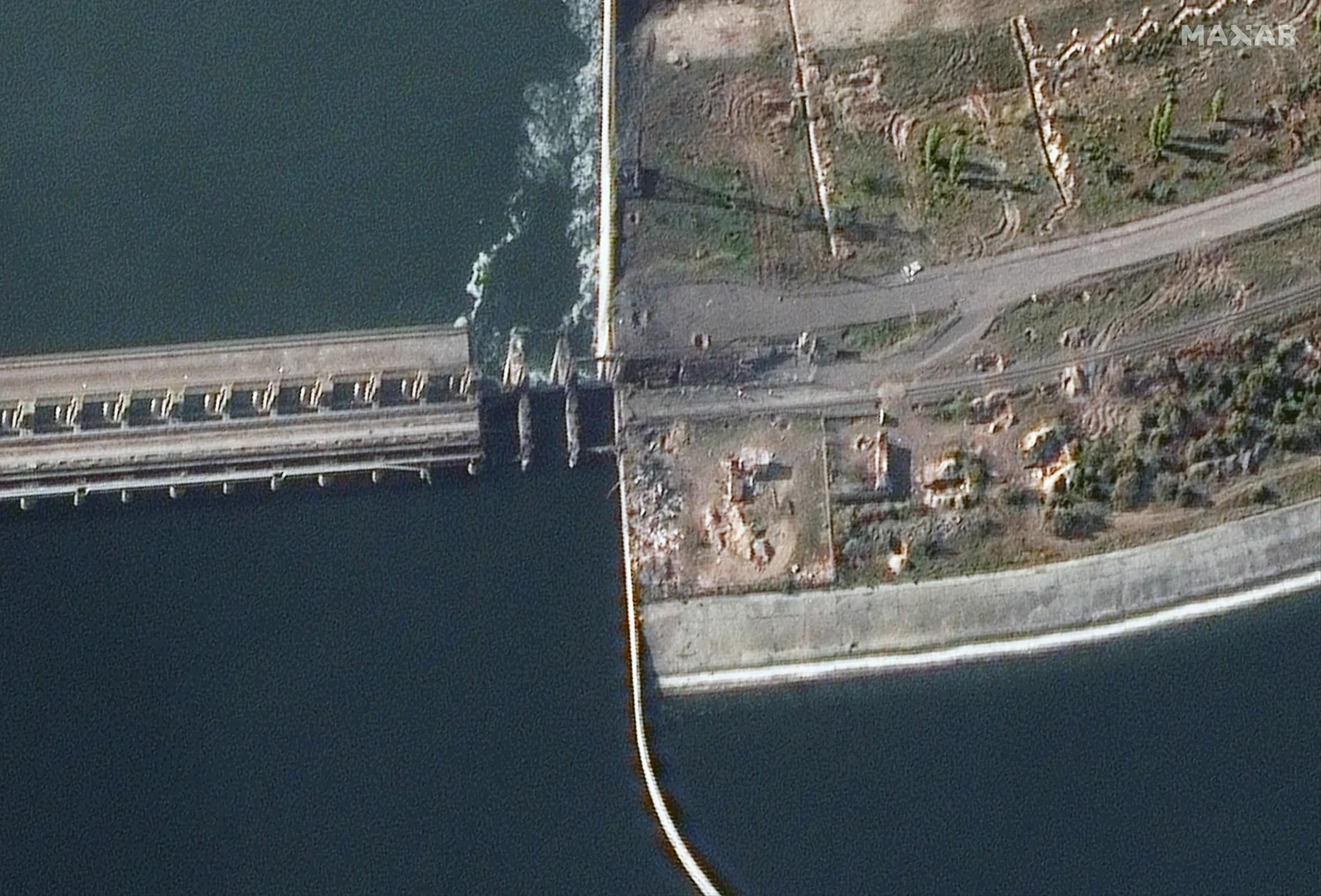
Satellite image of the damaged 3 spans by the Russian military
Source: Maxar, November 11, 2022[699]
With respect to the military advantage anticipated from the subsequent flooding after the Dam’s destruction, at the time of the attack, the setting was the following: at most, small Ukrainian army units were operating on the left bank of Dnipro. In particular, Armed Forces of Ukraine (“AFU”) groups were located in the lower reaches of Dnipro and on the marshy islands scattered between the river’s shores. They were also on the Kinburn Spit, a peninsula in the Black Sea area (see in detail Map 1 below).[700] At the same time, Russian forces were controlling the river’s left bank, where they had been preparing their positions and mining the shores for more than 7 months after withdrawing from the right bank of Kherson in fall 2022.[701] Geographically, in the Kherson area, compared to the right bank of the Dnipro River, the left bank has a lowland terrain, so in case of flooding, it is more likely to be inundated.[702]
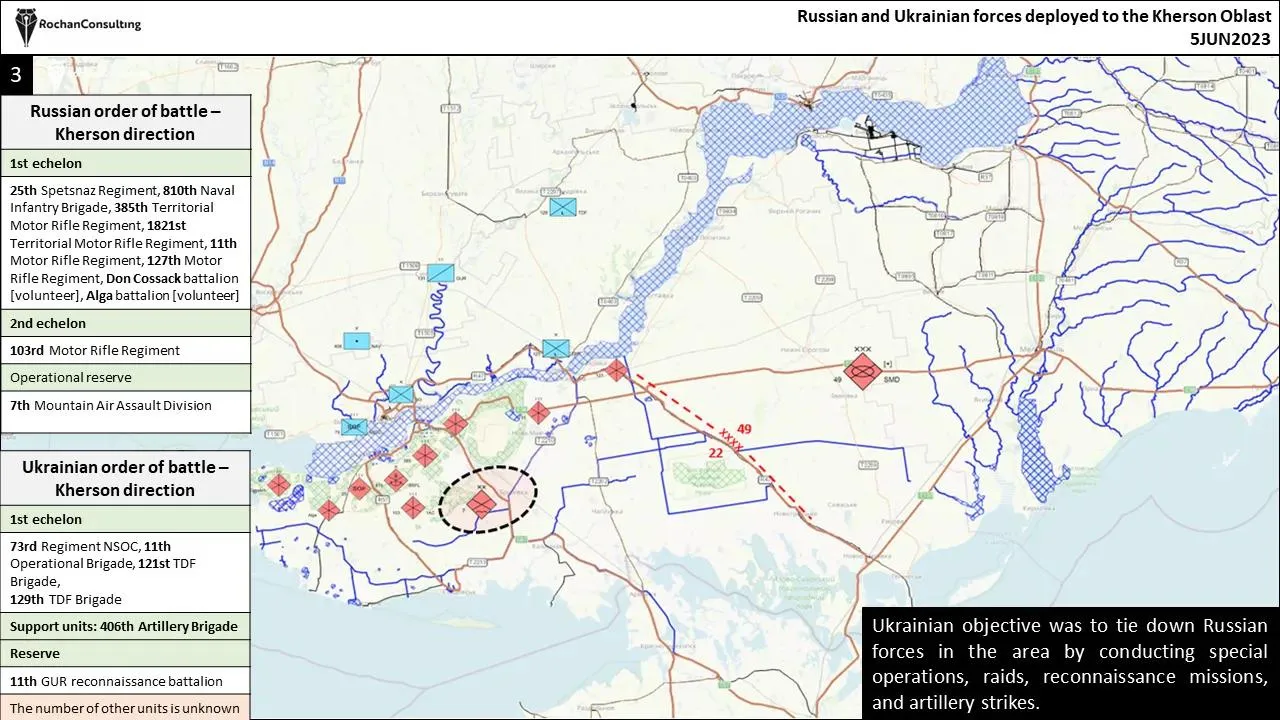
Map 1. Russian and Ukrainian forces deployed to the Kherson Oblast (June 5, 2023)[703]
In such a context when, due to the small number of Ukrainian troops, the Ukrainian counteroffensive toward Dnipro’s left bank seemed an unrealistic scenario, it was foreseeable that the prevention of the counteroffensive of the Ukrainian troops in the Kherson area was not anticipated as a military advantage.
The sole military advantage that could have been anticipated by the Russian military was that the subsequent flooding after the Dam’s destruction would force the small Ukrainian army units present to withdraw from the areas controlled on Dnipro islands and the left bank to prevent their operations in the area, e.g., possible pontoon crossings between the islands. However, this advantage would have lasted for a very limited time – only until the water receded.[704]
Taking this into account, several military experts have pointed out that Russia would certainly gain a more concrete and direct military advantage by attacking the Kakhovka Dam during the regrouping and transferring of the Ukrainian troops in the Dam vicinity.[705] This would specifically cause a high number of casualties and equipment loss for the AFU.
Prima facie, only the advantage in the form of compelling small Ukrainian army units to leave their strategic positions on Dnipro islands and the left bank in the Kherson area may potentially satisfy the “concrete and direct” notion; however, its significance needs to be assessed in comparison with the harm the attack would cause to the environment (see Section 5.5.3).
b) Overall military advantage
Compared to the IHL provisions Article 8(2)(b)(iv) RS was drawn from,[706] it also requires the military advantage to be “overall.” The EOC clarify that the overall military advantage “[m]ay or may not be temporally or geographically related to the object of the attack.” Although the addition of “overall” indicates that a military advantage might emerge over a later time and in an area other than the target vicinity, the ICRC claimed that it does not change the existing law that already provides such meaning.[707] The preparatory works to the Rome Statute also show that the sole rationale behind adding this clarification was to encompass limited types of attacks, including feigned ones,[708] similar to those preceding the Normandy landing of the Allied forces during World War II.[709]
Altogether, any unreasonable and excessively broad interpretations should not be invited since the foreseeability requirement[710] simply precludes vague advantages from being counted.[711] Moreover, the reliance on ex post facto justifications is also excluded.[712] Considering the inchoate character of this crime, only the foreseeable military advantage of a particular military operation shall be weighed against the foreseeable damage of such an operation.[713]
Even if an abusive interpretation of the term “overall” is adopted as a separate notion that includes long-term military advantages, the conclusion on the anticipated military advantage only in the form of AFU forces’ withdrawal from the left bank of Dnipro and the temporary limitation of their operational capacity would not change. At the time of the attack, the areas impacted by the flooding were geographically far from the main frontline clashes between Russian and Ukrainian troops.[714] On top of that, by the time the water receded, the AFU restored its presence on the islands near Dnipro’s left bank, and most of them were under the fire control of AFU or Special Operational Forces of Ukraine.[715]
Furthermore, immediately after the attack, the Russian military, and not the Ukrainian, was affected the most. The Russian positions on the left bank of Dnipro and mined territories on the shore were washed away and Russian units were withdrawing deeper into the occupied territory (see Map 2 below).[716] As of June 9, 2023, Russia had already lost up to 375 km2 of its controlled territory on the left bank.[717]
Therefore, once again, the forcing of Ukrainian troops to withdraw from their positions on the Dnipro River islands and left bank, together with the temporary limitation of their operational capacity could have been the only military advantage anticipated, which may potentially satisfy the “concrete and direct” notion.
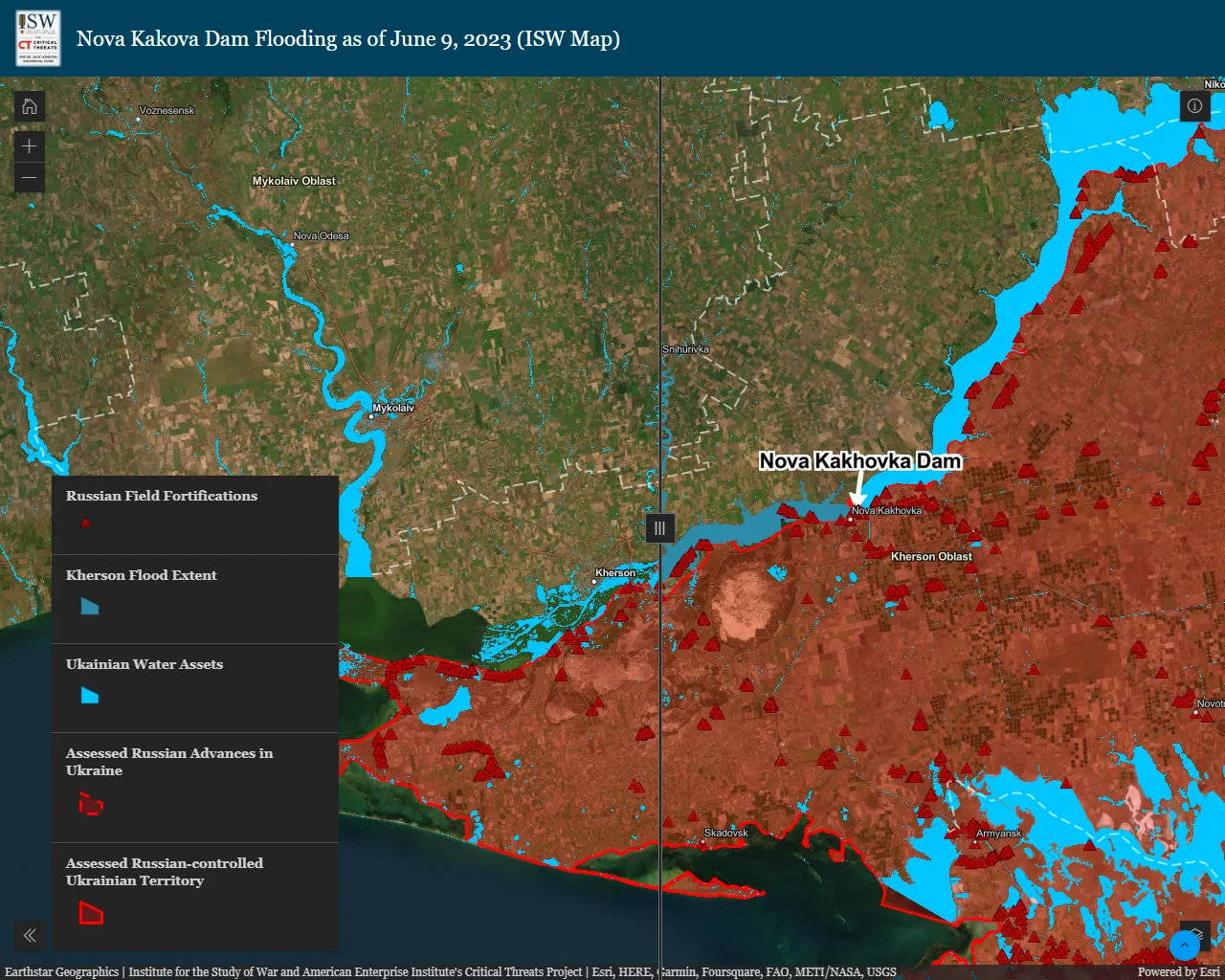
Map 2. Nova Kakhovka Dam Flooding as of July 9, 2023[718]
5.5.3. Assessing the Proportionality Requirement
According to Article 8(2)(b)(iv) RS, an attack is prohibited if it was such that it would cause widespread, long-term, and severe damage to the environment which would be clearly excessive in relation to the concrete and direct overall military advantage anticipated. This formulation introduces a proportionality test requiring an ex-ante assessment between the expected damage the attack would inflict on the environment (Section 5.5.1) and the military advantage anticipated (Section 5.5.2).[719]
a) Comparing the 2 consequences
Compared to the conventional API description of the excessiveness of damage, Art. 8(2)(b)(iv) RS adds the term “clearly.”[720] This inclusion does not seem to establish a higher threshold for the proportionality principle as such. However, it may additionally clarify that only those cases are worth being pursued where the significant imbalance between the environmental damage and the anticipated military advantage was obvious.[721]
On this basis, it is generally accepted that to satisfy the proportionality requirement and be lawful, the attack should offer a very substantial military advantage.[722] The ICTY confirmed the latter in its report on NATO’s bombing of Serbia, in which it also stated that the actions that lead to massive environmental damage, especially when they do not serve a clear and important military purpose, are likely to be illegal.[723] Markedly, weaponizing water is more likely to cause disproportionate environmental harm than to “weaken the military forces.”[724]
Despite a scarcity of pertinent international case law regarding the proportionality assessment, a few cases might assist in interpreting Art. 8(2)(b)(iv) RS. In Galic, the ICTY established that an attack on a crowd of approximately 200 people, including numerous children, despite the presence of a substantial number of soldiers, “would be clearly to cause incidental loss of life and injuries to civilians excessive in relation to the direct and concrete military advantage anticipated.”[725] In Gotovina,42 the ICTY similarly held that firing at the residences of a high-ranking commander would offer a definite military advantage in the form of disruption of his key military abilities. Nonetheless, the Court considered these particular attacks disproportionate due to the location of these residences in a civilian residential area entailing a “significant risk of a high number of civilian casualties and injuries, as well as of damage to civilian objects.”[727]
Similarly, the wholesale subsequent release of a huge amount of water due to the attack on the Kakhovka Dam could potentially pose a threat to small Ukrainian army units stationed in the vicinity of the Kakhovka Dam. As it has been elaborated on (see Section 5.5.2), the flooding could have forced the AFU groups to withdraw from their positions on the left bank of Dnipro and placed a limit on their capacity to operate in the mentioned area, but only for 2 to 3 weeks, until the water receded. This prima facie is the sole concrete and direct military advantage that could have been anticipated from the Dam’s breach.
Considering the danger of environmental harm emanating from the attack on the Kakhovka Dam (see Section 5.5.1), the military advantage anticipated by the Russian military in the form of the compulsion of the small AFU units to withdraw from their river’s left bank positions, for a very limited time, by no means can satisfy the proportionality test under Article 8(2)(b)(iv) RS. The attack’s limited ground and time effect on the Ukrainian military groups in the Kherson Region does not allow us to consider the anticipated military advantage as “substantial.” Even if the term “clearly” put forth by Article 8(2)(b)(iv) RS is interpreted as setting a higher threshold for the proportionality assessment than the conventional API standard, it does not alter the conclusion. It is simply evident that the gallons of flowing water that would burst after the Dam’s breach would inundate hectares of land full of various biodiversity, and that the latter’s negative impacts would clearly outweigh the minuscule military advantage of the temporary withdrawal of a few AFU groups operating on the left bank.
b) Choosing means expected to cause the least environmental damage
Additionally, a crucial factor that may assist in the proportionality assessment is the extent to which the unnecessary collateral damage to the environment was minimized, as provided by the precautionary principle of IHL.[728] Specifically, if alternative means to anticipate the military advantage with less collateral damage caused to the environment were available but not taken, it might be inferred that the attack was disproportionate.[729] This rule is described by API commentators “as the lesser of two evils”: instead of attacking the railway stations in towns, railways are hit at crucial points, but away from the inhabited areas, while the same military advantage is gained.[730] In the realm of environmental damage, the attack by the US Air Forces during the Vietnam War on the Lang Chi Hydroelectric Facility, which supplied up to 75% of Hanoi’s industrial and defense requirements, gives some understanding of the practical meaning of the mentioned rule. Being sure that there was still a 90% chance of anticipating a substantial military advantage, the US chose only to attack the Lang Chi Power Plant without breaching its dam because breaching the dam would have entailed the estimated risk of 23,000 civilian deaths.[731]
Analysis of the Ukrainian and Russian military practices demonstrates that Russians could have employed other means to force Ukrainian troops to leave their positions on the Dnipro River islands and left bank in the Kherson area. In this realm, an effective combination of the use of land forces, artillery, and unmanned aerial vehicles43 for intelligence has proven to be a practical method for compelling enemy forces to withdraw from their positions and establishments, both before[732] and after the Dam’s breach.[733]
Therefore, prima facie, the widespread, long-term, and severe environmental damage that would be caused due to the destruction of the Kakhovka Dam by Russian troops would be clearly excessive in relation to the concrete and direct overall military advantage anticipated.
5.6. Mens Rea of the Perpetrators: Getting Inside the Heads of Those Who Did It
As a general rule, the mental element of international crimes does not mandate the perpetrator to make a specific value judgment. In contrast, Article 8(2)(b)(iv) RS requires such a judgment, necessitating further analysis and understanding of its current description in the EOC to prove the mental element of this offense.
This subsection reviews the main theories of interpretation of the mental element requirements, proposes the most reasonable test for satisfying those (5.6.1), and provides evidence and analysis of the fact that the perpetrators could not have been unaware of the consequences of the attack on the Kakhovka Dam (5.6.2).
The third element of the crime, which relates to the mental element aspect of Article 8(2)(b)(iv), sets out the following requirements:
Article 8(2)(b)(iv) seems to contain several value judgment phrases, such as “clearly excessive,” “concrete,” “direct,” and “overall” that already complicate its application. At the same time, the difficulty of determining whether the mens rea criteria are satisfied lies in the evaluation of “value judgment” done by the perpetrator at the time of the attack.
Footnote 37, adjacent to the third element of the crime, states the following:
“As opposed to the general rule set forth in paragraph 444 of the General Introduction, this knowledge element requires that the perpetrator make the value judgement as described therein. An evaluation of that value judgement must be based on the requisite information available to the perpetrator at the time.”[735]
5.6.1. Elucidation of the Standard
a) Subjective and objective approaches to the interpretation of a valuation judgement
The purely subjective approach means that even when launching an objectively disproportionate attack, the perpetrator will only be responsible if they (1) knew in advance that the attack would cause widespread, long-term, and severe environmental damage, (2) determined the scope of the direct overall military advantage anticipated, and (3) determined that the harm would be clearly excessive to the military advantage.[737] In turn, the objective approach stands that the determination should be carried out objectively by the Court based on “the requisite information available to the perpetrator at the time.”[738]
The inclusion of the words “clearly” and “overall” into the text of the Article was a compromise between the parties to negotiations, as some States were afraid that the court would ex post apply a strict approach and not consider the situation through the eyes of the commander during the hostilities.[739] It was an attempt to give a wider margin of appreciation, i.e., freedom of discretion, for the perpetrator.[740] The parties seem to have added Footnote 37 with the same idea, but they did so at the last moment of negotiations without intensive discussions in Working Groups.[741] That is, the travaux préparatoires do not give enough information to fully comprehend the elements of “value judgment” and its evaluation after the course of events.
However, following a subjective approach and stretching the understanding of the perpetrator’s margin of appreciation creates significant opportunities for impunity, making the “perpetrator, in a way, the judge in his own cause.”[742] Some delegations that favored a more subjective approach even supported the exclusion of liability in cases where the perpetrator wrongfully believes that incidental damage would not be excessive, or does not know that an assessment of excessiveness has to be made.[743]
The logic of the former argument is criticized as “an unreasonable judgment […] in a case of clearly excessive death, injury or damage, would simply not be credible” and would allow the court to make a judgment on the evaluative element based on this lack of credibility.[744] The logic of the latter argument is criticized by the principle that ignorance of the law does not excuse one from responsibility. Similarly, the defense that the perpetrator did not make a “value judgment” and, therefore, cannot be held liable seems absurd and may justify any criminalized act.
It appears that the States agree that Footnote 37 should not allow a reckless perpetrator who had the necessary information at the time about potential harm and military advantage to escape liability due to a simple failure to assess “excessiveness.”[745] By refusing to make such an assessment, the perpetrator is essentially making its own “value judgment.”[746]
b) A reasonable military commander approach
In turn, the “reasonable military commander” standard helps to identify whether the mental element requirement of this crime is met. As noted by the ICTY Review Committee, “It is unlikely that military commanders with different doctrinal backgrounds and differing degrees of combat experience or national military histories would always agree in close cases. It is suggested that the determination of relative values must be that of the “reasonable military commander.”[747] A vast part of the scholarly community supports such an opinion to balance the possibility of impunity for the perpetrator in the case of subjective interpretation.[748] It is worth noting that the “reasonable commander” test applies to the specifics of Article 8(2)(b)(iv) text. That is, it does not ignore the evaluative component of “clearly excessive in relation to the concrete and direct overall…,” but assesses these components adequately. By applying this standard, the court will not justify the recklessness of the perpetrators and considers the reasonableness of the judgment.[749]
Objective assessment of the value judgment or the genuineness of this judgment is particularly important for environmental damage. Often, due to the commitment of military commanders to their military goals, the importance of the environment is neglected.[750] Consequently, in the eyes of a particular commander, an insignificant military objective will justify military advantage even at the cost of significant environmental damage, which might not even appear as a factor in their assessment. Following a subjective approach, a completely unreasonable value judgment, such as seeing “the destruction of a famed and unique natural habitat as justified by the need to deter an enemy from attacking, would result in an acquittal under article 8(2)(b)(iv).”[751] Such an approach would mean a complete leveling of the importance of environmental protection and would make its enshrinement in the Rome Statute illusory.
In the Kakhovka case, as noted, the main potential military advantage could have been to flood the Ukrainian troops to withdraw from their positions on the left bank of Dnipro and/or to further deter them from attacking Russia’s positions. As discussed in Section 5.5.2, the anticipated advantage was minor compared to the expected environmental damage following the attack. By employing the “reasonable military commander” standard, conclusions and findings will more accurately reflect a realistic assessment of proportionality, preventing individuals from escaping liability due to purely subjective and unreasonable interpretations of proportionality. This standard provides an adequate assessment of the commander’s actions, reducing the possibility of impunity for evident violations of IHL.
Often critically mentioned in the environmental context is the case of Lothar Rendulic, a German general during World War II.[752] He was responsible for scorched-earth warfare tactics that caused significant environmental damage in Norway. Although the court recognized that such actions were not justified, “he genuinely perceived [his actions] to be militarily justified at the time,” and Rendulic did not bear any legal responsibility.[753] The so-called Rendulic Rule requires an assessment of the commander’s actions in terms of what he knew when he made the decision rather than a post factum assessment.[754] However, even in this case, a certain reasonable assessment of what the attacker could have known and the quality of his decision is applied, as nothing prevents defendants from downplaying their knowledge.[755] For example, in the case of Kakhovka, the objective circumstances and statements of the attacking party leave no room for unawareness of the potential consequences, which will be explored further. However, considering such situations akin to the Rendulić case purely through a subjective understanding of Article 8(2)(b)(iv) would essentially grant military commanders “a licence to inflict grave environmental harm, as long as it was undertaken with some sort of military motive in mind.”[756]
Thus, it is crucial to consider the consequences of maintaining the Kakhovka Dam not only from a purely subjective perspective, but rather through the lenses of good faith and genuineness. To do otherwise would allow an attacking party to blow up one of the largest water reservoirs in another country, cause widespread environmental damage and human suffering, and justify it with the unreasonable and purely subjective belief that these means justify any military advantage anticipated.
5.6.2. Value Judgement of the Perpetrators in the Case of the Kakhovka Dam Explosion
The Kakhovka Dam was a strategic object for the energy and agricultural industries, creating a large Reservoir and restraining the flow of Dnipro, one of Europe’s largest rivers. The existence of a significant number of settlements below the Dam, primarily those under Russian control, was well known.
There are scenarios in which perpetrators would find it challenging to argue their ignorance of consequences and their inability to make value judgments. A striking example is the use of tactical nuclear weapons.[757] Another parallel can be drawn with attacks on military facilities located in densely populated areas. Without delving into the issue of proportionality, it is challenging to argue that the attacking party, aware of the attack’s location, did not “anticipate a significant degree of incidental damage.”[758]
Similar logic can be applied to the Kakhovka Dam due to its massive size, strategic importance, intended use, and location. The destruction of such an object releases a significant amount of water, which floods vast areas downstream, causing substantial damage to the environment, water supply, agriculture, etc.
The tactic of dam attacks is not novel in Russian military doctrine, with historical (e.g., the bombing of the Dnipro HPP during World War II) and contemporary instances.[759] For example, in April 2022, the Russians, retreating from the Kharkiv Oblast, planted explosives and blew up the dam of the Oskil Reservoir – one of the largest on the Ukrainian left bank.[760] The Oskil Reservoir was a water bank for the Siverskyi Donets River, which supplied water for almost the entire Ukrainian East.[761] In September 2022, Russian missiles destroyed the dam of the Karachuniv Reservoir in Kryvyi Rih.[762] This led to a significant rise in the water level in the Ingulets River and the flooding of some households in the city. In May 2023, the Russian military destroyed the dam of the Karliv Reservoir in Donetsk Oblast, leading to partial flooding of the villages of Halytsynivka and Dolynivka.[763] While these attacks did not yield catastrophic outcomes, the assault on the Kakhovka Dam signifies an escalation of a different magnitude.
In the Kakhovka case, the attacker cannot rely on the lack of sufficient information available at the time of the attack to make an objective value judgment. In particular, one of the problematic aspects of Article 8(2)(b)(iv) RS is that value judgments such as “overall military advantage” and “clearly excessive” may be unforeseeable to the ordinary soldier.[764] While this may be generally true, the Kakhovka case clearly stands out in that the potential consequences were common knowledge to almost any ordinary person, let alone military personnel or officers. In addition, the attacking side should “do everything feasible to obtain information that will allow for a meaningful assessment of the foreseeable incidental effects on civilians and civilian objects.”[765]
On top of that, the political and military leadership of the Russian Federation themselves, on multiple occasions, acknowledged that the destruction of the Kakhovka Dam would have catastrophic consequences (see Annex G), which proves the general understanding of the latter among such impacts. For example, General Surovikin, Commander of Russian “Special Military Operation” in Ukraine, stressed that attacking the Kakhovka HPP could lead to “the destruction of the infrastructure of a major industrial center and high civilian casualties”[766] and “significant casualties.”[767] All the more reason to say that these words resonated with the world media (i.e., Reuters.[768] BBC,[769] The Economic Times,[770] etc.), which made the excessive damages and casualties even more widespread demonstrating that such damage was foreseeable.
The Institute for the Study of War also referred to Surovikin’s words and suggested that the wide wave of accusations by the Russian authorities is a possible cover to later accuse Ukraine of blowing up the Dam.[771] This speculation appears plausible given the large-scale campaign of accusations and disinformation orchestrated by the Russian side. The allegations of a potential Dam detonation peaked in October–November 2022, with numerous Russian officials disseminating this information. Moreover, following Surovikin’s speech, the occupying administration announced the evacuation of the population living downstream of the Dam, including then-occupied Kherson.[772] At the same time, there was no publicly available evidence of any intention on the part of Ukraine to destroy the Dam, especially since the Ukrainian authorities actively denied such scenarios.[773] However, it can be assumed that these actions were a form of justification for the withdrawal of Russian troops from the right bank of Kherson, the sole oblast center that the Russian army had been able to capture since 2022.[774] In any case, this situation underscores the full awareness of the potential consequences of undermining the Dam by Russian authorities. It also underscores their ability to respond to such challenges through population evacuations. At the same time, as further detailed below, the Russian administration was absent in the initial 3 days after the Dam’s destruction, which led to significant casualties among the population.[775]
Other statements by Russian authorities at various levels also indicate awareness of the potential consequences of destroying the Dam. For instance, the Permanent Representative of Russia to the UN, Vasyl Nebeznia, stated that the breach of the Kakhovka Dam would cause a rise in the water level, subsequent flooding, and “thousands of civilians could die, and thousands of houses could be damaged.”[776] Similarly, the appointed by Russia Head of the military-civil administration of Kherson Region Vladimir Saldo said that the consequences of the destruction of Kakhovka HPP could be catastrophic for the residents of Kherson Region.[778]
Moreover, the Head of the Civil-Military Administration (CMA) of Novaya Kakhovka (representation of the Russian authorities in the occupied territory), Vladimir Leontiev, gave an especially detailed understanding of possible consequences:
“If the Kakhovka hydroelectric power station is destroyed, the water level in Nova Kakhovka will rise by more than 12 meters. The entire coastline of the left bank of the Kherson Region will be flooded, including all coastal houses. In particular, the village of Dnipryany will be severely affected, and the village of Korsunka, located downstream, will be even more severely affected. The Dnipro will widen significantly if the Dam breaks. After a breach, the North Crimean Canal will cease to function, and the hydroelectric power plant itself will take years to rebuild. These will be terrible, tragic consequences.”[779]
It is also important to emphasize that the attacker was aware not only of the consequences for people as a result of the Dam’s explosion but also for the environment. In addition to the fact that this awareness can be deduced from common sense, due to the nature of the object described above, officials explicitly mentioned potential environmental consequences. For example, on the day the Kakhovka Dam was blown up, the Russian Ministry of Defense stated that this was “a terrorist act that has led to the flooding of significant areas and will have severe and long-lasting environmental consequences.”[780] Russian Presidential Secretary Dmitry Peskov said that “this sabotage may entail grave consequences, environmental consequences and consequences of other nature.”[781] Many other Russian representatives made similar statements at public official events and in comments to the media, including government-led media (e.g., RIA Novosti or TASS). (See the entire list of names and full quotes in Annex G.)
It can be concluded that information about the consequences of the Dam’s explosion was widespread and generally known. Importantly, the sources of such information were diversified, from the representative of the Russian Federation to the UN Security Council and the commander of the Russian “Special Military Operation” in Ukraine to representatives of the local occupation authorities. This information had enough time to spread and become public; talk of a potential attack on the Dam began in mid-2022. Information about the consequences was disseminated not only by Russian or Ukrainian media, but also by the global media, making the information even more widely known. For example, on October 21, 2022, CBS wrote that “explosion [of the Dam] could spell disaster for the thousands of people who live in the settlements below it”[782]; on the same day, the Daily Mail spread a message that damage because of explosion “can easily be compared to [an] atomic bomb explosion”[783]; on the same day, Le Monde also shared information that such act will be “a catastrophe on a massive scale.”[784] Most media outlets focused on statements made by representatives of Ukraine or Russia regarding the potential environmental consequences. However, in this instance, what matters most is the prevalence of certain information, rather than the uniqueness of expert opinions on the matter.
Clearly, an “ordinary soldier” was or should have been aware of the grave consequences of the Dam explosion. Statements by ordinary soldiers proven that they did. One of the important facts confirming this is the video published on December 11, 2022, i.e., less than a month after the Ukrainian side openly accused the Russians of intending to blow up the Dam.[785] In it, a Ukrainian blogger with the nickname Edgar Myrotvorets, pretending to be loyal to Russia and a resident of the Donetsk Region, talks to 2 Russian Armed Forces soldiers in an online chat roulette. One of the Russian Armed Forces soldiers says he is part of the so-called Wagner Private Military Company. One of the soldiers inadvertently said that the mining of the Kakhovka Dam was a New Year’s gift for the Armed Forces of Ukraine.[786] Later, another soldier confirms that on January 1, the Kakhovka HPP should be blown up.[787] They note, “We were told to mine what we were told to mine, so we mined it.”[788]
Undisputably, the clear-cut awareness low-level Russian soldiers possessed (as the video makes clear)[789] about the precise consequences of blowing up the Kakhovka Dam. One of the soldiers says that after the Dam is broken, “Kherson will be completely washed away.”[790] Then the soldiers say that “the wave will be very good”; “will cover not only Kherson, there are 80 settlements …. the wave will be 36 meters … with a speed of more than 100 kilometers per hour … everything will be blown away.”[791] This is a clear confirmation of the extent to which the consequences were known and spread among the soldiers of the Russian Armed Forces. Therefore, we can say that even an “ordinary soldier” could not fail to receive even some such information or intuitively foresee the consequences.
In any event, it was barely an ordinary soldier who made the decision to blow up such a strategic facility. Instead, senior officers usually have more data and authority to make a “value judgment” on the ratio of military advantage to harm.
Importantly, after the disaster, Russian authorities sought to conceal the real extent of damage caused by the flooding, downplaying the number of casualties and remaining inactive in rescue operations.[792] In this context, Russia refused to allow the UN to dispatch a humanitarian mission to help the disaster victims.[793] According to an AP investigation, the Russian side concealed hundreds of deaths on the territory under their control.[794] Many of these deaths likely resulted from the occupation authorities’ statements about the “non-criticality of the situation,” despite its severity, and their absence from the disaster site for the initial 3 days.[795] Accordingly, most of the rescue missions were carried out by the local population using boats without any assistance from the authorities.[796] This information is also corroborated by witness statements gathered during TH and PEJ field missions, detailed in Section 4.1.1(a)(i). Witnesses specifically reported constant shelling from the territories under Russian control while rescuers were conducting human and animal rescue missions. Accordingly, it can be argued that the intentionality of the perpetrator’s actions is evidenced not only by the concealment of the consequences but also by active efforts to impede their mitigation.
Further, on May 30, 2023, just a week before the explosion, the Russian Government issued a Decree regarding the modification of the legislation “in the areas of industrial safety of hazardous production facilities and ensuring the safety of hydraulic structures” in some occupied territories, including Kherson Region. Paragraph 10 of the Decree reads as follows: “Until 1 January 2028, technical investigation of accidents at hazardous production facilities and accidents of hydraulic structures that occurred as a result of military operations, sabotage and terrorist acts shall not be carried out.” While this decree may not directly indicate an intention to commit an offense or conceal consequences, it warrants consideration within the broader context. It suggests a level of preparation by the Russian political and military leadership, potentially indicating forethought regarding the attack on the Kakhovka Dam. Together with other supporting evidence (see, for instance, Section 2.2), it contributes to the assessment that the most plausible explanation for the catastrophe is that the Russian forces deliberately blew up the Dam.
In summary, one of the key concepts outlined in this subsection, along with the proposed “reasonable commander” test, is that a reckless perpetrator who had the necessary information about potential harm and military advantage should not be allowed to escape liability through a simple failure to assess “excessiveness.”[797]
Given the information available at the time of the attack, the perpetrator of the Kakhovka Dam explosion could not have been unaware of the potential consequences of the Dam’s explosion. This is evidenced by numerous arguments outlined above, including general awareness of the consequences of blowing up a critical installation of such magnitude; a large-scale disinformation campaign that included accusations against the other side of plans to blow up the Dam accompanied by numerous statements by Russian political and military officials at various levels explicitly outlining the consequences of such an act; video footage featuring low-level Russian military personnel confirming the intention to blow up the Dam and providing fairly accurate data on the potential consequences; and the adoption of regulatory legislation immediately preceding the attack, which prevented investigations into similar disasters in the region. Consequently, the perpetrator either made a deliberate value judgment to cause these consequences or, by refusing to assess the potential consequences, essentially made an implicit value judgment through their actions.[798]
42 NB: The Appeals Chamber reversed the Trial Chamber’s judgment and pronounced that “the attacks on Martić involved a lawful military target was not based on a concrete assessment of comparative military advantage, and did not make any findings on resulting damages or casualties.” Nonetheless, the Trial Chamber’s findings concerning the disproportionality of the attack on Martic were not overtuned: Prosecutor v. Ante Gotovina and Mladen Markač, International Criminal Tribunal for the former Yugoslavia (ICTY), IT-06-90-A, 16 November 2012, para. 82, fn. 252[726]
43 An unmanned aerial vehicle (UAV) is commonly known as a drone.
44 In turn, paragraph 4 of the General Introduction states, “[I]t is not necessary that the perpetrator personally completed a particular value judgement, unless otherwise indicated.” In the understanding of paragraph 4, it is sufficient that a perpetrator is aware of the relevant facts. According to Elements of Crimes, Article 8(2)(b)(iv) is a case of “otherwise indicated,” and therefore, for the commission of the crime, the perpetrator should make this “value judgment.”
Calls to Action
1. International Prosecution of Those Responsible for Blowing Up the Kakhovka Dam
Pursuant to the investigation opened by the ICC Office of the Prosecutor in March 2022 into war crimes perpetrated during the Russian aggression on the territory of Ukraine, ICC investigators have conducted a field visit to the Kherson Region subsequent to the attack on the Kakhovka Dam to gather critical evidence.
We respectfully urge the ICC to undertake a thorough and systematic investigation into the attack on the Kakhovka Dam and treat it as a war crime in accordance with Article 8(2)(b)(iv) of the Rome Statute. This provision addresses war crimes involving widespread, long-term, and severe damage to the natural environment that is clearly excessive in relation to the anticipated military advantage. Conducting this investigation will set a crucial legal precedent for the prosecution of individuals responsible for such environmentally detrimental acts.
Moreover, we advocate for the creation of a UN Independent Commission (to be nested in one of the existing monitoring mechanisms for Ukraine or created on an ad hoc basis) to initiate an independent inquiry into the Kakhovka Dam’s destruction. Such an investigation should culminate in recommendations concerning the individual criminal liability of those who ordered and executed the attack. This will significantly advance the cause of justice for the victims and enhance accountability.
2. Engaging Civil Society and Grassroots Movements, Social and Environmental Movements, Non-Governmental Organizations, and Community-Based Organizations
The active participation of civil society and grassroots movements is vital to successful advocacy for justice, accountability, and environmental protection. We call on social and environmental movements, non-governmental organizations (“NGOs”), and civil society organizations (“CSOs”) to advocate for the adoption and enforcement of policies and laws that protect the environment and uphold the rights of victims and survivors of environmental crimes. We urge these actors to engage in campaigns to raise awareness about the impacts of environmental crimes and the need for international accountability.
By adopting these measures, the international community can take a firm stand against impunity, promote accountability, and ensure justice for the victims and survivors of the Kakhovka disaster and any future similar egregious acts.
3. Objective Assessment of Damages and Outcasting of Russia in the Form of Termination of its Participation in Environmental Treaty Bodies
We support the main calls to action laid out by a group of Ukrainian experts in their analytical report titled “Preliminary Ecological and Legal Analysis of the Breach of the Kakhovka Dam and Its Impacts”[799], specifically:
- Requesting the UN Secretary-General to convene the Advisory Committee of Experts under the Environmental Modification (ENMOD) Convention to assess the environmental impact of the Kakhovka HPP explosion.
- Developing an effective compensation mechanism to ensure victims and affected communities receive appropriate restitution.
- Support Ukraine’s diplomatic efforts to limit or terminate Russia’s participation in the environmental treaty bodies.
- Prevent Russia from influencing decision-making processes within these international environmental frameworks.
- Restrict Russia’s access to financial and technical cooperation mechanisms.
Acknowledgments
This report was written by a collaborative team comprising members from TH and PEJ, with general directions from their respective management and under the guidance and editorship of Dmytro Koval, Legal Director of Truth Hounds and Legal Adviser at Project Expedite Justice.
The report’s initial concept emerged from the TH and PEJ teams’ involvement in providing technical support to Ukrainian investigative and prosecutorial offices, including efforts related to crimes stemming from the Kakhovka HPP collapse. TH appreciates the support of the donors, who have chosen to remain unnamed, for their contributions to activities aimed at implementing the organization’s mission of shedding light on atrocity crimes and fighting impunity. PEJ wishes to acknowledge the generous support of the Howard G. Buffett Foundation. Its commitment to this work and PEJ’s Support for Accountability Avenues Project in Ukraine assures that the world will learn of the full scope and scale of Russia’s acts – and that the Ukrainian people will ultimately gain justice and compensation. We are grateful for their belief in our work and dedication to the cause of justice for Ukraine.
The materials regarding Consequences for Culture is prepared in the collaboration with the Crimean Institute for Strategic Studies within the framework of the project “Spreading activities and relaunching of the documenting of violations: cultural heritage of Ukraine in war” under the USAID/ENGAGE activity, which is funded by the United States Agency for International Development (USAID) and implemented by Pact. The contents of these materials are the sole responsibility of Pact and its partners and do not necessary reflect the views of USAID or the United States Government.
List of Contributions
Section I. The Region: History, Culture, Nature, Economics
Roman Koval
TH. Author
Section II. Unraveling the Truth: The Dam’s Destruction
Roman Koval
TH. Author
Vladyslav Chyryk
TH. Author
Section III. Vehicles of Damage: Flooding and Draining
Yuriy Uhryn
TH. Author
Dmytro Soldatenko
PEJ. Editor
Section IV. A Cascade of Consequences from the Dam’s Destruction
Andrii Latsyba
TH. Author: Detrimental Impact on Flora, Fauna, and Protected Areas, Harmful Influence on Soils
Yuriy Uhryn
TH. Author: Consequences for Water
Volodymyr Hryshko
TH. Author: Consequences for People
Myroslava Markova
PEJ. Author: Consequences for the Economy
Alisa Goloschapova
PEJ. Identification, tasking and coordination of external experts’ contributions
Denys Lashnyi
Crimean Institute for Strategic Studies Author: Consequences for Culture
Kateryna Boiko
Independent expert. Hydrogeological Expert Research and Analysis. Specialist Review
Vadym Maniuk
Independent expert. Expert Analysis of the Impact on Flora, Fauna, and Protected Areas
Andriy Bilenky
Independent expert. Expert Research and Analysis of Losses Incurred by the Agricultural Sector
Section V. War Crime of Excessive Damage to the Environment
Volodymyr Hryshko
TH. Author: Introduction, A Mix of Various IHL Provisions, Destruction of the Kakhovka
Dam Amounts to an Attack. Editor: Assessing the Military Advantage Anticipated; Assessing the Proportionality Requirement, Mens Rea of the Perpetrators
Dmytro Soldatenko
PEJ. Author: Considerations Related to the Gravity Threshold; Crime of Endangerment; Assessing the Possibility of Environmental Impact
Yuriy Uhryn
TH. Author: Assessing the Military Advantage Anticipated, Assessing the Proportionality Requirement
Andrii Latsyba
TH. Author: Mens Rea of the Perpetrators: Getting Inside the Heads of Those Who Did It
Amina Morhoieva
PEJ. Research on the Application of Evaluative Standards by the ICC
Review and Proofreading
Dmytro Koval
TH&PEJ. Review of the Report
Pascal Turlan
PEJ. Review of the Report
Cynthia Tai
PEJ. Review of the Report
Becky Priest Santavicca
PEJ. Proofreading of the Report
Field Research
Yaroslav Susoiev
TH. Field researcher
Oleksii Starynets
TH. Field researcher
Myroslava Markova
PEJ. Field researcher
Dmytro Soldatenko
PEJ. Field researcher
Roman Koval
TH. Field researcher
Olha Vovk
TH. Field researcher
Maryna Slobodianiuk
TH. Field researcher
Natalia Topchii
TH. Field researcher
Natalia Zlyhostieva
TH. Field researcher
Serhii Popov
TH. Field researcher
Annexes
EOS Data Analytics
Independent experts. Annex A. Remote Sensing Research and Analysis
Shaun Burnie, Jan Vande Putte
Greenpeace CEE. Annex B. Expert Research and Analysis of the Impacts of the Dam’s Destruction on the Zaporizhzhia Nuclear Power Plant
Kateryna Boiko
Independent expert. Annex C. Hydrogeological Expert Research and Analysis
Andriy Bilenkyi, Dmytro Soldatenko
Independent expert, PEJ. Annex D. Calculation of Approximate Losses Resulting from the Flooding of Crop Fields After the Breach of the Kakhovka Dam
Andriy Bilenkyi
Independent expert. Annex E. Calculation of Irrigation Losses
Andrii Latsyba, Volodymyr Hryshko
TH. Annex F. Study on Interpreting “Attack” on Protected Objects: Article 56 of the API and ICC’s Jurisprudence in Light of Kakhovka Dam Attack
Andrii Latsyba, Myroslava Markova
TH, PEJ. Annex G. Statements by Representatives of the Russian Political and Military Authorities Confirming Awareness of the Potential Consequences of the Kakhovka HPP Explosion
Design, Layout and Visual Identity
Anton Kolotylo
TH. Design & Layout of the Report
Vаleriia Rezanova
TH. Layout of the Report
Alisa Goloschapova
PEJ. Visual identity and Video production coordination
List of references
- «Укргідроенерго». Каховська ГЕС імені П.С.Непорожнього. URL.
- СРСР. Рада Міністрів СРСР, (1950). Про будівництво Каховської ГЕС на річці Дніпро, Південно-Українського та Північно-Кримського каналів, а також системи зрошення південних районів України і північних районів Криму, Постанова Ради міністрів СРСР. URL.
- Вільна історія. До історії будівництва Каховської ГЕС та Північнокримського каналу. Проекти, документи, фото. URL.
- Савчук І., (2022). Каховське водосховище. Остання велика будова комунізму в Україні. Локальна історія. URL.
- Ibid.
- Історична правда, (2023). Як будували Каховську ГЕС. Картини Альбіна Гавдзинського. URL.
- «Укргідроенерго». Каховська ГЕС: 65 років на варті енергетичної безпеки. URL.
- Ettinger E., (2023). Architecture of the Kakhovka Hydroelectric Power Plant. Bird In Flight. URL.
- Kubijovyc, V., ed., (1988). Encyclopedia of Ukraine. University of Toronto Press. Vol. 2 G-K, p. 401.
- «Укргідроенерго». Директор Каховської ГЕС Олег Пащенко: «Ми відбудуємо станцію після теракту». URL.
- Robinson J., (2023). Explainer: what threat does the Kakhovka dam breach pose to the Zaporizhzhia nuclear plant?. Chemistry World. URL.
- Солодько П. та ін., (2024). Карта Великого Лугу: шість Січей, ставка монгольського хана та інші цікаві місця.org.ua ‒ статті та журналістика даних для людей. URL.
- Ettinger E., (2023). Architecture of the Kakhovka Hydroelectric Power Plant. Bird In Flight. URL.
- Ibid.
- Meadows D. et al., (2018). Limits to Growth: The 30-Year Update. Pabulum, p. 167.
- Омельченко В., (2022). Сектор відновлюваної енергетики України до, під час та після війни. Центр Разумкова. URL.
- Ibid.
- World Hydropower Outlook. Opportunities to advance net zero, (2023). International Hydropower Association, pp. 4-14, URL.
- Звіт з оцінки відповідності (достатності) генеруючих потужностей, (2019). Національна енергетична компанія «Укренерго», с. 20, URL.
- Аналітична доповідь про сучасний стан, проблеми та перспективи розвитку гідроенергетики України, (2014). Національний інститут стратегічних досліджень, с. 48, URL.
- Звіт з оцінки відповідності (достатності) генеруючих потужностей, (2019). Національна енергетична компанія «Укренерго», с. 22, URL.
- Науково-аналітична записка про соціо-економічні наслідки руйнування греблі Каховської ГЕС, (2023). ДУ «Інститут економіки та прогнозування НАН України», с. 3.
- «Укргідроенерго». Каховська ГЕС – стійкий розвиток та підтримка регіону, (2019). URL.
- Галенко О., (2014). Історія України починається з Півдня, там її кульмінація, і з Півдня вона має бути переписана. ua Інтернет-мережа гуманітаріїв в Україні і світі. URL.
- Ibid.
- Винарчук Т., (2014). Внутрішні фронтири на Півдні України (кінець ХІХ – початок ХХ ст.) // Схід і Південь України: час, простір, соціум. Інститут історії України НАН України, Vol. 1, p. 164.
- Турченко Ф., (2004). Південь України напередодні Першої світової війни. Розділ 17, ч. 12.
- Заборона. Що ви знаєте про архітектуру промислових міст? Вона прекрасна. Подивіться, як за 70 років змінилася Нова Каховка, (2021). URL.
- Ibid.
- ЦДАВО України. Відомості про результати Всеукраїнського референдуму 1 грудня 1991 року. URL.
- WWF-Україна. WWF-Україна розробив унікальну мапу рамсарських угідь країни, (2020). URL.
- Ibid.
- Ibid.
- Конвенція про водно-болотні угіддя. Україна, (1991). URL.
- Ibid.
- UNESCO: Building Peace through Education, Science and Culture, communication and information. URL.
- Data Zone. URL.
- Nature Reserve Fund of Ukraine. Black Sea Biosphere Reserve. URL.
- Ibid.
- Council Of Europe, (2023). Updated list of officially adopted Emerald Network sites. URL.
- Convention on the Conservation of European Wildlife and Natural Habitats. Emerald Network of Areas of Special Conservation Interest. URL.
- ArcGIS Web Application. URL.
- Валовий регіональний продукт, (2023). Державна служба статистики України, p. 34, URL.
- Шевченко П. та ін., (2022). Не лише кавуни. Чому повернення Херсона важливе для України — 7 фактів про бізнес у регіоні. Новини бізнесу, економіки, фінансів, ринків та компаній — НВ Бізнес. URL.
- АПК-Інформ. Частка Херсонської області в сільськогосподарському виробництві України. URL.
- Свитсуха Д., (2021). Політичні вподобання та економічний розвиток: як змінилася Миколаївщина за часів незалежності. Суспільне Миколаїв. URL.
- АгроПортал. #ІндексАПК. Всупереч умовам ризикованого землеробства Миколаївщина лідирує за показниками виробництва, (2021). URL; АРК Inform. Частка Херсонської області в сільськогосподарському виробництві України, (2023). URL.
- Запорізька обласна державна адміністрація. Про основні підсумки соціально-економічного розвитку Запорізької області / Стан соціально-економічного розвитку Запорізької області на 16.12.2021. URL.
- Дніпропетровська обласна державна адміністрація. Економічний потенціал, (2020). URL; Дніпропетровська обласна державна адміністрація. Паспорт області, (2021). URL.
- Головне управління статистики у Миколаївській області, (2022). Статистичний збірник «Зовнішня торгівля Миколаївської області» у 2021 році. YouTube, таймкод: 00:58, URL (Переглянуто: 2 травня 2024 р.); Головне управління статистики у Херсонській області. Товарна структура зовнішньої торгівлі Херсонської області у 2021 році. URL.
- Головне управління статистики у Херсонській області. Динаміка географічної структури зовнішньої торгівлі товарами (1996–2021 роки). URL; АгроПортал. #ІндексАПК. Всупереч умовам ризикованого землеробства Миколаївщина лідирує за показниками виробництва, (2021). URL.
- Некращук О., (2022). Гарні новини з півдня. Звільнення Херсона відкриває експорт зерна з портів Миколаєва — інтерв’ю. Новини бізнесу, економіки, фінансів, ринків та компаній — НВ Бізнес. URL.
- Ukraїner. Херсонський арт, або натхненні Поліною Райко, (2021). URL.
- Херсонська обласна державна адміністрація, (02.24.2022), Facebook, URL (Переглянуто: 2 травня 2024 р.).
- Міністерство енергетики України, (02.24.2022), Facebook, URL (Переглянуто: 2 травня 2024 р.).
- @flackelf, (2022). Взятие Каховской ГЭС. 24.02.22. Херсонская обл. YouTube, URL (Переглянуто: 2 травня 2024 р.).
- Ibid.
- Куришко Д., (2022). Нова Каховка. Як це провести п’ять днів під окупацією Росії. BBC News Україна, URL.
- Кубай І., (2022). П’ять ангелів-охоронців поліцейського Олега Федька. Історія родини, яку росіяни вбили під Новою Каховкою. Українська правда. Життя. URL.
- Енергосистема продовжує свою стабільну роботу, ‒ Міненерго, (2022). Міністерство енергетики України. URL.
- Ржеутська Л., (2022). В умовах окупації: що відомо про роботу Каховської ГЕС?. Deutsche Welle, URL.
- Бадюк О., (2023). «Мінували з осені 2022 року». Як саме була зруйнована Каховська ГЕС? Радіо Свобода, URL; Росіяни перетворили Каховську ГЕС на військовий об’єкт, (2023). UAinfo, URL.
- Back in April, Occupiers Mined Kakhovka Hydroelectric Power Plant and Currently Working to Mine Floodgates and Supports, (2022). Defence Intelligence of the Ministry of Defence of Ukraine, URL.
- Lawlor K., et al. (2022). Russian Offensive Campaign Assessment, October 19. ISW, URL.
- Расследования и портреты, (2022). Как защищают Каховскую ГЭС мобилизованные. YouTube, URL (Переглянуто: 2 травня 2024 р.).
- Що це за 205-та мотострілецька бригада армії РФ, яка підірвала Каховську ГЕС, (2023). Defense Express, URL.
- 205 ОМСБр (в/ч 74814, г. Будённовск) и другие «апалченцы» в Горловке, (2015). The Stabilizec, URL.
- «Укргідроенерго», (06.06.2023), Facebook, URL (Переглянуто: 2 травня 2024 р.).
- Myre G., (2023). Ukraine blames Russia for blowing up a major southern dam. NPR, URL; Ukraine: Dam destruction «monumental humanitarian, economic and ecological catastrophe»: Guterres, (2023). UN News, URL; @tcbestepe, (06.07.2023), X, URL.
- Херсонська ОДА (ОВА) [@khersonskaODA], (06.07.2023), Telegram, URL.
- Прокудін Олександр – офіційна сторінка [@olexandrprokudin], (06.08.2024), Telegram, URL.
- Руслан Лєвієв [@RuslanLeviev], (06.06.2023), X, URL.
- Еван Гілл [@evanhill], (06.06.2023), X, URL.
- Lake Kahovka ‒ Water level, (2023). Hydroweb, URL.
- Руслан Лєвієв [@RuslanLeviev], (06.06.2023), X, URL.
- Сейсмічні сигнали, отримані від вибуху на Каховській греблі в Україні 6 червня 2023 року (2023). NORSAR, URL.
- Glanz J. et al., (2023). Why the Evidence Suggests Russia Blew Up the Kakhovka Dam. The New York Times, URL; Олександр Янковський та Олена Бадюк, (2023). Що чули місцеві жителі, коли була знищена Каховська ГЕС? | Новини Приазов’я. Радіо Свобода, URL.
- Shabaev G. et al., (2023). «THEY CAN’T GET OUT, EVERYTHING IS FLOODED». WHAT THE OCCUPIERS WERE TALKING ABOUT DURING THE BLOWING UP OF THE KAKHOVKA DAM: TELEPHONE INTERCEPTS. Slidstvo.info, URL.
- @voenacher, (06.06.2023), Telegram, URL.
- Schmitt E., (2023). Official Says Spy Satellites Detected Explosion Just Before Dam Collapse. The New York Times, URL.
- Glanz J., Santora M. and Pérez-Peña R., (2023). Internal Blast Probably Breached Ukraine Dam, Experts Say (Cautiously). The New York Times, URL.
- Канал специального назначения [@okspn], (06.06.2023), Telegram, URL.
- @novosti_efir, (06.06.2023), Telegram, URL.
- @voenacher, (06.06.2023), Telegram, URL.
- Розрахунковий шлях сонця в Новокаховській міській громаді, Херсонська область, Україна, 06.06.2023, (2023). SunCalc, n.d., URL.
- Planet [@planet], (06.06.2023), X, URL.
- Андрійчук А., (2023). Таки підрив? Висновки західних вчених про причини руйнування Каховської ГЕС. Радіо Свобода, URL.
- Glanz J. et al., (2023). Why the Evidence Suggests Russia Blew Up the Kakhovka Dam, (2023), The New York Times, URL.
- Ibid.
- Garasym A., (2023). The Kakhovka HPP was designed to withstand a nuclear attack. There is no question of its self-destruction, Texty.org.ua, URL.
- Невоенкор Курлаева [@KotNaMirotvorze], (06.06.2023), Telegram, URL.
- @rian_ru, (06.06.2023), Telegram, URL.
- Небензя назвал инцидент на Каховской ГЭС немыслимым преступлением Киева, (2023). Известия, URL.
- @rian_ru, (06.06.2023), Telegram, URL.
- @zvezdanews, (04.27.2022), Telegram, URL.
- @rian_ru, (04.19.2022), Telegram, URL.
- @wargonzo, (04.18.2022), Telegram, URL.
- @rezident_ua, (04.19.2022), Telegram, URL.
- @RtrDonetsk, (04.30.2022), Telegram, URL.
- Відео Мілітарний портал, (2022). Нова Каховка, Херсонщина 10 серпня 2022. YouTube, URL (Переглянуто: 2 травня 2024 р.).
- Оперативне командування «Південь» / Operational Command «South», (08.10.2022), Facebook, URL; Херсонська обласна державна адміністрація, (08.10.2022), Facebook, URL.
- Supernova+ [@supernova_plus], (08.10.2022), Telegram, URL.
- Соколов А., Солопов М., (2023). Сколько раз ВСУ обстреливали Каховскую ГЭС после начала военной спецоперации. Ведомости, URL.
- The invaders are trying to rebuild the crossing at the Kakhovka Dam, (2022). Militarnyi, URL; Схеми [@cxemu], (09.19.2022), Telegram, URL.
- Схеми [@cxemu], (09.19.2022), Telegram, URL; Біля Каховської ГЕС обвалилася частина мосту, (2022). Militarnyi, URL.
- Схеми [@cxemu], (09.19.2022), Telegram, URL.
- GMLRS: The Precision Fires Go-To Round, (2024). Lockheed Martin, URL.
- Вільха: зброя-привид чи gamechanger?, (2023). URL.
- У Криму підірвали Чонгарський міст, (2023). URL.
- Zaporizhzhia’s Dnipro Hydroelectric Power Plant hit amid Russian attack on energy infrastructure, (22.04.2024). The Kyiv Independent. URL; Полковник ГШ [@war_home], (22.03.2024), Telegram, URL.
- OSINTtechnical [@Osinttechnical], (06.06.2023), X, URL.
- Новини Приазов’я, (2022). Каховська ГЕС під обстрілами. Які загрози?. Радіо Свобода. URL.
- Ibid.
- Место встречи/Выпуск от 7 июня 2023 года. НТВ, таймкод 26:13, URL.
- Ibid.
- Russian offensive campaign assessment, October 19, (2023). Institute for the Study of War. URL.
- Bilefsky, D., (2022). Zelensky says Russia plans to blow up a major dam in a «false flag» attack, flooding southern Ukraine. The New York Times. URL.
- Back in April, the occupants mined the Kakhovka HPP and are currently working on mining gateways and supports. The Defence Intelligence of Ukraine. URL; Axe, D., (2023). Last Fall A Russian Brigade Nearly Blew Up Ukraine’s Dnipro River Dam. Eight Months Later The Russians Finally Pulled The Trigger. Forbes. URL.
- Surveillance video from November 2022 shows explosions at the Kakhovka dam, (2023). NBC URL.
- RU [@izvestia], (12.11.2022), Telegram, URL.
- Ibid.
- Maxar Technologies [@Maxar], (11.11.2022), X, URL.
- Ibid.
- Соловьёв LIVE,(2022). Как живут и сражаются мобилизованные 205-й бригады, обороняющие Каховскую ГЭС. Rutube. [Accessed May 3, 2024]. URL.
- Невоенкор Курлаева [@KotNaMirotvorze], (02.09.2023), Telegram, timecode: 09:18, URL.
- Government of the Russian Federation, (2023). On the peculiarities of application in the territories of the Donetsk People’s Republic, Lugansk People’s Republic, Zaporizhzhya region and Kherson region of the provisions of the legislation of the Russian Federation in the field of industrial safety of hazardous production facilities and ensuring the safety of hydraulic structures, Resolution No. 873, 30 May. URL.
- Следком [@sledcom_press], (06.06.2023), Telegram, URL.
- СК подтвердил гибель 55 человек после разрушения Каховской ГЭС, (2023). РИА Новости. URL.
- Witness No. 18957; Witness No. 19226; Witness No. 19218; Witness No. 19065; Witness No. 18982; Witness No. 19276; Witness No. 19585; див. також Mellen, R. and Willis, H., (2023). Russian-Controlled Dam Risks Flooding in Southern Ukraine. The New York Times. URL.
- Global Reservoirs and Lakes Monitor (G-REALM) – Lake Kakhovskoye (000873) Height Variations from Altimetry, (2023). USDA, URL.
- International Court of Juctice, (2001). Memorial Of The Republic Of Croatia. Vol. 1, para. 233. URL.
- Hinnant L., Stepanenko V., (2023) Damage to Russian-occupied dam submerges Ukrainian reservoir island community. URL.
- Center of Journalistic Studies. A new video from the Kakhovskaya HPP shows the continuation of uncontrolled water discharge. The submerged coast of Novaya Kakhovka and the positions of the occupiers, (2023). Center of Journalistic Studies. URL.
- Lake Kahovka – Water level, (2023). Hydroweb. URL.
- A new video from the Kakhovskaya HPP shows the continuation of uncontrolled water discharge. The submerged coast of Novaya Kakhovka and the positions of the occupiers, (2023). Center of Journalistic Studies. URL.
- Расследования и портреты, (2022). Как защищают Каховскую ГЭС мобилизованные. (Accessed: May 3, 2024).. URL.
- Ibid, таймкод 03:00 (Accessed: May 3, 2024).. URL.
- Соловьёв LIVE, (2022). Как живут и сражаются мобилизованные 205-й бригады, обороняющие Каховскую ГЭС. Rutube. (Accessed: May 3, 2024).. URL.
- Соловьёв LIVE, (2022). Как живут и сражаются мобилизованные 205-й бригады, обороняющие Каховскую ГЭС. Rutube. (Accessed: May 3, 2024).. URL.
- Jomini of the West [@JominiW], (07.04.2023), X.
- Poulet volant [@Pouletvolant3], (06.06.2023), X. URL.
- Шабаєв Г., Шабаєв Г., Овсяний К. та ін., (2023). «They Can’t Get Out, Everything Is Flooded». What The Occupiers Were Talking About During The Blowing Up Of The Kakhovka Dam: Telephone Intercepts, (2023). Slidstvo.info
- Служба безпеки України [@SBUkr], (09.06.2023), Telegram, URL.
- Соловьёв LIVE, (2022). Как живут и сражаются мобилизованные 205-й бригады, обороняющие Каховскую ГЭС. Rutube. (Accessed: May 3, 2024).. URL; Савчук, М., Івлєва, О., Шабаєв, Г. and Овсяний, К., (2023). «В готовности! Всё по команде!». Ідентифіковані армійці РФ, які контролювали Каховську ГЕС. Ексклюзивні перехоплення. Радіо Свобода. URL.
- Official: Kakhovka dam was blown up by Russia’s 205th Motorized Rifle Brigade.,(2023) The Kyiv Independent. URL.
- Командування військ рф укріплює оборону на Кримському напрямку, координатор, ‒ ІС (2023), sprotyv.info. URL; Владимир Путин посетил штабы группировки войск «Днепр» и национальной гвардии «Восток», (2023). Телеканал Краснодар. URL.
- Макаревич Олег Леонтійович. Книга Катів. URL; Евгений Барханов [@evgenii_barkhanov], (29.10.2023), Дзен, URL.
- Верховный Главнокомандующий Вооружёнными Силами. Президент России, URL; Министерство обороны Российской Федерации: Руководство. Министерство обороны Российской Федерации, URL.
- Лабьяк, И., (2023). Путин внезапно посетил «штаб СВО»: что известно (фото, видео). ТСН. URL.
- Министерство обороны Российской Федерации: Руководство. Министерство обороны Российской Федерации, URL.
- «Питання Генерального штабу Збройних Сил Російської Федерації» (що включає «Положення про Генеральний штаб Збройних Сил Російської Федерації»), (2013). Указ Президента РФ № 631 від 23 липня. URL.
- Минобороны России [@mod_russia], (02.07.2022), Telegram, URL.
- Шойгу впервые назначил командующего войсками на спецоперации, (2022). РБК. URL.
- Минобороны России [@mod_russia], (02.07.2022), Telegram, URL; Минобороны России [@mod_russia], (16.07.2022), Telegram, URL; Минобороны России [@mod_russia], (18.07.2022), Telegram, URL; Минобороны России [@mod_russia], (20.07.2022), Telegram, URL.
- Zvezdanews [@zvezdanews], (18.04.2023), Telegram, URL.
- Кремль сообщил, что Путин посетил группировку войск «Днепр». Раньше ее не существовало — по версии британской разведки, структуру создали из-за больших потерь (2023). vot-tak.tv. URL.
- AKIpress news, (2023). Путин посетил штаб группировки войск «Днепр» и штаб национальной гвардии «Восток». YouTube. [Переглянуто: 3 травня 2024 р.]. URL; Перестановки генералов. Что выявил визит Путина на оккупированные территории Украины и почему в РФ отменили марши «Бессмертного полка» — ISW, (2023). URL.
- РФ. Державна Дума, (1996). «Про оборону», Федеральний закон від 31 травня № 61-ФЗ. URL.
- «Питання Генерального штабу Збройних Сил Російської Федерації» (що включає «Положення про Генеральний штаб Збройних Сил Російської Федерації»), (2013). Указ Президента РФ № 631 від 23 липня URL
- Полномочия Министра обороны Российской Федерации, (2011). Министерство обороны Российской Федерации, URL.
- ВДВ за Честность и Справедливость [@vdv_za_chestnost_spravedlivost], (20.11.2023), Telegram, URL.
- Херсонська ОДА (ОВА) [@khersonskaODA], (08.06.2023), Telegram, URL.
- Сукупні супутникові знімки вод та наслідки для Херсонської області в Україні у період з 6 по 9 червня 2023 року (2023 р.). UNOSAT,
- Звіт «Оцінка потреб після катастрофи на греблі Каховської ГЕС» (2023 р.). ООН та Уряд України, ст. 10, URL.
- Деталі руйнування Каховської греблі: консорціум NASA Harvest оцінює наслідки для сільського господарства за допомогою супутникових знімків (2023). NASA Harvest, URL; Міноборони: 32 людини загинули та 39 зникли безвісти внаслідок вибуху на Каховській ГЕС, (2023). Укрінформ, URL. «Загалом було підтоплено 612 кілометрів квадратних, з яких 32 відсотки – деокупована територія».
- Продукін Олександр ‒ Офіційна сторінка [@olexandrprokudin], (06.06.2023), Telegram, URL.
- Моніторинг руйнування Каховської греблі та затоплення з використанням супутникових даних, 6 червня 2023 р. (2023 р.). ДОСТУП, URL.
- Топографічна карта Херсонської області, висота, рельєф. Топографічні карти,
- Witness № 19151.
- Експрес-оцінка: Наслідки руйнування Каховської ГЕС 9 червня 2023 р. (2023 р.). Єльська лабораторія гуманітарних досліджень, ст. 4, URL; Моніторинг пошкоджень Каховської греблі та затоплення з використанням супутникових даних (2023 р.). ДОСТУП, URL.
- Моніторинг пошкоджень Каховської греблі та затоплення з використанням супутникових даних, (2023 р.). ДОСТУП, URL.
- Witness № 19114.
- Оцінка збитків міста Херсон, Херсонський регіон, Херсонська область, Україна станом на 7 червня 2023 року; 08:19 UTC, (2023). UNOSAT, URL.
- Leatherby L., (2023). Супутникові знімки показують масштаби затоплення через руйнування греблі в Україні. New York Times, URL; Смутко А., (2023). У тіні війни українці тікають з міст, затоплених через підрив дамби. Reuters, URL (Переглянуто: 3 травня, 2024).
- Дайджест ключових наслідків російської агресії для довкілля України за 17‒23 червня 2023 року, (2023). Міністерство захисту довкілля та природних ресурсів України, URL.
- Іван Кухта [@Snihyrivkachannel], (06.06.2023), Telegram, URL.
- Witness № 19122.
- Witness № 19151.
- Witness № 19596.
- Witness № 19122.
- Witness № 19258.
- Witness № 19114.
- Witness № 19235.
- Witness № 19249.
- Афанасіївка (Миколаївська область). Google Earth
- Суспільне Миколаїв, (2023). У Снігурівській територіальній громаді 13 сіл досі залишаються під водою. YouTube, тайм-код: 00:16, URL (Переглянуто: 3 травня 2024 р.); Затоплені. Про долю людей, які опинилися у водному полоні на Херсонщині, (2023). Українське радіо, URL.
- Свистуха Д., (2023). На Миколаївщині відновили два мости, зруйновані російськими військами. Суспільне Миколаїв, URL.
- Іван Кухта [@Snihyrivkachannel], (15.03.2023), Telegram, URL.
- Іван Кухта [@Snihyrivkachannel], (17.06.2023), Telegram, URL.
- Witness № 19122.
- Нова Одеса (Миколаївська область). Google Earth.
- Сєнкевич Online [@senkevichonline], (08.06.2023), Telegram, URL.
- Миколаївський обласний центр з гідрометеорології, (8.06.2023), Facebook, URL (Переглянуто: 3 травня 2024 р.).
- Witness № 19115.
- Майбутнє Миколаєва, (2020). Миколаїв туристичний №1 ЯХТ-КЛУБ. YouTube, таймкод: 00:57 , URL (доступ: 3 травня 2024 р.); У Миколаєві практично затопило територію яхт-клубу, (2023 р.). WITNESS.info, URL.
- Дайджест ключових наслідків російської агресії для довкілля України за 17‒23 червня 2023 року, (2023). Міністерство захисту довкілля та природних ресурсів України, URL.
- Дайджест ключових наслідків російської агресії для довкілля України за 17‒23 червня 2023 року, (2023). Міністерство захисту довкілля та природних ресурсів України, URL.
- Іван Кухта [@Snihyrivkachannel], (10.06.2023), Telegram, URL.
- Іван Кухта [@Snihyrivkachannel], (20.06.2023), Telegram, URL.
- Сєнкевич Online [@senkevichonline], (09.06.2023), Telegram, URL; Сєнкевич Online [@senkevichonline], (26.06.2023), Telegram, URL.
- Witness № 19114.
- Witness № 19122.
- Witness № 19123.
- Дайджест відновлення України: Спеціальний випуск КШЕ, (2023). КШЕ, ст. 11, URL.
- Vyshnevskyi V. et al., (2023). The destruction of the Kakhovka dam and its consequences. Water International, p. 3
- Звіт «Оцінка потреб після катастрофи на греблі Каховської ГЕС», (2023). Організація Об’єднаних Націй Україна, С. 9, URL.
- Vyshnevskyi V. & Shevchuk S., (2024). The destruction of the Kakhovka dam and the future of the Kakhovske reservoir. International Journal of Environmental Studies, p. 5.
- Vyshnevskyi V. et al., (2023). The destruction of the Kakhovka dam and its consequences. Water International, pp. 10-11; Vyshnevskyi V. & Shevchuk S., (2024). The destruction of the Kakhovka dam and the future of the Kakhovske reservoir. International Journal of Environmental Studies, pp. 9-10.
- Canals in Ukraine are Drying Up, (2023). NASA Earth Observatory, URL; Kakhovka: Hydroweb Data Shows a Reservoir Turned Back a River, (2023). Hydroweb, URL.
- Vyshnevskyi V. et al., (2023). The destruction of the Kakhovka dam and its consequences. Water International, pp. 10-11.
- Navigating The Kakhovka Dam Collapse: NASA Harvest Consortium Assesses Agriculture Impacts With Satellite Imagery, (2023). Harvest, URL; Canals in Ukraine are Drying Up, (2023). NASA Earth Observatory, URL.
- Супутниковий знімок каналу Каховського водосховища поблизу Мар’янського (05.06.2023). Sentinentelhub, URL (Переглянуто: 7 травня 2024 р.); Супутниковий знімок каналу Каховського водосховища поблизу Мар’янського, (18.06.2023). Sentinentelhub, URL (Переглянуто: 7 травня 2024 р.).
- Супутниковий знімок найпівнічнішого каналу біля Балки, (05.06.2023). URL (Переглянуто: 7 травня 2024 р.);
- Супутниковий знімок найпівнічнішого каналу біля Балки, (20.06.2023). URL (Переглянуто: 7 травня 2024 р.).
- Супутниковий знімок Північно-Кримського каналу Каховського водосховища, (05.06.2023). Sentinentelhub. URL (Переглянуто: 7 травня 2024 р.); Супутниковий знімок Північно-Кримського каналу Каховського водосховища, (18.06.2023). URL (Переглянуто: 7 травня 2024 р.).
- Супутниковий знімок Каховського каналу Каховського водосховища, (05.06.2023). Sentinentelhub. URL (Переглянуто: 8 травня 2024 р.); Супутниковий знімок Каховського каналу Каховського водосховища, (18.06.2023). URL (Переглянуто: 7 травня 2024 р.).
- International Atomic Energy Agency, Communication dated 6 June 2023 received from the Permanent Mission of Ukraine to the Agency, INFCIRC/1093, URL.
- Giusti E.V. and Meyer E.L., (1977). Water Consumption by Nuclear Powerplants and Some Hydrological Implications. U.S. Dept. of the Interior, Geological Survey.
- Fedonenko, O. et al., (2018). Environmental Characteristics by Eco-Sanitary and Toxic Criteria of the Cooling Pond of Zaporizhzhya Nuclear Power Plant (Ukraine). International Letters of Natural Sciences. 70, p. 2.
- Енергоатом [@energoatom_ua], (09.06.2023), Telegram, URL.
- Укргідроенерго [@Ukrhydroenergo], (09.06.2023), X, URL.
- Енергоатом, (2023). Рівень води у ставку-охолоджувачі ЗАЕС – стабільний. URL.
- International Atomic Energy Agency, Communication dated 6 June 2023 received from the Permanent Mission of Ukraine to the Agency, INFCIRC/1093, URL.
- International Atomic Energy Agency, Update 219 – IAEA Director General Statement on Situation in Ukraine, URL.
- Державна інспекція ядерного регулювання (2023), Розпорядженням Держатомрегулювання експлуатація енергоблоку №5 ЗАЕС обмежена станом «холодний зупин». URL.
- Державна інспекція ядерного регулювання України (2024), Олег Коріков: Усі енергоблоки ЗАЕС перебувають в холодному стані, але головні загрози ядерній та радіаційній безпеці несуть окупація та мілітаризація станції. URL.
- Valowa, Y., (2023). Hot and cold: The risks posed by mines at Zaporizhzhia nuclear power plant. Emerging Europe. URL.
- Каховського водосховища більше не існує – НАН України, (2023). НАН України, URL.
- Афанасьєв С., (2023). Про екологічні наслідки руйнування греблі Каховської ГЕС.
- Стенограма доповіді на засіданні Президії НАН України 6 вересня 2023 року. Вісник НАН України, Vol. 11, p. 75.
- Гарасим, А., (2023). Тепер уже точно: територія Каховського водосховища — не пустеля.org.ua, URL.
- Гарасим, А., (2024). У Каховське водосховище повертається вода. Супутникові знімки. Texty.org.ua, URL.
- Zafra M., Bankova D., (2023), Maps: Damage from the Nova Kakhovka Dam collapse in Ukraine. URL. “It is not known how many people may have died as a result of the flooding.”
- Richard Stone, (2024). Ukrainian scientists tally the grave environmental consequences of the Kakhovka Dam disaster. Science | AAAS. URL.
- Ukraine – Destruction of Kakhovka Dam – Flash Update #6, (2023). UNOCHA, URL.
- Гамалій І., (2023). Підрив Каховської ГЕС: відомо про 32 загиблих, реальні цифри значно більші. ua, URL; Military Media Center [@militarymediacenter], (09.05.2023), Telegram, URL.
- Witness № 19103; Witness № 19185.
- Witness № 19114; Witness № 19235.
- Holt E., (2023). Thousands at risk after Ukrainian Dam destruction. Lancet (London, England), 401(10393), 2028.
- Holt E., (2023). Thousands at risk after Ukrainian Dam destruction. Lancet (London, England), 401(10393), 2028.
- Ремажевская Л., (2023). “Ви на землі. Ви вже вдома.” Репортаж «Ґрат» із Херсона, куди під обстрілами евакуюють мешканців затоплених територій. Ґрати, URL.
- Rapid Environmental assessment of Kakhovka Dam Breach Ukraine, 2023, (2023). UNEP – UN Environment Programme, С. 6, URL.
- Приазов’я Н., Янковський О., Бадюк О., Антипенко І., (2023). «Люди чекають на дахах. Окупанти залишаються». Хто і як рятує жителів затопленої лівобережної Херсонщини. Радіо Свобода, URL.
- Disease, destruction, flooded fields, and hunger: The far-reaching consequence of the Kakhovka Dam collapse in Ukraine, (2023). Middle East Institute, URL.
- Доценко М., (2023). Окупанти повідомили нові дані про кількість загиблих внаслідок підриву Каховської ГЕС. Мост, URL.
- Disease, destruction, flooded fields, and hunger: The far-reaching consequence of the Kakhovka Dam collapse in Ukraine, (2023). Middle East Institute, URL. Див. також: Місія МКЧХ в Україні так і не отримала доступу на лівий берег Дніпра після підриву Каховської ГЕС URL.
- Сотні мешканців Олешок загинули після підриву ГЕС, бо росіяни відмовили в евакуації, (2023). Центр Національного Спротиву, URL.
- Kullab S., Novikov I., (2023). At least hundreds died in floods after Ukraine Dam collapse, far more than Russia said. AP News, URL.
- Kullab S., Novikov I., (2023). At least hundreds died in floods after Ukraine Dam collapse, far more than Russia said. AP News, URL.
- Kullab S., Novikov I., (2023). At least hundreds died in floods after Ukraine Dam collapse, far more than Russia said. AP News, URL.
- Max Fras [@maxfras], (06.06.2023), X, URL (Переглянуто: 3 травня 2024 р.). “Russia-appointed Kherson Oblast governor Saldo, speaking right in front of the flooded streets of Novaya Kakhovka: “Everything is fine in Novaya Kakhovka, people go about their daily business like any day”.
- Melkozerova V., Gavin G., (2023). As Ukraine evacuates its Dam-flooded towns, cries for help go unanswered in Russian-occupied territory. POLITICO, URL.
- Kullab S., Novikov I., (2023). At least hundreds died in floods after Ukraine Dam collapse, far more than Russia said. AP News, URL.
- Приазов’я Н., Янковський О., Бадюк О., Антипенко І., (2023). «Люди чекають на дахах. Окупанти залишаються». Хто і як рятує жителів затопленої лівобережної Херсонщини. Радіо Свобода, URL.
- ACAPS Briefing note – Ukraine: Flooding due to the destruction of the Kakhovka Dam, (2023). ACAPS, URL; див. також Жирій, К. (2023). Свідчення мешканців лівобережжя Херсонщини шокують: їм не залишили шансу на порятунок. УНІАН, URL.
- Приазов’я Н., (2024). Померлі через повінь досі лежать під завалами будинків – влада Голої Пристані. Радіо Свобода, URL.
- Жирій, К. (2023). Свідчення мешканців лівобережжя Херсонщини шокують: їм не залишили шансу на порятунок. УНІАН, URL.
- Ніна Павлишинець, (06.08.2023), Facebook, URL (Переглянуто: 3 травня 2024 р.).
- Звіт «Оцінка потреб після катастрофи на греблі Каховської ГЕС», (2023). Організація Об’єднаних Націй в Україні, С. 25, URL. Щодо аспектів психічного здоров’я див. заяву представника ВООЗ в Україні: «Ідеться про мільйони людей, які потребують підтримки психічного здоров’я». У цій заяві підкреслюються як жахливі наслідки самої катастрофи, так і кумулятивний ефект уже пережитих українцями лих. Schlein L., (2023). WHO: Kakhovka dam disaster risks epidemic of physical, mental health problems. Voice of America, URL.
- Holt E., (2023). Thousands at risk after Ukrainian Dam destruction. Lancet (London, England), 401(10393), 2028.
- Kakhovka Dam disaster a health crisis in the making: WHO, (2023). UN News, URL.
- Witness № 19115.
- ACAPS Briefing note – Ukraine: Flooding due to the destruction of the Kakhovka Dam, (2023). ACAPS, URL.
- Жарова Л., Кінаш А., Буряк Г. (2023) Проблеми оцінки наслідків сучасних військових техногенних катастроф Бізнес, економіка, сталий розвиток, лідерство та інновації 10, С. 25.
- Potential Long-Term Impact of the Destruction of the Kakhovka Dam UNCT Joint Analytical Note, (2023). The UN Resident Coordinator Office in Ukraine, URL. Див. також: Міністерство охорони здоров’я України, (06.07.2023), Facebook, URL (Переглянуто: 3 травня 2024 р.).
- Жарова Л., Кінаш А., Буряк Г. (2023) Проблеми оцінки наслідків сучасних військових техногенних катастроф Бізнес, економіка, сталий розвиток, лідерство та інновації 10, С. 25.
- ACAPS Briefing note – Ukraine: Flooding due to the destruction of the Kakhovka Dam, (2023). ACAPS, URL
- Schlein L., (2023). WHO: Kakhovka Dam disaster risks epidemic of physical, mental health problems. Voice of America, URL; див. також Kaveri M., (2023). Landmine and cholera danger after Ukraine Dam collapses. Health Policy Watch, URL.
- ACAPS Briefing note – Ukraine: Flooding due to the destruction of the Kakhovka Dam, (2023). ACAPS, URL
- Witness № 19277.
- Булавін Д., (2023). Ліквідація наслідків підриву Каховської ГЕС завершена — МОЗ. ua, URL.
- Witness № 19065.
- ACAPS Briefing note – Ukraine: Flooding due to the destruction of the Kakhovka Dam, (2023). ACAPS, URL.
- Tétrault-Farber G., Faulconbridge G., (2023). Mines uprooted in Ukraine Dam disaster could pose danger for years, Red Cross says. Reuters, URL.
- ACAPS Briefing note – Ukraine: Flooding due to the destruction of the Kakhovka Dam, (2023). ACAPS, URL.
- ACAPS Briefing note – Ukraine: Flooding due to the destruction of the Kakhovka Dam, (2023). ACAPS, URL.
- Tétrault-Farber G., Faulconbridge G., (2023). Mines uprooted in Ukraine Dam disaster could pose danger for years, Red Cross says. Reuters, URL.
- Schlein L., (2023). WHO: Kakhovka Dam disaster risks epidemic of physical, mental health problems. Voice of America, URL.
- Witness № 19123.
- Андрус К., (2023). У Нікополі після зникнення Каховського водосховища у двори до людей масово повзуть змії. Новини Нікополя, URL.
- Witness № 19116. Документатори TH також зафіксували присутність великої кількості змій у селі Олексіївка Дніпропетровської області (див. Witness № 18982).
- Witness № 19218.
- Witness № 19277.
- ACAPS Briefing note – Ukraine: Flooding due to the destruction of the Kakhovka Dam, (2023). ACAPS, URL.
- Vyshnevskyi V., Shevchuk S., et al., (2023). The destruction of the Kakhovka Dam and its consequences. Water International, 48(5), 631–647; с.с. 640-641.
- Звіт «Оцінка потреб після катастрофи на греблі Каховської ГЕС», (2023). Організація Об’єднаних Націй Україна, С. 9, URL.
- Witness № 18948; Witness № 18979; Witness № 18999.
- Witness № 19276.
- Witness № 18960.
- Witness № 19794.
- Witness № 19794.
- Witness № 18957; Witness № 19229.
- Герасименко Я., (2024). У Кривому Розі будують експериментальний водогін. Зеленський приїхав на його огляд. ua, URL.
- Донець О., (2023). На Дніпропетровщині запустили першу нитку водогону, який будують після підриву Каховської ГЕС. ua, URL.
- Witness № 19151; Witness № 19114; Witness № 19353.
- Witness № 19151; Witness № 19353.
- Witness № 19103; Witness № 19123.
- Звіт «Оцінка потреб після катастрофи на греблі Каховської ГЕС», (2023). Організація Об’єднаних Націй в Україні, С. 9, URL.
- ACAPS Briefing note – Ukraine: Flooding due to the destruction of the Kakhovka Dam, (2023). ACAPS, URL
- Аналіз наслідків підриву дамби Каховської ГЕС на населені пункти Херсонської та Миколаївської областей, (2023). Вокс Україна / Інститут КШЕ, URL (Переглянуто: 3 травня 2024 р.).
- Повінь у Херсоні (Україна). Azenzus Vision. (n.d.), URL (Переглянуто: 3 травня 2024 р.).
- Witness № 19236.
- Witness № 18979.
- Witness № 19235.
- Повінь у Херсоні (Україна). Azenzus Vision. (n.d.), URL (Переглянуто: 3 травня 2024 р.).
- McDonnell, T., (2023). Ukraine’s COP28 mission: Punish Russia’s ‘environmental war crimes’. Semafor, URL.
- Expert reaction to reported attack on Ukraine’s Kakhovka Dam, (2023). Science Media Centre), URL; A Preliminary Environmental Risk Assessment of the Kakhovka Dam Flooding: Environment and Conflict Alert Ukraine, (2023). PAX, p. 6, URL.
- Witness № 18979.
- Witness № 19226.
- Третє засідання робочої групи НАН України з аналізу наслідків руйнування греблі Каховської ГЕС, (2023). НАН України. URL.
- Журавлева Л.А. (1988). Гидрохимия устьевой области Днепра и Южного Буга в условиях зарегулированного речного стока. Наук. думка, с. 176.
- Афанасьєв С., (2023). Про екологічні наслідки руйнування греблі Каховської ГЕС.
- Стенограма доповіді на засіданні Президії НАН України 6 вересня 2023 року. Вісник НАН України, № 11, с. 71‒
- Witness № 19122.
- Witness № 19276.
- Науковці Академії вивчають ложе Каховського водосховища, (2023). НАН України, URL.
- Україна. Міністерство охорони здоров’я України, (2010). Про затвердження Державних санітарних норм та правил «Гігієнічні вимоги до води питної, призначеної для споживання людиною» (ДСанПіН 2.2.4-171-10). Наказ Міністерства охорони здоров’я України № 400, URL.
- Україна. Міністерство охорони здоров’я України, (2010). Про затвердження Державних санітарних норм та правил «Гігієнічні вимоги до води питної, призначеної для споживання людиною» (ДСанПіН 2.2.4-171-10). Наказ Міністерства охорони здоров’я України № 400, URL.
- Державна екологічна інспекція Південно-Західного округу, (10.06.2023), Facebook, URL (Переглянуто: 6 травня 2024 р.).
- Динаміка основних параметрів морської екосистеми в українському секторі північно-західної частини Чорного моря в перший місяця після екологічної катастрофи руйнування Каховської дамби2023, (2023). Інститут морської біології НАН України, URL.
- Струк О., Море проблем. «Це локальна катастрофа для нашої північно-західної частини Чорного моря». ua, URL.
- Забруднення Чорного моря як наслідок аварійної ситуації, яка склалася після підриву греблі Каховської ГЕС, (2023). УкрНЦЕМ. URL.
- Rapid Environmental Assessment of. Kakhovka Dam Breach, (2023). UNEP, p. 32, URL.
- Струк О., Море проблем. “Це локальна катастрофа для нашої північно-західної частини Чорного моря”. ua. URL.
- Witness № 19122
- Радіо Свобода Україна, (2023). До узбережжя Одеси течією винесло сміття й фрагменти меблів через руйнування Каховської ГЕС. YouTube, URL (Переглянуто: 6 травня 2024 р.); Козлова Л., (2023). Будинки, плити, меблі: в Одесі пляжі забиті “дарами моря” після підриву Каховської ГЕС. УНІАН, URL.
- Тучковенко Ю. та ін., (2023). Особливості розповсюдження в Чорному морі розпріснених і забруднених перехідних вод з Дніпровсько-Бузького лиману після руйнування греблі Каховського водосховища. Український гідрометеорологічний журнал, № 32, с. 102.
- Забруднення Чорного моря як наслідок аварійної ситуації, яка склалася після підриву греблі Каховської ГЕС, (2023). УкрНЦЕМ. URL.
- Забруднення Чорного моря як наслідок аварійної ситуації, яка склалася після підриву греблі Каховської ГЕС, (2023). УкрНЦЕМ. URL.
- Наукова оцінка екологічних шкоди, завданої руйнуванням Каховської дамби, (2023). Інститут морської біології НАН України, URL.
- Rapid Environmental Assessment of. Kakhovka Dam Breach, (2023). UNEP, р. 94, URL.
- Rapid Environmental Assessment of Kakhovka Dam Breach, (2023). UNEP, р. 47, URL.
- Witness № 18979.
- Linnik P., (2000). Role of bottom sediments in the secondary pollution of aquatic environments by heavy-metal compounds. Lakes & Reservoirs: Research & Management, с. 15.
- Rapid Environmental Assessment of Kakhovka Dam Breach, (2023). UNEP, p. 87, URL, з посиланням на проєкт EUWI+ (Водна ініціатива Європейського Союзу плюс) для країн Східного партнерства, результат 2 (2021 р.). Cкринінговий моніторинг річкового басейну Дніпра — скринінг забруднюючих речовин.
- First research of the contamination of the sediments from Kakhovka reservoir, (2023). Arnika, p. 6, URL.
- Rapid Environmental Assessment of Kakhovka Dam Breach, (2023). UNEP, p. 32, URL; Вплив аварії на Каховській ГЕС на морську екосистему: Оновлені дані від УкрНЦЕМ, (2023). УкрНЦЕМ, URL.
- Rapid Environmental Assessment of Kakhovka Dam Breach, (2023). UNEP, pp. 18-19, URL; Rybak N. and Dubis L., (2023). River Bed and Floodplain of the Dnipro River within the Kakhovka Reservoir: Before Its Construction and after the Dam Blow up in 2023. International Conference of Young Professionals «GeoTerrace-2023» (European Association of Geoscientists & Engineers 2023).
- Rapid Environmental Assessment of Kakhovka Dam Breach, (2023). UNEP, pp. 18-19, URL.
- Державна екологічна інспекція Південно-Західного округу [@derzhecoinspekciya_pivdenno_zah], (08.06.2023), Telegram, URL (Переглянуто: 6 травня 2024 р.).
- Допис в Telegram «Результати лабораторних досліджень проб води, відібраних в річці Інгулець» (8 червня 2023 р.)
- Державна екологічна інспекція Південно-Західного округу [@derzhecoinspekciya_pivdenno_zah], (09.06.2023), Telegram, URL (Переглянуто: 6 травня 2024 р.).
- Державна екологічна інспекція Південно-Західного округу [@derzhecoinspekciya_pivdenno_zah], (10.06.2023), Telegram, URL (Переглянуто: 6 травня 2024 р.).
- Witness № 19122.
- Державна екологічна інспекція Південно-Західного округу [@derzhecoinspekciya_pivdenno_zah], (11.06.2023), Telegram, URL (Accessed: May 6, 2024).
- Державна екологічна інспекція Південно-Західного округу [@derzhecoinspekciya_pivdenno_zah], (14.06.2023), Telegram, URL (Переглянуто: 6 травня 2024 р.).
- Державна екологічна інспекція Південно-Західного округу [@derzhecoinspekciya_pivdenno_zah], (10.06.2023), Telegram, URL (Переглянуто: 6 травня 2024 р.). Проби води були взяті Державною екологічною інспекцією в Новій Дофінівці Одеського району та на пляжі Ланжерон в Одесі.
- Державна екологічна інспекція Південно-Західного округу [@derzhecoinspekciya_pivdenno_zah], (14.06.2023), Telegram, URL (Переглянуто: 6 травня 2024 р.). Знову ж таки, проби води були взяті Державною екологічною інспекцією в Новій Дофінівці Одеського району та на пляжі Ланжерон в Одесі.
- Довідка про надзвичайну ситуацію внаслідок руйнування дамби Каховської ГЕС станом на 29.06.2023, (2023). Департамент екології та природних ресурсів Одеської обласної державної адміністрації, URL; Державна екологічна інспекція Південно-Західного округу [@derzhecoinspekciya_pivdenno_zah], (27.06.2023), Telegram, URL (Переглянуто: 6 травня 2024 р.). Знову ж таки, проби води були взяті Державною екологічною інспекцією в Новій Дофінівці Одеського району та на пляжі Ланжерон в Одесі.
- Тучковенко Ю., (2023). Особливості розповсюдження в Чорному морі розпріснених і забруднених перехідних вод з Дніпровсько-Бузького лиману після руйнування греблі Каховського водосховища. Український гідрометеорологічний журнал, № 32, С. 110.
- Президент України провів екстрене засідання Ради національної безпеки і оборони щодо ситуації на Каховській ГЕС, (2023). Офіс Президента України, URL.
- Оперативна інформація щодо наслідків вибуху на Каховській ГЕС станом на 06:00 13.06.2023, (2023). Міністерство захисту довкілля та природних ресурсів України, URL; Тимошенко, Д. та ін. (2023). Русло Дніпра можна буде перейти пішки: гендиректор «Укргідроенерго» про наслідки підриву Каховської ГЕС. Радіо Свобода, URL.
- Kakhovka flooding: Soil and water bodies may not be used for many years, (2023). Greenpeace, URL.
- Analyzing the environmental consequences of the Kakhovka Dam collapse, (2023). CEOBS, pp. 4-5, URL.
- Ukraine Situational Overview Kakhovka Dam breach, (2023). REACH, p. 3, URL.
- Екологічні наслідки та ризики бойових дій в Україні. Ecodozor, URL.
- Bryan, S. et al., (2023). A rapid assessment of the immediate environmental impacts of the destruction of the Nova Kakhovka Dam, Ukraine. Zenodo, pp. 64-65, URL.
- Rapid Environmental Assessment of Kakhovka Dam Breach, (2023). UNEP, p. 88, URL.
- Rapid Environmental Assessment of Kakhovka Dam Breach, (2023). UNEP, p. 36, URL.
- Оперативна інформація щодо наслідків вибуху на Каховській ГЕС станом на 06:00 13.06.2023, (2023). Міністерство захисту довкілля та природних ресурсів України, URL. Ukraine Situational Overview Kakhovka Dam breach, (2023). REACH, p. 3, URL. Разом із затопленими нафтобазами фактична кількість місць (джерел) нафтового забруднення була значно більшою.
- Russia Ukraine War: Houses and stadium are seen underwater and polluted by oil in the flooded Kherson, Ukraine, (2023). Keystone SDA. URL.
- Varenytsia I., (2023). In shadow of war, Ukrainians flee towns submerged by dam burst. Reuters, URL (Переглянуто: 6 травня 2024 р.).
- Leatherby L., (2023). Satellite Images Show Scale of Flooding From Ukraine Dam Collapse. New York Times, URL.
- Оперативна інформація щодо наслідків вибуху на Каховській ГЕС станом на 06:00 13.06.2023, (2023). Міністерство захисту довкілля та природних ресурсів України, URL.
- Екологічні наслідки та ризики бойових дій в Україні. Ecodozor, URL.
- Село Корсунка ушло под воду из-за прорыва плотины Каховской ГЭС, (2023). ZOV Херсон, URL.
- Rapid Environmental Assessment of Kakhovka Dam Breach, (2023). UNEP, с. 91, URL.
- Екокатастрофи через мор курей на птахофабриці під Херсоном вдалося уникнути — Держекоінспекція, (2022). Радіо Свобода, URL.
- План управління річковим басейном Дніпра. Частина 1 (2025-2030), (2021). Водна Ініціатива Плюс Європейського Союзу для країн Східного партнерства (EUWI+), URL (Переглянуто: 6 травня 2024 р.).
- Analyzing the environmental consequences of the Kakhovka dam collapse, (2023). CEOBS, pp. 5-6, URL.
- Куришко Д., (2023). Розмиті кладовища і скотомогильники. Які хвороби загрожують Україні після катастрофи на греблі. BBC News Україна, URL.
- Witness № 19122.
- Методичні рекомендації щодо визначення основних антропогенних навантажень та їхніх впливів на стан поверхневих вод, (2018). Державне агентство водних ресурсів України, URL.
- Державна екологічна інспекція Південно-Західного округу [@derzhecoinspekciya_pivdenno_zah], (8 червня 2023), Telegram, URL.
- Державна екологічна інспекція Південно-Західного округу [@derzhecoinspekciya_pivdenno_zah], (9 червня 2023), Telegram, URL.
- Державна екологічна інспекція Південно-Західного округу [@derzhecoinspekciya_pivdenno_zah], (10 червня 2023), Telegram, URL.
- Державна екологічна інспекція Південно-Західного округу, [@derzhecoinspekciya_pivdenno_zah], (14 червня 2023), Telegram, URL.
- Довідка про надзвичайну ситуацію внаслідок руйнування дамби Каховської ГЕС станом на 15.06.2023, (2023). Департамент екології та природних ресурсів Одеської обласної державної адміністрації, URL.
- Примітка: тільки в пробі морської води, взятої 13 червня 2023 року з Великого фонтану в Одесі, концентрація заліза вже не перевищувала нормативного рівня: Довідка про надзвичайну ситуацію внаслідок руйнування дамби Каховської ГЕС станом на 15.06.2023, (2023). Департамент екології та природних ресурсів Одеської обласної державної адміністрації, URL.
- Vyshnevskyi V., et al. (2023). The destruction of the Kakhovka dam and its consequences. Water International, p. 8.
- Однак УкрНЦЕМ не вказуються точні дані про концентрацію названих сполук у пробах морської води: Забруднення Чорного моря як наслідок аварійної ситуації, яка склалася після підриву греблі Каховської ГЕС, (2023). УкрНЦЕМ, URL.
- Вплив аварії на Каховській ГЕС на морську екосистему: Оновлені дані від УкрНЦЕМ, (2023). УкрНЦЕМ, URL.
- Vyshnevskyi V., et al. (2023). The destruction of the Kakhovka dam and its consequences. Water International, p. 8.
- Kolatková M., (2024). First research of the contamination of the sediments from Kakhovka reservoir. Arnika, p. 35, URL.
- Забруднення Чорного моря як наслідок аварійної ситуації, яка склалася після підриву греблі Каховської ГЕС, (2023). УкрНЦЕМ, URL.
- Державна екологічна інспекція Південно-Західного округу [@derzhecoinspekciya_pivdenno_zah], (8 червня 2023), Telegram, URL.
- Державна екологічна інспекція Південно-Західного округу [@derzhecoinspekciya_pivdenno_zah], (9 червня 2023), Telegram, URL.
- Державна екологічна інспекція Південно-Західного округу [@derzhecoinspekciya_pivdenno_zah], (8 червня 2023), Telegram, URL.
- Державна екологічна інспекція Південно-Західного округу [@derzhecoinspekciya_pivdenno_zah], (10 червня 2023), Telegram, URL.
- Державна екологічна інспекція Південно-Західного округу, [@derzhecoinspekciya_pivdenno_zah], (11 червня 2023), Telegram, URL.
- «Результати лабораторних досліджень проб води, взятих у річці Інгулець та Дніпро-Бузькому лимані»
- Державна екологічна інспекція Південно-Західного округу, [@derzhecoinspekciya_pivdenno_zah], (14 червня 2023), Telegram, URL.
- Довідка про надзвичайну ситуацію внаслідок руйнування греблі Каховської ГЕС станом на 15.06.2023, (2023). Департамент екології та природних ресурсів Одеської обласної державної адміністрації, URL.
- Наукова оцінка наслідків прориву Каховської греблі для довкілля (2023). Інститут морської біології НАН України, URL.
- Тучковенко Ю.С. та ін., (2023). Особливості розповсюдження в Чорному морі розпріснених і забруднених перехідних вод з Дніпровсько-Бузького лиману після руйнування греблі Каховського водосховища. Український гідрометеорологічний журнал, (№ 32), 95-114, с. 108; Наукова оцінка екологічної шкоди, заподіяної проривом Каховської греблі, (2023). Інститут морської біології НАН України, URL. Див. також, Суспільне Миколаїв, (2023). Стан води в акваторії Миколаєва відповідає нормам. YouTube, URL (Переглянуто: 6 травня 2024 р.).
- Примітка: тільки в пробі морської води, взятої 13 червня 2023 року з Великого фонтану в Одесі, концентрація заліза вже не перевищувала нормативного рівня: Довідка про надзвичайну ситуацію внаслідок руйнування дамби Каховської ГЕС станом на 15.06.2023, (2023). Департамент екології та природних ресурсів Одеської обласної державної адміністрації, URL.
- Тучковенко Ю.С. та ін., (2023). Особливості розповсюдження в Чорному морі розпріснених і забруднених перехідних вод з Дніпровсько-Бузького лиману після руйнування греблі Каховського водосховища. Український гідрометеорологічний журнал, (32), 95-114, С. 110.
- Забруднення Чорного моря як наслідок аварійної ситуації, яка склалася після підриву греблі Каховської ГЕС, (2023). УкрНЦЕМ, URL.
- Наукова оцінка наслідків прориву Каховської греблі для довкілля (2023). Інститут морської біології НАН України, URL.
- Цвітіння фітопланктону в Одеській затоці після підриву Каховської дамби, (2023). УкрНЦЕМ, URL; Стан фітопланктонного угруповання після підриву греблі Каховської ГЕС, (2023). УкрНЦЕМ, URL.
- Цвітіння фітопланктону в Одеській затоці після підриву Каховської дамби, (2023). УкрНЦЕМ, URL; Стан фітопланктонного угруповання після підриву греблі Каховської ГЕС, (2023). УкрНЦЕМ, URL. Див. також Наукова оцінка наслідків прориву Каховської греблі для довкілля (2023). Інститут морської біології НАН України, URL.
- Стан фітопланктонного угруповання після підриву греблі Каховської ГЕС, (2023). УкрНЦЕМ, URL.
- Наукова оцінка наслідків прориву Каховської греблі для довкілля (2023). Інститут морської біології НАН України, URL.
- Цвітіння фітопланктону в Одеській затоці після підриву Каховської дамби, (2023). УкрНЦЕМ, URL.
- Наукова оцінка наслідків прориву Каховської греблі для довкілля (2023). Інститут морської біології НАН України, URL.
- Цвітіння фітопланктону в Одеській затоці після підриву Каховської дамби, (2023). УкрНЦЕМ, URL; Співробітники Українського наукового центру екології моря продовжують вивчати наслідки підриву Каховської ГЕС для Чорного моря, (2023). УкрНЦЕМ, URL.
- Співробітники Українського наукового центру екології моря продовжують вивчати наслідки підриву Каховської ГЕС для Чорного моря, (2023). УкрНЦЕМ, URL.
- Наукова оцінка наслідків прориву Каховської греблі для довкілля (2023). Інститут морської біології НАН України, URL.
- Забруднення Чорного моря як наслідок аварійної ситуації, яка склалася після підриву греблі Каховської ГЕС, (2023). УкрНЦЕМ, URL.
- Тучковенко Ю.С. та ін., (2023). Особливості розповсюдження в чорному морі розпріснених і забруднених перехідних вод з Дніпровсько-Бузького лиману після руйнування греблі каховського водосховища. Український гідрометеорологічний журнал, (№ 32), 95-114, с. 103: Ці супутникові знімки були отримані як багатоканальні зображення за допомогою радіометра MODIS із супутників Aqua, Terra, радіометра VIIRS зі станції Suomi NPP та NOAA-20. Супутник SENTINEL-3B OLCI з повною роздільною здатністю 300 м також використовувався для візуалізації концентрації хлорофілу А.
- Губарєва В., (2023), Чорне море загоює рани: 4 місяці після Каховської катастрофи. Ukraine War Environmental Consequences Work Group, URL; Струк О., (2023). Море проблем. “Це локальна катастрофа для нашої північно-західної частини Чорного моря”. ua, URL.
- Стан фітопланктонного угруповання після підриву греблі Каховської ГЕС, (2023). УкрНЦЕМ, URL.
- Стан фітопланктонного угруповання після підриву греблі Каховської ГЕС, (2023). УкрНЦЕМ, URL.
- Левковська В., (2013). Гігієнічна оцінка морського середовища в районі Одеської затоки. Таврический медико-биологический вестник, Т. 16, № 4, 99-102, с. 99, URL.
- Забруднення Чорного моря як наслідок аварійної ситуації, яка склалася після підриву греблі Каховської ГЕС, (2023). УкрНЦЕМ, URL.
- Witness № 19115.
- Довідка про надзвичайну ситуацію внаслідок руйнування дамби Каховської ГЕС станом на 22.06.2023, (2023). Департамент екології та природних ресурсів Одеської обласної державної адміністрації, URL.
- Держекоінспекція Південного округу (Запорізька та Херсонська області), (9 червня 2023), Telegram, URL.
- Держекоінспекція Південного округу (Запорізька та Херсонська області), (12 червня 2023), Telegram, URL; Держекоінспекція Південного округу (Запорізька та Херсонська області), (12 червня 2023), Telegram, URL.
- Держекоінспекція Південного округу (Запорізька та Херсонська області), (13 червня 2023), Telegram, URL.
- Держекоінспекція Південного округу (Запорізька та Херсонська області), (14 червня 2023), Telegram, URL.
- Держекоінспекція Південного округу (Запорізька та Херсонська області), (27 червня 2023), Telegram, URL; Держекоінспекція Південного округу (Запорізька та Херсонська області), (28 червня 2023), Telegram, URL; Держекоінспекція Південного округу (Запорізька та Херсонська області), (1 серпня 2023), Telegram, URL; Держекоінспекція Південного округу (Запорізька та Херсонська області), (2 серпня 2023), Telegram, URL.
- Держекоінспекція Південного округу (Запорізька та Херсонська області), (28 серпня 2023), Telegram, URL; Держекоінспекція Південного округу (Запорізька та Херсонська області), (29 серпня 2023), Telegram, URL: показник розчиненого кисню перевищив нормативні показники в Інгульці поблизу села Дар’ївка, а поблизу села Велика Олександрівка він відповідав нормі.
- Гігієнічним нормам не відповідають щонайменше 30% проб води, відібраних з поверхневих водойм, — Ігор Кузін, (2023). Міністерство охорони здоров’я України, URL.
- Довідка про надзвичайну ситуацію внаслідок руйнування дамби Каховської ГЕС станом на 31.07.2023, (2023). Департамент екології та природних ресурсів Одеської обласної державної адміністрації, URL.
- Witness № 19123.
- Witness № 18948.
- The HALO TRUST [@TheHALOTrust], (06.06.2023), X, URL.
- Analyzing the environmental consequences of the Kakhovka dam collapse, (2023). CEOBS, URL.
- Smith P., (2023). Mines, disease and more: The dangers in Ukraine’s floodwaters. NBC News, URL: “In the last month alone, its teams [The HALO Trust] found more than 5,000 anti-tank mines in the Mykolaiv region, 464 of them near riverbanks. Three of those minefields are now entirely underwater.”
- KAKHOVKA: DAM FLOODS AMPLIFY UKRAINE MINE EMERGENCY, (2023). The Halo Trust, URL; The HALO TRUST [@TheHALOTrust], (06.06.2023), X, URL. Див. також Ukraine dam’s destruction increases mines threat: Red Cross, (2023). France24, URL.
- Підрив Каховської ГЕС: воєнний злочин замість військової стратегії, (2023). Мілітарний, URL.
- Одеська обласна державна адміністрація, (06.08.2023), Facebook, URL (Accessed: May 6, 2024); Оперативне командування «Південь», (06.08.2023), Facebook, URL (Переглянуто: 6 травня 2024 р.).
- Rapid Environmental Assessment of Kakhovka Dam Breach, (2023). UNEP, p. 41, URL.
- Analysing the environmental consequences of the Kakhovka dam collapse, (2023). CEOBS, p. 7, URL. See also, Russian Offensive Campaign Assessment, (2023). ISW, URL: “The flooding has destroyed many Russian first line field fortifications that the Russian military intended to use to defend against Ukrainian attacks. The flood also destroyed Russian minefields along the coast, with footage showing mines exploding in the flood water.”
- Noack R., (2018). Estonia is still clearing thousands of World War II mines from its waters. The Washington Post, URL.
- Kakhovka: Dam Floods Amplify Ukraine Mine Emergency (2023). The Halo Trust, URL. Див. також Mines dislodged by Ukraine dam collapse could wash up on beaches, UN official says, (2023). Reuters, URL.
- Rapid Environmental Assessment of Kakhovka Dam Breach, (2023). UNEP, p. 41, URL.
- A Preliminary Environmental Risk Assessment of the Kakhovka Dam Flooding, (2023). PAX, с. 6, URL.
- Environmental assessment and recovery priorities for Eastern Ukraine, (2017). OSCE, p. 31, URL.
- Den Otter, J, et al., (2023). Release of Ammunition-Related Compounds from a Dutch Marine Dump Site. Toxics 11, no. 3: 238, URL.
- Кліматична характеристика Запорізької області. Запорізький обласний центр з гідрометеорології. URL.
- Петроченко, В.І. (2009). Природа Запорізького краю: Довідник. «Тандем Арт Студія», с. 196.
- Грачов А., (2023 р.) Карта геоботанічного районування України. Карти України. URL.
- Грачов А., (2023 р.) Карта гідрологічного районування України. Карти України. URL.
- Witness № 19116.
- Міністерство захисту довкілля та природних ресурсів України, [@EnvironmentalofUkraine], (22.08.2023), Facebook, (Доступ: 6 травня 2024 р.). URL.
- Witness № 18957.
- Ibid.
- Witness № 19253.
- Witness № 19226.
- Вірлич, Є., (2023). Що наразі відбувається на дні Каховського водосховища: розповідають херсонські біологи. Район.Каховка. URL.
- Ibid.
- Chalyi, S., (2023). In shadow of war, Ukrainians flee towns submerged by dam burst. t [Фото]. Reuters. URL.
- Запорізький рибоохоронний патруль, (15.06.2023), Facebook, (Доступ: 6 травня 2024 р.). URL.
- Witness № 18957.
- Witness № 19226.
- Witness № 19287.
- Witness № 19596; Witness № 19251; Witness № 19116.
- Жарикова, А., (2023). Через підрив Каховської ГЕС втрачено понад 11 тисяч тонн риби на 10 мільярдів, — Мінагрополітики. Економічна правда. URL.
- Михайлов, Д., (2023). В Україні з 1 квітня — нерестова заборона на вилов риби. Суспільне | Новини. URL.
- Witness №
- Якими є наслідки російського теракту на Каховській ГЕС для дикої природи?, (2023). Українська природоохоронна група. URL.
- Згідно з висновками, наданими Українською природоохоронною групою; Rapid Environmental Assessment of Kakhovka Dam Breach, (2023). United Nations Environment Programme, p. 58, URL.
- Witness № 18956.
- Rapid Environmental Assessment of Kakhovka Dam Breach, (2023). United Nations Environment Programme, p.58, URL.
- Ibid.
- A rapid assessment of the immediate environmental impacts of the destruction of the Nova Kakhovka Dam, Ukraine, (2023). UKCEH & HRW, p. 59, URL.
- Грачов А., (2023 р.) Перелік об’єктів природно-заповідного фонду України в розрізі областей. Природно-заповідний фонд України. URL.
- Супутникові дані про величину паводкових вод між стіною дамби в Новій Каховці та гирлом річки Дніпро, Херсонська область, Україна, 07 червня 2023 року; 13:01 UTC, (08.06.2023), UNOSAT. URL.
- Ibid.
- Rapid Environmental Assessment of Kakhovka Dam Breach, (2023). United Nations Environment Programme, p.61, URL.
- Біологічне різноманіття Херсонщини під загрозою!, (2023). Національний університет біоресурсів і природокористування України. URL.
- Міністерство захисту довкілля та природних ресурсів України, (2023). Руслан Стрілець на зустрічі міністрів довкілля країн ЄС розповів про наслідки від підриву Каховської ГЕС. Урядовий портал. URL.
- Згідно з висновками, наданими Українською природоохоронною групою; Мицишин, Г., (2023). Підрив Каховської ГЕС: які види рідкісних тварин зникнуть назавжди. KP.UA. URL.
- Ibid.
- Згідно з висновками, наданими Українською природоохоронною групою; Рада Європи (1979). Appendix II – Strictly Protected Fauna Species Convention on the Conservation of European Wildlife and Natural Habitats. URL; Document ‒ Annex III: protected fauna species, (1994). European Environment Agency. URL.
- Стебловська А., (2023). Змії, черепахи та тритони: в Одесі продовжують рятувати тварин з Херсонщини. Суспільне | Новини. URL.
- Майже 150 червонокнижних тритонів загинули, бо їх винесло з прісної в солону воду внаслідок підриву росіянами Каховської ГЕС, (2023). URL.
- Міністерство захисту довкілля та природних ресурсів України [@EnvironmentalofUkraine], (14.06.2023), Facebook, (Доступ: 6 травня 2024 р.). URL.
- Павленко М., (2023). Мертвих тварин продовжує виносити на берег Чорного моря після підриву Каховської ГЕС (фото, відео). НСН – Новини України. URL.
- Загибель диких тварин через підрив Каховської ГЕС оцінюється у понад ₴880 мільйонів, (2023). Укрінформ. URL.
- Згідно з висновками, наданими Українською природоохоронною групою; Борисіхіна, К., (2023). До 70% популяції. Український учений попередив про масове вимирання рідкісного гризуна. НВ Техно. URL.
- Згідно з висновками, наданими Українською природоохоронною групою; Мицишин, Г., (2023). Підрив Каховської ГЕС: які види рідкісних тварин зникнуть назавжди. KP.UA. URL; Вовк, К., (2023). Цілий вид рідкісних тварин може зникнути через затоплення після підриву Каховської ГЕС. Свідомі. URL.
- Бойко, М., (2023). У зоопарку Нової Каховки загинуло близько 300 тварин: чому їх не змогли врятувати. ТСН.ua. URL.
- Галух, О., (2023). Один вид риб уже зник з лиця Землі: науковець розповів про наслідки підриву Каховської ГЕС. Вечірній Київ. URL.
- Інтерв’ю директора Інституту гідробіології НАН України члена-кореспондента НАН України Сергія Афанасьєва відносно Каховськоі ГЕС, (2023). Інститут гідробіології Національної Академії Наук України. URL.
- Novitskyi, R., Hapich, H., Maksymenko, M., Kutishchev, P. and Gasso, V., (2024). Losses in fishery ecosystem services of the Dnipro river Delta and the Kakhovske reservoir area caused by military actions in Ukraine. Frontiers in Environmental Science. Vol 12. URL.
- Козова, Л., (2023). Без мідій та бичків: відомі наслідки для Чорного моря після підриву Каховської ГЕС. УНІАН. URL.
- Тимошенко, Д., Кузьменко, С. and Реалії, Д., (2023). Русло Дніпра можна буде перейти пішки: гендиректор «Укргідроенерго» про наслідки підриву Каховської ГЕС. Радіо Свобода. URL.
- Ukraine: Explosion of Kakhovka plant displaces nearly 1900 households – Floating landmines and oil spill pose further threat, (2023). CARE International. URL.
- Ukraine Situational Overview: Kakhovka Dam breach, (2023). REACH, p.8, URL.
- Ibid.
- Rapid Environmental Assessment of Kakhovka Dam Breach, (2023). United Nations Environment Programme, p.58, URL.
- Грачов А., (2023 р.) Перелік об’єктів природно-заповідного фонду України в розрізі областей. Природно-заповідний фонд України. URL.
- Кожушко, А., (2023). Нижньодніпровський природний парк повністю знищено після підриву Каховської ГЕС. Факти. URL.
- Rapid Environmental Assessment of Kakhovka Dam Breach, (2023). United Nations Environment Programme, p.27, URL.
- Що стало з природою вище Каховської ГЕС?, (2023). Українська природоохоронна група. URL.
- Струк, О., (2023). Вербове море. Або що зараз відбувається на місці Каховського водосховища (відео). ua. URL.
- Що стало з природою вище Каховської ГЕС?, (2023). Українська природоохоронна група. URL.
- (2023). A Preliminary Environmental Risk Assessment of the Kakhovka Dam Flooding (Report number if available), p. 6. URL.
- GIEWS Update ‒ Ukraine: Flood waters from the breach of the Kakhovka Dam receded, but concerns remain for future agricultural production, (2023). Food and Agriculture Organization of the United Nations, p.5, URL.
- Грачов А., (2023 р.) Родючість ґрунтів України. Карти України. URL.
- “Why did this horrible event befall us?” The Kakhovka tragedy – one of the worst man-made disasters of the past decades – EU NEIGHBOURS east, (2023). EU NEIGHBOURS east. URL; Rapid Environmental Assessment of Kakhovka Dam Breach Ukraine, (2023). United Nations Environment Programme, p. 18. URL; Klitina, A., (2023). Destruction of Kakhovka Dam Spells Disaster for the Black Sea Coast. Visegrad Insight. URL.
- Toth, G., Adhikari, K., Varallyay, Gy., Toth, T., Bodis, K., & Stolbovoy, V. (2008). Updated map of salt affected soils in the European Union. URL.
- Науковці Академії вивчають ложе Каховського водосховища, (2023). Національна академія наук України. URL.
- Звіт «Оцінка потреб після катастрофи на греблі Каховської ГЕС», (2023 р.). Організація Об’єднаних Націй в Україні. URL.
- НЕК «Укренерго» [@ npcukrenergo], (06.06.2023), Facebook, URL.
- Каховська ГЕС: підготовчі дії для відбудови. Укргідроенерго. URL.
- Україна Аналітична записка про довгостроковий вплив руйнування Каховської греблі, (2023 р.). Організація Об’єднаних Націй в Україні. URL.
- Вночі 6 червня російськими окупаційними військами здійснено підрив Каховської ГЕС. Укргідроенерго. URL.
- Орел, І., (2023). Україна вирішила будувати нову Каховську ГЕС за $1 млрд. Чи дійсно вона потрібна? Пояснює керівник «Укргідроенерго» Ігор Сирота. Forbes.ua URL.
- Звіт «Оцінка потреб після катастрофи на греблі Каховської ГЕС», (2023 р.). Організація Об’єднаних Націй в Україні. URL.
- Ibid.
- Witness № 19249.
- Звіт «Оцінка потреб після катастрофи на греблі Каховської ГЕС», (2023 р.). Організація Об’єднаних Націй в Україні. URL.
- Аналіз наслідків підриву дамби Каховської ГЕС на населені пункти Херсонської та Миколаївської областей. КШЕ. URL (Доступ: 3.05.2024).
- Затоплення Херсона (UA). Azenzus Vision. (n.d.), URL (Доступ: 3.05.2024).
- Максим Нефьодов, (2023). Українська Атлантида: наслідки підриву Каховської ГЕС у цифрах. ua. URL.
- Після підриву Каховської ГЕС від Зеленодольської філії НІБУЛОНа відійшла вода, (2023). Elevatorist.com. URL.
- Наслідки підриву ГЕС. У Херсонській області затопило філію Нібулона — відео, (2023). НВ Бiзнес. URL.
- Звіт «Оцінка потреб після катастрофи на греблі Каховської ГЕС», (2023 р.). Організація Об’єднаних Націй в Україні. URL.
- Калашник, П., (2023). Ефект з уповільненою дією. Катастрофа на Каховській ГЕС не завадить економічному зростанню, але вплине на інфляцію. Як трагедія позначиться на ВВП, цінах і держбюджеті. Forbes.ua. URL.
- Євгеній Ігнатенко, Олександр Кубраков [@igne2008], [@oleksandr.kubrakov], (07.06.2023), Facebook, URL.
- Букатюк, У., Федорін, В., Кацило, Д. and Петрушко, Л., (2023). Від довоєнного «Нібулона» залишилась третина. Андрій Вадатурський – про спадок батька, перебудову компанії та інвестиції в Україну попри війну. ua. URL.
- Звіт «Оцінка потреб після катастрофи на греблі Каховської ГЕС», (2023 р.). Організація Об’єднаних Націй в Україні. URL.
- Петрушко, Л., (2023). Через підрив Каховської ГЕС експорт може втратити $1,5–2 млрд. Бліц-інтервʼю міністра АПК Миколи Сольського. ua. URL.
- Тарасовський, Ю., (2023). Підрив Каховської ГЕС. Єдиний в Україні державний осетровий завод затоплений: чим це загрожує. ua. URL.
- Witness № 19115.
- Ibid.
- Witness № 19226.
- Witness № 19218.
- Witness № 18953.
- Witness №. 18957; Witness № 19585; Witness № 19229.
- Witness № 19116.
- Аналіз наслідків підриву дамби Каховської ГЕС на населені пункти Херсонської та Миколаївської областей. КШЕ. URL.
- Затоплення Херсона (UA). Azenzus Vision. (n.d.), URL (Доступ: 3.05.2024).
- Звіт «Оцінка потреб після катастрофи на греблі Каховської ГЕС», (2023 р.). Організація Об’єднаних Націй в Україні. URL.
- Ibid.
- Затоплення Херсона (UA). Azenzus Vision. (n.d.), URL (Доступ: 3.05.2024).
- Гарасим, А., Кельм, Н. and Гонца, Ф., (2023). Міста, фермери, промисловість. Хто залишився без води після підриву Каховської греблі (Карта). org.ua. URL.
- TACC [@tass_agency], (06.06.2023), Telegram, URL; Власти исключили угрозу крупным населенным пунктам после прорыва Каховской ГЭС (2023). Известия. URL.
- Звіт «Оцінка потреб після катастрофи на греблі Каховської ГЕС», (2023 р.). Організація Об’єднаних Націй в Україні. URL.
- Прасад, А., (2023). Збитки гідротехнічної меліорації від підриву Каховської ГЕС перевищили 150 млрд грн – Мінагрополітики. ua. URL.
- Федосеєнко, М., (2023). Чи доцільно витрачати $1 млрд на відбудову Каховської ГЕС. Чотири економічні «за» від аналітика KSE Institute Максима Федосеєнка. Forbes.ua. URL.
- Підрив Каховської ГЕС завдав Україні щонайменше $2 млрд прямих збитків — перші обрахунки KSE Institute, (2023). Київська школа економіки. URL.
- Звіт «Оцінка потреб після катастрофи на греблі Каховської ГЕС», (2023 р.). Організація Об’єднаних Націй в Україні. URL.
- Witness № 19151.
- Witness № 18920.
- Witness № 19226.
- Witness № 19585.
- Witness № 19276.
- Звіт «Оцінка потреб після катастрофи на греблі Каховської ГЕС», (2023 р.). Організація Об’єднаних Націй в Україні. URL.
- Затоплення Херсона (UA). Azenzus Vision. (n.d.), URL (Доступ: 3.05.2024).
- Звіт «Оцінка потреб після катастрофи на греблі Каховської ГЕС», (2023 р.). Організація Об’єднаних Націй в Україні. URL.
- Регіональна статистика. Держстат України, URL.
- Площі, валові збори та урожайність сільськогосподарських культур за їх видами та по регіонах. Архів. Держстат України, URL.
- Площі, валові збори та урожайність сільськогосподарських культур за їх видами та по регіонах. Архів. Держстат України, URL.
- Регіональна статистика. Держстат України, URL.
- Супутникові знімки показують шкоду через руйнування української греблі, (2023 р.). Мережа Aviation Week, URL.
- Площі, валові збори та урожайність сільськогосподарських культур за їх видами та по регіонах. Архів. Держстат України, URL.
- Ibid.
- Ibid.
- Ibid.
- Ibid.
- Ibid.
- Реалізація продукції сільського господарства підприємствами та господарствами населення, (2021). Держстат України, URL. Таке саме джерело цін використовує Продовольча та сільськогосподарська організація ООН у своїй аналітичній системі.
- CISS. Картка спільного реєстру ‒ Ягорлицьке поселення. URL; CISS. Картка спільного реєстру ‒ Зольник Велика Кардашинка. URL; CISS. Картка спільного реєстру ‒ Фортеця Тягин. URL.
- Закон України «Про засудження комуністичного та націонал-соціалістичного (нацистського) тоталітарних режимів в Україні та заборону пропаганди їхньої символіки», URL.
- Закон України «Про охорону культурної спадщини», URL.
- Музиченко Я., (2023). «Втрачений рай» в Олешках. Будинок Поліни Райко, якого ми вже не побачимо. Локальна історія. URL.
- Україна, Кабінет Міністрів України, (2024). Реєстраційна картка об’єкта культурної спадщини «Розвиток історичного центру Нової Каховки», Постанова № 342 від 15 березня.
- Українська правда. Життя, (2023). МКІП опублікував список музеїв та пам’яток Херсонщини під загрозою підтоплення. Українська правда. Життя. URL.
- Triffterer O., Ambos K., (2016). The Rome Statute of the ICC: A Commentary. C.H. Beck/Hart/Nomos, München/Oxford/Baden-Baden, 3rd edition, p. 8.“This preambular paragraph contains the basis for international criminal law, namely that this emerging discipline is in reality the criminal law of the community of nations, with the function of protecting the highest legal values of this community against ‘such grave crimes [that] threaten the peace, security and well-being of the world’”.
- Triffterer O., Ambos K., (2016). The Rome Statute of the ICC: A Commentary. Hart Publishing, 3rd edition, p. 8.
- Rome Statute of the International Criminal Court (last amended 2010), (1998). UN General Assembly, ISBN No. 92-9227-227-6, Article 8(2)(b)(iv).
- Gillett M., (2022). Prosecuting Environmental Harm before the International Criminal Court Gillett. Cambridge University Press, p. 91; Dörmann K., (2002). Elements of War Crimes under the Rome Statute of the International Criminal Court. Cambridge University Press, p. 166.
- Rome Statute of the International Criminal Court (last amended 2010), (1998). UN General Assembly, ISBN No. 92-9227-227-6, Article 8(2)(b)(iv).
- Reflections on the Destruction of the Nova Kakhovka Dam From an International Law Perspective, (2023). Stavros Evdokimos Pantazopoulos, URL.
- What International Humanitarian Law Says About the Nova Kakhovka Dam, (2023). Fletcher Russia and Eurasia Program, URL.
- Gillett M., (2023). The Kakhovka Dam and Ecocide: A Convergence of International Criminal Law, International Humanitarian Law, International Environmental Law, and International Human Rights Law? Verfassungsblog, URL.
- Gillett M., (2022). Prosecuting Environmental Harm before the International Criminal Court Gillett. Cambridge University Press, p. 107; Sandoz Y., Swinarski C., Zimmermann B. (eds), (1987). Commentary on the Additional Protocols of 8 June 1977 to the Geneva Conventions of 12 August 1949. ICRC, Geneva/Martinus Nijhoff, Leiden, pp. 636, 670-671, paras 2021, 2161-2162; Dannenbaum T., (2023). What International Humanitarian Law Says About the Nova Kakhovka Dam. URL.
- Policy paper on case selection and prioritisation, (2016). International Criminal Court, para. 7, URL.
- Rome Statute of the International Criminal Court (last amended 2010), (1998). UN General Assembly, ISBN No. 92-9227-227-6, Article 17(1)(d).
- Prosecutor v. Al Hassan Ag Abdoul Aziz Ag Mohamed Ag Mahmoud, ICC-01/12-01/18 OA, ICC, 19 February 2020, para. 2, URL.
- Rapid Environmental Assessment of Kakhovka Dam Breach, (2023). United Nations Environment Programme, p.6, URL.
- Military Media Center, [@militarymediacenter], (05.09.2023), Telegram, URL.
- Что известно о прорыве Каховской ГЭС, (2023). TACC, URL.
- Kullab S., Novikov I., (2023). Russia covered up and undercounted true human cost of floodings after dam explosion. AP investigation finds. AP News, URL.
- Ukraine – Humanitarian Impact and Response Flash Update #8: Destruction of Kakhovka Dam, (2023), OCHA, URL.
- Kullab S., Novikov I., (2023). Russia covered up and undercounted true human cost of floodings after dam explosion. AP investigation finds. AP News, URL
- See Section 4.2.1. (c) (Desalinisation in the Black Sea and its tributaries); Tuchkovenko Y., Stepanenko S., (2023). The impact of destruction of the Kakhovka dam on the environmental status of the Odesa area of the Black Sea. Problems of Water supply, Sewerage and Hydrauliс, Vol. 44, p. 71, URL.
- На правобережній Херсонщини затопило близько 10 тисяч гектарів полів через підрив ГЕС, (2023). Економічна правда, URL.
- Flood waters from the breach of the Kakhovka Dam receded, but concerns remain for future agricultural production, (2023). Food and Agriculture Organization of the United Nations, p. 3, URL.
- DW News, (2023). The severe consequences of the Kakhovka dam breach. YouTube, URL.
- Dörmann K., (2003). Elements of war crimes under the Rome Statute of the International Criminal Court: sources and commentary. Cambridge University Press, p. 166; Klamberg M., (2017). Commentary on the law of the International Criminal Court. Torkel Opsahl Academic EPublisher, Vol. 29, p. 86, footnote 81; Triffterer O., Ambos K., (2016). The Rome Statute of the ICC: A Commentary. Hart Publishing, 3rd edition, p.378; Customary International Humanitarian Law. International Committee of the Red Cross (ICRC), Vol. I, Rule 45.
- Protocol Additional to the Geneva Conventions of 12 August 1949, and relating to the Protection of Victims of International Armed Conflicts (Protocol I), 1125 UNTS 3, (1977). International Committee of the Red Cross (ICRC), Article 51(5)(b).
- Saul B., Dapo A., (2020). The Oxford guide to international humanitarian law. Oxford University Press, p. 209;
- Henckaerts J-M., Doswald-Beck L., (2005). Customary International Humanitarian Law. International Committee of the Red Cross (ICRC), Vol. I, Rule 43. “A. No part of the natural environment may be attacked, unless it is a military objective.”
- Saul B., Dapo A., (2020). The Oxford guide to international humanitarian law. Oxford University Press, p. 210; Jacobsson M. G., (2016). Third report on the protection of the environment in relation to armed conflicts. ILC, para. 28, URL.
- Saul B., Dapo A., (2020). The Oxford guide to international humanitarian law. Oxford University Press, p. 216.
- The Oxford Guide to IHL is also clear in stipulating that Potential harm to the environment […] is lawful only if the anticipated environmental damage is not excessive in relation to the expected military advantage.
- Saul B., Dapo A., (2020). The Oxford guide to international humanitarian law. Oxford University Press, p. 214, p.218
- Henckaerts J-M., Doswald-Beck L., (2005). Customary International Humanitarian Law. International Committee of the Red Cross (ICRC), Vol. I, Rule 45.
- Saul B., Dapo A., (2020). The Oxford guide to international humanitarian law. Oxford University Press, p. 215, citing contested by Bellinger J. B., William J. H., (2007). A US government response to the International Committee of the Red Cross study Customary International Humanitarian Law. International Committee of the Red Cross (ICRC), Vol. 89, p. 443, pp. 455-456, URL.
- Dörmann K., (2003). Elements of war crimes under the Rome Statute of the International Criminal Court: sources and commentary. Cambridge University Press, pp.166-167; Triffterer O., Ambos K., (2016). The Rome Statute of the ICC: A Commentary. Hart Publishing, 3rd edition, p. 379. “The majore difference between this provision [Art. 8(2)(b)(iv) of the RS] and those contained in the Add. Prot. I and ENMOD, however, is the inclusion of a proportionality test”.
- Dörmann K., (2003). Elements of war crimes under the Rome Statute of the International Criminal Court: sources and commentary. Cambridge University Press, pp.166-167.
- Cryer R., et al. (2014). An introduction to international criminal law and procedure. Cambridge University Press, p. 298; Cassese A., (2008). International Criminal Law. Oxford University Press, 2nd edn, p.96. Cassese describes the environmental provision as ‘a huge leap backwards’
- Ambos K., (2022). Treatise on International Criminal Law. Oxford University Press, Vol. 2, 176.
- Cryer R., et al. (2014). An introduction to international criminal law and procedure. Cambridge University Press, p. 299, referring in its footnote 218 to the Advisory Opinion on Legality of the Threat or Use of Nuclear Weapons Case, (1996). ICJ Rep 226, para. 30; Final Report to the Prosecutor by the Committee Established to Review the NATO Bombing Campaign Against the Federal Republic of Yugoslavia, (1999). ICTY, 15; Cohen A., Zlotogorski D., (2021). Proportionality in International Humanitarian Law: Consequences, Precautions, and Procedures. Oxford University Press, Vol. 6., p. 82, who, although, employ a less strict characterization of the discrepancies between RS and AP I: “It seems to us that while any damage to the environment should be considered in the proportionality analysis, only especially severe environmental damage (causing “widespread, long-term and severe damage”) might rise to the level of a prohibited attack.”
- Final Report to the Prosecutor by the Committee Established to Review the NATO Bombing Campaign Against the Federal Republic of Yugoslavia, (1999). ICTY, 18: “Indeed, military objectives should not be targeted if the attack is likely to cause collateral environmental damage which would be excessive in relation to the direct military advantage which the attack is expected to produce”; Legality of the Threat or Use of Nuclear Weapons, Advisory Opinion, (1996). International Court of Justice, para 30: “Nonetheless, States must take environmental considerations into account when assessing what is necessary and proportionate in the pursuit of legitimate military objectives. Respect for the environment is one of the elements that go to assessing whether an action is in conformity with the principles of necessity and proportionality.”
- References to ‘environmental damage’ and ‘endangering natural environment’ in this section implies ‘widespread, long-term and severe damage to the natural environment clearly excessive in relation to direct and concrete overall military advantage anticipated’.
- Ambos K., (2013). Treatise on International Criminal Law. Oxford University Press, Vol. 1, p. 242.
- Vienna Convention on the Law of Treaties, (1969). United Nations, Treaty Series, vol. 1155, p. 331 , Article 31(1).
- Dörmann K., (2003). Elements of war crimes under the Rome Statute of the International Criminal Court: sources and commentary. Cambridge University Press, p. 131; Rome Statute of the International Criminal Court (last amended 2010), (1998). UN General Assembly, ISBN No. 92-9227-227-6, Article 8(2)(b)(vii): making improper use of a flag of truce, of the flag or of the military insignia and uniform of the enemy or of the United Nations, as well as of the distinctive emblems of the Geneva Conventions, resulting in death or serious personal injury (emphasis added).
- Rome Statute of the International Criminal Court (last amended 2010), (1998). UN General Assembly, ISBN No. 92-9227-227-6, Preamble, para 5. Punishment of the inchoate offenses falling short of actual harm is considered as a component of preventive justice, see Ashworth A., Zedner K., (2014). Preventive Justice. Oxford University Press, p. 95
- United States of America v. Wilhelm List and Others, International Military Tribunal, No. 10, Vol XI TWC (1948) 1297.
- Prosecutor v. Stanilav Galic, IT-98-29-T, ICTY, 5 December 2003, para. 58, footnote 109, URL.
- During the drafting of this provision, most delegations argued that the crime would be committed even if the attack, for objective reasons beyond the perpetrator’s control, did not result in excessive environmental harm, despite it normally causing such harm. E.g., the failure of the weapon system: Dörmann K., (2002). War Crimes under the Rome Statute of the International Criminal Court, with a Special Focus on the Negotiations on the Elements of Crimes in Max Planck Yearbook of UN Law, Vol. 7, p. 384. URL.
- Elements of Crimes, (2011). International Criminal Court (ICC), ISBN No. 92-9227-232-2, Article 8(2)(b)(iv).
- Triffterer O., Ambos K., (2016). The Rome Statute of the International Criminal Court: A Commentary. Hart Publishing, 3rd edition, p. 355: “The elements do not further explain concepts like ‘attack’, ‘civilian population’, ‘civilians’ and ‘taking a direct part in hostilities’. Clarification can however be found in the underlying treaty and customary law bases. The term ‘attack’ is specifically defined for IHL purposes and means acts of violence against the adversary, whether in offence or in defence (article 49 para 1 Add. Prot I). […] It refers to any combat action…”. See also the Dörmann K., (2003). Elements of war crimes under the Rome Statute of the International Criminal Court: sources and commentary. Cambridge University Press, p. 169.
- Prosecutor v. Bosco Ntaganda (Trial Chamber VI). ICC-01/04-02/06-2359, International Criminal Court, 08 July 2019, para. 916, URL: “The Chamber notes that neither the Statute nor the Elements of Crimes include a definition of the term ‘attack’. Having regard to the established framework of international law, the Chamber notes that the crime as described in Article 8(2)(e)(i) of the Statute is based on Article 13(2) of Additional Protocol II. This protocol does not define attacks, but Additional Protocol I does, and the term is considered to have the same meaning in Additional Protocol II.2659 ‘Attack’ must therefore be understood within the meaning of Article 49 of Additional Protocol I as ‘acts of violence against the adversary, whether in offence or defence’.
- Protocol Additional to the Geneva Conventions of 12 August 1949, and relating to the Protection of Victims of International Armed Conflicts (Protocol I). ICRC, 8 June 1977, paras. 1879-1880, URL.
- Bothe M., Partsch K. J., Solf W., (1982). Commentary on the Two 1977 Protocols Additional to the Geneva Conventions of 1949. Martinus Nijhoff Publishers, Pp. xxi, 746, p. 329.
- See also the discourse within Article 8(2)(b)(iv): “a military operation would amount to an attack for the purposes of Article 8(2)(b)(iv) to the extent it involved the use of armed force against an opposing party” in Gillett M., (2022). Environmental Harm as a Crime under the Rome Statute. Prosecuting Environmental Harm before the International Criminal Court, Cambridge University Press & Assessment, p. 96.
- Bothe M., Partsch K. J., Solf W., (1982). Commentary on the Two 1977 Protocols Additional to the Geneva Conventions of 1949. Martinus Nijhoff Publishers, Pp. xxi, 746, p. 329.
- Triffterer O., Ambos K., (2016). The Rome Statute of the International Criminal Court: A Commentary. C.H. Beck/Hart/Nomos, München/Oxford/Baden-Baden, 3rd edition, p. 355.
- Triffterer O., Ambos K., (2016). The Rome Statute of the International Criminal Court: A Commentary. C.H. Beck/Hart/Nomos, München/Oxford/Baden-Baden, 3rd edition, p. 355.
- Triffterer O., Ambos K., (2016). The Rome Statute of the International Criminal Court: A Commentary. C.H. Beck/Hart/Nomos, München/Oxford/Baden-Baden, 3rd edition, p. 355-356.
- However, even if one disputes the violent nature of the wave, it still formed part of an “attack as a whole” and is included in the frame of reference for conducting a proportionality assessment. To define this notion, see Gillard E.-C., (2018). Proportionality in the conduct of hostilities : the incidental harm side of proportionality assessments, Chatham House Report, URL: “consideration must be given to the context in which the act is conducted. If the military advantage anticipated from a single attack (as defined in Article 49 AP I) is not dependent on or affected by other acts, then the act should be considered an ‘attack as a whole’ for the purpose of proportionality assessments. If, on the other hand, a single attack is an element in a larger operation where other acts (which may, or may not, amount to ‘attacks’) contribute to the military advantage, then the operation in its entirety should be considered the ‘attack as a whole’. See also Bothe M., Partsch K. J., Solf W., (1982). Commentary on the Two 1977 Protocols Additional to the Geneva Conventions of 1949. Martinus Nijhoff Publishers, Pp. xxi, 746, p. 329, stating that the ‘attack’ refers to the co-ordinated acts of violence against the adversary by a specific military formation engaged in a specific military operation, rather than to each act of violence of the individual combatants who are members of that formation. In case of a breach of a dam, Russians expected the military advantage not from breaching the dam itself but from the subsequent flow of the water.
- Prosecutor v. Bosco Ntaganda, ICC-01/04-02/06 A2, International Criminal Court, Observations by ALMA – Association for the Promotion of IHL in the Case of The Prosecutor v. Bosco Ntaganda, 18 September 2020, para. 4, URL.
- Prosecutor v. Bosco Ntaganda, ICC-01-04-2/06 A2, International Criminal Court, Amicus Curiae of Dr. Agnieszka Jachec-Neale, 18 September 2020, para. 17, URL; Prosecutor v. Bosco Ntaganda, ICC-01/04-02/06 A2, International Criminal Court, Observations by ALMA – Association for the Promotion of IHL in the Case of The Prosecutor v. Bosco Ntaganda, 18 September 2020, para. 4, URL.
- @jurnko, (06.06.2023), Telegram, URL. Also, on 9 June, the Security Service of Ukraine released what they said was an intercepted call between two Russian officers admitting responsibility for the destruction. In the call, the alleged officers say that the explosion was supposed to “scare” people but “(they did) more than what they planned for.” – Brown S., (2023). Intercepted Phone Call Proves Russia Blew Up Dam in Botched Operation, SBU Claims. Kyiv Post, URL.
- In particular, ordinary Russian soldiers were cognizant of the massive civilian casualties on both banks of the Dnipro River. See @edgarU, (12.11.2022), Telegram, URL, the video depicting ordinary Russian soldiers saying back in December 2022 that “the wave will be very good” and that it “will cover not only Kherson, there are 80 settlements …. the wave will be 36 meters … with a speed of more than 100 kilometers per hour … everything will be blown away”.
- See, for instance, Milanovic M., (2023). The Destruction of the Nova Kakhovka Dam and International Humanitarian Law: Some Preliminary Thoughts. EJIL:Talk!, URL. See also Tignino M., Kebebew T., Pellaton C., (2023). International Law and Accountability for the Nova Kakhovka Dam Disaster. Lieber Institute West Point, URL.
- Official records of the Diplomatic Conference on the Reaffirmation and Development of International Humanitarian Law Applicable in Armed Conflicts, Geneva (1974-1977), (1978). Federal Political Dept Bern, Diplomatic Conference on the Reaffirmation and Development of International Humanitarian Law Applicable in Armed Conflicts, Vol. I, p. 16 of the Draft Additional Protocols to the Geneva Conventions of August 12, 1949, URL, Aricle 49(1): It is forbidden to attack or destroy works or installations containing dangerous forces, namely, dams, dykes and nuclear generating stations. These objects shall not be made the object of reprisals.
- Bothe M., Partsch K. J., Solf W., (1982). Commentary on the Two 1977 Protocols Additional to the Geneva Conventions of 1949. Martinus Nijhoff Publishers, Pp. xxi, 746, p. 396. See also Michael N. Schmitt, who refers to Bothe and stipulates “Second, Article 56 only applies to “attacks,” a term of art in IHL. It would not bar the destruction of a Party’s own dam, for instance, to flood a potential avenue of attack by the enemy. Use of the term “attack” instead of “destruction” was intended to make this distinction clear-cut” in Schmitt M. N., (2022). Attacking Dams – Part II: The 1977 Additional Protocols. Lieber Institute West Point, URL. However, this citation does not employ the wording “a dam controlled by a Party,” but explicitly employs the phrase “Party’s own dam.” Indeed, as further emphasized in the discourse, “depending on how “own” is understood” it could pose a challenge to prosecuting a potential Article 8(2)(b)(iv) case against Russian actors in Nova Kakhovka case (Hansen T. O., (2023). Could the Nova Kakhovka Dam Destruction Become the ICC’s First Environmental Crimes Case? Just Security, URL). As our extensive review of, inter alia, the preparatory works of API establishes in Annex F, the term ‘own’ should be understood and interpreted as specifically relating to the rightful title over a territory or object, not just control.
- See also Dinstein, who, while mentioning this permission under Art. 56 of AP I, specifically envisages the wording “in defence of the national territory” and “against an invader”: “By contrast, destruction of dykes in defence of the national territory against an invader (through flooding) will be permissible under a special ‘scorched earth’ dispensation of AP/I”, Dinstein Y., (2022). The conduct of hostilities under the law of international armed conflict. 3rd ed., Cambridge University Press, p. 263.
- Milanovic M., (2023). The Destruction of the Nova Kakhovka Dam and International Humanitarian Law: Some Preliminary Thoughts. EJIL:Talk!, URL.
- Tignino M., Kebebew T., Pellaton C., (2023). International Law and Accountability for the Nova Kakhovka Dam Disaster. Lieber Institute West Point, URL.
- While Tignino M., Kebebew T., Pellaton C. only referred to the possibility that Russians may argue in that way, Milanovic altogether explicitly stipulated that “I will reserve my judgment here, my point is simply that the existence of an “attack” in the sense of IHL is not an obvious issue.”
- Bothe M., Partsch K. J., Solf W., (1982). Commentary on the Two 1977 Protocols Additional to the Geneva Conventions of 1949. Martinus Nijhoff Publishers, Pp. xxi, 746, p. 396.
- Sandoz Y., Swinarski C., Zimmermann B. (eds), (1987). Commentary on the Additional Protocols of 8 June 1977 to the Geneva Conventions of 12 August 1949. ICRC, Geneva/Martinus Nijhoff, Leiden, para. 1890.
- Eliav Lieblich [@eliavl], (06.06.2023), X, URL: “There’s nothing that per se precludes acts by occupants against objects within the territory from being “attacks”.
- Bothe M., Partsch K. J., Solf W., (1982). Commentary on the Two 1977 Protocols Additional to the Geneva Conventions of 1949. Martinus Nijhoff Publishers, Pp. xxi, 746, p. 349: “26 Some authorities express the view that the emplacement of mines is not an attack as that term is defined in Art. 50* because no act of violence occurs until the mine is actuated by the presence of persons or vehicles. This seems to be specious reasoning. There is nothing in Art. 50(1)** which excludes a delayed act of violence from the definition”.
* most probably referring to what is now Art. 49 of the API.
** most probably referring to what is now Art. 49(1) of the API. - Sandoz Y., Swinarski C., Zimmermann B. (eds), (1987). Commentary on the Additional Protocols of 8 June 1977 to the Geneva Conventions of 12 August 1949. ICRC, Geneva/Martinus Nijhoff, Leiden, para. 1881: “During the above-mentioned enquiry the question arose whether the placing of mines constituted an attack. The general feeling was that there is an attack whenever a person is directly endangered by a mine laid.”
- Gillett M., (2022). Environmental Harm as a Crime under the Rome Statute. Prosecuting Environmental Harm before the International Criminal Court, Cambridge University Press & Assessment, p. 96.
- Кобзар Ю., (2023). Пропаганда РФ заплуталася у своїй брехні про Каховську ГЕС — журналіст. ua, URL.
- @jurnko, (06.06.2023), Telegram, URL. Also, on 9 June, the Security Service of Ukraine released what they said was an intercepted call between two Russian officers admitting responsibility for the destruction. In the call, the alleged officers say that the explosion was supposed to “scare” people but “(they did) more than what they planned for.” – Brown S., (2023). Intercepted Phone Call Proves Russia Blew Up Dam in Botched Operation, SBU Claims. Kyiv Post, URL.
- @jurnko, (06.06.2023), Telegram, URL.
- Weir, D., (2020). How does War Damage the Environment. Conflict and Environment Observatory. URL.
- The preparatory materials to these documents also lack sufficient details on the substance of the discussed standard. This includes reports and records of the Preparatory Commission for the ICC, Rome Conference, Ad Hoc Committee on the Establishment of the ICC, and International Law Commission. Yet, some remarks from the ILC materials will be discussed further.
- Rome Statute of the International Criminal Court (last amended 2010), (1998). UN General Assembly, ISBN No. 92-9227-227-6, Article 21(1)(2); Vienna Convention on the Law of Treaties, (1969). United Nations, Treaty Series, vol. 1155, p. 331, Article 31(1), 31(3)(c).
- References to ‘environmental damage’ and ‘endangering natural environment’ in this section imply ‘widespread, long-term and severe damage to the natural environment clearly excessive in relation to direct and concrete overall military advantage anticipated’.
- Gillett M., (2022). Prosecuting Environmental Harm before the International Criminal Court. Leiden University Press, pp. 99-100. URL; Arnold, R., & Wehrenberg, S., Art. 8, mn. 244-267 in Triffterer, O., Ambos K., (2016). The Rome Statute of the ICC: A Commentary. Beck/Hart/Nomos, München/Oxford/Baden-Baden, 3rd edition, p. 378, para. 252. URL:Regarding the question whether the damage must have occurred, the Preparatory Committee followed the view that for the crime to be committed it is not necessary that the attack had a particular result. This understanding is expressed in the phrasing that ‘the attack was such that it would cause’
- Judgment of Supreme Court of the Republic of Slovenia of 04.07.2019 in no.VS00025581, IPS 65803/2012. URL.
- Krajnik, J., & Korošec, D. (2023). Potential Endangerment Offences: an Old but Newly Discovered Concept. URL, referring to Schröder, H., (1967). Abstrakt-konkrete Gefährdungsdelikte. JuristenZeitung, Vol. 22, no. 17, p. 522. URL.
- See Heller K. J., Lawrence J. C., (2007). The Limits of Article 8(2)(b)(iv) of the Rome Statute, the First Ecocentric Environmental War Crime Georgetown International Environmental Law Review. GIELR, p. 23. URL; also see criticism in Schmitt M., (1997), Green War: An Assessment of the Environmental Law of International Armed Conflict. Yale Journal Of International Law, Vol. 22:1, p. 71. URL.
- See, for example, the opinion of the Federal Constitutional Court of Germany that measures to address terrorist ransom shall be fleshed out in specific situations and could not be drafted in advance. BVerfG, (1977). Judgment of the First Senate of 16 October 1977 – 1 BvQ 5/77, para. 16. URL.
- Kudryavcev V., (2004). General Theory of Qualification of Crimes (2nd edition), p. 115.
- v. The United Kingdom, ECHR, Application no. 20166/92, 22 November 1995, para 36. URL.
- For instance, ‘widespread’ nature of systematic attacks against civilian population in Article 7(1) of the RS; ‘severe’ pain or suffering in Article 7(2)(e); ‘severe’ deprivation of fundamental rights in Article 7(2)(g).
- The Prosecutor V. Jean-Pierre Bemba Gombo, Judgment pursuant to article 74 of the Statute. ICC-01/05-01/0, 21 March 2016, para. 163. URL; The Prosecutor V. Bosco Ntaganda. Judgment pursuant to Article 74 of the Statute. ICC-01/04-02/06, 8 July 2019, para. 691. URL.
- Draft Code of Crimes against Peace and Security of Mankind with commentaries, (1996). United Nations, p 56, para 15. See also Heller K. J., Lawrence J. C., (2007). The Limits of Article 8(2)(b)(iv) of the Rome Statute, the First Ecocentric Environmental War Crime Georgetown International Environmental Law Review. GIELR, p. 15. URL.
- Protocol Additional to the Geneva Conventions of 12 August 1949, and relating to the Protection of Victims of International Armed Conflicts (Protocol I), (1977). International Committee of the Red Cross (ICRC), 1125 UNTS 3 Article 35 (3):
- […]
- It is prohibited to employ methods or means of warfare which are intended, or may be expected, to cause widespread, long-term and severe damage to the natural environment.
- Protocol Additional to the Geneva Conventions of 12 August 1949, and relating to the Protection of Victims of International Armed Conflicts (Protocol I), (1977). International Committee of the Red Cross (ICRC), 1125 UNTS 3, Article 55 (1):
- Care shall be taken in warfare to protect the natural environment against widespread, long-term and severe damage. This protection includes a prohibition of the use of methods or means of warfare which are intended or may be expected to cause such damage to the natural environment and thereby to prejudice the health or survival of the population.
- Hulme, K., (2004). War Torn Environment: Interpreting the Legal Threshold, Brill, p. 89. URL.
- Sandoz Y., Swinarski C., Zimmermann B. (eds), (1987). Commentary on the Additional Protocols of 8 June 1977 to the Geneva Conventions of 12 August 1949. ICRC, Geneva/Martinus Nijhoff, Leiden, p. 420, para. 1462. URL.
- Levie H. S., (1980). Protection of war victims: Protocol 1 to the 1949 Geneva conventions. Oceana Publications Dobbs Ferry, N.Y. 1979, Vol. III, p. 279. Belgian and Dutch proposal No.CDDH/215/Rev.1, para 27. URL.
- Guidelines on the protection of the natural environment in armed conflict, (2020). ICRC, p. 15, paras 15-16. URL.
- Lehto, M., (2019). International Law Commission. Special Rapporteur on Protection of the Environment in Relation to Armed Conflict ILC, p. 84, para. 192. URL.
- Guidelines on the protection of the natural environment in armed conflict, (2020). ICRC, p. 15, para 16. URL.
- Jacobsson, Marie G., (2014). Preliminary report by Special Rapporteur Marie G. Jacobsson, UN. ILC. paras 79-86. URL.
- Guidelines on the protection of the natural environment in armed conflict, (2020). ICRC, p. 15, para 16. URL referring to Sandoz Y., Swinarski C., Zimmermann B. (eds), (1987). Commentary on the Additional Protocols of 8 June 1977 to the Geneva Conventions of 12 August 1949. ICRC, Geneva/Martinus Nijhoff, Leiden, p. 662, para. 2126. URL.
- Sandoz Y., Swinarski C., Zimmermann B. (eds), (1987). Commentary on the Additional Protocols of 8 June 1977 to the Geneva Conventions of 12 August 1949. ICRC, Geneva/Martinus Nijhoff, Leiden, p. 415, para. 1451. URL.
- Bothe M., (1991). The protection of the environment in times of armed conflict: Legal rules, uncertainty, deficiencies and possible developments. German Yearbook of International Law, Vol. 34, pp. 6–7. URL; , M.L. and Droege C., (2013).“The protection of the natural environment in armed conflict: Existing rules and need for further legal protection, Nordic Journal of International Law, p. 33.
- Report in Levie H. S., (1980). Protection of war victims: Protocol 1 to the 1949 Geneva conventions. Oceana Publications Dobbs Ferry, N.Y., Vol. III, p. 276, para. 27. URL.
Also, described as the ‘size of the geographical area affected by the damage’ in the Draft Code of Crimes Against The Peace And Security of Mankind, Commentary to Article 26 in the Yearbook of the International Law Commission, (1991). ILC. UN. Volume II (2), 107, para 5. URL. - Bothe M., (1991). The protection of the environment in times of armed conflict: Legal rules, uncertainty, deficiencies and possible developments. German Yearbook of International Law, Vol. 34, p. 7. URL.
- Hulme K., (2004). War Torn Environment: Interpreting the Legal Threshold, Brill, p. 93. URL.
- Levie H. S., (1980). Protection of war victims: Protocol 1 to the 1949 Geneva conventions. Oceana Publications Dobbs Ferry, N.Y., Vol. III, p. 279, Belgian and Dutch proposal No. p. 276, para 27. URL.
- Draft Code of Crimes Against The Peace And Security of Mankind, Commentary to Article 26 in the Yearbook of the International Law Commission. (1991), ILC. UN. Volume II (2), 107, para 5. URL.
- Travaux preparatoire to AP I contain contradictory statements on whether the discussed modifier necessarily requires ‘prejudicial effect of the damage to the civilian population’. To this extent, see Hulme, K., (2004). War Torn Environment: Interpreting the Legal Threshold. Brill, Vol. 2, p. 96. URL. In contrast, Article 8 (2) (b) (iv) does not explicitly relate environmental damage to human suffering.
- UNEP recommended this definition to be the minimum basis in further clarification of the term. See Protecting the environment during armed conflict: an inventory and analysis of international law, (2009). UNEP, p 5. URL. Also, see Guidelines on the protection of the natural environment in armed conflict, (2020). ICRC, p. 38, para. 72. URL.
- Ibid.
- Reznik, V. S., Morozova, O. S., Morozov, O. V., Jaskulska, I., Kamieniarz, J. (2016). Current State of Irrigation in the Kherson Steppe Zone of Ukraine and in Kujawsko-Pomorskie Province in Poland, p. 74. URL.
- Elements of Crimes, (2011). International Criminal Court (ICC), ISBN No. 92-9227-232-2, Article 8(2)(b)(iv), footnote 36. URL.
- Henckaerts, J.-M., & Doswald-Beck, L. (2005). Customary International Humanitarian Law Volume I: Rules, p. 49.; Dörmann, K. (2002). Elements of War Crimes under the Rome Statute of the International Criminal Court. Cambridge University Press, pp. 170, 172; Triffterer O., Ambos K., (2016). The Rome Statute of the ICC: A Commentary. Beck/Hart/Nomos, München/Oxford/Baden-Baden, 3rd edition, pp. 376, 378, paras. 248, 251; The principles of proportionality in the rules governing the conduct of hostilities under international humanitarian law (International Expert Meeting), (2016). ICRC, p. 13: «Занадто широке тлумачення операційного контексту може призвести до того, що критерії “конкретності та прямоти” втратять сенс».
- Mukherjee, A. (2021). “Article 8(2)(b)(iv) of the Rome Statute: All Bark and No Bite?” International Journal of Legal Science and Innovation, Vol. 3, Is. 4, p. 1002.URL.
- Cryer, R., et al. (2014). An introduction to international criminal law and procedure. Cambridge University Press, p. 300. URL.
- Ambos, K., (2013). Treaties on International Criminal Law. Oxford University Press, Vol. 2, p. 150. URL.
- Brian, L., (2023). Cox, In Defence of Doctrinal Assessments: Proportionality and the 31 October Attack on the Jabalia Refugee Camp, EJIL:Talk!. URL: «Пресреліз був виданий безпосередньо Армією оборони Ізраїлю, тому це цінний ресурс для визначення конкретних та прямих військових переваг, настання яких очікували особи, відповідальні за планування та проведення нападу».
- Депутат Госдумы заявил, что армия РФ заранее подготовилась к прорыву Каховской ГЭС, (2023). URA.ru. URL: За словами першого заступника голови комітету Держдуми з охорони Олексія Журавльова, «задум полягав у тому, щоб розмити лівий, більш пологий берег Дніпра, на якому розташовуються російські війська. Так і сталося».
- Путин назвал украинскую сторону виновной в обрушении Каховской ГЭС, (2023). URL.
- Ibid: «Скажу дивну річ, проте: на жаль, це [підрив Каховської ГЕС] зірвало їхній [України] контрнаступ на цьому напрямку».
- Патрушев заявил о сбросе воды на ДнепроГЭС, который предшествовал подрыву плотины Каховской ГЭС, (2023). Інтерфакс. URL: «У зв’язку з підвищенням рівня води в Дніпрі після руйнування Каховської ГЕС, Збройні сили України залишають позиції на островах у гирлі Дніпра. “Вода справді піднялася, але наші позиції залишилися неушкодженими. Українські Збройні сили тікають з островів, там значне затоплення”, — зазначив співрозмовник агентства».
- Maxar Technologies [@Maxar], (11.11.2022), X. URL; Ministry of Defence [@DefenceHQ], (16.11.2022), X, URL: «11 листопада 2022 року об’єкт зазнав додаткової істотної шкоди, майже напевно через умисний контрольований підрив російськими військами, що відступали. Ймовірно, це була спроба перешкодити майбутньому просуванню українських збройних сил. Зруйновано три прольоти автомобільного та залізничного мостів у північній частині дамби — тепер просування там неможливе».
- Голова Херсонської області повідомив, що Каховська гідроелектростанція припинила виробляти енергію, (2022). Інтерфакс. URL: призначений Росією губернатор Херсонської області Володимир Сальдо заявив: «…турбіни не видають електроенергію, і потреби в цьому немає». ; В Україні змінюється режим роботи ГЕС, «Укренерго» закликає українців економити електроенергію, (2023). Радіо «Свобода». URL: Відразу після російської атаки на греблю 6 червня 2023 року український оператор системи передачі електроенергії «Укренерго» заявив, що енергоблоки ГЕС не виробляють електроенергію для України із жовтня 2022 року.
- Maxar Technologies [@Maxar], (11.11.2022), X. URL.
- Ukraine’s Offensive Operations: Shifting the Offense-Defense Balance, (2023). CSIS. URL: «Росіяни побудували комплекс оборонних споруд уздовж дельти Дніпра біля Херсона і з великими відстанями вдовж Дніпра… Також вони побудували велику кількість польових укріплень, щоб ще більше ускладнити просування. На дорогах Херсона окопи вирили через кожні декілька кілометрів, що сповільнює спроби дістатися до великих логістичних вузлів та сприяє розвалу Херсонського фронту».
- Топографічна карта Херсонської області, висота над рівнем моря, рельєф місцевості. Топографічна карта. URL.
- Muzyka, K., (2023). Ukraine Conflict Monitor:The military situation in the Kherson Oblast after the collapse of the Nova Kakhovka Dam. URL.
- Ibid: «Руйнування греблі обмежило маневреність будь-яких сил на Херсонському напрямку і зробило цю територію непридатною для військових операцій десь на 4‒8 тижнів». The Impact of the Kakhovka Dam Breach on the New Ukrainian Counteroffensive, (2023). CSIS. URL: «Руйнування греблі недостатньо, щоб зупинити український контрнаступ вздовж Дніпра в Херсонській області цього літа, але це затримає операцію щонайменше на декілька тижнів».
- The Russian Contingency: Ukraine’s Counter-Offensive Begins by Michael Koffman and Aaron Stein, (2023). War on the Rocks, URL: «Варто детальніше зупинитися на питанні наслідків для контрнаступу та військової обстановки. Вірте чи ні, не думаю, що вони аж настільки істотні. По-перше, імовірність проведення великої української операції з форсування Дніпра була б у кращому разі така сама, як і ймовірність великого контрнаступу на півдні. Це було б дуже ризиковано, і я впевнений, що Росія достатньо підготувалася до захисту. По-друге, рейди через річку, на які звертали увагу в останні декілька місяців, здійснювалися невеликими групами ССО, які робили набіги на острови між берегами. Тому якщо це мало стати вирішенням проблеми загрози форсування річки українськими військами, то це не надто розумне рішення, адже загроза була низькою, при цьому були знищені також російські оборонні позиції на “їхній” стороні Дніпра» [перекладено], — із заяв Майкла Коффмана.
- Rome Statute of the International Criminal Court (last amended 2010), (1998). Генеральна Асамблея ООН, ISBN No. 92-9227-227-6, п. 8(b)(iv) Додаткових протоколів про супутню шкоду закріплює поняття «конкретної та прямої військової переваги» (див. пункти 51 (5)(b), 85 (3)(b), 35(3)(b), 55(1)(a) Додаткових протоколів).
- Dörmann K., (2002). Elements of War Crimes under the Rome Statute of the International Criminal Court. Cambridge University Press, p. 170. URL; Henckaerts, J-M., Doswald-Beck L., (2005). Customary International Humanitarian Law. International Committee of the Red Cross (ICRC), Vol. I, p. 577; Heller, K. J., Lawrence J., (2007). The Limits of Article 8(2)(b)(iv) of the Rome Statute, the First Ecocentric Environmental War Crime Georgetown International Environmental Law Review. GIELR, p. 10.
- Dörmann K., (2002). Elements of War Crimes under the Rome Statute of the International Criminal Court, with a Special Focus on the Negotiations on the Elements of Crimes. Max Planck Yearbook of UN Law, Vol. 7, p. 386. URL.
- Dörmann K., (2002). Elements of War Crimes under the Rome Statute of the International Criminal Court: sources and commentary. Cambridge University Press, 166: «Під час неофіційних обговорень підкреслювалася необхідність включення цього речення, щоб передбачити ситуації, коли військова перевага від нападів може настати пізніше або в інших місцях (як приклад наводилися удавані напади під час Другої світової війни, що передували висадці союзних військ у Нормандії)», цитати Bothe M., Partsch K. J., Solf W., (1982). Commentary on the Two 1977 Protocols Additional to the Geneva Conventions of 1949. Martinus Nijhoff Publishers, p. 366. Див. також Для імітації підготовки масованого вторгнення в район Нор-Па-де-Кале у Франції використовувалися фальшиві радіосигнали та приманки у вигляді надувних танків та муляжів десантних катерів: D-Day’s Parachuting Dummies and Inflatable Tanks. Imperial War Museums. URL.
- Dörmann, K. (2002). Elements of War Crimes under the Rome Statute of the International Criminal Court. Cambridge University Press, Cambridge, pp. 163-164. URL; Triffterer O., Ambos K., (2016). The Rome Statute of the ICC: A Commentary. Beck/Hart/Nomos, München/Oxford/Baden-Baden, 3rd edition, p. 377, para. 247.
- Ibid.
- Ibid.
- Triffterer O., Ambos K., (2016). The Rome Statute of the ICC: A Commentary. Beck/Hart/Nomos, München/Oxford/Baden-Baden, 3rd edition, p. 173. URL.
- Russian offensive campaign assessment, (2023). ISW. URL: «Слід також зазначити, що зони бойових дій, які постраждали від повені (в радіусі 120 км від зони затоплення між Новою Каховкою та Кізомисом) дуже віддалені географічно від ліній фронту, де Інститут вивчення війни спостерігав бойові дії протягом останніх декількох днів».
- Ukrainian troops reportedly reclaim territory in Kherson province, (2023). The Guardian, з посиланням на проросійські Telegram-канали. URL.
- Russian offensive campaign assessment, (2023). ISW. URL: «На відео від 6 червня можна побачити, як російські війська нібито відступають із затоплених позицій, з чого можна припустити, що вони не були готові до повені, спричиненої руйнуванням греблі Каховської ГЕС… Представники української влади визнали, що російські формування і позиції на східному березі справді були заскочені зненацька й опинилися під загрозою затоплення через особливості місцевого рельєфу; деякі українські чиновники припустили, що це сталося внаслідок умисного підриву греблі російськими військами».
- Див. також: самі росіяни визнали викладене вище, наприклад «Комсомольская правда» (2023). Девять неопровержимых фактов против Киева:Вот зачем катастрофа на Каховской ГЭС нужна Украине. URL: «Лівий — наш берег Дніпра — в Херсонській області істотно нижчий за правий, підконтрольний Україні. Наша лінія оборони, з мінними полями, побудована вздовж узбережжя. Наші підрозділи постійно чергували на островах (їх багато в пониззі Дніпра), протидіючи диверсійним групам противника. Нам вдавалося дистанційно припиняти спроби ЗСУ висадитися на наші береги і заздалегідь повідомляти про пересування ДРГ на катерах. Сьогодні острови пішли під воду, а мінні поля розмиваються потужною течією».
- Інтерактивна карта: візуалізація штучної повені в Херсоні, Україна, (2023). URL.
- Інтерактивна карта: візуалізація штучної повені в Херсоні, Україна, (2023). URL.
- Triffterer, O., & Ambos, K. (2016). The Rome Statute of the ICC (3rd edition). Hart, and Nomos, p. 379, para. 254; Henckaerts, J.-M., & Doswald-Beck, L. (2005). Customary International Humanitarian Law, Cambridge, vol. I, pp. 153, 583; Gillet, M., (20; Lieber Studies..Proportionality in IHL: Consequences, Precautions and Procedures, p. 88.
- Dörmann K., (2002). Elements of War Crimes under the Rome Statute of the International Criminal Court. Cambridge University Press, p. 166. URL.
- Cryer R. et al. (2007). An introduction to international criminal law and procedure. Cambridge University Press, p. 300. URL.; Dörmann K., (2002). Elements of War Crimes under the Rome Statute of the International Criminal Court. Cambridge University Press, p. 166. URL.; «Схоже, це доповнення має на меті забезпечення покарання лише в очевидних випадках непропорційності, і саме так його витлумачила прокуратура під час розслідування можливого порушення принципу пропорційності британськими збройними силами в Іраку». – Letter to Senders concerning the Situation in Iraq (2006). ICC Office of the Prosecutor, pp. 5-7. URL; Final Report to the Prosecutor, (2006). Комітет, створений для розгляду бомбардувань НАТОпротиСоюзної Республіки Югославії. МТБЮ, п. 21: «Слово “явно” передбачає, що кримінальна відповідальність настає лише в тих випадках, коли надмірність випадкової шкоди була очевидна». ; The 2014 Gaza Conflict: 7 July – 26 August 2014: Factual and Legal Aspects, (2015). The State of Israel, Ministry of Foreign Affairs, para. 330 URL: «Наслідки не вважаються надмірними, доки відсутній суттєвий дисбаланс між очікуваною побічною шкодою та очікуваною військовою перевагою».
- Yves Sandoz et al., (1986). Commentary on the Additional Protocol I to the Geneva Conventions of 12 August 1949. ICRC, para. 2209. URL.
- Final Report of the Committee Established to Review the NATO Bombing Campaign Against the Federal Republic of Yugoslavia, para. 22. URL.
- Tignino M., et al., (2023). International Law and Accountability for the Nova Kakhovka Dam Disaster – Lieber Institute West Point, URL з посиланням на Декларацію про відмову від використання під час війни розривних снарядів вагою менше 400 грамів (1868). Санкт-Петербург. URL.
- Prosecutor v. Stanilav Galic, International Criminal Tribunal for the former Yugoslavia (ICTY), IT-98-29-T, 5 December 2003, p. 387. URL.
- Примітка: Апеляційна палата скасувала рішення судової палати і постановила, що «напади на Мартич як законну військову ціль були здійснені без проведення конкретної оцінки порівняння військової переваги та можливої шкоди і жертв». Проте висновки судової палати про непропорційність нападу на Мартич не були скасовані: Prosecutor v. Ante Gotovina and Mladen Markač, International Criminal Tribunal for the former Yugoslavia (ICTY), IT-06-90-A, 16 November 2012, para. 82, fn. 252. URL.
- Prosecutor v. Ante Gotovina et al, International Criminal Tribunal for the former Yugoslavia (ICTY), IT-06-90-T, 15 April 2011, paras 1910-1911. URL.
- Gillett M., (2018). Prosecuting Environmental Harm before the International Criminal Court. Leiden University Press, pp. 110-111. URL; Henderson I., (2009). The Contemporary Law of Targeting: Military Objectives, Proportionality and Precautions in Attack under Additional Protocol I, Martinus Nijhoff Publishers, Leiden, p. 199. URL; Cohen, A., & Zlotogorski, D. (2021). Proportionality in International Humanitarian Law: Consequences, Precautions, and Procedures. Oxford University Press, p. 83. URL; Bothe, M. (2020). Precaution in International Environmental Law and Precautions in the Law of Armed Conflict. Goettingen Journal of International Law, Vol. 10(1), 276. URL; Cryer, R., et al. An introduction to international criminal law and procedure. Cambridge University Press, 2014, p. 301. URL.
- Sandoz Y., Swinarski C., Zimmermann B. (Eds.), (1987). Commentary on the Additional Protocols of 8 June 1977 to the Geneva Conventions of 12 August 1949.. ICRC, Geneva/Martinus Nijhoff, Leiden, p. 687, paras. 2227-2228. URL.
- Hays Parks W., (1990). Air Law and the Law of War. Air Force Law Review. 32, pp.167-168.
- obs [@JdgObserver], (20.05.2023), X. URL; Див. також: Stepanenko K., et al., (2023). Russian Offensive Campaign Assessment, May 20, 2023. Critical Threats. URL : «На геолокаційному відео, опублікованому 20 травня, видно, що українські збройні сили діють на додаткових територіях на острові Черкеський (за 26 км на південний захід від Херсона)».
- Russian offensive campaign assessment, (2023). ISW. URL. «Згідно з заявами російського міноборони, російські війська знищили чотири диверсійно-розвідувальні групи українських ССО поблизу Козацького (на північному заході Нової Каховки) та на островах “Олешківський” та “Переяславський”, можливо, маючи на увазі острови з різними назвами у неназваному секторі дельти Дніпра. Інші російські джерела стверджували, що російські та українські війська діють на невстановлених островах у дельті Дніпра в Херсонській області».
- Elements of Crimes, (2011). International Criminal Court (ICC), ISBN No. 92-9227-232-2, Article 8(2)(b)(iv).
- Elements of Crimes, (2011). International Criminal Court (ICC), ISBN No. 92-9227-232-2, Article 8(2)(b)(iv), footnote 37.
- Dörmann K., (2003). Elements of war crimes under the Rome Statute of the International Criminal Court: sources and commentary. Cambridge University Press, p. 164; Cryer R., et al. (2014). An introduction to international criminal law and procedure. Cambridge University Press, p. 302.
- Heller K. J., Lawrence J. C., (2007). The Limits of Article 8(2)(b)(iv) of the Rome Statute, the First Ecocentric Environmental War Crime Georgetown International Environmental Law Review. GIELR, Vol. 20, p. 22; Cryer R., et al. (2014). An introduction to international criminal law and procedure. Cambridge University Press, p. 302.
- Cryer R., et al. (2014). An introduction to international criminal law and procedure. Cambridge University Press, p. 302; Dörmann K., (2003). Elements of war crimes under the Rome Statute of the International Criminal Court: sources and commentary. Cambridge University Press, p. 164; Elements of Crimes, (2011). International Criminal Court (ICC), ISBN No. 92-9227-232-2, Article 8(2)(b)(iv), footnote 37.
- Triffterer O., Ambos K., (2016). The Rome Statute of the ICC: A Commentary. Hart Publishing, 3rd edition, para 247, p. 377.
- Ibid.
- Cryer R., et al. (2014). An introduction to international criminal law and procedure. Cambridge University Press, p. 302; Dörmann K., (2003). Elements of war crimes under the Rome Statute of the International Criminal Court: sources and commentary. Cambridge University Press, p. 164.
- Bothe M. et al., (2002). War Crimes in The Rome Statute of the International Criminal Court: A Commentary. Oxford University Press, p. 400.
- Dörmann K., (2003). Elements of war crimes under the Rome Statute of the International Criminal Court: sources and commentary. Cambridge University Press, p. 165.
- Ibid.
- Ibid.
- Ibid.
- Final Report to the Prosecutor by the Committee Established to Review the NATO Bombing Campaign Against the Federal Republic of Yugoslavia, (1999). ICTY, 15.
- Dörmann K., (2003). Elements of war crimes under the Rome Statute of the International Criminal Court: sources and commentary. Cambridge University Press, p. 164; Cryer R., et al. (2014). An introduction to international criminal law and procedure. Cambridge University Press, p. 302; Triffterer O., Ambos K., (2016). The Rome Statute of the ICC: A Commentary. Hart Publishing, 3rd edition, para 247, p. 377.
- Ibid.
- Gillett M., (2018). Prosecuting Environmental Harm before the International Criminal Court. Leiden University Press, p. 110.
- Ibid, p. 109.
- Brian J. Bill (2009). The Rendulic ‘Rule’: Military necessity, commander’s knowledge and methods of warfare. Yearbook of International Humanitarian Law, Vol. 12, pp. 119-155, p. 151.
- Hostages Trial, (1949). United Nations War Crimes Commission, Law Reports of Trials of War Criminals, vol. III, pp. 66–9; J. Yuzon, (1996). Deliberate Environmental Modification Through the Use of Chemical and Biological Weapons: “Greening” the International Laws of Armed Conflict to Establish an Environmentally Protective Regime. American University International Law Review, p. 815. in Gillett M., (2018). Prosecuting Environmental Harm before the International Criminal Court. Leiden University Press, p. 110.
- Brian J. Bill (2009).The Rendulic ‘Rule’: Military necessity, commander’s knowledge and methods of warfare. Yearbook of International Humanitarian Law, Vol. 12, pp. 119-155, pp. 134-135.
- Ibid, сс. 119-155, с. 136-137.
- Gillett M., (2018). Prosecuting Environmental Harm before the International Criminal Court. Leiden University Press, p. 110.
- Heller K. J., Lawrence J. C., (2007). The Limits of Article 8(2)(b)(iv) of the Rome Statute, the First Ecocentric Environmental War Crime Georgetown International Environmental Law Review. GIELR, p. 23.
- Cox B. L., (2023). In Defence of Doctrinal Assessments: Proportionality and the 31 October Attack on the Jabalia Refugee Camp. EJIL:Talk! Blog of the European Journal of International Law, URL.
- Мороз Д., (2013). До 100 тисяч осіб загинули від підриву «Дніпрогесу» за наказом Сталіна, Радіо Свобода, URL.
- Гарасим, А., Кельм, Н. (2022). Вичерпати всю воду. При відступі росіяни осушили найбільше водосховище Лівобережжя. org.ua, URL.
- Ibid.
- Черниш, О. (2023). Війна проти Дніпра. Як Росія намагається атакувати українські водосховища і греблі – BBC News Україна. BBC News Україна. URL
- Степура,А. (2023).Руйнування греблі Карлівського водосховища: ситуація на ранок 26 травня. Суспільне | Новини, URL
- Ambos K., (2013). Treatise on International Criminal Law. Oxford University Press, Vol. 1, p. 92.
- 32nd International Conference of the Red Cross and Red Crescent. International humanitarian law and the challenges of contemporary armed conflicts, (2015). International Committee of the Red Cross, p. 52.
- Генерал Суровикин предупредил о подготовке удара ВСУ по Каховской ГЭС, (2022). Коммерсантъ, URL.
- Суровикин предупредил о последствиях мощной атаки на Каховскую плотину. (2022). РИА Новости, URL.
- Is the Kakhovka dam in Ukraine about to be blown?, (2022). Reuters, URL (Переглянуто: May 9, 2024).
- Kirby P., (2022). Ukraine war: Zelensky accuses Russia of plot to blow up dam. BBC News, URL.
- Russia Ukraine war: Is Kakhovka dam to be blown?, (2022). The Economic Times, URL.
- Lawlor K, et al., (2022). Russian offensive campaign assessment. ISW Press, URL.
- Lawlor K, et al., (2022). Russian offensive campaign assessment. ISW Press, URL.
- Bilefsky, D., (2022). Zelensky says Russia plans to blow up a major dam in a ‘false flag’ attack, flooding southern Ukraine. The New York Times. URL.
- Россия сдала Херсон. Как войска покидают оккупированные территории? (2022) BBC Русская Служба, URL.
- Russia covered up and undercounted true human cost of floodings after dam explosion, AP investigation finds, (2023). AP News, URL.
- Выступление Постоянного представителя В.А. Небензи на заседании СБ ООН по ситуации на Украине, (2022). Постоянное представительство Российской Федерации при ООН, URL.
- ВСУ обстреляли ракетами ГЭС в Новой Каховке, (2022). РИА Новости, URL.
- Владимир Леонтьев про возможные последствия разрушения Каховской ГЭС, (2022). Известия, URL.
- Минобороны России [@mod_russia], (06.06.2023), Telegram, URL.
- В Кремле назвали подрыв Каховской ГЭС преднамеренной диверсией Украины, (2023.). Новости России, СНГ и мира – ИА REGNUM, URL.
- Jewers C., Pleasance C., (2022). Russia has mined hydro dam and plans to blow it up, Zelensky warns. Mail Online, URL.
- Goodyear S., (2022). Ukraine warns of ‘huge humanitarian catastrophe’ if it can’t keep the lights on. CBC Radio, URL.
- Bouvier P., (2022). Le barrage de Kakhovka, nouvel enjeu de la contre-offensive ukrainienne. Le Monde.fr., URL.
- Едгар Миротворець [@edgarU], (11.12.2022), Telegram, timecode: 00:50, URL.
- Ibid, timecode: 01:20, URL.
- Ibid, timecode: 01:30, URL.
- Ibid, timecode: 02:13, URL.
- Ibid, timecode: 02:05, URL.
- Ibid, timecode: 01:50, URL.
- Ibid, timecode: 08:20, URL.
- Novikov I., (2023). Takeaways from AP investigation into Russia’s cover-up of deaths caused by dam explosion in Ukraine. AP News, ; Ukraine’s Zelenskiy: Russia is hiding bodies of victims of dam breach, (2023). Reuters, URL (Переглянуто: 9 травня 2024 р.).
- Russia rejects U.N. help as death toll from breached dam rises, (2023). Reuters, URL (Переглянуто: 9 травня 2024 р.).
- Russia covered up and undercounted true human cost of floodings after dam explosion, AP investigation finds, (2023). AP News, URL.
- Ibid.
- Ibid.
- Dörmann K., (2003). Elements of war crimes under the Rome Statute of the International Criminal Court: sources and commentary. Cambridge University Press, p. 165.
- Ibid, p. 165.
- Preliminary ecological and legal analysis of the breach of the Kakhovka dam and its impacts: analytical report / Coalition “Ukraine. 5 AM”; NGO “Fund Support for Fundamental Research”; Resource & Analysis Center “Society and Environment”. – Kyiv, 2023. Research team: Andrusevych A., Korotkyi T., Marushevskyi G., Medvedieva M., Polovyi M., Tropin Z., Hendel N.