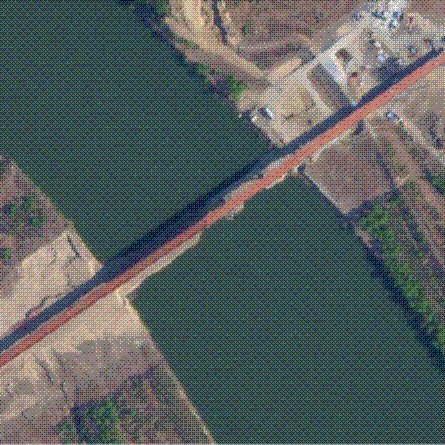
The Korean–Russian Friendship railway bridge across the Tumen River is the key overland link between Russia and the DPRK, and it has effectively remained the only functioning rail crossing between the two states since it was put into operation in 1959. Its significance lies not in the size of the structure but in the fact that it connects the Russian rail network with the North Korean line running to the Tumen River and onward to the port of Rason. This creates a unique logistics channel.
The bridge sits on a short stretch of the Russian–North Korean border, roughly 17 km long. Transport infrastructure is concentrated in a narrow corridor around the border stations of Khasan on the Russian side and Tumangang on the North Korean side. On the Russian side, the crossing is tied to Khasan station in the urban-type settlement of Khasan and to the access rail spur that brings cargo up to the border. This part of Russia is sparsely populated, and Khasan is the only settlement for kilometres around.
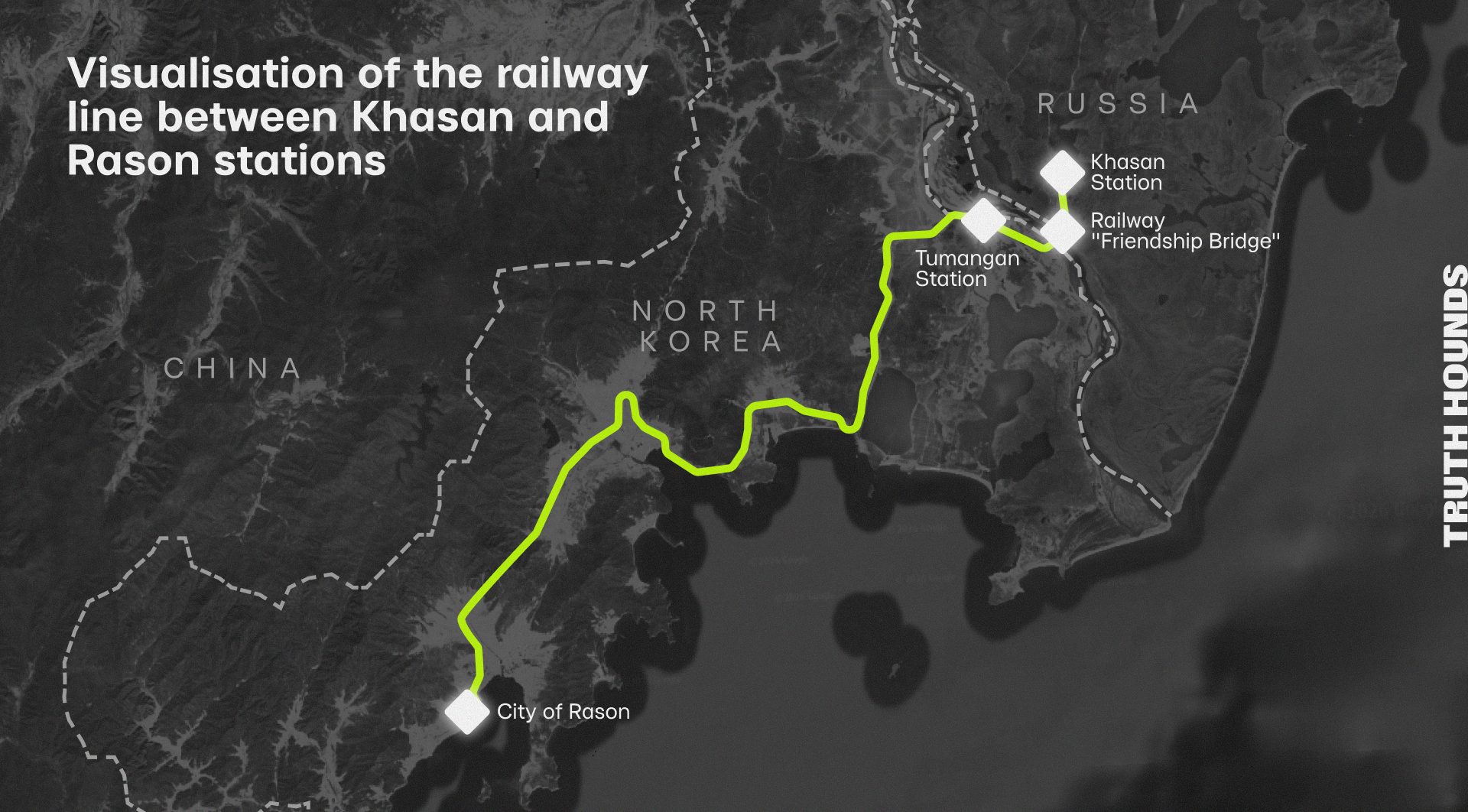
The key technical challenge of this crossing is the difference in rail gauge between Russia and the DPRK: 1,520 mm and 1,435 mm, respectively. That is precisely why international services are operated via double or shared tracks, rather than via conventional through services. In other words, two sets of rails — Korean and Russian standard — are laid in parallel along this section. The bridge is about 800 m long, and the mixed-gauge line continues for a further 54 km or so to the port of Rason. A train that leaves Russia and crosses the bridge can therefore only reach Rason; to travel across the rest of the country’s rail network its wheelsets must be changed, while trains from the DPRK can likewise go no further than Khasan station.
This means that the efficiency of the crossing depends not on the bridge alone, but on the supporting infrastructure, shunting capacity, transshipment facilities and controls at both ends of the route.
Visualisation of the railway line between Khasan and Rason stations. Graphics by Truth Hounds
From the 2018 Agreements to the Start of Construction
Talks about building a road bridge to connect the two countries went on for a long time, and in 2018–2019 the sides reached an agreement. From 2018–2019 the design documentation was drawn up and both countries agreed on the technical parameters of the project [1]. Problems began with the COVID-19 pandemic, however, when the DPRK’s borders were sealed completely and its already infrequent contacts with other countries disappeared altogether. There were notable cases in which, with no transport links to the outside world at all, Russian diplomats and their families left North Korea on a hand-powered rail trolley [2] across the same Friendship Bridge.
Once the pandemic ended and the political situation brought the two countries closer, the idea was revived.
In June 2024 Russia and the DPRK signed a treaty on comprehensive strategic partnership [3], which formally entered into force on 4 December 2024 after ratification [4]. The key outcome of these arrangements was deeper military cooperation — in particular, large-scale deliveries of North Korean weapons to Russia [5], and the deployment of DPRK troops to the fighting in Russia’s Kursk region [6]. In parallel, the two sides concluded an agreement during the June talks to build a new road bridge across the shared border river, next to the existing Russian–Korean Friendship Bridge [7].
The DPRK is known to have begun work in November 2024 [8], and the Russians in mid-December of the same year [9].
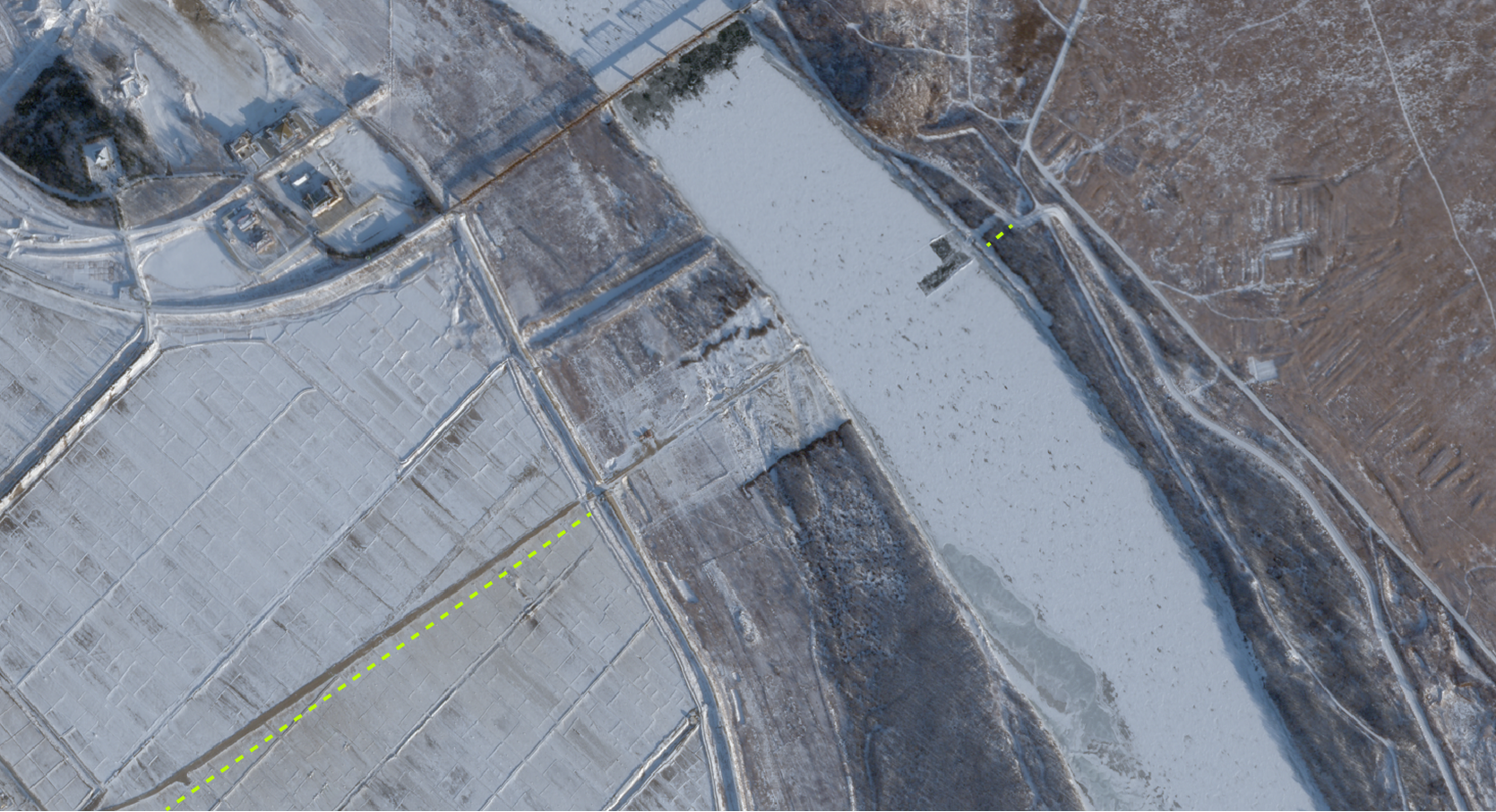
31 January 2025. Graphics by Truth Hounds. Satellite image: Planet
The first results of the project can be seen in satellite imagery from 31 January 2025, less than two months after the treaty was ratified. Newly built roads leading to the site of the future bridge are already visible on both sides. The Russians had also cleared the trees that were in the way. The roads stand out because they are free of snow, which means they were in active use — this is more pronounced on the Korean side, since construction there started earlier.
On 29 April 2025, a ceremonial launch of construction took place with Russian Prime Minister Mikhail Mishustin attending by video link [10]. Technical details of the structure also emerged. The total length of the bridge including approach roads will be 4.7 kilometres. The bridge itself is 1 kilometre long, of which 424 metres are being built from the Russian side and 581 metres from the North Korean side. The bridge is 7 metres wide with two lanes of traffic planned [11].
The Contractor and Its Owners
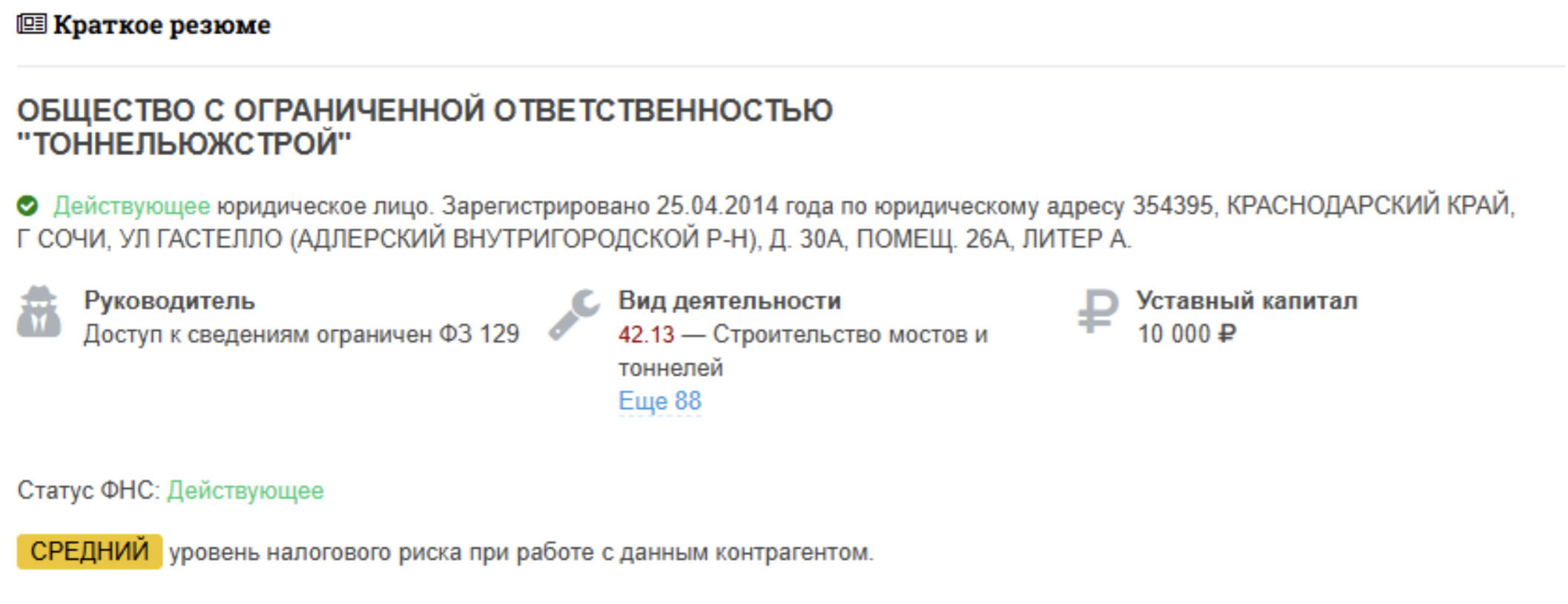
The contract to build the road bridge went to a dubious company, LLC TonnelYuzhStroy [12]. The firm has been loss-making for three years running, and its financial indicators clearly do not match those of an organisation capable of winning a tender for such an ambitious project. Its net assets at the end of 2023 stood at 223 million roubles, against accounts payable of 154 million roubles. Its revenue in 2022 and 2023 came to just 194 thousand roubles [13]. The company’s charter capital is 10 thousand roubles, and in 2023 it employed a total of four people. As of 2023 the firm was a defendant in 20 commercial court claims worth around 60 million roubles and was subject to 14 enforcement proceedings [14].
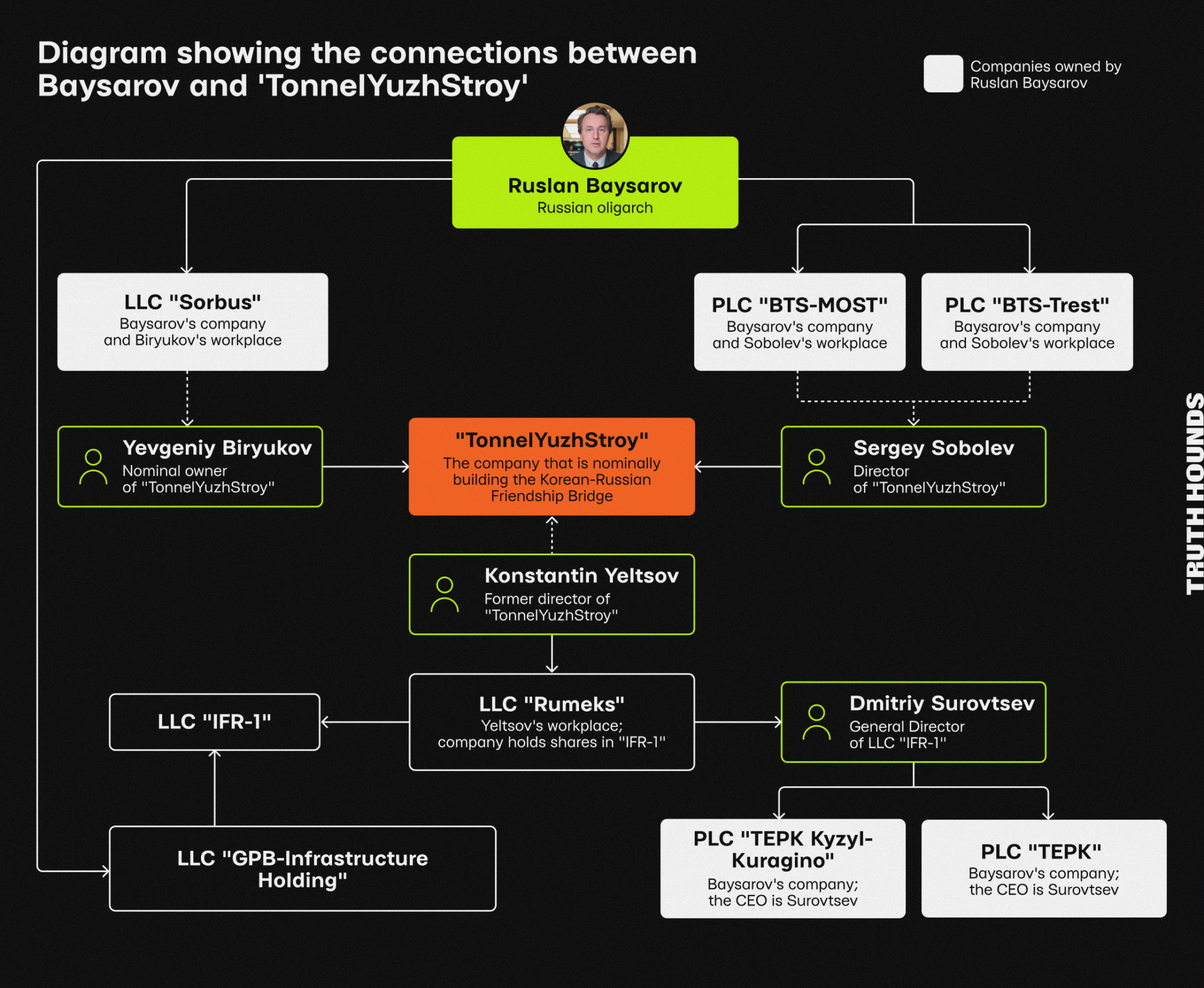
The firm is believed to be a front, with the bridge actually built by the oligarch Ruslan Baysarov [15]. The company’s nominal owner is Yevgeny Biryukov [16]; according to open registries he worked at the private security firm LLC Sorbus [17], founded by Ruslan Baysarov [18]. TonnelYuzhStroy’s listed director is Sergey Sobolev [19], who also worked at Baysarov’s companies — PLC BTS-MOST and PLC BTS-Trest [20]. The ownership and CEO details were later removed from the registries [21].
Information relating to the management and beneficiaries of 'TonnelYuzhStroy' has been removed from public registers
Another figure linking Ruslan Baysarov to the construction company is Konstantin Yeltsov, who headed TonnelYuzhStroy before moving to LLC Rumeks in 2024 [22]. Rumeks holds a stake in LLC IFR-1 [23], whose general director was Dmitry Surovtsev [24] – who simultaneously held the same post at two companies owned by Ruslan Baysarov, PLC TEPK [25] and PLC TEPK Kyzyl-Kuragino [26],[27]. LLC IFR-1, either directly or through its parent company LLC GPB-Infrastructure Holding [28], also frequently works on the same projects as companies owned outright by Baysarov [29],[30].
Diagram showing the connections between Baysarov and 'TonnelYuzhStroy'. Graphics by Truth Hounds
Baysarov himself is the beneficial owner of the large BTS-MOST group of companies, which brings together a number of manufacturing and design firms and has extensive experience in major infrastructure projects. These include bridge construction in the Russian Far East and cross-border bridges linking Russia and China [31].
Baysarov also occupies a prominent place in the business circles of the Chechen Republic. He is known as one of the key businessmen connected to Ramzan Kadyrov, the region’s current head. Baysarov is sometimes described as Kadyrov’s “wallet”, a label that underlines his role in the financial affairs of the Chechen government [32].
In 2022 Baysarov was placed under UK sanctions as a person benefiting from the Russian government through ownership of a company operating in strategic sectors [33].
In January 2024 he held a one-on-one working meeting with Putin, during which they discussed the construction of bridges, tunnels and road infrastructure [34].
Under the contract, the bridge is to be commissioned by the end of 2026 [35],and the contractor is currently on schedule. Around 70 workers are employed on the Russian side [36], after a year of intensive work they erected the main structure, and on 21 April 2026 the bridge’s closure ceremony was held [37].
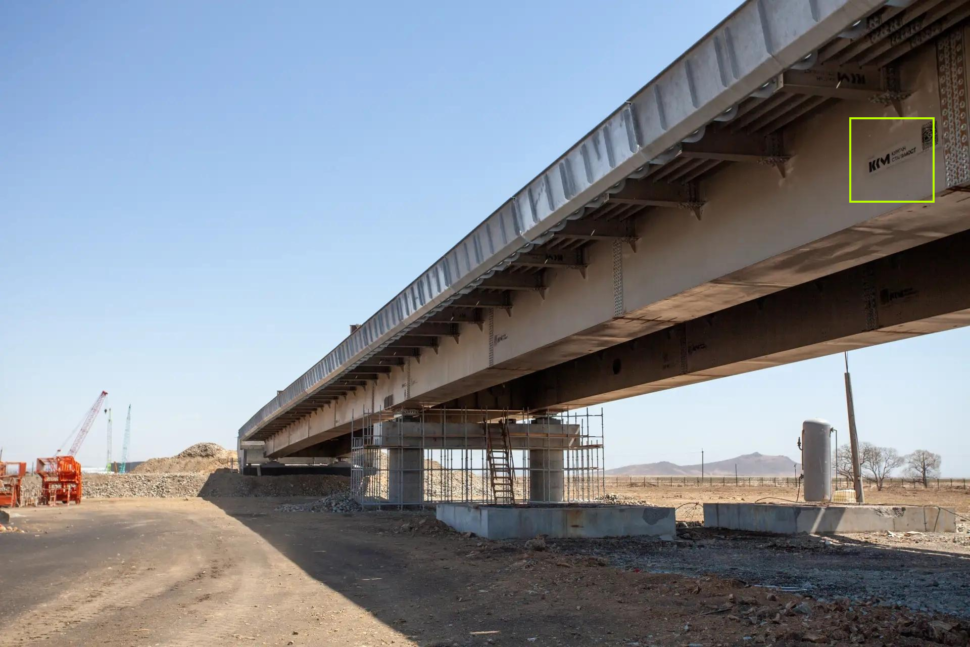
The subcontractor’s logo. A photograph from the bridge joining ceremony on 21 April 2026
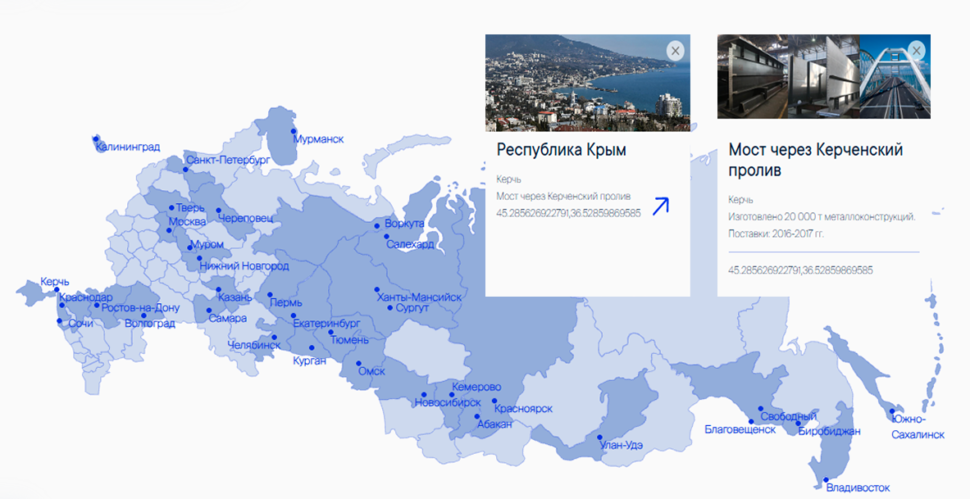
Photographs from the ceremony made it possible to identify another company involved. A logo on the structures points to the subcontractor ZAO KurganStalMost, a Russian industry leader that previously produced steel structures for the Crimean Bridge. The company is headed by Dmitry Paryshev, a member of Putin’s United Russia party.
Map of projects in which ‘KurganStalMost’ was involved
Construction Progress from Satellite Data
Recent satellite imagery allows a closer look at the bridge and the surrounding area. It shows the progress made compared with earlier stages of construction.
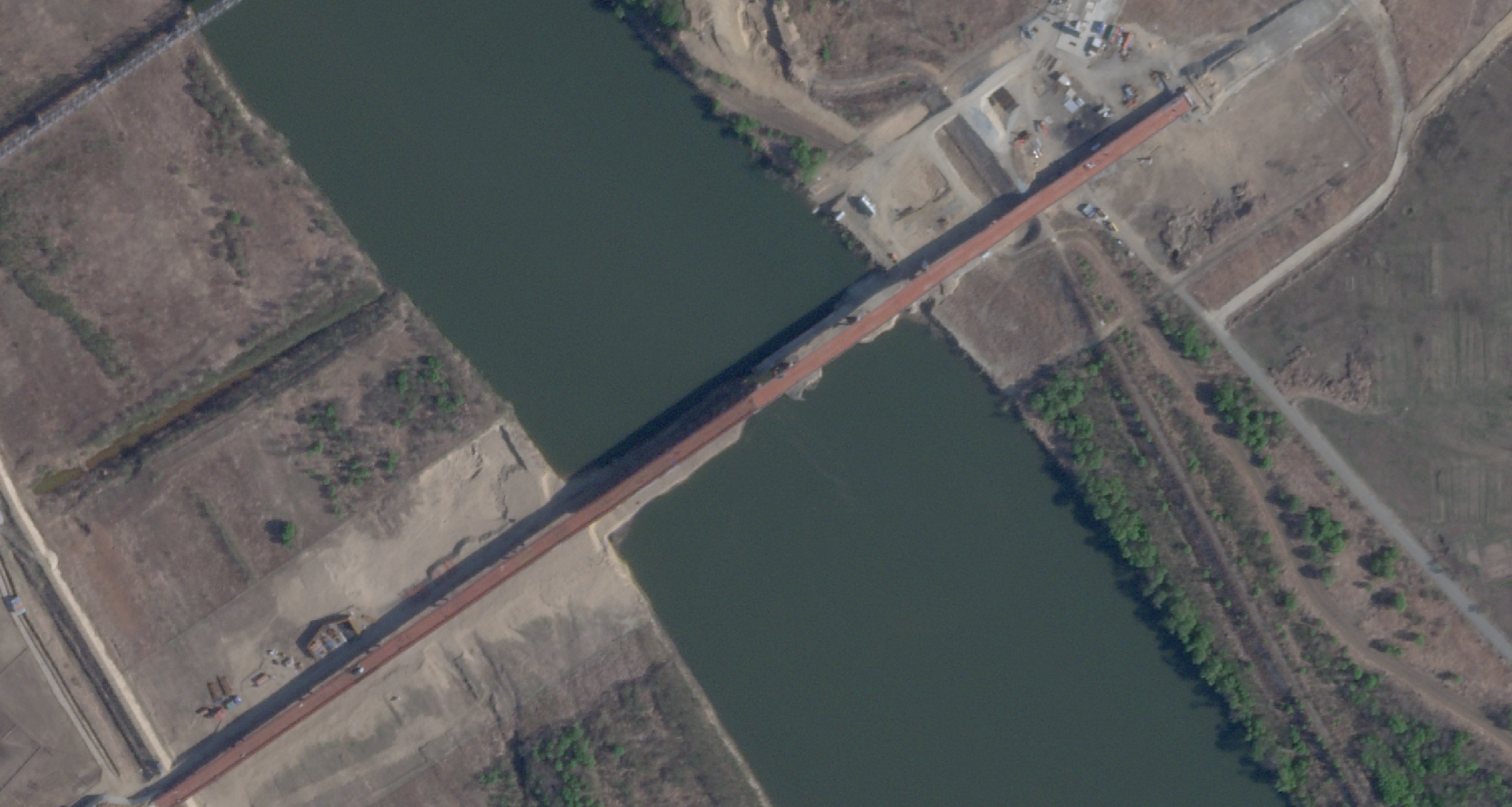
22 April 2026. Satellite image: Planet
The main structure is clearly already complete, but it is also apparent that the approach roads on both sides are unfinished and that the bridge has no asphalt surface yet.
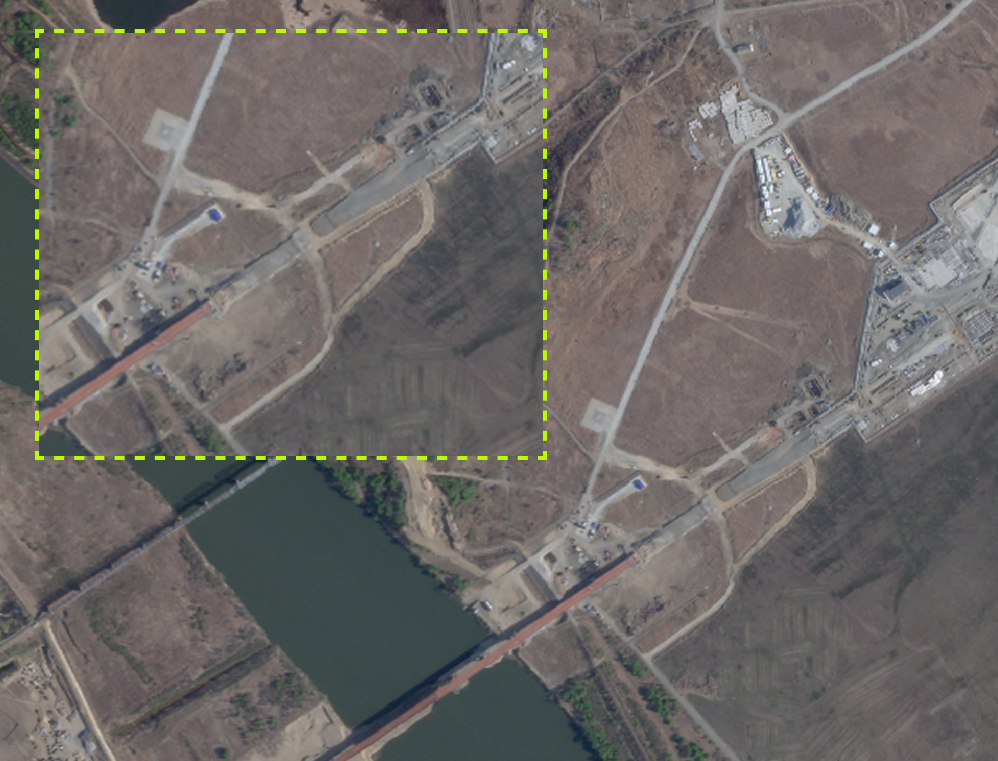
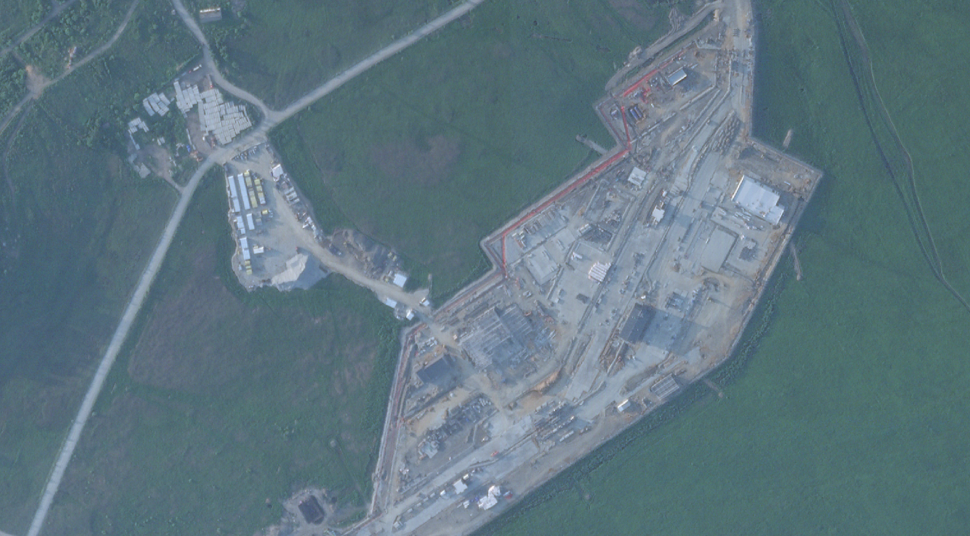
Looking at the adjacent area in the same image of 22 April 2026, a large amount of machinery and building materials is visible on the Russian side, together with a completed helicopter pad and an unfinished road leading to the customs checkpoint.
22 April 2026. Graphics by Truth Hounds. Satellite image: Planet
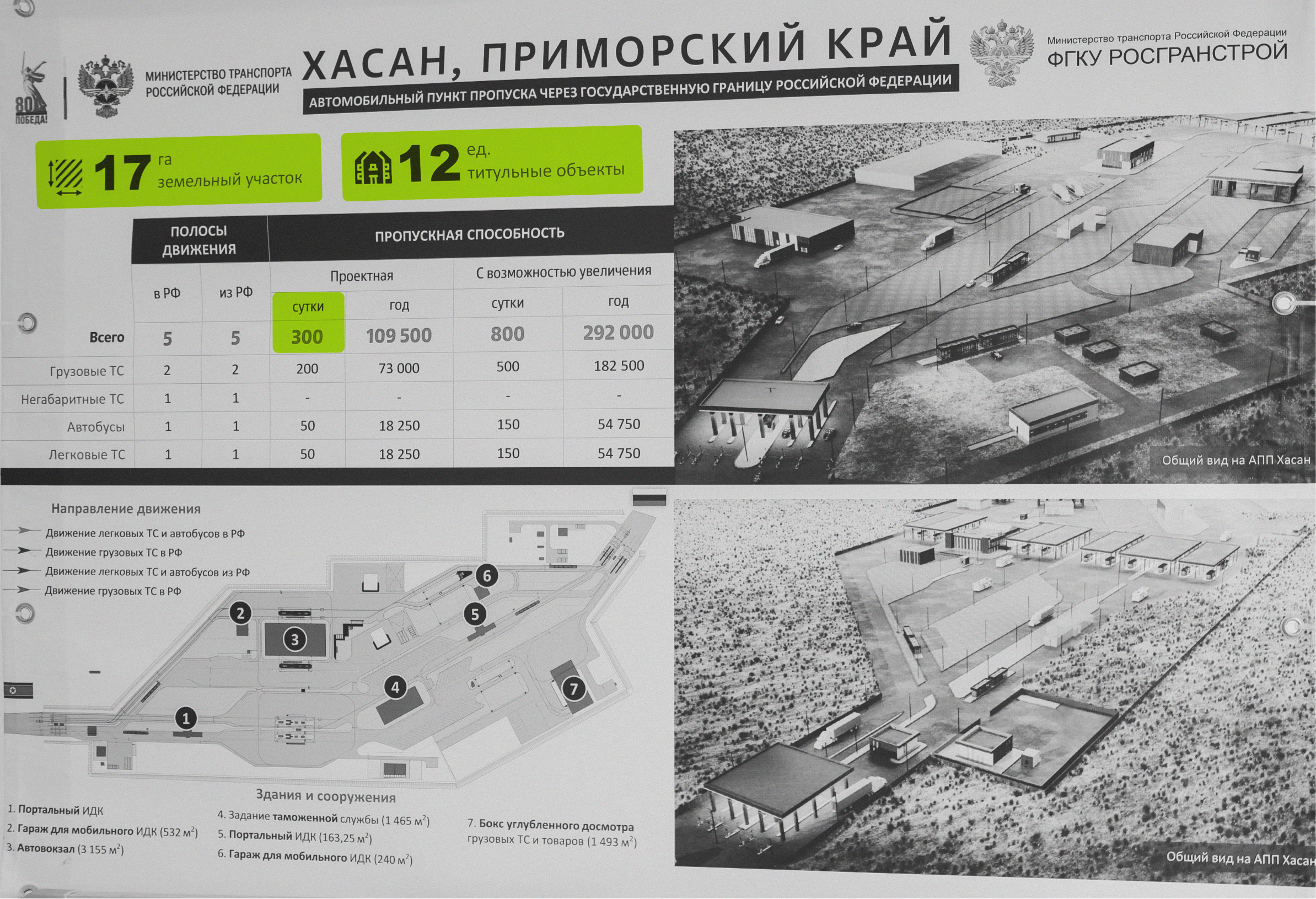
Beyond the bridge itself, the project [38] provided for the supporting infrastructure: the Khasan road border checkpoint. It is designed to cover 17 hectares and contain 12 modular buildings capable of processing 300 vehicles a day.
The planned layout of the 'Khasan' border crossing point [39]
The 22 April 2026 image shows that the checkpoint is already under active construction: some buildings have been erected and large quantities of building materials are stored nearby. On 8 April 2026 it was announced that the checkpoint was 40 per cent complete [40].
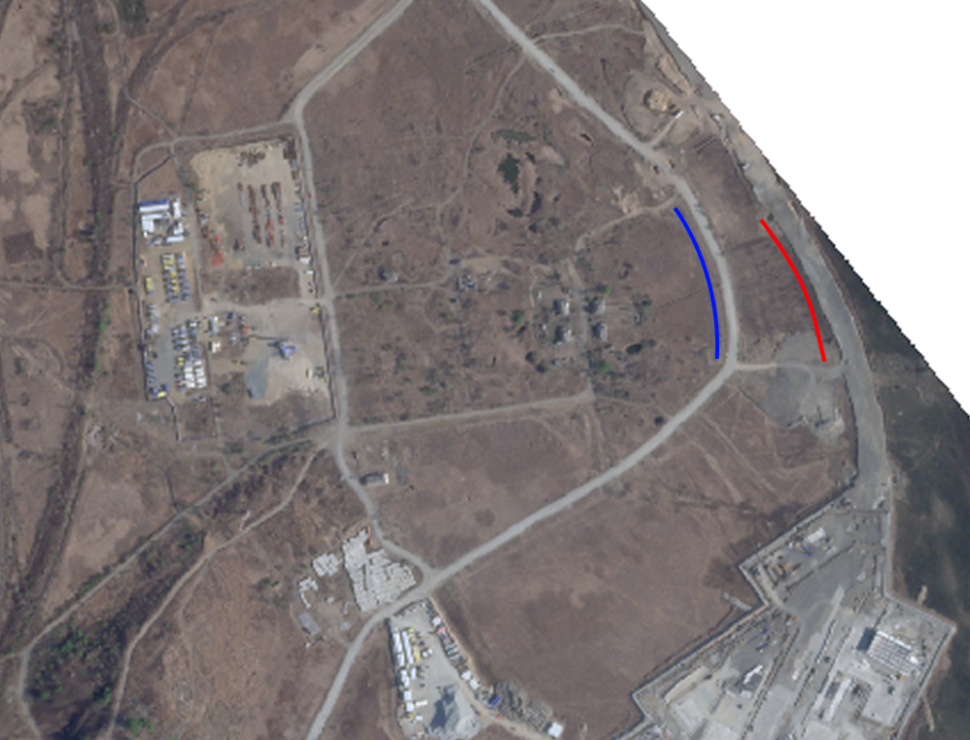
A new road has also been run to the checkpoint, considerably wider than the existing one; the checkpoint itself is stated to be ten lanes wide [41].
The existing road (blue) and the new one (red), 22 April 2026. Graphics by Truth Hounds. Satellite image: Planet
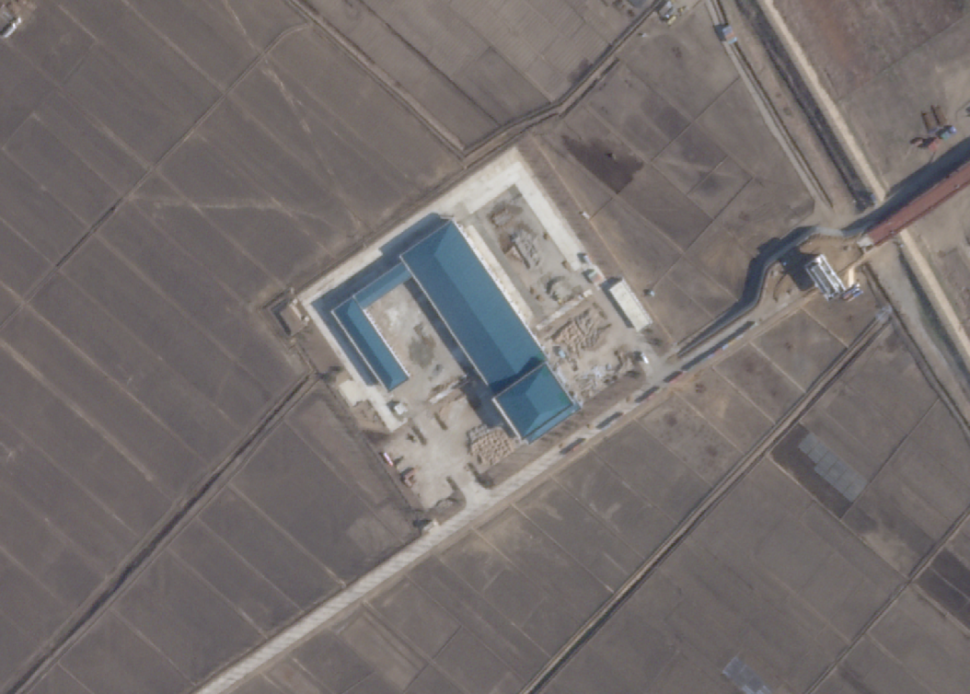
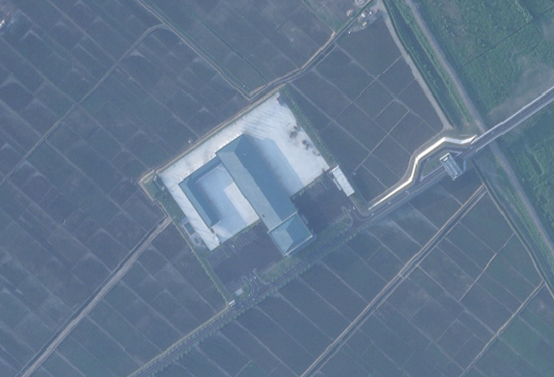
Infrastructure is being developed on the Korean side of the river as well, though on a far more modest scale. Work continues there on a similar but much smaller checkpoint.
A border crossing on the Korean side of the river, 22 April 2026. Satellite image: Planet
Imagery from 30 June 2026 shows further progress. The bridge now has an asphalt surface, and the Korean checkpoint looks all but finished: the car park has been laid out, asphalt roads have been built, and the previously depicted building materials are now absent.
A border crossing on the Korean side of the river, 30 June 2026. Satellite image: Planet
Because the Russian checkpoint is several times larger, it requires far more time to build and, unlike the Korean one, remains a long way from completion. Progress is nonetheless obvious and work is proceeding at a brisk pace. Building materials, cranes and vehicles are visible across the whole site – all of which points to a high intensity of work.
Compared with the 22 April image, some buildings have been completed and work has started on new ones. Tellingly, the volume of building materials has noticeably decreased since the earlier image – further evidence that construction is moving steadily forward.
A border crossing on the Russian bank of the river, 30 June 2026. Satellite image: Planet
Economic Rationale and Military Significance
The bridge’s future is highly ambiguous. On the one hand, the media and Russian officials write about expanding trade cooperation [42] between the two countries and about the DPRK’s wish to develop tourism in its northern regions, particularly in the city of Rason [43].
Both claims invite scepticism. Tourism into the DPRK is heavily restricted and cannot grow quickly given the country’s closed nature. Those who do venture to spend a holiday there are drawn not to mountains or the resort town of Rason but to the singular atmosphere of Pyongyang, a city sealed off from the world and unlike anywhere else. The capital lies 700 kilometres from the border, and few are likely to choose to cover that distance by car.
Trade links between the two countries are equally unimpressive in scale. In 2023 bilateral trade amounted to 23 million USD. For comparison: setting aside Ukraine and the European countries where trade with Russia has collapsed or ceased because of the war, Mongolia is the smallest trading partner among Russia’s remaining neighbours. In 2024 trade between Russia and Mongolia came to 2.9 billion USD – still two orders of magnitude higher than trade with the DPRK [44]. Even Russian figures have voiced doubts about the project’s economic rationale. The former Russian diplomat Georgy Toloraya, for instance, said he was not confident the bridge would pay for itself, as it would lack traffic [45].
The same happened with the Khasan–Rason rail line, which never reached full capacity despite being modernised.
The conclusion is that the road bridge is first and foremost a geopolitical statement declaring the two countries’ rapprochement. The project sprang to life only once the Kremlin found itself in international isolation following the full-scale invasion of Ukraine. Economic calculation gave way to acute military and political need. Road transport, unlike rail, is far harder for open-source investigators to track by satellite. A flow of trucks makes it possible to move specific cargoes quickly and flexibly without assembling conspicuous rail convoys.
In light of the strategic partnership treaty signed by Russia and the DPRK, the bridge therefore becomes a direct artery for moving North Korean troops, construction brigades and military officials into Russia, with Russian technology and resources flowing in the opposite direction.