
Read in Ukrainian
On 3 September, Truth Hounds and Project Expedite Justice (PEJ) presented the findings of their joint report, Organised Cruelty: Russia’s Network of Unlawful Detention and Torture in Kharkiv Region. The report documents repeated instances of torture and ill-treatment in a network of places where civilians were unlawfully detained.
Organized Cruelty: Russia’s Detention and Torture Network in Kharkiv Oblast
Based on 114 testimonies from survivors and witnesses, documentary evidence, and open-source investigations, the report analyses the establishment and functioning of this system of detention and torture. The evidence reveals recurring patterns across 29 identified places of torture, including common structural and organisational features, staff selection and organisational practices, interrogation methods, and techniques of torture.
The event was moderated by Maryna Slobodianiuk, Training and Strategic Projects Coordinator at Truth Hounds. In her opening remarks, Maryna spoke about the background to the report.
“On 20 September 2022, a team of Truth Hounds documenters went on their first mission to the recently liberated areas of Kharkiv region. We documented the traces of the occupation – killings, shelling, the shooting of cars, looting and attacks on cultural heritage. During the five-day mission, we found information about 80 people who had been subjected to enforced disappearance and torture. There were then around 10 more documentation missions to the region. Based on these missions, the number of people who had been held in places of unlawful detention was estimated at around 800. We worked with this body of information in the case of Volodymyr Vakulenko, while preparing a submission to the German prosecutor’s office, and in cooperation with the official investigation. But we realised that this was only part of the information and that it required a different approach.”
– Maryna Slobodianiuk, Training and Strategic Projects Coordinator, Truth Hounds.
Lina Biscaia, Legal and Program Director – Ukraine at Project Expedite Justice, emphasised the scale of the resources and effort invested by the Truth Hounds and PEJ teams in processing the large body of information and identifying patterns of detention.
“It was a huge effort to process all the information, try to identify the patterns, and establish together that there was an organisational structure behind this. And that these were indeed not random incidents. They were planned and organised. We will be very happy to see this contributing to future accountability efforts.”
– Lina Biscaia, Legal and Program Director – Ukraine, Project Expedite Justice.
Ashot Agaian, Project Expedite Justice, spoke about the common patterns identified across the torture sites and the categories of people who were targeted.
“Although the torture sites were located in different parts of Kharkiv region, with some as far as 150 kilometres apart, they nevertheless shared common features, which may indicate that they were part of an organised system. We identified the following common features: 1) organisational – the selection of buildings and the transportation of detainees between torture sites; 2) functional – the division of functions between main and transit torture sites; 3) personnel-related – the division of responsibilities among the occupying forces; and 4) torture methods – beatings, electric shocks and sexual violence.”
– Ashot Agaian, Project Expedite Justice.
Read in Ukrainian
Truth Hounds compiled this
report with the support of our donor.

This publication was produced with the generous support of the Howard G. Buffett Foundation. Its contents are the sole responsibility of Project Expedite Justice and Truth Hounds.
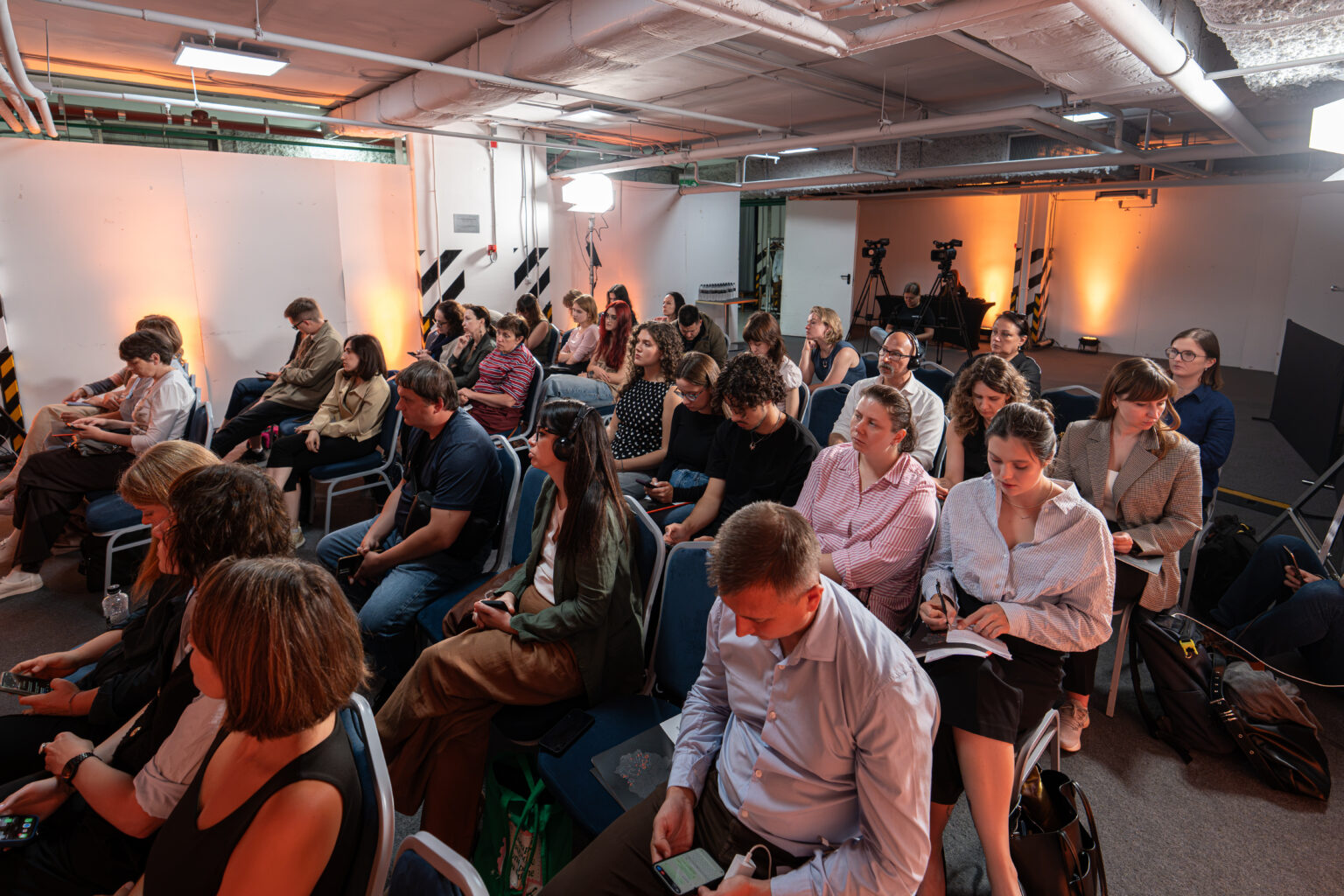
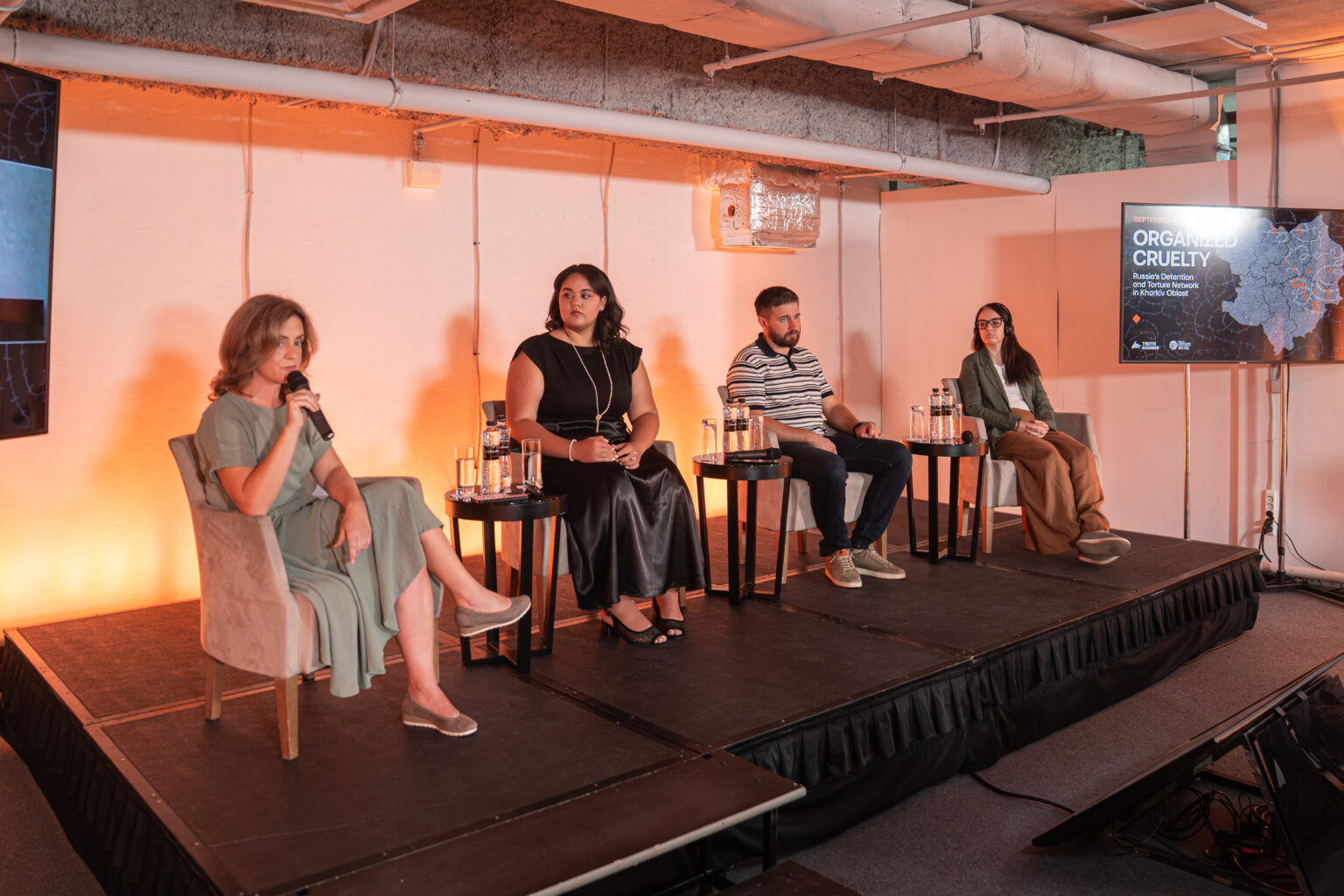

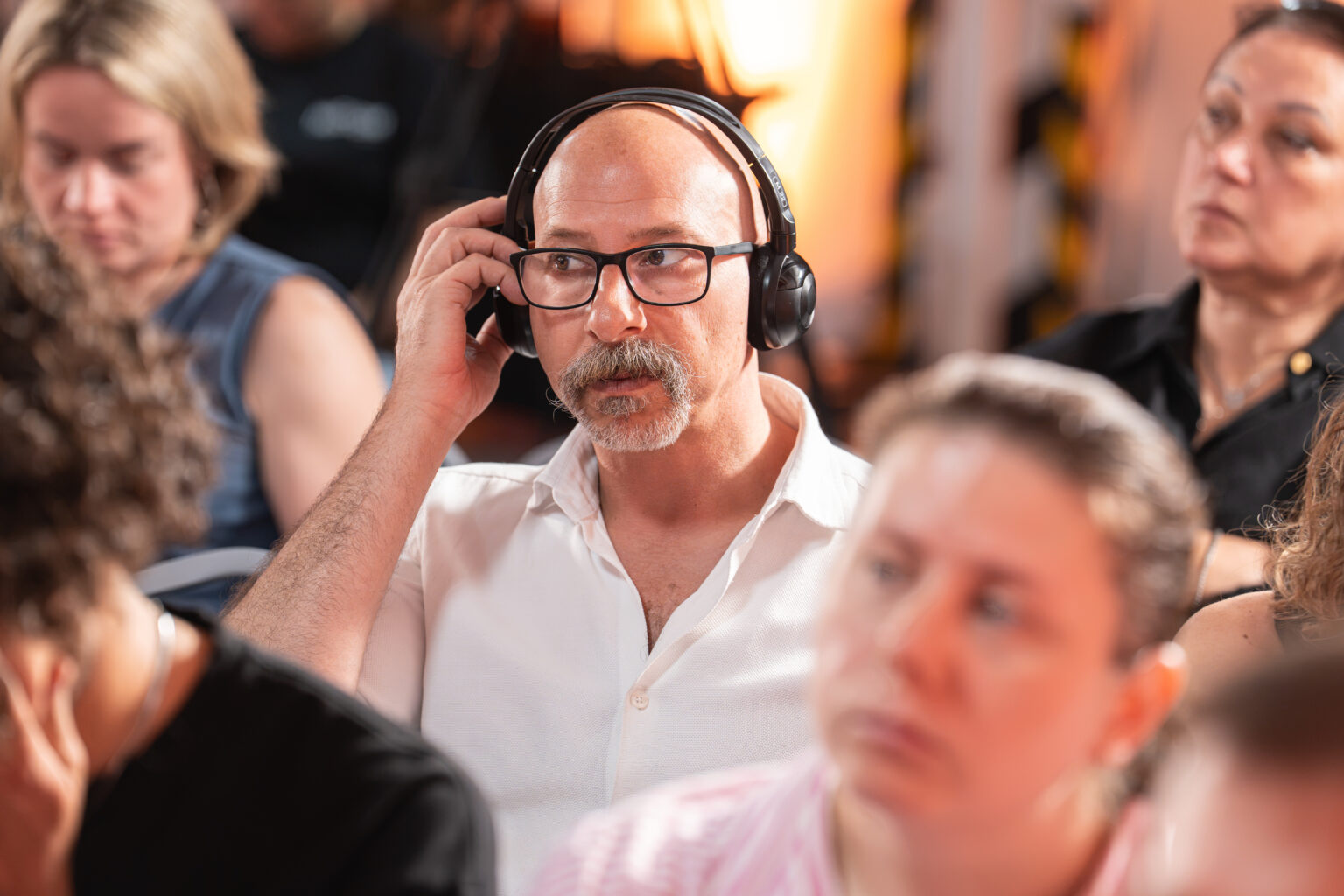
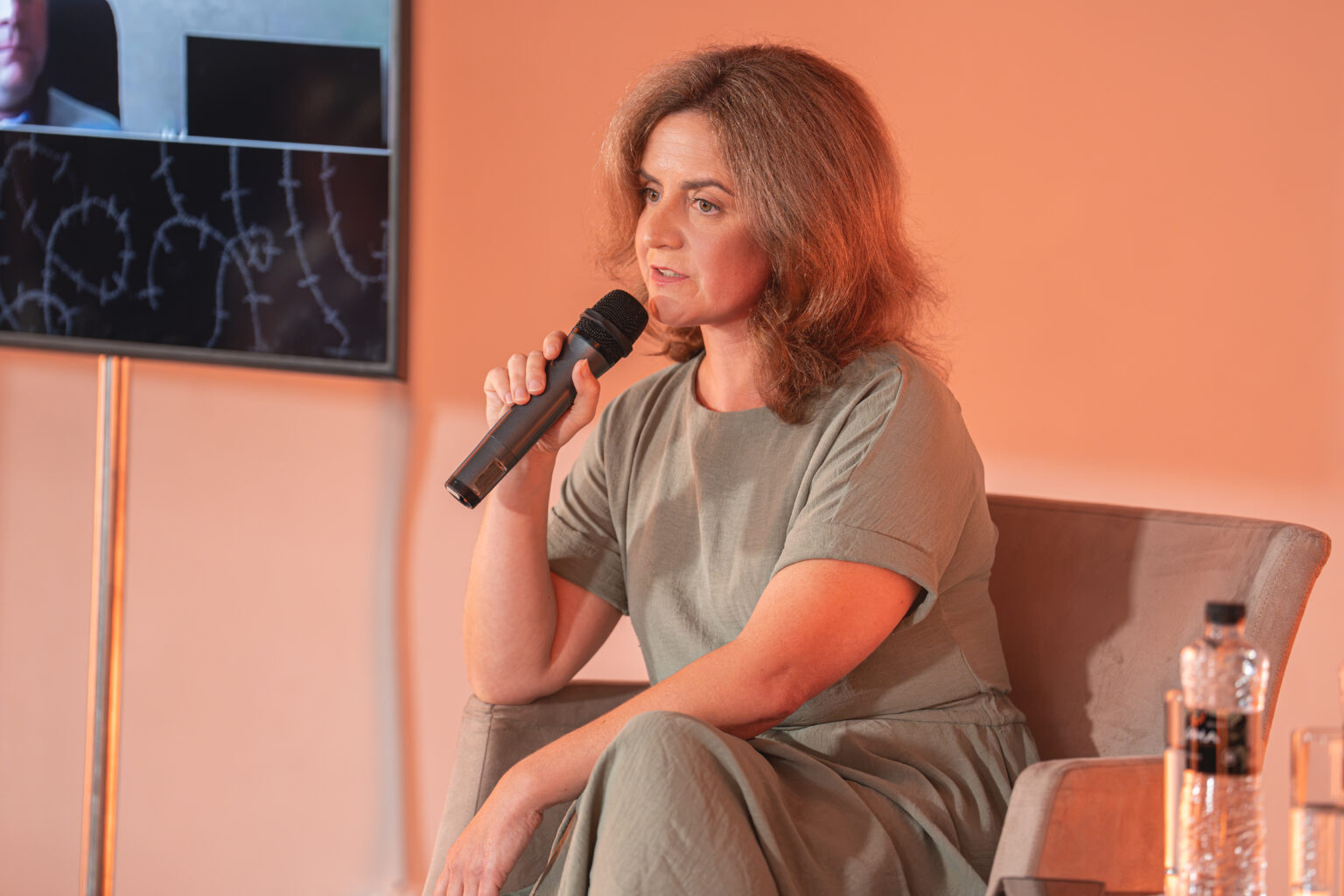
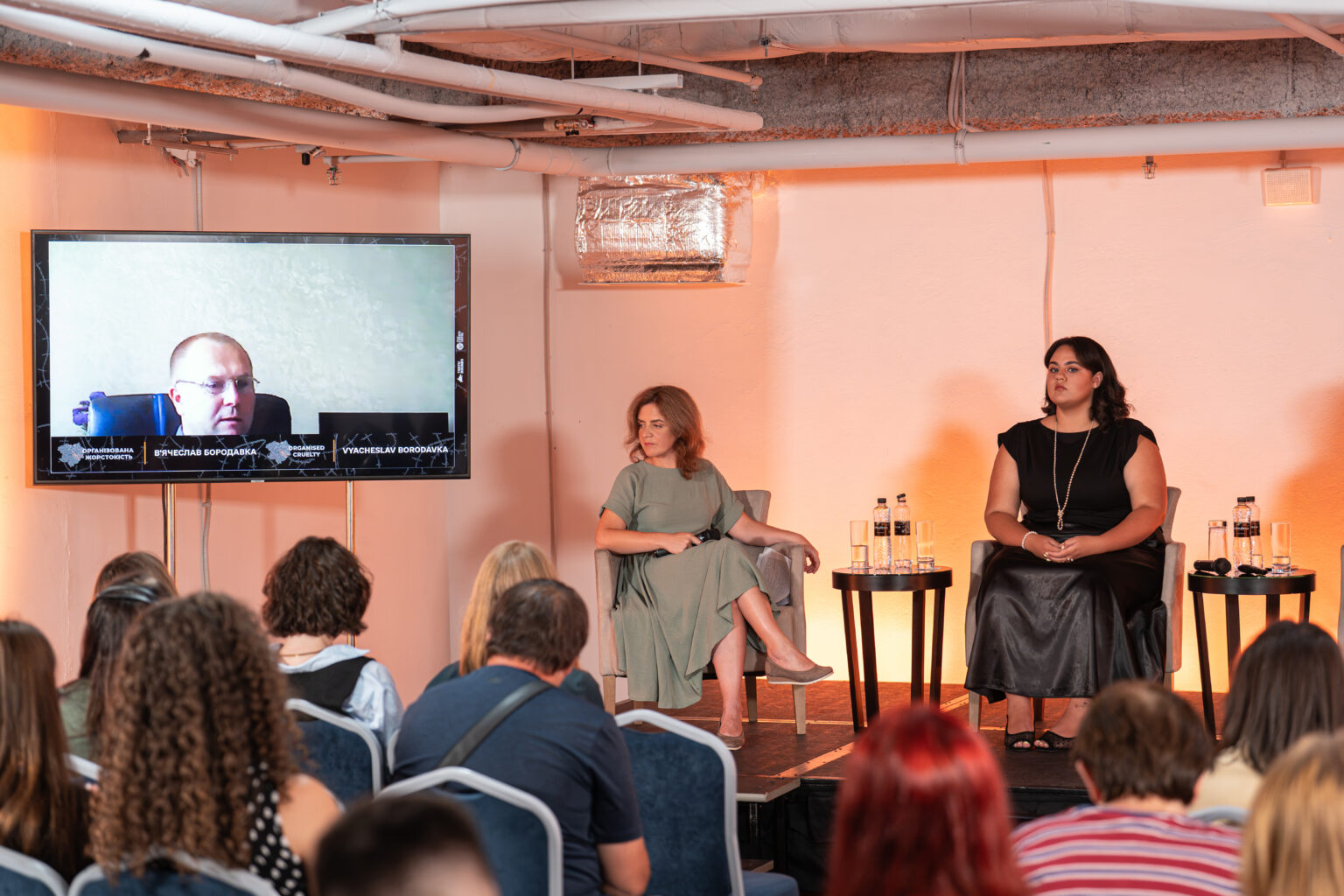


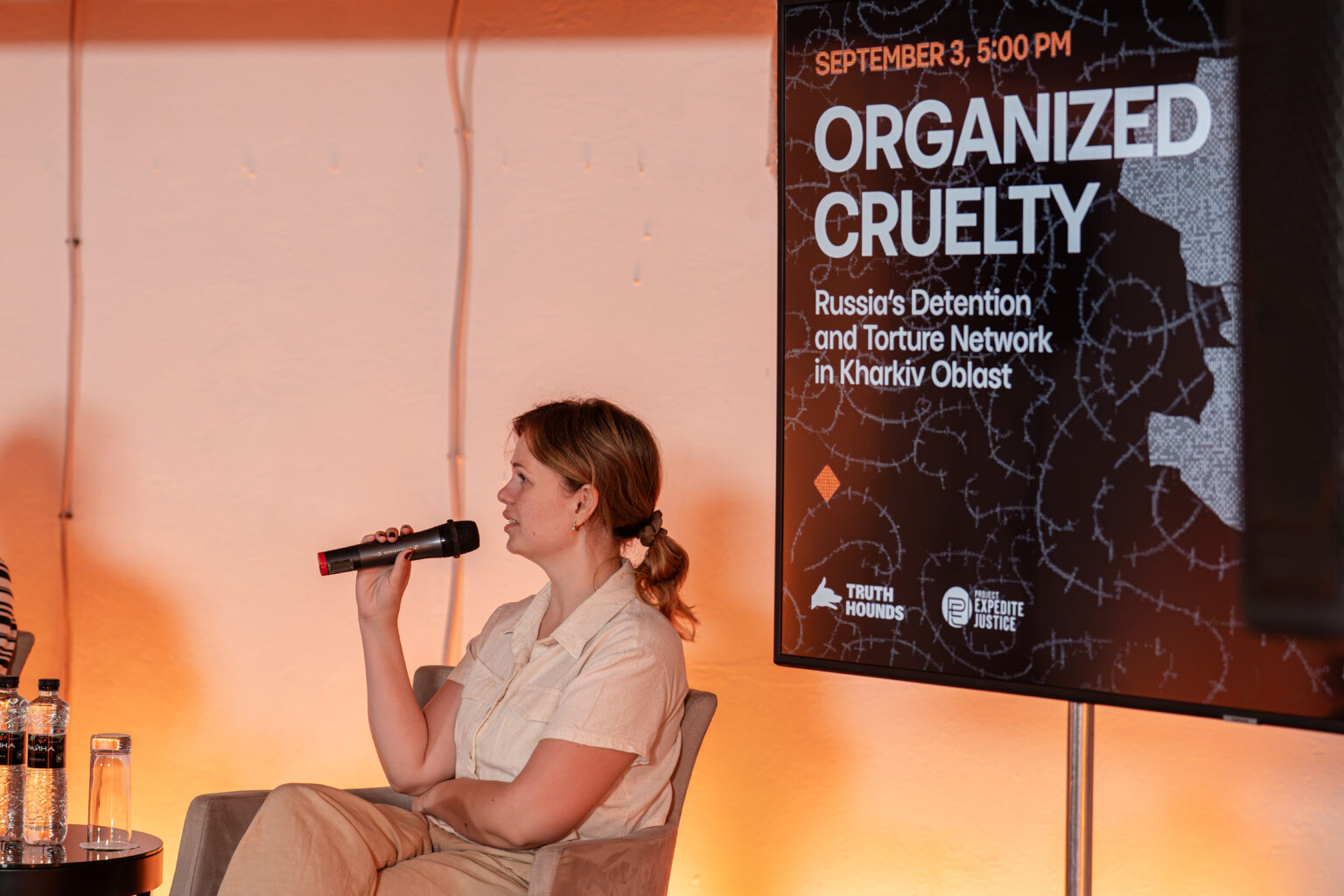
Photo: Anton Fedorov
Based on the testimonies collected, we identified several categories of civilians who were targeted by Russian forces. These included men of conscription age; veterans and their family members; people suspected of “sabotage” or being “spotters”; representatives of the State Migration Service and law-enforcement agencies; volunteers; people reported by their neighbours; and those who displayed Ukrainian symbols.
Liliia Lakhnech, Legal Counsel at Truth Hounds, explained the legal significance of the documented patterns, their implications for the legal qualification of the crimes, and the mechanisms available for holding perpetrators accountable. The possible legal qualifications include unlawful deprivation of liberty, torture and sexual violence.
“None of the legal qualifications we proposed excludes the others. All victims were subjected to unlawful deprivation of liberty and torture, while the majority were subjected to sexual violence. All three proposed legal qualifications applied cumulatively and reflected an entire system of methods used against civilians.”
– Liliia Lakhnech, Legal Counsel, Truth Hounds.
The accountability mechanisms we identified include national jurisdiction, universal jurisdiction and the International Criminal Court (ICC).
Spartak Borysenko, Head of the Department for Combating Crimes Committed in Conditions of Armed Conflict at the Kharkiv Regional Prosecutor’s Office, outlined the results of the national investigation, including the number of identified victims and people who have been notified of suspicion, as well as the legal qualifications currently being applied and the prospects for qualifying the crimes as crimes against humanity.
“At present, more than 1,500 people who were subjected to ill-treatment and torture have been identified in Kharkiv region. This is not a final figure, as there are people who have left Ukraine, as well as people who are considered missing in the region. So far, 68 people have been notified of suspicion of committing acts of ill-treatment and torture in Kharkiv region during the occupation in 2022. They include servicemen of the so-called self-proclaimed ‘LPR’ and ‘DPR’, members of the Russian Armed Forces, Rosgvardia, the National Police and the FSB, as well as local residents and Ukrainian citizens who collaborated with the occupation authorities.”
– Spartak Borysenko, Head of the Department for Combating Crimes Committed in Conditions of Armed Conflict, Kharkiv Regional Prosecutor’s Office.
Viacheslav Borodavka, a teacher, civilian detainee and co-organiser of the survivors’ NGO “Vilno Zhyty”, shared his experience of being detained and held at a torture site, as well as his experience of recovery following his release.
“I spoke out in support of Ukraine [at meetings of heads of educational institutions], for which I was detained twice. I was held at the torture site at the Vovchansk Aggregate Plant, where I experienced everything that has been discussed. But the hardest thing was that the cell was next to the ‘torture room’, and we could hear everything. That was the most frightening part. I was released without being taken to Russia. Now, the men who come to our NGO for help include those who have spent more than three years in Russia, and it is horrifying.”
– Viacheslav Borodavka, civilian detainee, co-organiser of the survivors’ NGO “Vilno Zhyty”.
Viacheslav also spoke about his experience of obtaining official recognition as a person deprived of liberty as a result of Russia’s armed aggression against Ukraine, and the difficulties people face in obtaining this status.
Olha Opalenko, Advisor on Interim Compensation at Truth Hounds, spoke about state mechanisms for supporting victims and the problems they face when seeking official recognition of their status. Given the protracted nature of the war and the large number of victims, the number of cases considered by the relevant commission could reach into the thousands.
“Ukrainian Law No. 2010-IX provides for the possibility of obtaining the status of a person who has been unlawfully detained and provides for a range of forms of state support. However, the Commission for Establishing the Fact of Deprivation of a Person’s Personal Liberty as a Result of the Armed Aggression against Ukraine has been subject to significant criticism. Members of the Commission still apply the ‘beyond reasonable doubt’ standard of proof. This means that they require victims to provide evidence that they were held in captivity. As a result, for people who return from detention on their own, outside state-organised exchange procedures, almost all avenues for obtaining this status are closed.”
— Olha Opalenko, Advisor on Interim Compensation, Truth Hounds.
Olha also emphasised that the Commission should collect evidence itself rather than shifting this responsibility onto victims, and should provide reasoned decisions explaining the grounds for refusal, while following a victim-centred approach. She also highlighted the International Register of Damage for Ukraine (RD4U), where applicants are not required to provide evidence or supporting documentation. This is a deliberate choice by the Register and an example of a victim-centred approach.
We would like to thank all the speakers for their expertise, openness and valuable contributions to the discussion, as well as everyone who joined us online and in person.
We would like to express our sincere gratitude to:
- The Howard G. Buffett Foundation for supporting the release of the report.
- Our colleagues at Project Expedite Justice, with whom we collaborated in preparing the report.
- Media Initiative for Human Rights for sharing a number of survivor and witness testimonies with us.
- Lyubov Mykhailova, Mykhailo Hlubokyi, and the Izolyatsia Foundation for their invaluable contribution in preserving and sharing the history of the art platform and its lost artworks.
- Ihor Karamyshev, Head of the Unit at the Main Investigation Department of the National Police of Ukraine, for his contribution regarding the progress of investigations into those allegedly responsible.
- Maksym Filipenko for creating a series of illustrations for the report.
We are grateful to the victims and witnesses for the strength and resilience they have shown in sharing their stories and experiences in support of efforts to restore justice.