
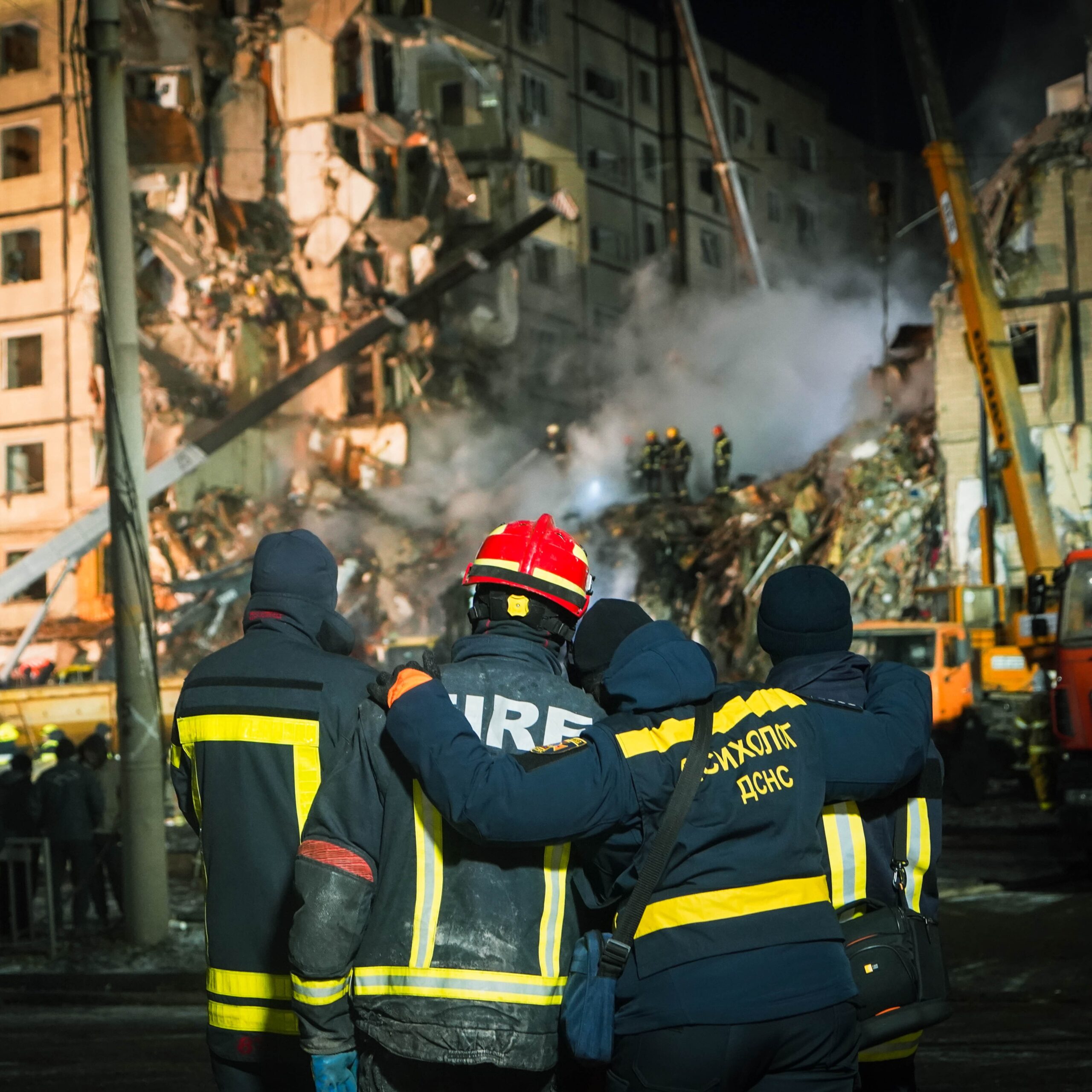
Photo: State Emergency Service of Ukraine, January 14, 2023
Appendix.
Codebook. All Incidents Involving Ukrainian Emergency Responders
This analytical note provides an update to the datasets documenting attacks on emergency responders in Ukraine, initially published as part of the Calculated Harm report. It examines developments over the period from November 2025 to May 2026 and assesses whether, and if so how, trends have changed since the previous reporting period.
Armed Attacks Resulting in Harm to Emergency Responders in Ukraine
Appendix.
Codebook. All Incidents Involving Ukrainian Emergency Responders
The original report documented a sustained pattern of attacks affecting emergency responders, rescue infrastructure, and emergency operations vehicles throughout Ukraine. It highlighted the growing role of drone warfare, the prevalence of double-tap strikes, and the increasing risks faced by emergency personnel operating both near and away from the frontline. This update applies the same methodology and scope to newly collected data, enabling a comparison with short- and long-term trends observed since 2022.
Between November 2025 and May 2026, Truth Hounds identified:
incidents affecting emergency responders, 76% of them occurring in frontline areas¹.
- Two of these incidents resulted in fatalities, and 14 incidents (13%) caused injuries, affecting a total of 56 emergency responders. Overall, at least three emergency responders were killed and 53 were injured.
- 53 incidents (48%) resulted in the destruction or damage of emergency equipment, while 58 incidents (53%) involved damage to fire departments. In general, at least 82 emergency response vehicles and 58 fire stations were reportedly damaged or destroyed.
- 38 incidents were described in the sources as double-tap strikes, meaning that emergency responders were likely targeted after arriving at the scene of an earlier armed attack and beginning their response operations. Drawing on in-depth open-source analysis, we were able to verify 13 such incidents.
Publishing regular updates remains important because attacks against emergency responders continue to evolve. New data not only helps identify emerging trends but also provides insight into how Russian tactics are adapting over time.
¹ Within the scope of this study, frontline areas are defined as those that, according to the Ministry for Development of Communities and Territories of Ukraine, were, at the time of the attack, included in the list of territories where hostilities were being conducted, were ongoing, or could potentially occur. See: Ministerstvo rozvytku hromad ta terytorii Ukrainy (2025), Verkhovna Rada of Ukraine, URL (accessed: 02.05.2026).
Photo: State Emergency Service of Ukraine, January 14, 2023
¹ Within the scope of this study, frontline areas are defined as those that, according to the Ministry for Development of Communities and Territories of Ukraine, were, at the time of the attack, included in the list of territories where hostilities were being conducted, were ongoing, or could potentially occur. See: Ministerstvo rozvytku hromad ta terytorii Ukrainy (2025), Verkhovna Rada of Ukraine, URL (accessed: 02.05.2026).
Calculated Harm: Attacks on Emergency Responders in Ukraine
Methodological Note
The methodology of open-source monitoring and verification is described in detail in the Calculated Harm report. In addition, information on the definition of key terms and the coding of incidents is provided in the Codebook attached as an annex to this analytical note. Several updates to the dataset structure and content should also be noted:
- Raion and hromada columns were added to increase geographic precision;
- A column indicating whether video footage of an attack and its consequences exists was introduced;
- An additional column containing archived links to the relevant footage was added;
- A column indicating whether an attack on a moving emergency response vehicle occurred was added;
- A new category, “Unknown drone (short-range),” was added to the “Weapons” column;
- Two incidents from the previous reporting period (from 24 February 2022 to 31 October 2025) that were newly identified through open-source monitoring were added to the previous version of the dataset.
Trends Over Time
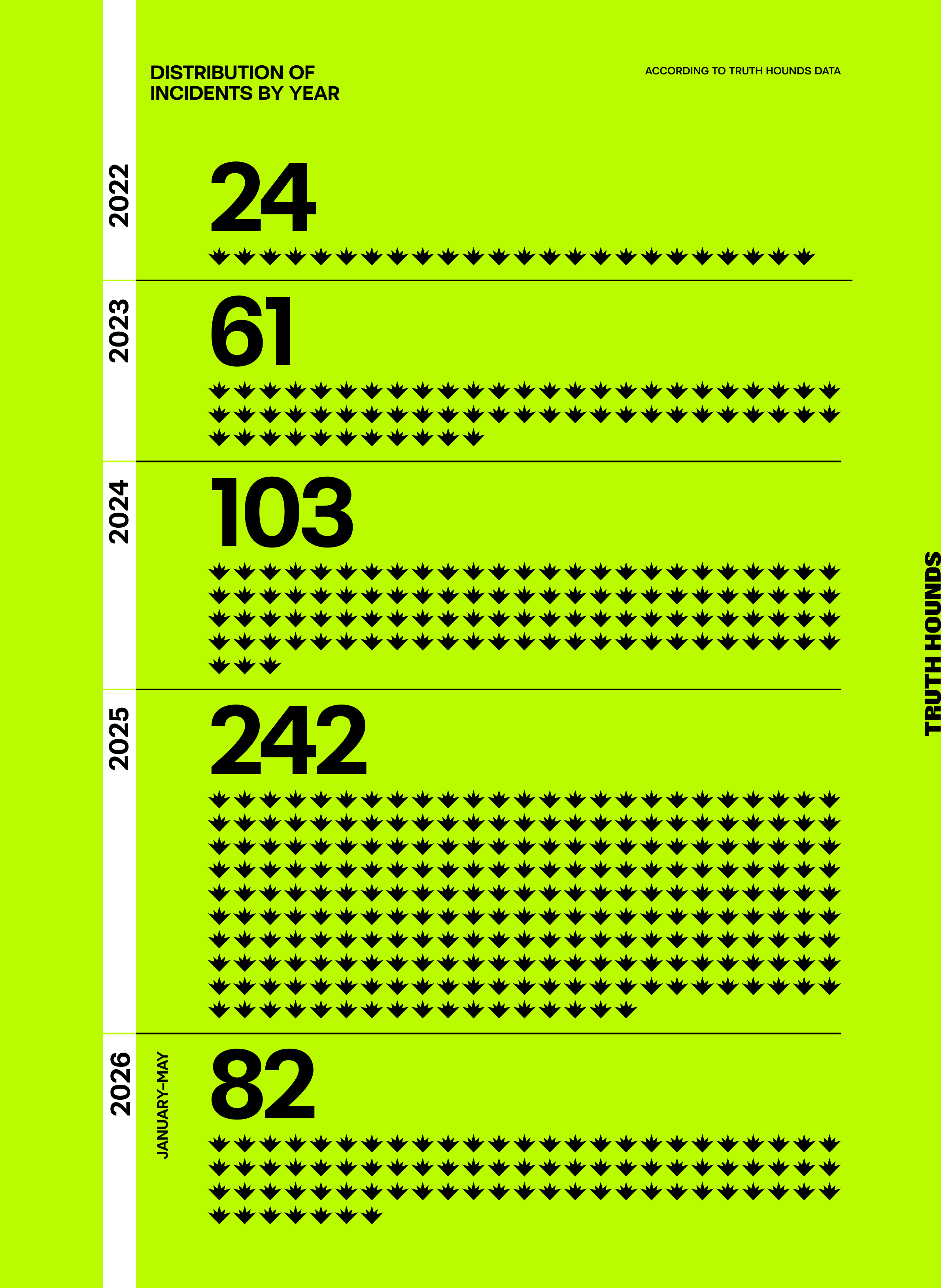
From November 2025 to May 2026, 109 incidents of attacks affecting emergency responders were recorded. By comparison, during the same period in 2024–2025, 76 such incidents were identified through open-source analysis using the same methodology. This suggests that attacks causing harm to emergency responders in Ukraine continue to represent a persistent pattern.
At the same time, comparing the current reporting period with the preceding seven months (April–October 2025), during which 180 incidents were recorded, indicates a decline of almost 40%. The reasons for this decrease require further assessment. However, it should be noted that the second half of 2025 saw the highest number of recorded incidents affecting emergency responders since the beginning of the full-scale invasion and may therefore represent an exceptionally intense period of targeting.
Geography
76% of all documented incidents occurred in frontline areas, which is the continuation of the trend observed in the latest report. Most affected were Dnipropetrovsk (29 incidents), Donetsk (19), Zaporizhzhia (14), Kherson (12), Kharkiv (11), and Sumy (11) Oblasts. At the local level, the city of Kherson experienced the highest number of incidents, with nine documented cases, followed by Mykolaivka (Donetsk Oblast) and Nikopol (Dnipropetrovsk Oblast) with six incidents each.

Although frontline regions continue to account for the majority of attacks, incidents occurring further away from active combat zones have become more common.The share of such incidents increased from 8% in 2024 to approximately 12% in 2025. In 2026 to date, 7 incidents were recorded in locations relatively distant from the frontline, including in the city of Kyiv and in Kyiv and Poltava Oblasts. Three of these incidents occurred in May alone. This represents a concerning trend that may indicate a further expansion of the geographical reach of attacks on emergency responders.
Weapons
Drones remain the most common weapon used in incidents resulting in harm to emergency responders. Of the 109 recorded cases, 78 (over 70%) involved UAVs (both short-range and long-range).
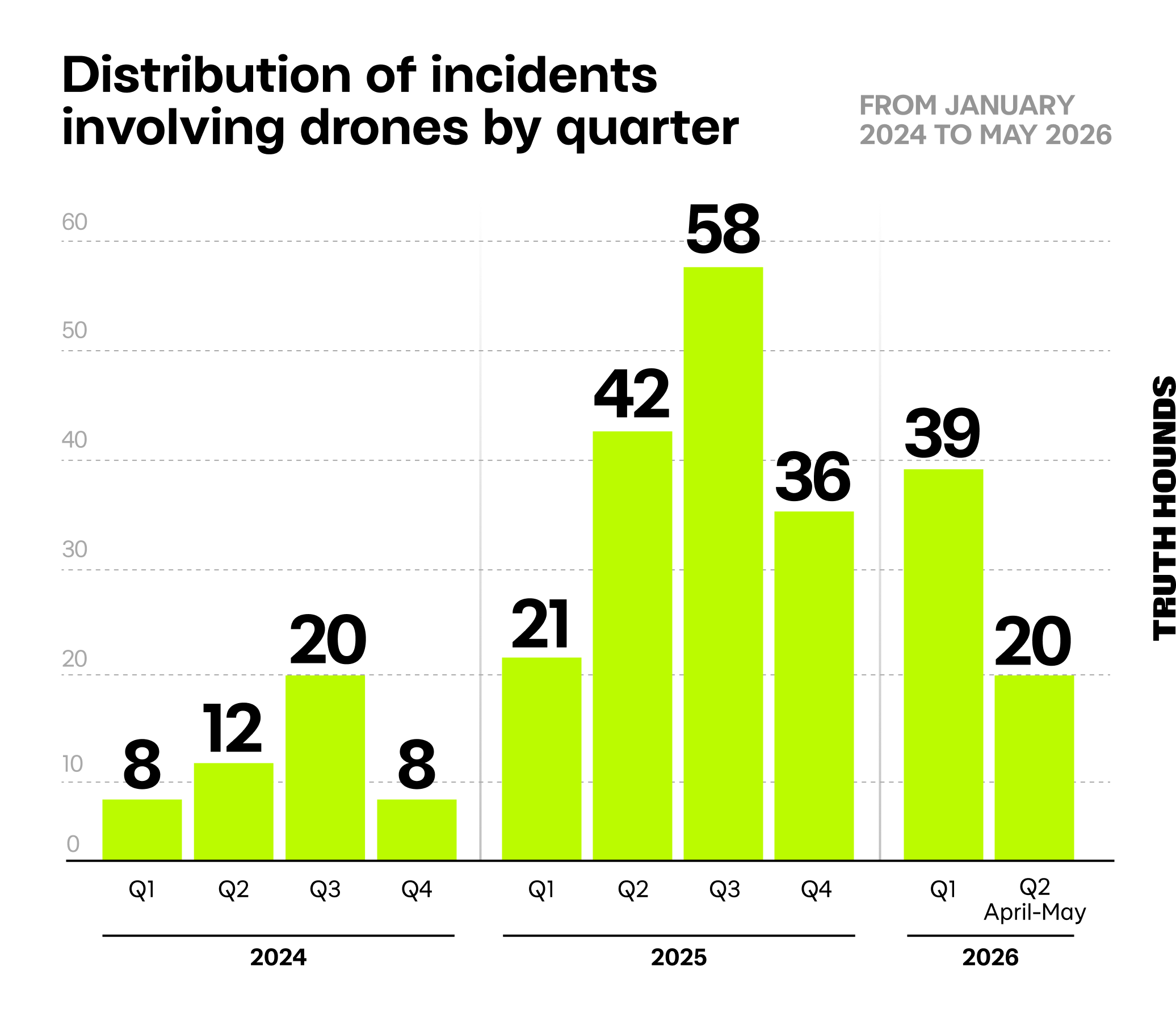
The widespread use is particularly pronounced in relation to short-range drones: between January and May 2026, 27% of all incidents involved short-range drones, which is similar to the same period a year earlier. This observation is noteworthy, as the technical characteristics of such systems, namely a high degree of operator control and the availability of live video feeds, may make it more plausible to infer that attacks on emergency responders were intentional².
² More information on how the use of short-range drones may be applied in the assessment of intentionality is available in the Calculated Harm and Killzone reports by Truth Hounds.
Zaporizhzhia, 14 December 2025
On 14 December 2025, Russian forces launched a series of five first-person view (FPV) kamikaze drone strikes against Zaporizhzhia, a frontline city in southeastern Ukraine, at that point located approximately 30 kilometres from the line of contact. The attacks occurred between 10:19 and 10:50 and included a probable double-tap strike in the city’s Khortytskyi district. No potential stationary military objectives that could have justified the initial strike were identified in the vicinity of the strike site based on open-source assessment. Following an initial drone attack, additional FPV drones targeted the same location while emergency responders were operating at the scene. The attacks caused damage to residential buildings, civilian vehicles, commercial premises, and a vehicle belonging to the humanitarian organization World Central Kitchen. 14 people were injured overall. Among them were three emergency responders and one police officer wounded during the repeat strikes.
Regarding other weapon types, artillery was reportedly used in 11% of incidents, the same proportion as aerial bombs. Missiles were reportedly used in two incidents. Overall, compared with previous reporting periods, the use of weapon types other than drones in these attacks has gradually become less common, especially in frontline areas, while the proportion of incidents involving drones has continued to increase.
² More information on how the use of short-range drones may be applied in the assessment of intentionality is available in the Calculated Harm and Killzone reports by Truth Hounds.
Double-Tap Strikes
From November 2025 to May 2026, 38 incidents exhibiting the characteristics of double-tap strikes were recorded, of which 13 were verified. Verification involved confirming that the initial and subsequent strikes occurred at the same location and that the interval between them ranged from approximately ten minutes to five hours. These findings represent a considerable decrease compared with the previous seven-month period, during which 103 such cases were identified and 39 such verified.
Nine of the 13 verified incidents occurred in frontline areas, and in all cases, except for the case in Poltava Oblast described below, various types of drones were reportedly used as the means of attack. Among the verified incidents, only one involved the presence of potential stationary military targets within a 300-metre radius of the strike site based on open-source assessment. While this does not preclude the possible presence of moving targets or stationary targets not identifiable through open-source research, these findings may further indicate that targeting was directed specifically at civilians and civilian objects, including emergency responders as a distinct category.
A double-tap strike in Seleshchyna, Poltava Oblast, 5 May 2026
On 5 May 2025, at approximately 1:55 a.m. and 2:30 a.m., Russian forces attacked a gas extraction facility in the village of Seleshchyna, Poltava Oblast, in central Ukraine, allegedly using long-range drones. After emergency responders from the State Emergency Service (SES) arrived to mitigate the consequences of the attack, the site was struck again between 3:17 a.m. and 3:25 a.m., allegedly by a ballistic missile. The attack killed two emergency responders and injured 22 others, making it the incident with the highest recorded number of emergency responder casualties since the beginning of the full-scale invasion. Additional casualties included police officers and employees of the gas extraction facility.
Russian sources commenting on the attack either did not mention that emergency responders had been killed or injured or stated only that emergency responders and gas facility employees were “allegedly” killed in the second strike.
This case is particularly notable because it represents a typical example of a double-tap strike that occurred far from the frontline and resulted in an exceptionally high number of casualties among emergency responders. While the initial strike targeted an object that could potentially be regarded as dual-use, the harm caused by the subsequent strike was likely disproportionate to any concrete and direct military advantage that Russian forces could have anticipated.
Attacks on Fire Stations
Attacks resulting in the damage or destruction of fire stations also remained a continuing trend. Within the reporting period, 58 such incidents were identified, which represents an over 20% increase compared to the previous seven months.
In three cases, the buildings were allegedly destroyed, while in 18 — sustained severe or moderate damage. In 37 cases, the open-source evidence was insufficient to assess the extent of harm.
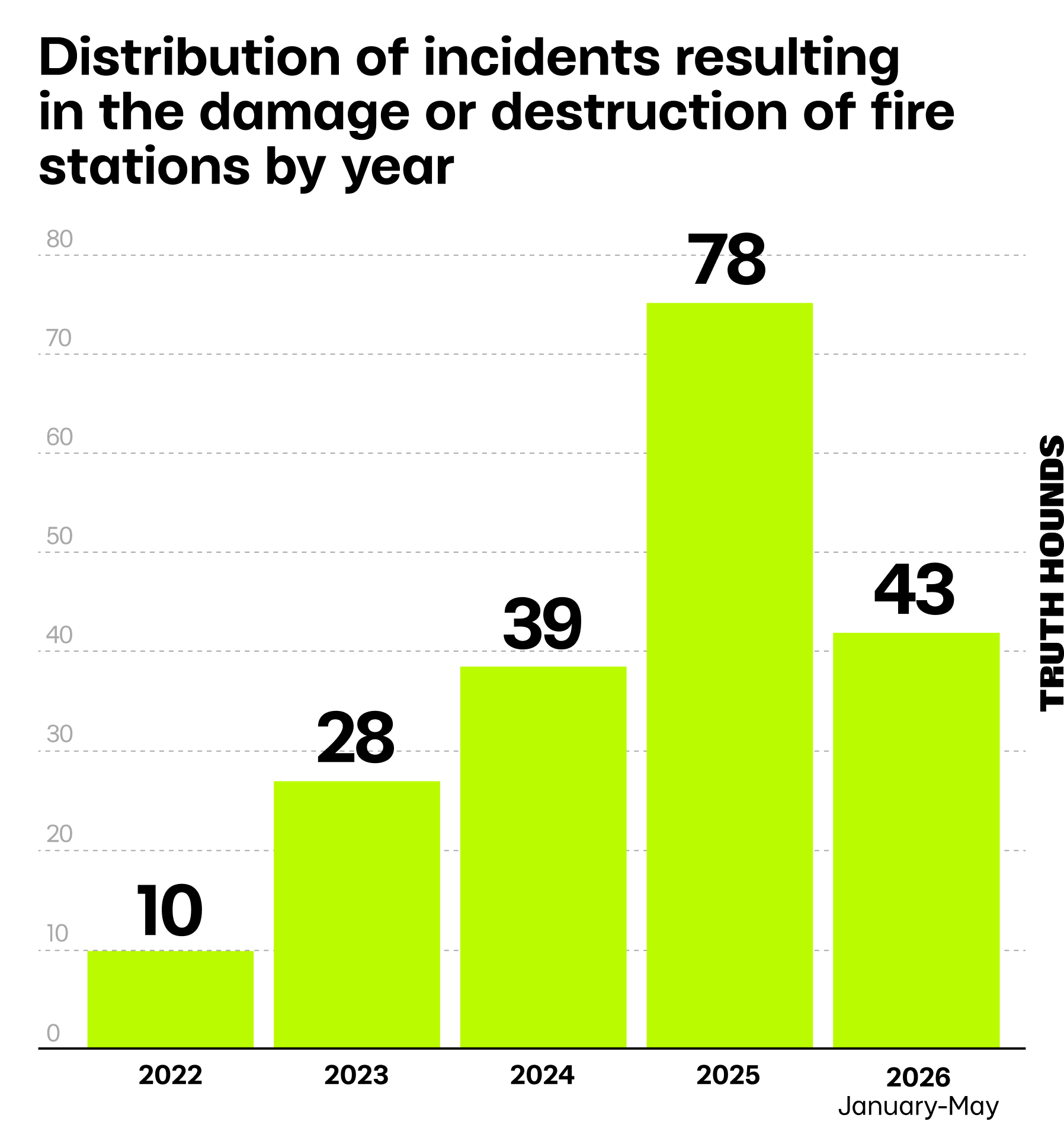
In more than 40% of cases, all of which occurred in frontline areas, buildings reportedly sustained damage twice or more times. This underscores the heightened vulnerability of such infrastructure in areas where the civilian population is most exposed to the challenges associated with proximity to the frontline.
Kyiv, 24 May 2026
On 24 May 2026, a building of the Main Directorate of the SES in Kyiv Oblast was hit by an allegedly direct missile strike, resulting in the destruction of the third to fifth floors. At the time of the attack, approximately 30 SES employees responsible for receiving emergency calls were working in an underground shelter nearby. None were injured in the attack.
As a result of the strike, ten emergency response vehicles were destroyed and two more sustained damage. No potential military targets were identified in the vicinity of the strike site based on open-source assessment. In addition to the SES building, a nearby Chornobyl Museum building was also significantly damaged.
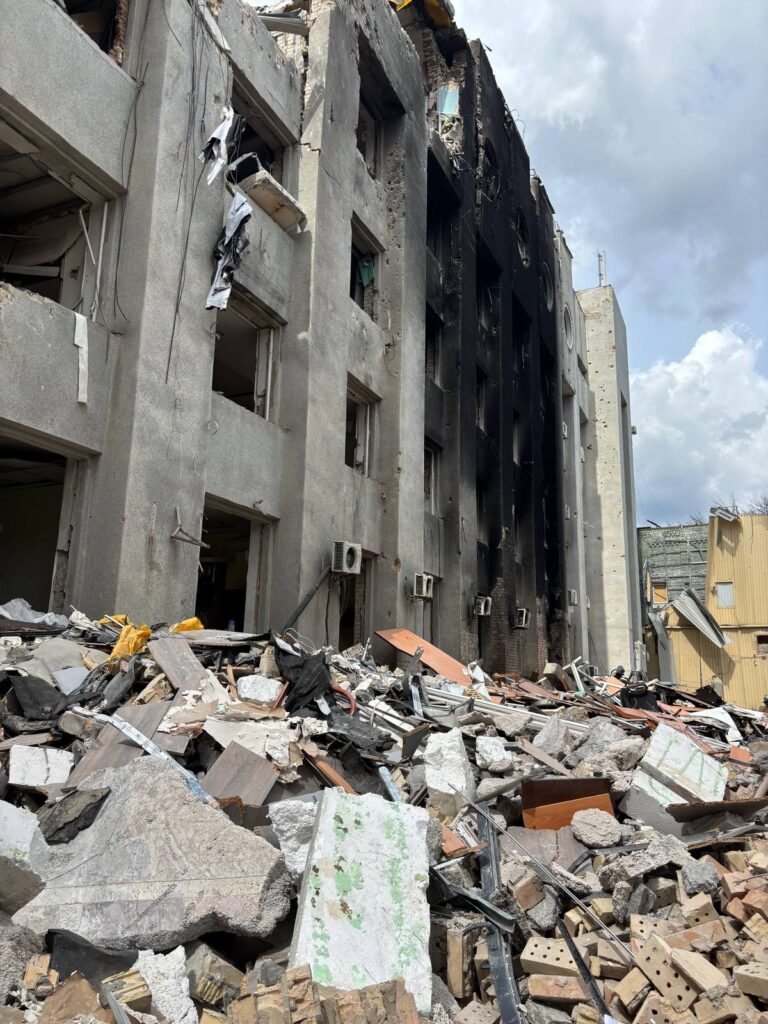
The building of the Main Directorate of the SES in Kyiv Oblast, damaged in the aftermath of a Russian attack on Kyiv on 24 May 2026.
Photo: 24 Channel.
Drone Attacks on Moving Vehicles
Six incidents identified in the new reporting period involved attacks on emergency responders while they were in moving vehicles. All of these attacks were conducted using short-range drones and occurred in either Zaporizhzhia or Dnipropetrovsk Oblast. The use of camera-equipped drones in such cases is highly indicative of intentional targeting, as such systems are typically capable of tracking visibly marked fire engines or evacuation vehicles on the road and striking with high precision. While this type of attack was not examined in depth in the previous report, the continued occurrence of such incidents indicates the need for further analytical attention.
Conclusion
Between November 2025 and May 2026, the number of incidents resulting in harm to emergency responders remained high, although lower than in the previous seven-month period. Geographically, most incidents remained concentrated in areas closest to the battlefield; however, there has been a rise in cases occurring in locations relatively distant from the frontline, including in the capital city of Kyiv. Drones remain the dominant means of attack, with short-range drones playing an increasingly important role in frontline areas, compared to other weapon systems.
The intensity of double-tap strikes decreased compared to the previous seven months, while the number of incidents resulting in damage to fire stations and other buildings used by emergency responders increased by over 20%. As most of these cases occurred in frontline areas, this trend underscores the growing vulnerability of emergency response infrastructure in areas where the civilian population remains most exposed to the impacts of hostilities.
Overall, the findings indicate that attacks impacting emergency responders in Ukraine persist and that many of them exhibit patterns that may indicate an intentional character. This underscores the need for continued measures to enhance the safety of personnel, particularly in the context of threats posed by short-range drones in frontline areas, as well as sustained efforts to identify and hold those responsible for such attacks accountable. Truth Hounds will continue to document attacks impacting emergency responders using open-source evidence and will publish updated datasets at regular intervals.