

View the study in PDF format
Appendix 2.
Codebook. All Incidents Involving Ukrainian Emergency Responders
Appendix 3.
Datasets
View the study in PDF format
Appendix 2.
Codebook. All Incidents Involving Ukrainian Emergency Responders
Appendix 3.
Datasets
Dedicated to Ukrainian emergency responders
who lived and died rescuing others.
Executive Summary
Since the beginning of the full-scale invasion in 2022, Russian forces have repeatedly killed, injured, and targeted emergency responders in Ukraine while they carried out civil defense tasks. Evidence collected and analyzed by Truth Hounds suggests a sustained pattern, not a series of isolated accidents or incidental battlefield harm. These attacks have hit hardest in frontline communities but they have also occurred in other cities relatively far from the front, weakening civilian protection across a wide part of the country.
This Truth Hounds report analyzes Russian attacks on emergency responders in Ukraine from February 24, 2022 to October 31, 2025. It identifies recurring patterns of such attacks in time, geography and weapon type, examines possible rationales, and assesses the implications for emergency response efforts in Ukraine. It also considers possible legal characterizations of such attacks under international humanitarian law and, where relevant, the Rome Statute.
The findings are based on systematic open sources monitoring, 21 semi-structured interviews conducted during field missions, and official statistical data provided by the State Emergency Service of Ukraine (SES). In addition, we publish four datasets designed to ensure transparency and enable further analysis.
Truth Hounds has identified 401 incidents in the study period in which attacks killed or injured emergency responders, damaged fire stations or emergency operations vehicles, or forced responders to suspend operations due to repeat attacks. These incidents caused at least 42 deaths and 258 injuries among emergency responders, and damaged or destroyed at least 248 emergency operations vehicles and 138 fire stations. Official data provided by the SES are significantly higher: 111 deaths, 550 injuries, 617 damaged or destroyed vehicles, and 449 affected fire stations and other SES facilities during the same period.
The difference between our monitoring data and official SES figures suggests the actual scale of attacks likely exceeds what is captured in open sources and may help establish approximate ranges for the overall scope of incidents examined in this study.
Truth Hounds compiled this report with the support of donors

This publication was produced with the generous support of the Howard G. Buffett Foundation. Its contents are the sole responsibility of Project Expedite Justice and Truth Hounds.
Cover photo: SES emergency responders near a civilian high-rise building damaged by a combined Russian missile and long-range drone attack on Kyiv on November 25, 2025, which killed seven people and injured 21.


THE REPORT’S FIRST CHAPTER shows that attacks on emergency responders increased over time and reached their highest recorded number in 2025. Most incidents occurred in frontline areas, especially in Donetsk, Kharkiv, Dnipropetrovsk, and Kherson Oblasts. At the same time, the attacks did not remain confined to those areas. They also reached cities farther from the front, showing that this pattern has a broad geographical reach.
The report also finds a major shift in weapon use. Drones became the dominant weapon in incidents affecting emergency responders, and their use rose sharply in 2024 and 2025. Our data indicates that in 2025 there were 138 reported drone-related attacks—almost 3 times higher than in 2024 and more than 15 times higher than in 2023. That shift matters because many drones allow operators to observe an attack site in real time. Emergency responders wear distinctive uniforms and operate clearly marked vehicles that visibly identify them as emergency services personnel. Therefore, attackers’ use of drones with real time video feeds strengthens the inference that emergency responders, at least in some cases, came under intentional attack.
“At the beginning of the war, the number of strikes was significantly lower, whereas now damage to equipment by FPV drones—in other words, the deliberate destruction of fire trucks—is observed almost daily. Reports of repeat shelling or FPV-drone strikes during firefighting operations are received virtually every day. A similar trend can be observed with respect to facilities: the number of double-tap strikes against them has also increased,”
Viktor Likanov, Deputy Director of the Department of Resource Support and Head of the Directorate for Construction and Operation of Mobile Assets of the SES, told Truth Hounds in an interview (September 10, 2025).

THE SECOND CHAPTER identifies recurring types of attacks, primarily double-tap strikes and attacks on fire stations, but also drone “hunting” of emergency operations vehicles, attacks on evacuation and pyrotechnic teams, and attacks during large-scale environmental shocks.
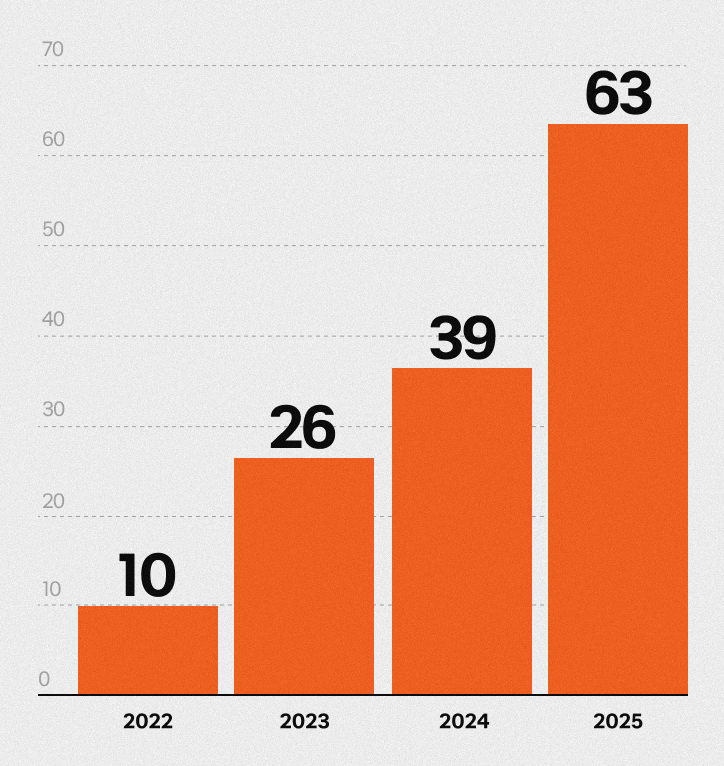
Double-tap strikes are a military tactic where the first strike hits a particular target and subsequent ones are directed at emergency responders arriving at the scene. Truth Hounds identified 200 incidents that bore the hallmarks of double-tap strikes and verified 92, mainly through open-source analysis.
Those verified cases caused at least 20 deaths and 108 injuries among emergency responders and damaged or destroyed at least 76 emergency vehicles and 3 civil defense buildings. In more than half of those verified cases, drones carried out the second strike. In most cases, an initial strike hit or landed near a civilian object, and responders who arrived to help then faced the follow-up strike. These attacks do more than kill and injure. They interrupt rescue work, delay debris removal, deepen fear among civilians, and force responders to work under the constant threat of another hit. In such cases, these types of attacks function as a tool of terror, prompting fear and hopelessness.

The number of verified double-tap strikes.
Source: Truth Hounds.
The same chapter also identifies attacks on fire stations as a second major pattern. Fire stations are critical operational hubs and vital spaces for civilian life in conflict. Truth Hounds documented 138 incidents that damaged or destroyed fire stations, while SES data indicate a much larger overall toll. Most of these attacks occurred close to the frontline, and some stations were hit repeatedly. In Nikopol alone, we recorded more than ten such incidents. In most analyzed cases, researchers did not identify a stationary military facility within 300 meters of the station, which supports an inference that the stations themselves may have been the intended targets. These attacks matter because when strikes damage or destroy fire stations, they degrade emergency capacity over time, weaken local resilience, and leave civilian communities more vulnerable to both wartime and ordinary emergencies. Such attacks may also exacerbate forced displacement, and, in combination with other measures, may be used to pressure leadership into making political or military concessions.
Distribution of incidents resulting in the damage or destruction of fire stations by year.
Source: Truth Hounds.
The report finds that attacks on emergency responders in Ukraine may amount to war crimes, including attacks on civilians and, in certain circumstances, attacks on civilian objects under the Rome Statute. It also argues that some attacks may violate the prohibition on acts or threats of violence whose primary purpose is to spread terror among the civilian population under Article 51(2) of Additional Protocol I. We recognize that any final criminal qualification depends on the facts and evidence in each case.
CHAPTER 3 examines how Russian and pro-Russian sources disparage and vilify Ukrainian emergency responders. Truth Hounds identified 169 posts on 26 pro-Russian Telegram channels that commented on Ukrainian emergency responders. Many posts threatened responders directly. Others portrayed the SES and its infrastructure as military targets, accused responders of working with foreign fighters or NATO, or used dehumanizing language and calls for violence. Official Russian sources largely stayed silent about attacks on emergency responders and their losses. In that context, these Telegram channels offer important insight into a discourse that may help explain or reinforce the targeting pattern documented elsewhere in the report.

THE REPORT’S LAST CHAPTER shows how these attacks have reshaped emergency work in Ukraine. In some frontline communities, war-related calls now dominate daily operations. Emergency responders must change routes, suspend work, shelter during operations, and rely more heavily on jamming systems, drone detectors, armored vehicles, and robotic tools. These burdens can delay rescue, prolong fires, and leave civilians trapped for longer durations. The attacks also impose serious physical and psychological costs. Some responders have suffered permanent injuries or lost the ability to continue working. Many others live with sustained stress, anxiety, and fear linked to war itself and to the risk of being killed while trying to save others.
“Every day feels like it might be your last. [...] Emergency responders face this every day,”
Viktoriia Kryvolapchuk, co-founder of the Brave Minds project for psychological assistance to the SES, told Truth Hounds (January 26, 2026).
The data clearly shows that Russian attacks on emergency responders in Ukraine have formed a sustained pattern that harms those who carry out civil defense, disrupts rescue operations, and weakens civilian protection.
Improved protection measures may have reduced the lethality of some attacks, but also can slow response time and increase the burden on emergency responders while conducting what is already extremely challenging work emotionally and physically. Most of all, the increase in the frequency of attacks on emergency responders over the last three years points to a deeply troubling trajectory in the war. Attacks on emergency responders in this conflict demand urgent response from the international community, including in the field of criminal investigation and accountability.
Recommendations
To the Government of Ukraine
- Promote and support the development of technological solutions aimed at increasing occupational safety for emergency responders.
- Ensure continuous and effective interagency coordination with regard to the documentation of strikes against emergency responders and the use of the resulting data in criminal proceedings.
- Support and expand state programs that finance medical treatment, rehabilitation, mental health and psychosocial support for emergency responders, health insurance coverage, and ensure appropriate and timely payments to the families of fallen emergency responders.
- Establish sustainable mechanisms for integrating injured emergency responders and civil defense veterans into training, analytical, and managerial positions within the civil protection service.
- Expand mobilization reservations for local and volunteer firefighting units to help them maintain staffing levels and recruit new personnel for this essential work.
- Grant humanitarian demining personnel appropriate social protection in view of the high level of risk and the significant public importance of their work.
To the Verkhovna Rada
- Use parliamentary oversight tools, including committee hearings and reporting requirements, to systematically track attacks on emergency responders, monitor state support to affected services and personnel, and identify gaps in protection, staffing, equipment, and rehabilitation;
- Review whether current legal and budgetary frameworks adequately protect emergency responders, humanitarian deminers, and the families of those killed or injured in service, and amend these frameworks where necessary.
To Ukrainian law enforcement
- Incorporate the findings and conclusions of this study into criminal case files concerning strikes on emergency responders and fire stations, where relevant.
- Assess, based on any available facts and evidence of specific attacks on emergency responders, whether to classify these acts as war crimes, including attacks against civilians under Article 8(2)(b)(i) of the Rome Statute, or attacks against civilian objects under Article 8(2)(b)(ii) of the Rome Statute.
- Assess, based on available facts and evidence of specific attacks on emergency responders, whether any such incidents violate the prohibition in Article 51(2) of AP I on acts or threats of violence the primary purpose of which is to spread terror among the civilian population, and whether, depending on the facts, they may also amount to war crimes or other serious violations of international humanitarian law.
- In criminal proceedings relating to Russian strikes on emergency responders in Ukraine, examine whether identified suspects or accused persons located in Ukraine may also have participated in similar attacks committed in Syria. Where evidence supports that link, pursue available avenues for criminal liability under Article 8 of the Criminal Code of Ukraine.¹
To criminal justice actors in other countries
- Review strikes on emergency responders as potential war crimes or other serious violations of international humanitarian law that may justify criminal proceedings under universal jurisdiction, regardless of the victims’ nationality or where the crimes occurred. In particular, examine whether to open such proceedings in relation to attacks carried out by Russian forces in Ukraine.
- Provide technical and expert support to Ukrainian law enforcement agencies in investigating strikes against emergency responders.
For foreign governments and international organizations
- Enhance cooperation with the SES in developing and implementing technological solutions aimed at strengthening the safety and operational resilience of search-and-rescue operations, humanitarian demining, and other emergency response activities in conditions of armed conflict.
- Facilitate structured and continuous dialogue between Ukrainian emergency responders and civil defense services of other states to exchange experience related to operations in modern armed conflicts and other complex security environments.
- Support programs for the treatment and rehabilitation of injured emergency responders, including by expanding opportunities for specialized medical treatment and recovery abroad.
- Provide financial and material assistance for the repair and replacement of equipment and machinery damaged or destroyed as a result of armed attacks, prioritising emergency services operating in frontline areas. Preference should be given to equipment and vehicles that can be repaired rapidly and serviced within Ukraine.
- Use the findings of this report when considering targeted individual sanctions, under applicable sanctions regimes, against persons involved in the planning, ordering, or execution of strikes against emergency responders.
For national and international civil defense organizations
- Strengthen international professional solidarity by publicly condemning attacks against civil defense personnel in Ukraine, advocating for their professional needs, providing targeted assistance, and developing structured cooperation with Ukrainian civil defense services.
For private donors
- Facilitate the procurement of UAVs and robotic systems for firefighting and rescue operations, as well as for the armouring of vehicles used in the evacuation of civilians from frontline areas.
- Provide financial support to Ukrainian manufacturers engaged in the development of firefighting technologies and broader emergency response needs, including rescue operations, debris removal, and humanitarian demining.
For technology companies
- Provide discounted or in-kind access, where feasible, to critical technologies that enhance the safety, resilience, and operational capacity of emergency responders, including tools for communication, situational awareness, and damage assessment.
- Build clear safeguards into any support provided in conflict settings, including strong data protection, access controls, audit logs, and protocols that reduce the risk that sensitive operational information could expose emergency responders or affected civilians to further harm.
- Support Ukrainian developers and manufacturers working on practical tools for firefighting, rescue, and demining by offering technical partnerships, mentorship, interoperability support, and responsible procurement pathways.
- Work with Ukrainian emergency services, civil defense actors, and trusted nongovernmental partners to adapt existing commercial technologies to frontline emergency-response needs, including early warning tools, secure communications, situational awareness systems, and safer remote inspection capabilities.
For the academic, research and human rights communities
- Strengthen the systematic collection of disaggregated quantitative data and field documentation of attacks against emergency responders across different armed conflicts in order to enable comparative analysis, identify recurring patterns, and assess their immediate, long-term, and structural impact on emergency services, civilian resilience, humanitarian response, and post-conflict reconstruction.
- Study the motives, decision-making logic, and operational patterns of armed attacks against emergency responders to identify effective measures to enhance their safety and minimize risks.
¹ Pursuant to Article 8 of the Criminal Code of Ukraine, Ukrainian law enforcement authorities may initiate criminal proceedings under the principle of universal jurisdiction. This applies in cases provided for by international treaties or where a person has committed serious or particularly serious crimes against the rights and freedoms of citizens of Ukraine or the interests of Ukraine.